

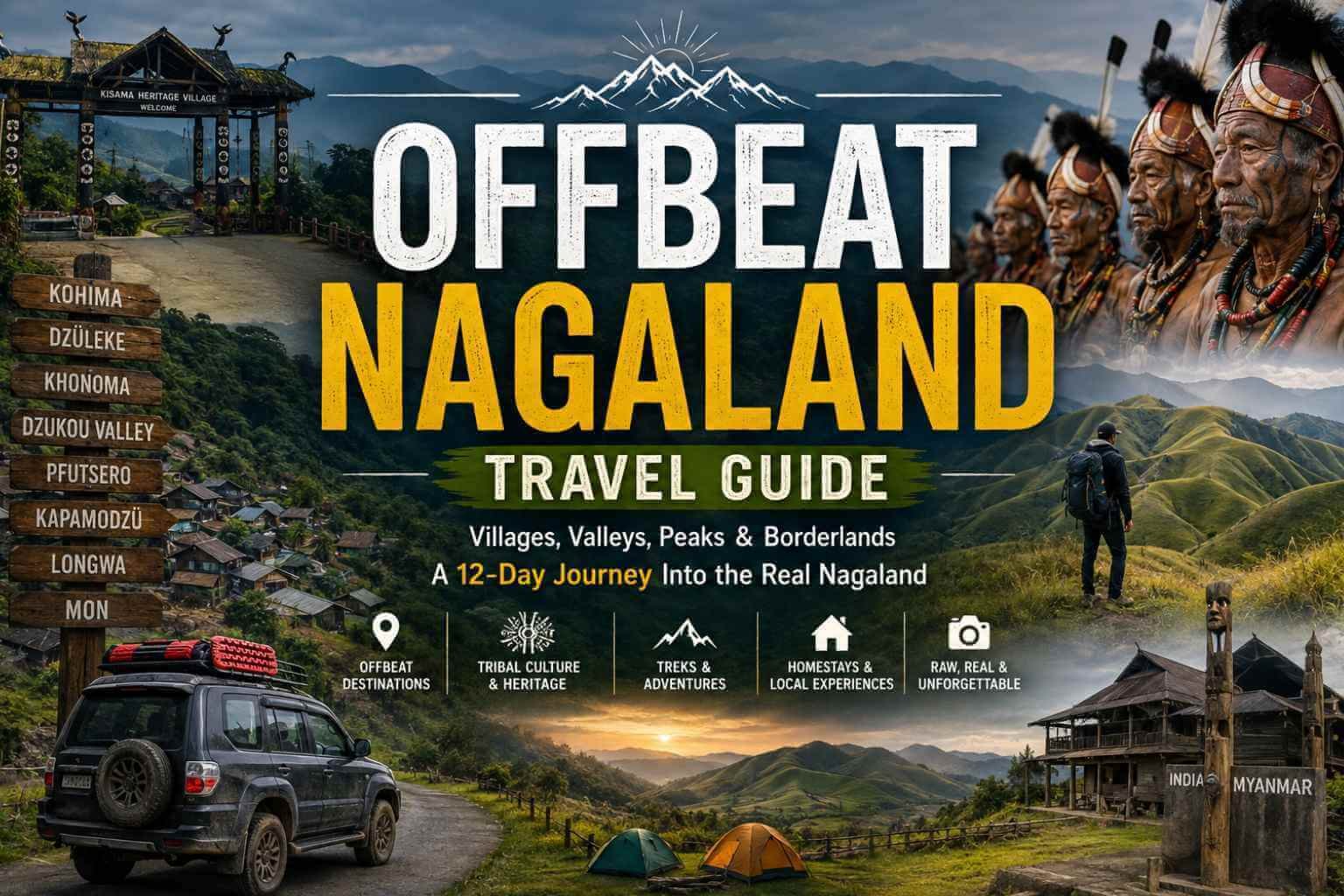

Offbeat Nagaland Travel Guide
12-Day Journey Through Villages, Valleys, Peaks & Konyak Country
If your idea of travelling in Nagaland goes beyond simply visiting Kohima and attending the Hornbill Festival, this Offbeat Nagaland Travel Guide is for you.
Nagaland is one of those places where the best experiences are often not found at conventional tourist attractions. They happen while walking through a quiet village, eating inside a local home, trekking across the rolling hills of Dzukou Valley, sitting beside a river in Dzüleke, watching clouds move across Kapamodzü Peak, or listening to stories from elderly Konyak people in Longwa.
At Wild Hill Adventure, we have travelled these routes many times, and some of these villages have become places we return to again and again.
This 12-day itinerary connects some of our favourite experiences across Kohima, Dzüleke, Khonoma, Dzukou Valley, Pfutsero, Kapamodzü, Jorhat, Mon and Longwa, finishing in Dibrugarh.
It isn’t designed for travellers who simply want to tick places off a list.
It is for people who want to experience Nagaland slowly and locally.
Offbeat Nagaland Travel Guide: Quick Overview
Duration: 12 Days / 11 Nights
Starting Point: Guwahati, Assam
Ending Point: Dibrugarh, Assam
Main Region: Nagaland
Route: Guwahati → Kohima → Dzüleke → Khonoma → Dzukou Valley → Pfutsero → Kapamodzü → Kohima → Jorhat → Longwa → Dibrugarh
Best suited for
This journey is particularly good for travellers interested in:
- Naga tribal culture
- Remote villages
- Photography
- Trekking and camping
- Local food
- Rural experiences
- Slow travel
- Northeast Indian history
- Offbeat destinations
- Border villages
The itinerary combines some famous places with destinations that many first-time visitors to Nagaland never reach.
Why Choose an Offbeat Nagaland Trip?
Most first-time Nagaland itineraries revolve around Kohima, Kisama, Khonoma and perhaps Dzukou Valley.
Those places are worth visiting, but Nagaland is much bigger than that.
Once you travel deeper into the state, the experience changes.
The roads become quieter. Villages become smaller. Mobile connectivity can become unreliable. Homestays replace conventional hotels. Food becomes simpler and more local.
And your interactions with people often become the most memorable part of the journey.
This itinerary tries to show you different sides of Nagaland rather than repeating similar sightseeing every day.
You experience the Angami region around Kohima, trek through Dzukou, explore the highlands around Pfutsero and Kapamodzü, and then travel far north into Konyak country around Mon and Longwa.
Day 1: Guwahati to Kohima
Your offbeat Nagaland journey begins in Guwahati, Assam.
After arriving at Guwahati Airport, meet our team and begin the drive towards Kohima.
It is a long travel day, but it also gives you your first introduction to Northeast India’s changing landscapes.
You leave the plains of Assam behind and gradually enter the hills.
Whenever possible, we like stopping at small roadside fruit stalls rather than only stopping at conventional restaurants.
Depending on the season, you’ll find different locally grown fruits and produce.
By evening, arrive in Kohima, Nagaland’s capital.
Check into your hotel or homestay and rest.
Overnight: Kohima
Day 2: Kohima to Dzüleke and Khonoma
Today we begin exploring the countryside around Kohima.
Two villages are particularly special to us:
Dzüleke and Khonoma.
Although both can be visited from Kohima, they offer completely different experiences.
Dzüleke Village
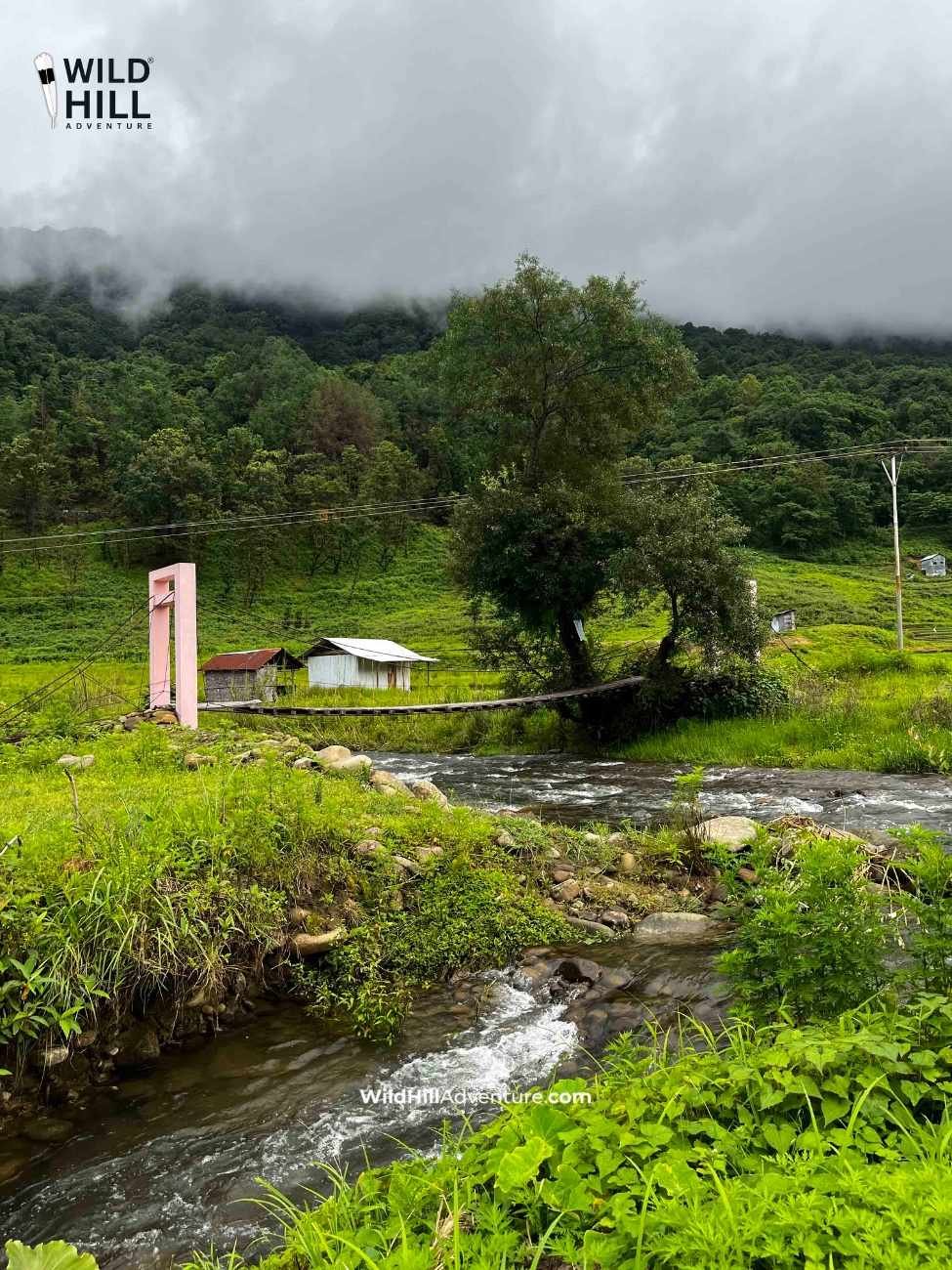
Dzüleke is one of my favourite villages in Nagaland.
What makes it special isn’t a giant monument or famous viewpoint.
It is the atmosphere.
Imagine a small village surrounded by green hills, forests, fields and a river, with colourful flowers growing around simple village homes.
Mobile connectivity can be limited, which is actually part of the charm.
You can walk through the village, explore the surrounding fields and simply experience rural life.
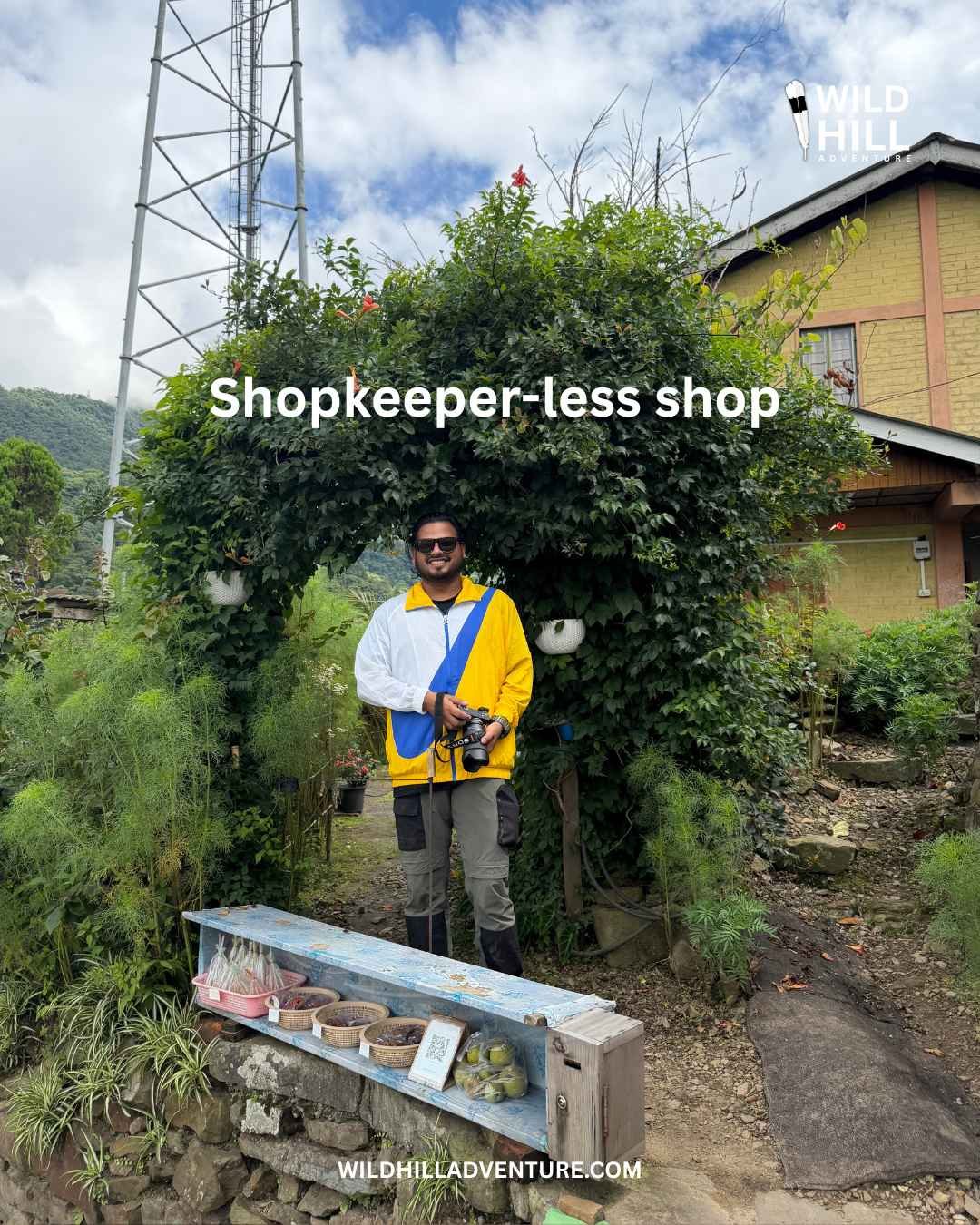
One of Dzüleke’s interesting features is its honesty shops, where goods can be sold without a shopkeeper constantly sitting there. The system depends on community trust.
For travellers accustomed to cities, something this simple often becomes surprisingly memorable.
Continue to Khonoma
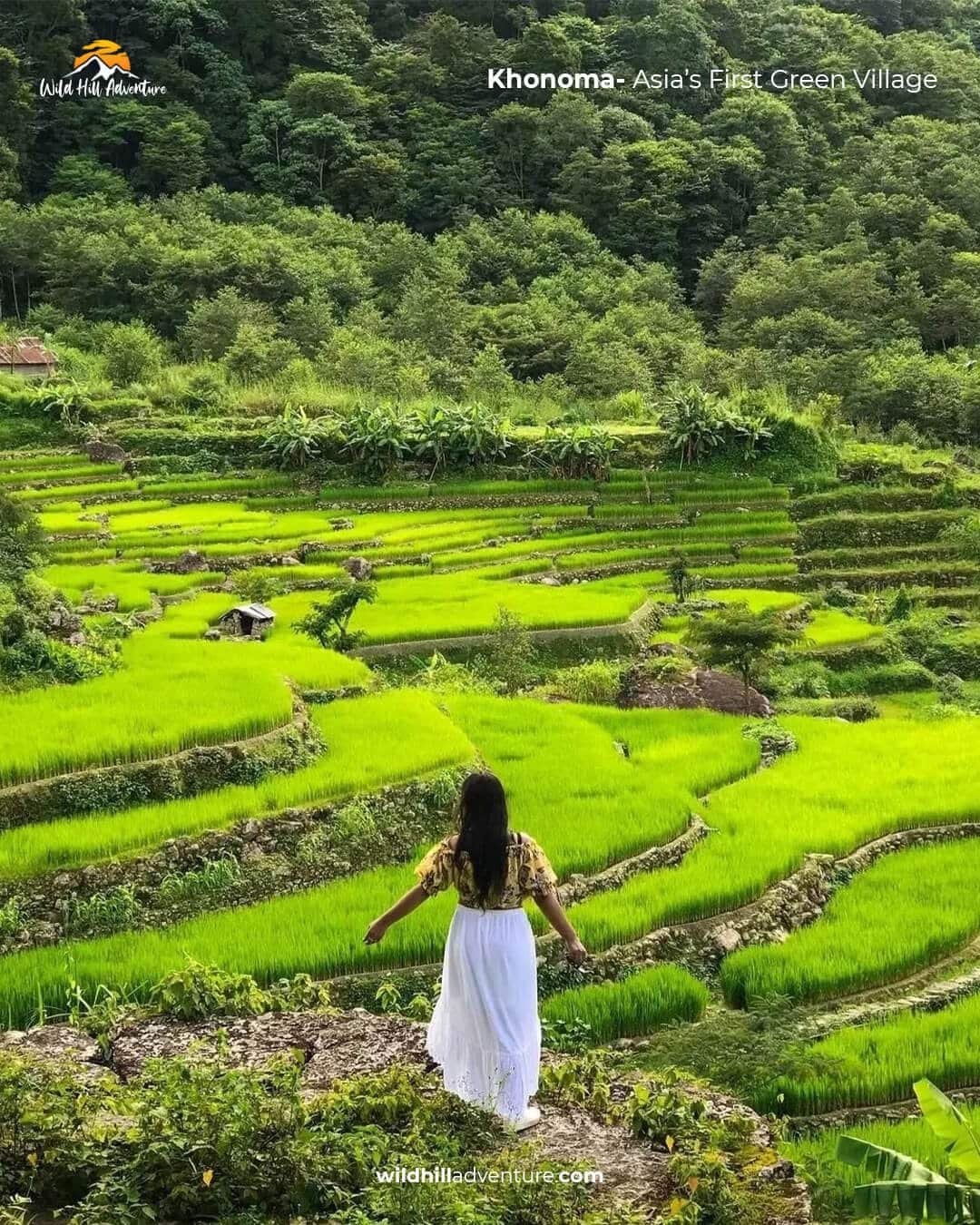
From Dzüleke, continue towards Khonoma, one of Nagaland’s best-known villages.
Khonoma is famous for its history, terraced cultivation and community conservation.
But don’t visit Khonoma only for photographs.
Take a guided village walk.
Explore the old settlement, walk along its stone pathways, see traditional houses and learn about Angami history and village life.
Then head towards the terraced fields.
When the fields are green, this part of Khonoma can look almost unreal.
A proper Khonoma experience can easily take several hours.
Return to Kohima in the evening.
Overnight: Kohima
Day 3: Trek to Dzukou Valley
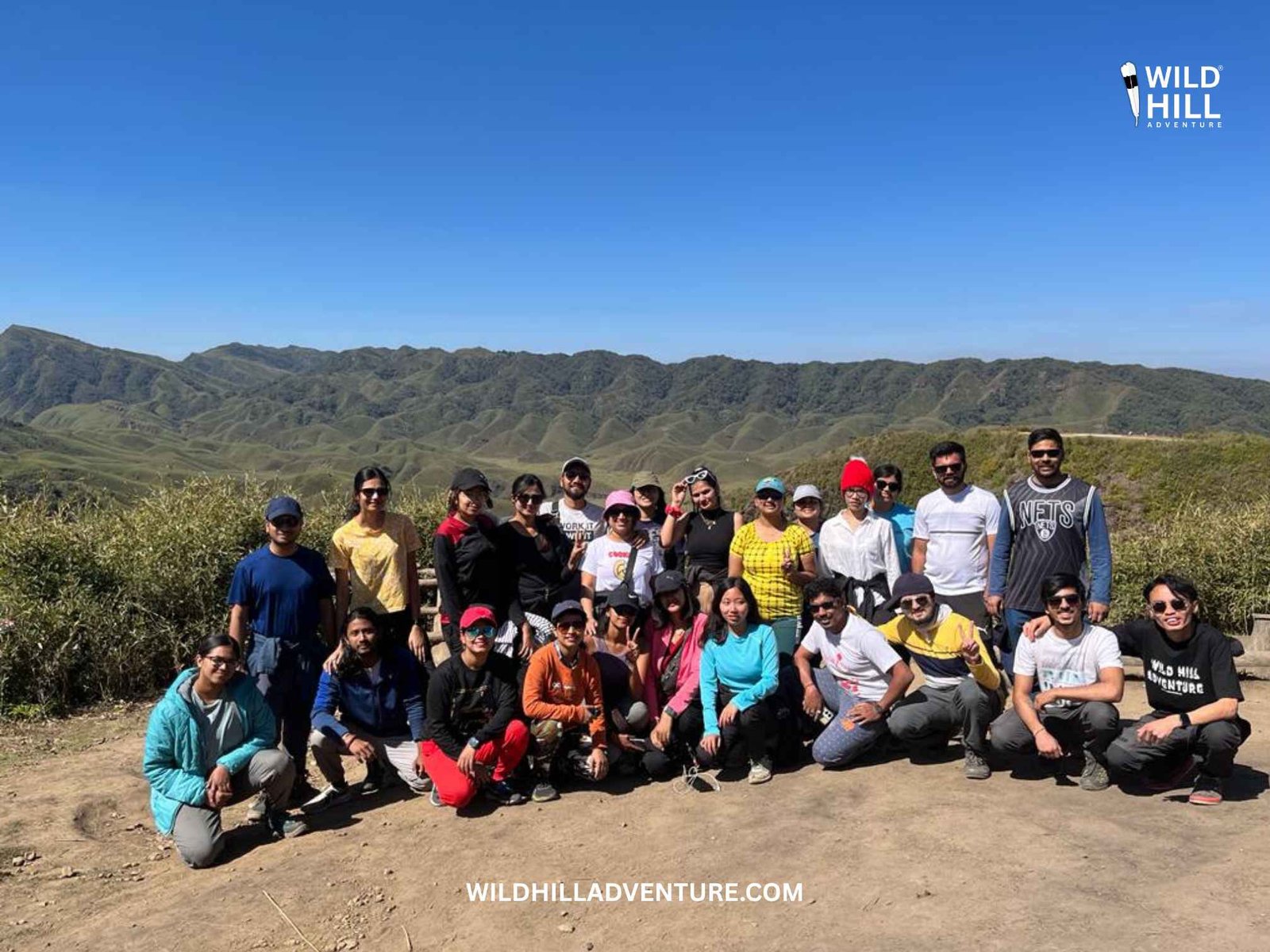
Today is one of the biggest adventures of the trip.
We leave early for the Viswema trekking point and begin our journey towards Dzukou Valley with a local guide.
Trekking to Dzukou Valley via Viswema
There are different approaches to Dzukou Valley. For this itinerary, we use the Viswema side.
The beginning involves a steady climb.
Depending on your fitness level, pace and trail conditions, the initial ascent can take approximately 1 to 2 hours.
Once you reach the ridge, everything changes.
Suddenly, the landscape opens.
Rolling green hills stretch into the distance and the trail begins traversing the valley.
The remaining trek generally takes another few hours with breaks for photography, food and rest.
Don’t rush this section.
Dzukou isn’t just about reaching the campsite.
The walk itself is part of the experience.
Camping in Dzukou Valley
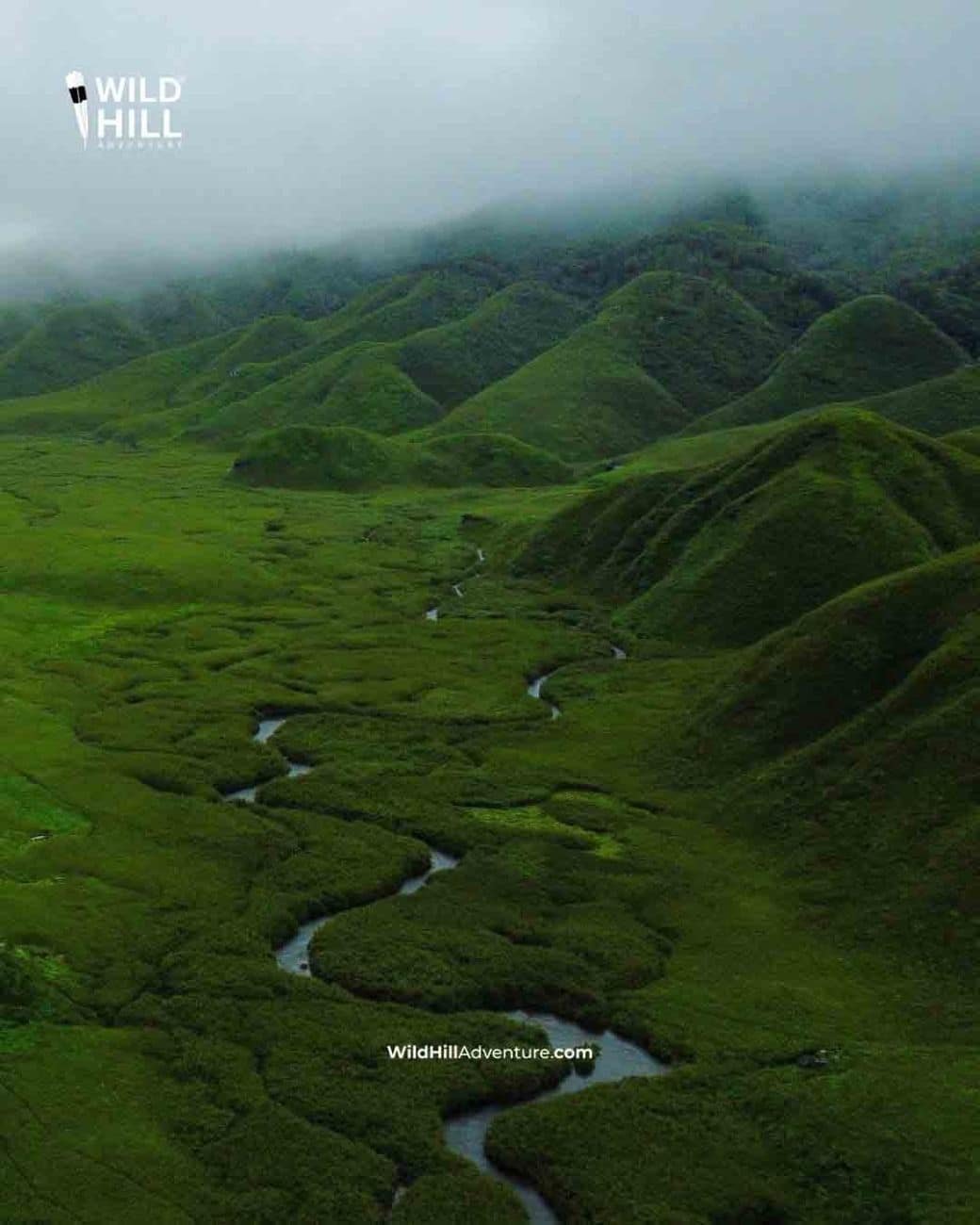
After reaching the base area, settle into the Wild Hill Adventure campsite.
Then comes my favourite part.
Nothing.
You don’t have to do anything.
Sit outside your tent.
Watch the mountains.
Talk with other travellers.
See the sunset.
And if the weather cooperates, look up after darkness.
The absence of city lights can make nights in Dzukou magical.
After years of bringing travellers here, Dzukou has become more than another destination for us. It is an emotion.
Overnight: Dzukou Valley camping
Day 4: Dzukou Valley to Kohima
Wake up surrounded by the hills of Dzukou.
If the weather is clear, mornings can be beautiful.
Have breakfast before beginning the return trek.
Descending is generally faster than climbing, but don’t underestimate it. Wet rocks, mud and steep sections require careful footing, particularly during or after rain.
Our vehicle will be waiting at the roadhead.
Return to Kohima and keep the remainder of the day relatively relaxed.
Your legs will probably appreciate it.
Overnight: Kohima
Day 5: Kohima to Pfutsero and Kapamodzü Peak
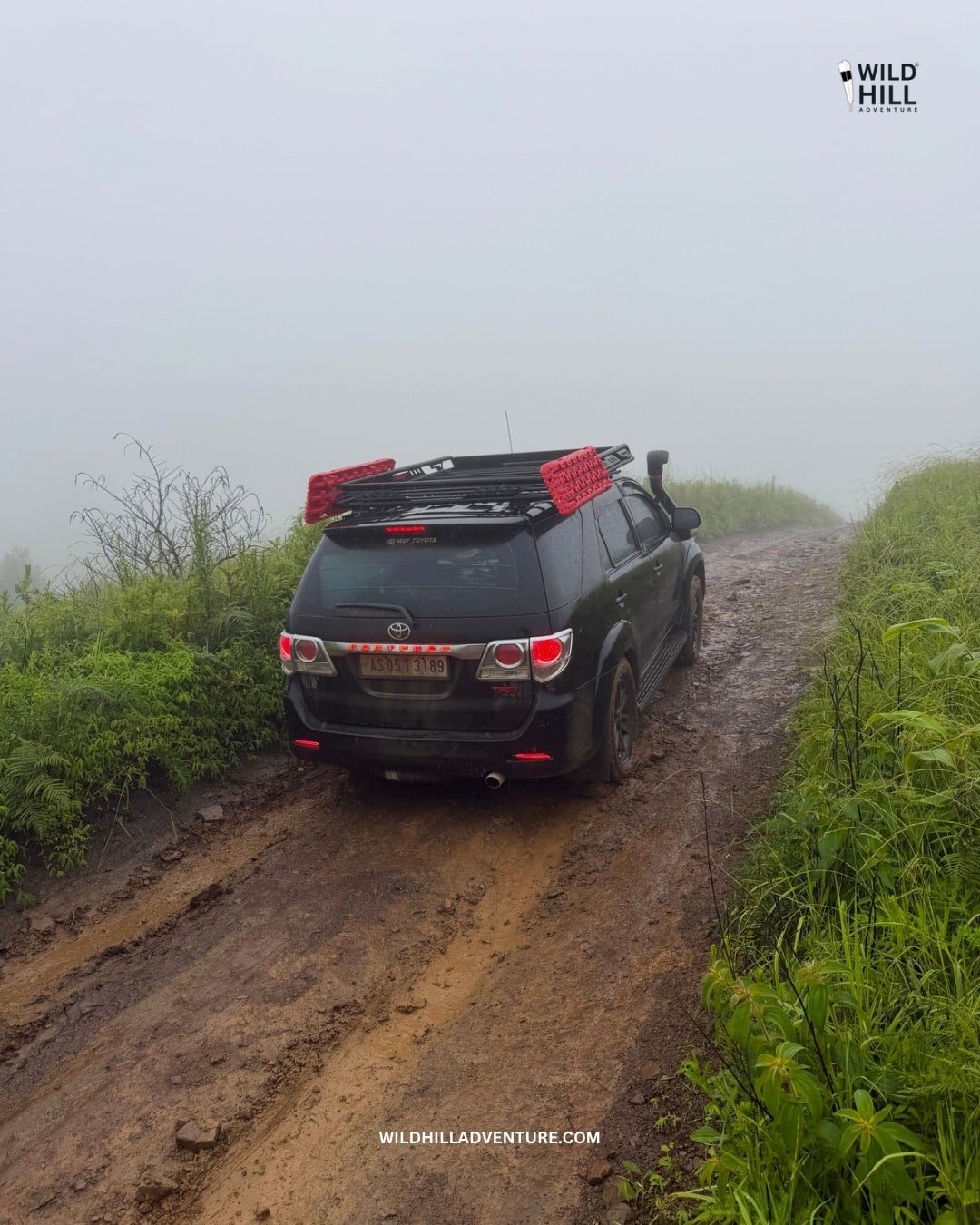
This is where the itinerary becomes considerably more offbeat.
Leave Kohima and travel towards Pfutsero.
Pfutsero is a beautiful high-altitude town in Phek district. The surrounding countryside feels very different from Kohima.
Depending on the season, you may pass agricultural areas filled with locally grown produce.
Take some time to explore before continuing towards Kapamodzü Peak.
Kapamodzü Peak
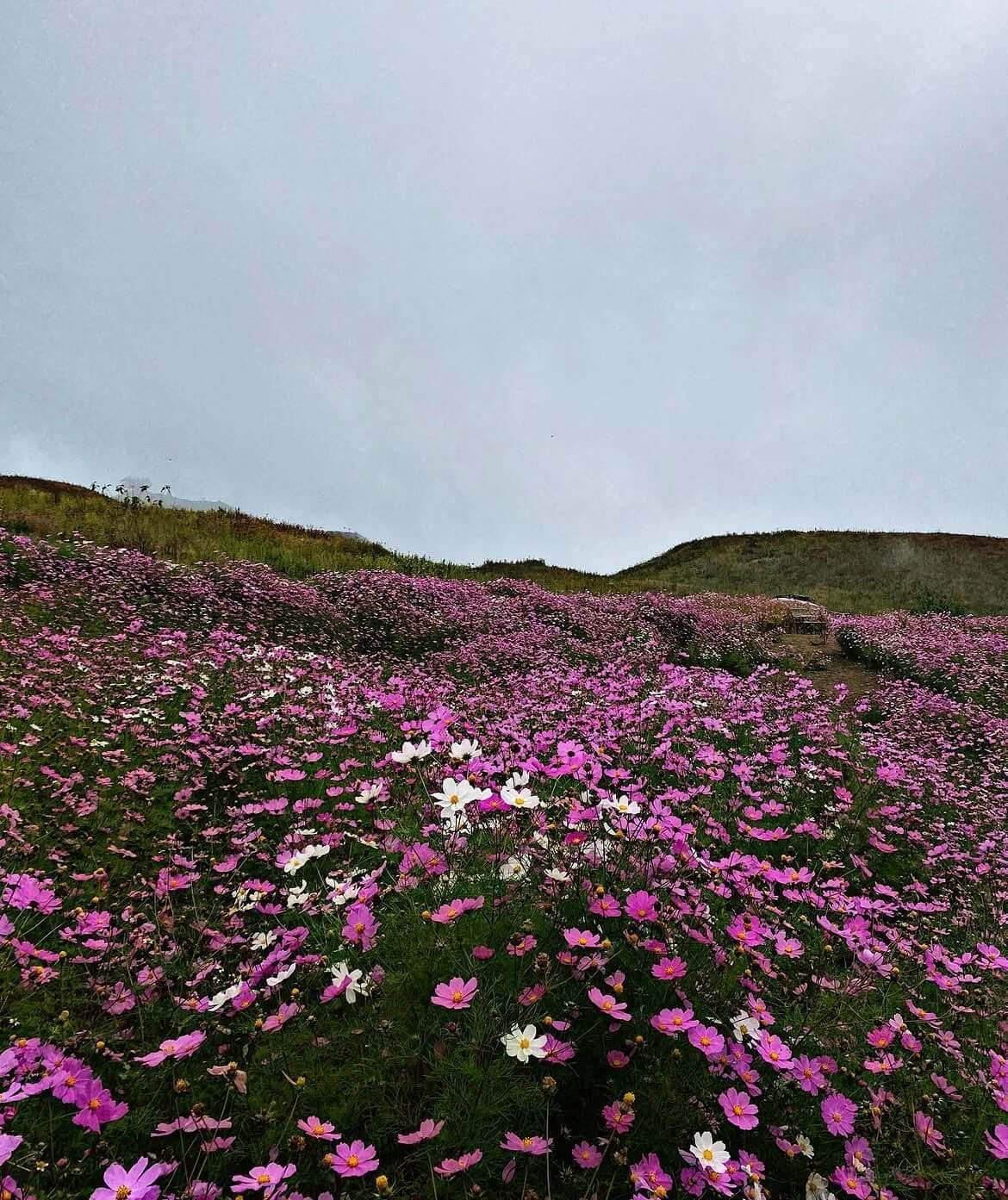
Kapamodzü is one of those places that deserves far more attention than it receives.
The journey itself is part of the adventure.
Road conditions can vary considerably, particularly during monsoon. Some sections can become muddy and slippery, which is why appropriate vehicles and local knowledge are valuable.
Once you reach the parking area, the peak is relatively close.
And then comes the view.
On clear days, you get huge panoramic landscapes.
During monsoon, the experience is completely different.
Clouds move across the mountains, visibility changes within minutes, and sometimes you find yourself standing above or inside a sea of mist.
Stay overnight around Kapamodzü and experience the silence after most daytime visitors leave.
Overnight: Traditional stay/homestay near Kapamodzü
Day 6: Kapamodzü to Kohima
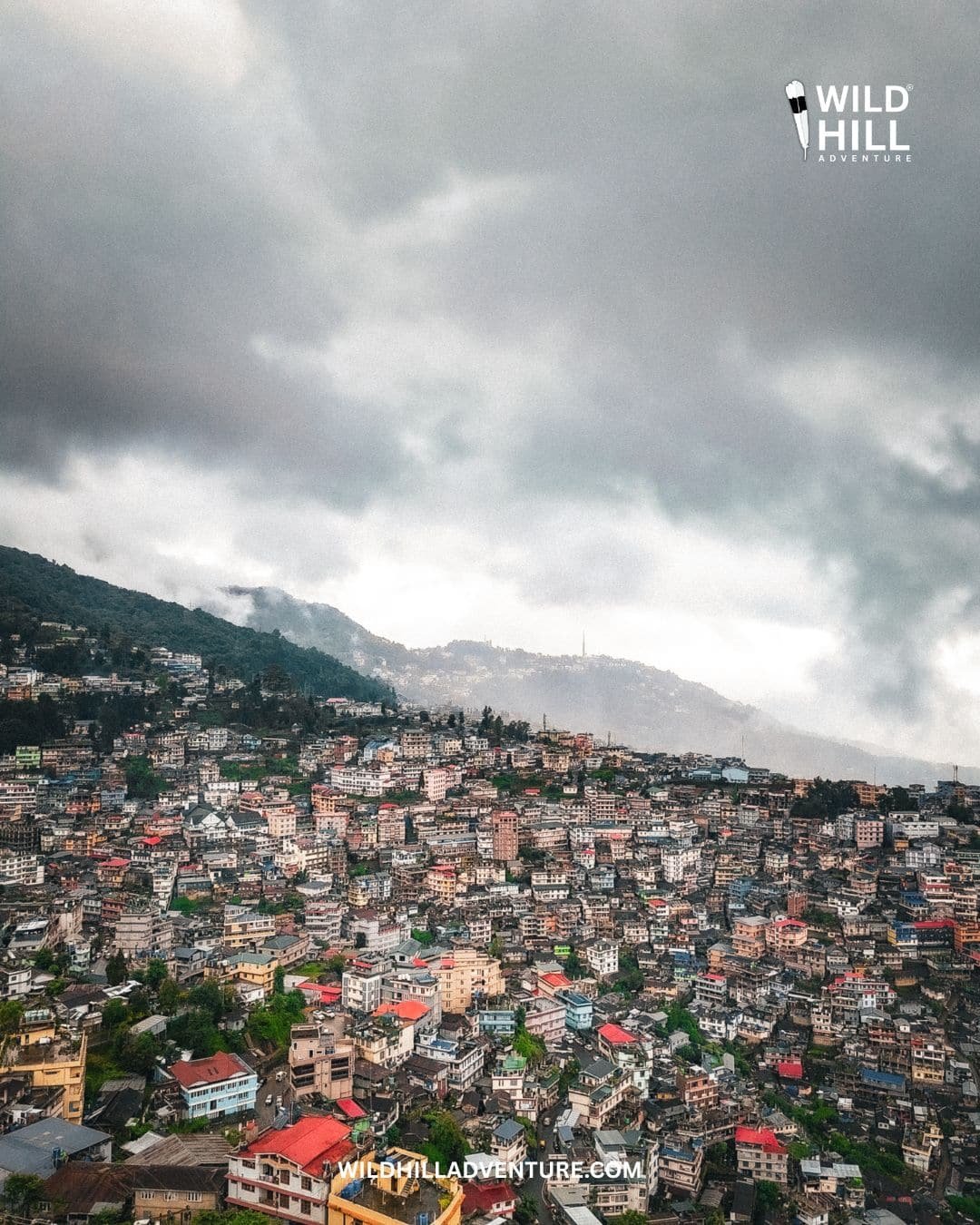
Wake up early.
Sunrise at Kapamodzü can be spectacular when the weather cooperates.
But mountain weather doesn’t follow our itinerary.
Sometimes you wake up to nothing but fog.
That is part of travelling here.
After breakfast, begin the drive back towards Kohima.
Once in the city, spend the afternoon exploring some of Kohima’s important cultural and historical sites.
Kohima War Cemetery
The Kohima War Cemetery commemorates soldiers who died during the Battle of Kohima in World War II.
Even travellers who aren’t deeply interested in military history often find the place moving.
Nagaland State Museum
If you want a better understanding of Nagaland’s diverse communities, traditional clothing, objects and cultural heritage, the museum is a useful stop.
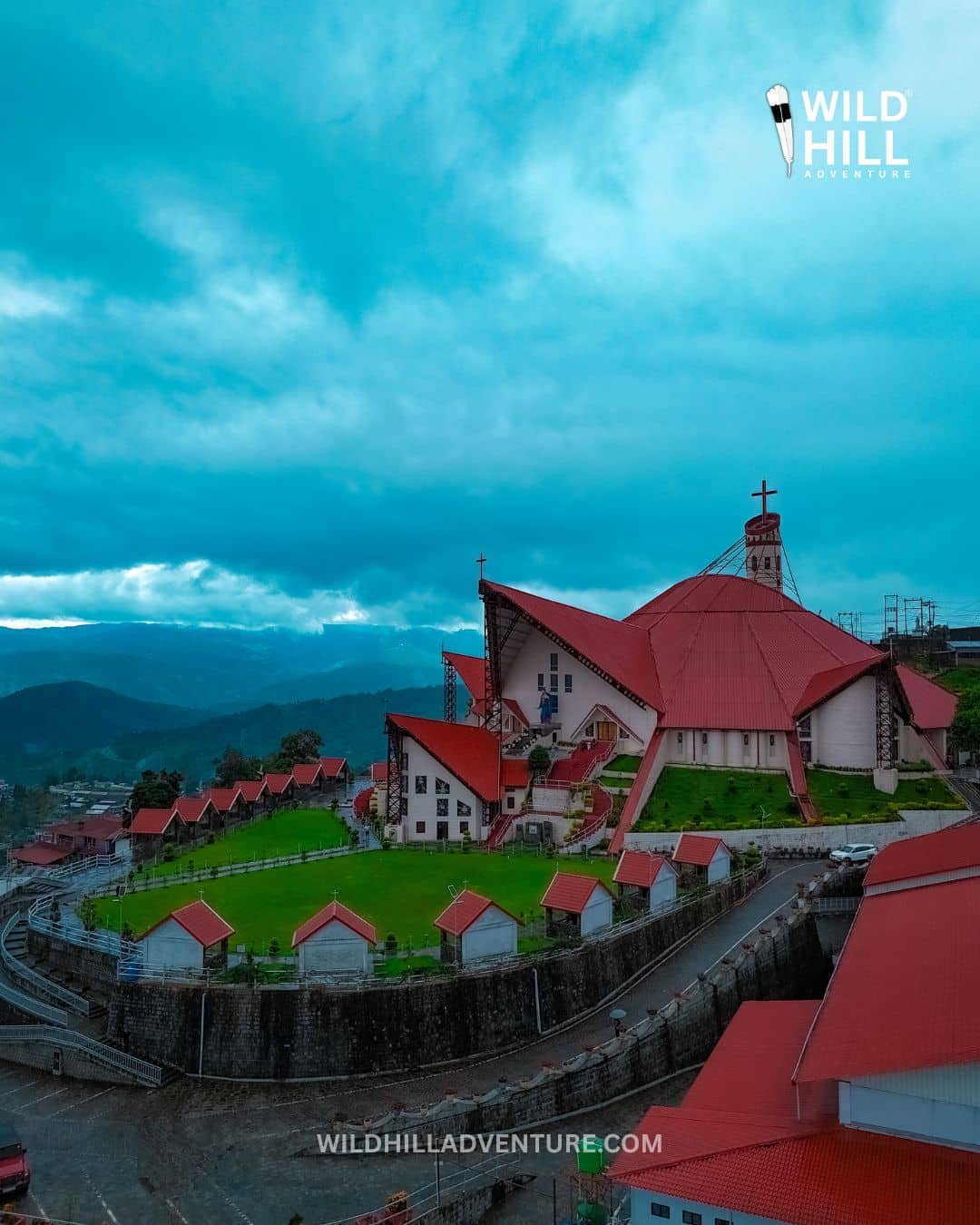
Kohima Cathedral
Visit the Cathedral of Mary Help of Christians, one of Kohima’s recognisable landmarks.
Local Markets
Markets are always among my favourite places when travelling.
Kohima’s markets give you a glimpse into what local people actually buy and eat, from seasonal vegetables and spices to regional ingredients.
Kisama Heritage Village
Kisama is internationally known as the venue of the Hornbill Festival.
Outside festival dates, the atmosphere is much quieter, but the site can still help travellers understand the architectural diversity represented through traditional-style morungs.
Overnight: Kohima or Jakhama
Day 7: Kohima to Jorhat
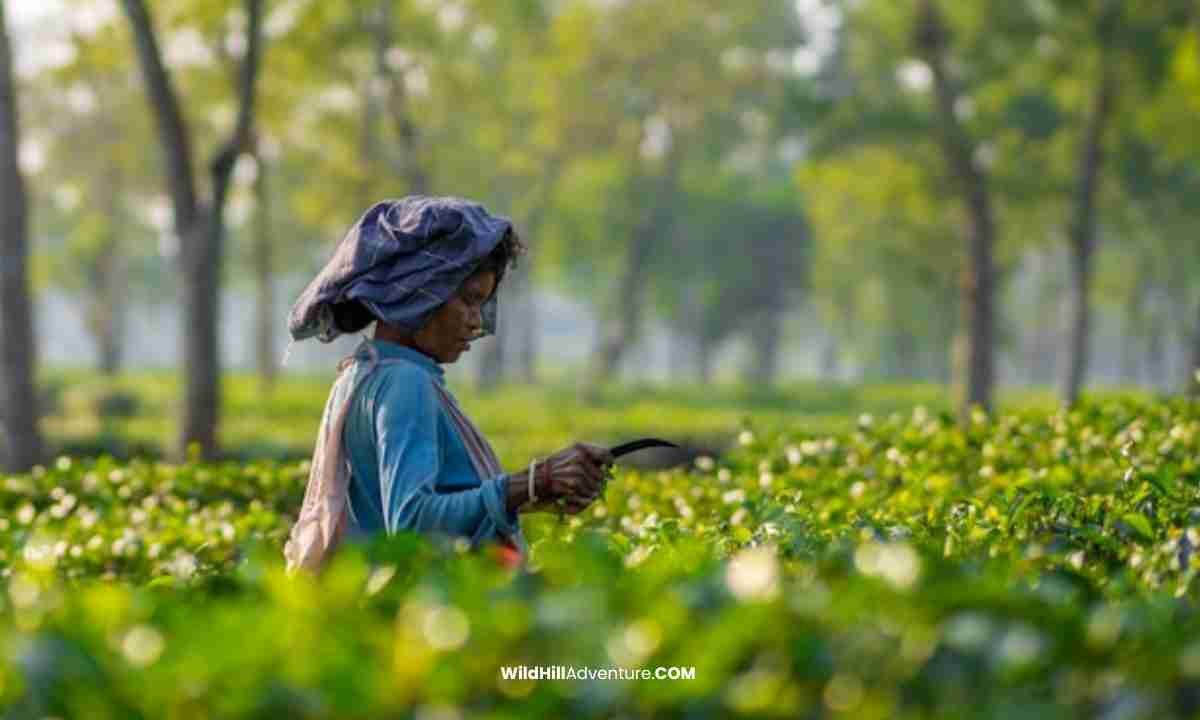
Today we temporarily leave Nagaland and enter Assam.
Drive from Kohima towards Jorhat, one of Assam’s major tea-growing regions.
The scenery changes dramatically.
Mountain roads gradually give way to the plains and tea country.
If timing and availability permit, stop at a tea garden.
Jorhat is also a good place to enjoy Assamese cuisine before heading back into the more remote areas of Nagaland.
Have dinner and rest because tomorrow is another long journey.
Overnight: Jorhat
Day 8: Jorhat to Longwa
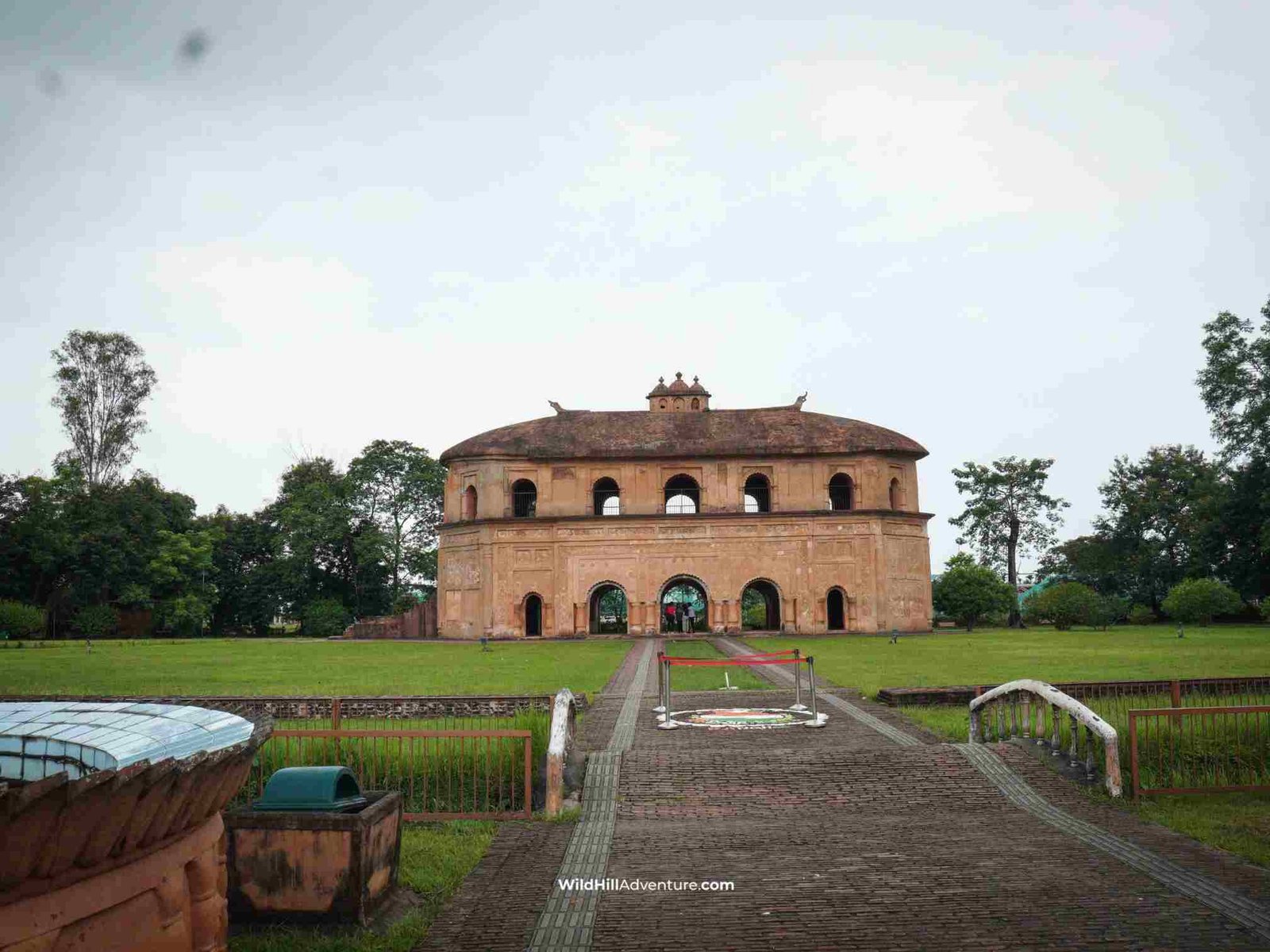
Today we travel towards one of the most fascinating parts of the entire itinerary:
Longwa Village.
Leave Jorhat early and drive towards Mon district.
As you approach Konyak country, the scenery and architecture begin changing again.
This is a long journey, so we include stops for food, tea and photography depending on time.
Reach Longwa or Mon by evening.
If you’re staying in Longwa, don’t expect luxury.
That’s not why you come here.
You come to experience life in one of India’s most fascinating border regions.
Overnight: Longwa or Mon
Day 9: Exploring Longwa Village
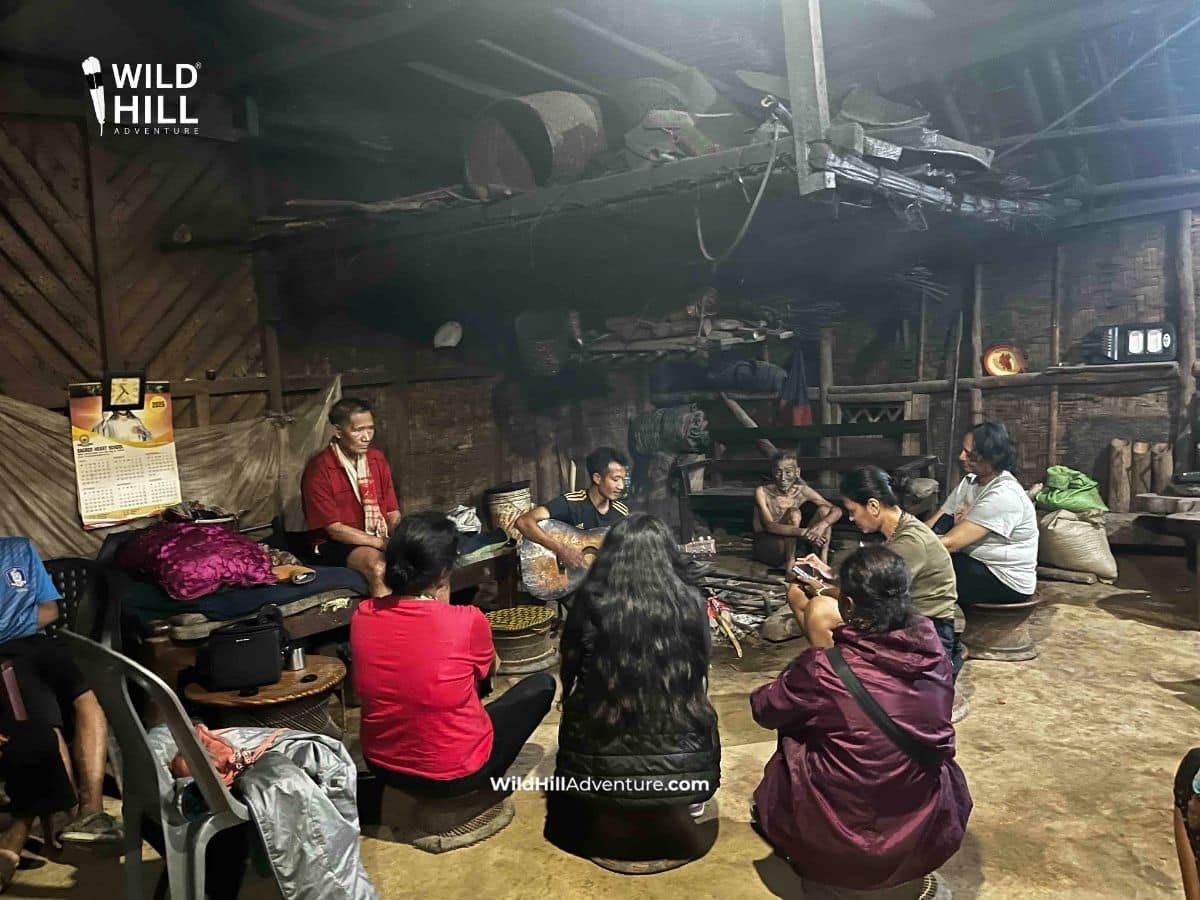
Longwa deserves more than a rushed photo stop.
Spend the day exploring the village with a local guide.
Visit the Angh’s House
The Angh, commonly described to visitors as the village king, holds an important traditional position within the community.
His large traditional house is one of Longwa’s best-known landmarks.
Longwa sits directly along the India-Myanmar border, making its geography particularly unusual.
India-Myanmar Border
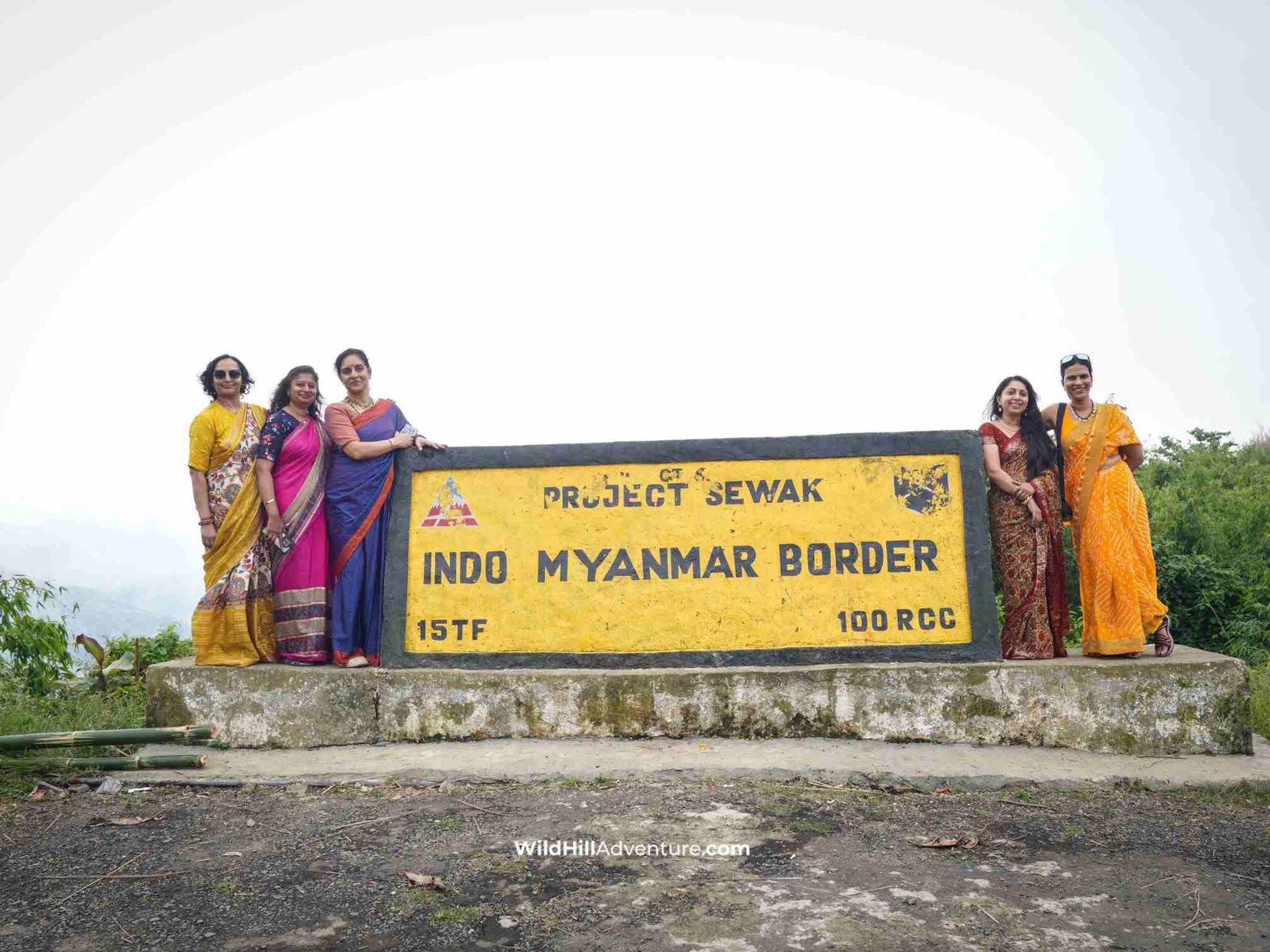
One of the most photographed experiences here is standing near the international boundary.
You’ll find border markers indicating India and Myanmar.
But the experience becomes much more meaningful when a local guide explains how families, villages and traditional relationships existed across this landscape long before modern international borders.
Border Viewpoints
Depending on access, weather and local conditions, explore viewpoints around the border area.
Watching sunset over these hills is a very different experience from the busy tourist viewpoints found elsewhere in India.
Overnight: Longwa
Day 10: Understanding Konyak Heritage
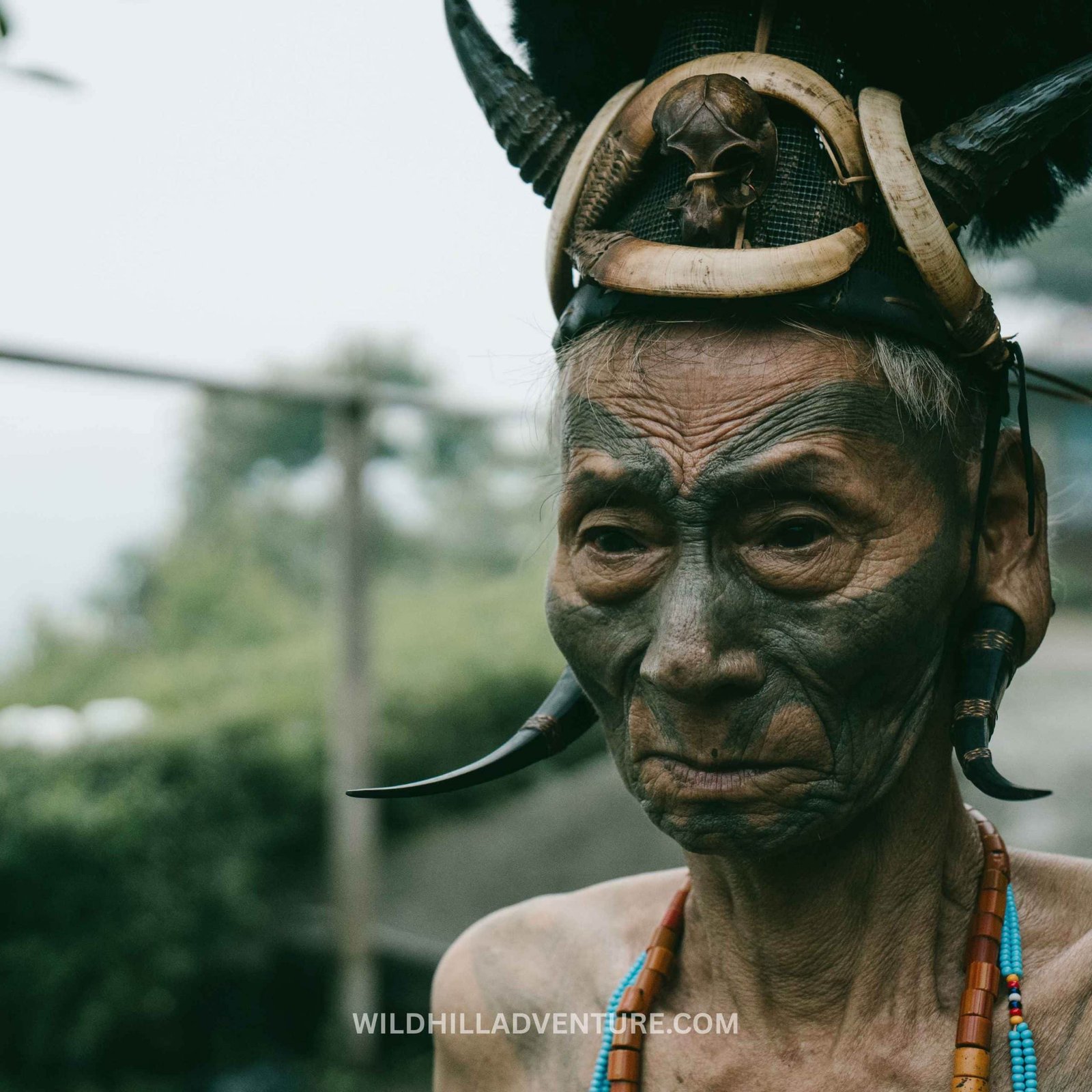
If Day 9 introduces you to Longwa geographically, Day 10 is about its people.
The Konyaks are one of Nagaland’s best-known Naga communities.
Their history includes a former headhunting tradition, but reducing Konyak culture to the word “headhunter” misses most of the story.
Their architecture, craftsmanship, oral histories, traditional institutions and changing way of life are equally important.
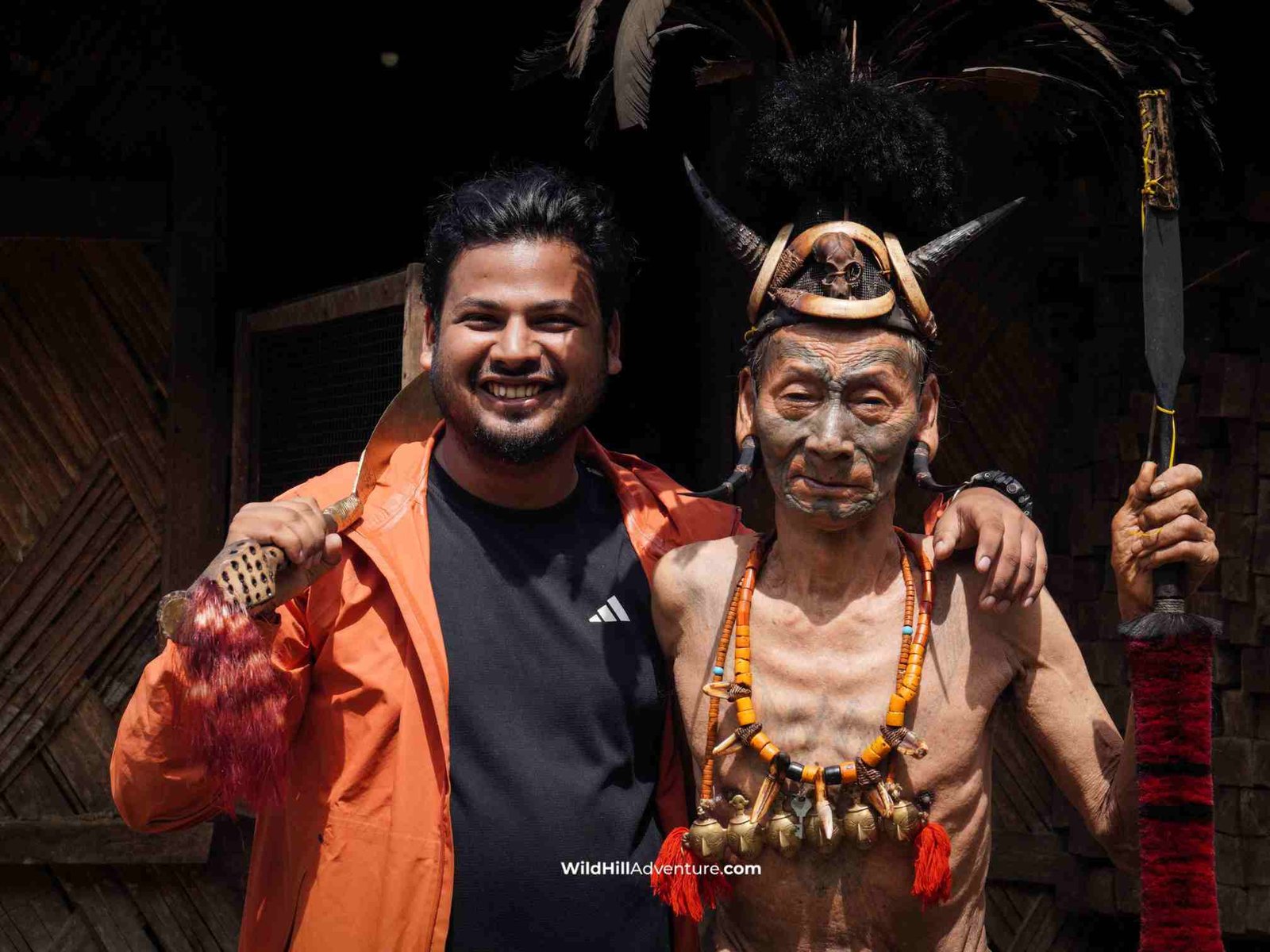
Meet Elderly Tattooed Konyak Men
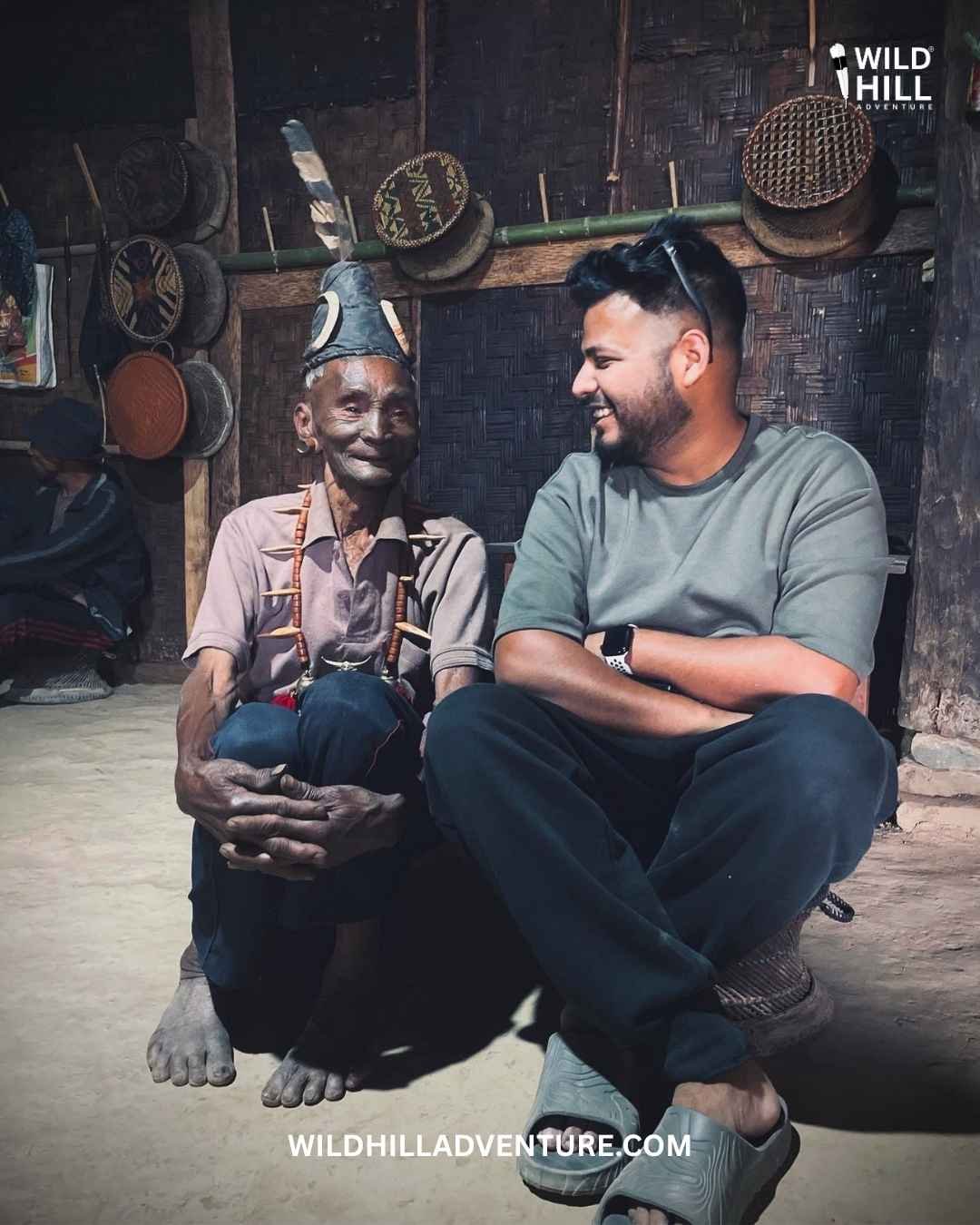
A small number of elderly Konyak men from the generation associated with the former warrior tradition remain.
Some carry distinctive facial and body tattoos.
If you have the opportunity to meet them, treat it as a human interaction rather than a tourist photo opportunity.
Talk.
Listen.
Ask permission before photographing anyone.
These elders aren’t museum exhibits.
They are people whose memories provide a rare connection to a rapidly disappearing period of Konyak history.
Visit Traditional Morungs
Traditional morungs historically played an important role in village social and cultural life.
You’ll also encounter impressive log drums and traditional structures.
Meet Local Craftspeople
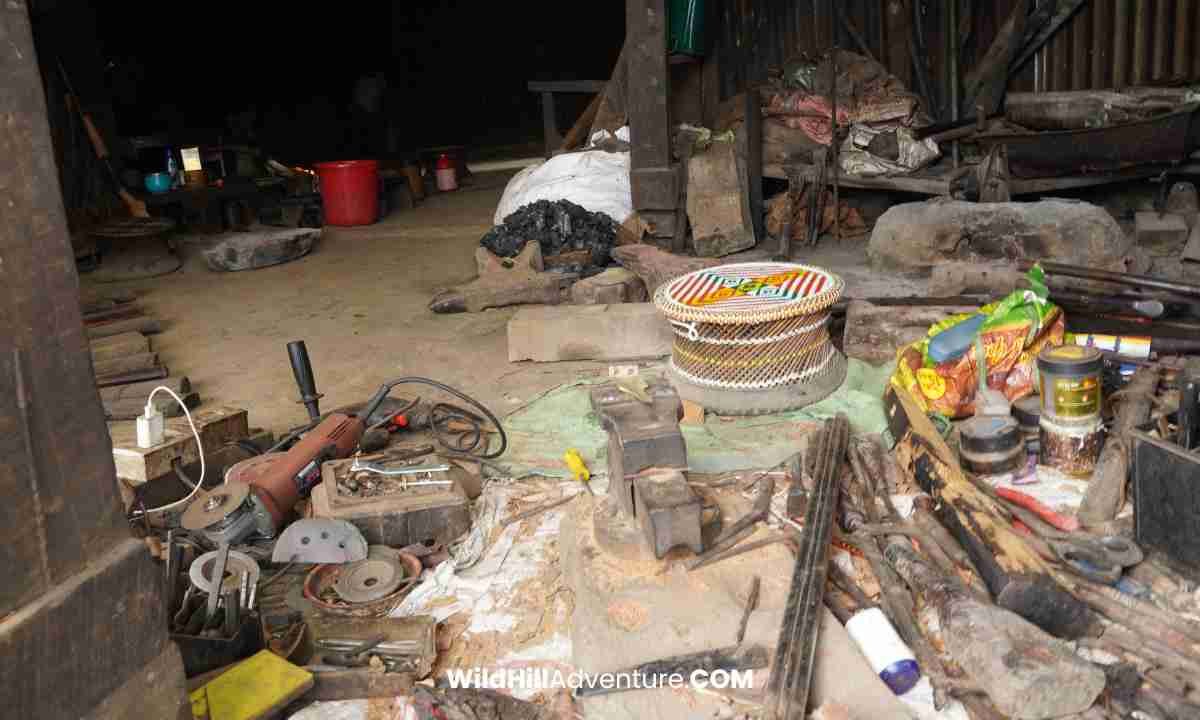
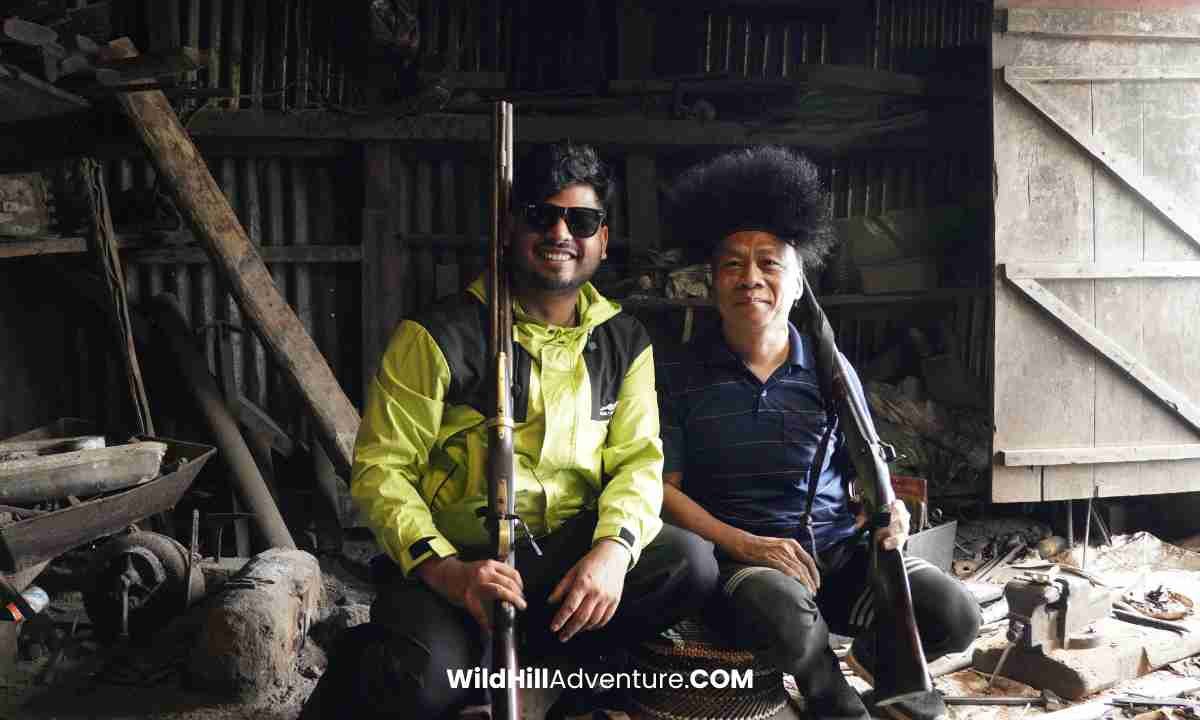
Depending on availability, you may encounter artisans working with wood, beads, metal and other traditional crafts.
Rather than buying generic souvenirs elsewhere, Longwa is a good place to support locally made products directly.
Spend your final evening in Longwa slowly.
By this point in the journey, you’ll probably realise that the conversations were as important as the landscapes.
Overnight: Longwa
Day 11: Longwa to Dibrugarh
Leave Longwa early and begin the drive towards Dibrugarh in Assam.
After days of remote villages and mountain roads, returning to Assam’s tea country feels like entering another world.
If time and availability allow, visit a tea estate and learn more about Assam’s tea heritage.
Spend your final evening relaxing in Dibrugarh.
Overnight: Dibrugarh
Day 12: Departure from Dibrugarh
After breakfast, check out from your hotel.
Transfer to Dibrugarh Airport or railway station for your onward journey.
The trip ends here.
But Nagaland has a habit of staying with you.
Best Time for an Offbeat Nagaland Trip
Nagaland can offer very different experiences depending on when you travel.
October to April
This is generally the easiest period for travelling around Nagaland. Conditions are usually better for road journeys, village exploration and outdoor activities.
December
December brings the Hornbill Festival and significantly more visitors around Kohima and Kisama.
If you want to combine this itinerary with Hornbill Festival, accommodation and transportation should be arranged well in advance.
Monsoon
Monsoon Nagaland is spectacularly green.
Clouds, waterfalls, rice fields and mist-covered mountains completely transform the landscape.
But there is a trade-off.
Road conditions can become challenging, trekking trails become slippery, and delays caused by rain or landslides are possible.
If you travel during monsoon, keep your itinerary flexible.
How Difficult Is This Nagaland Itinerary?
This isn’t an extreme expedition, but it is also not a conventional luxury holiday.
You should be comfortable with:
- Long road journeys
- Mountain roads
- Basic homestays
- Limited connectivity
- Changing weather
- Trekking
- Early departures
- Simple local meals
- Occasional itinerary changes
Dzukou Valley is the most physically demanding part of the trip.
Most other destinations involve road journeys and moderate walking.
Accommodation on an Offbeat Nagaland Trip
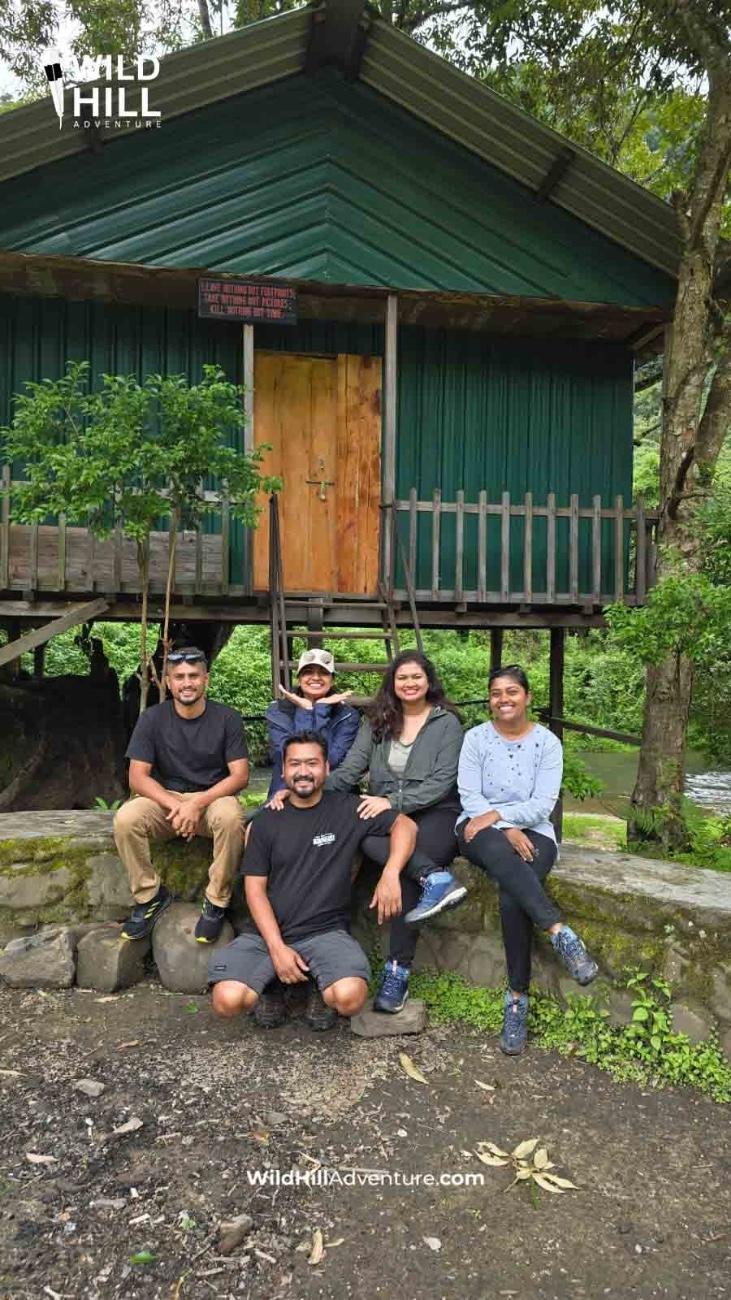
One mistake travellers make is expecting the same accommodation standard everywhere.
Kohima, Jorhat and Dibrugarh offer conventional hotels.
Remote areas are different.
In villages such as Longwa and around Kapamodzü, homestays are part of the experience.
Facilities may be basic.
But what you gain is access to places where conventional tourism infrastructure barely exists.
You eat locally prepared food, interact with hosts and experience village life much more closely.
For Dzukou Valley, camping and basic trekking accommodation are the practical options.
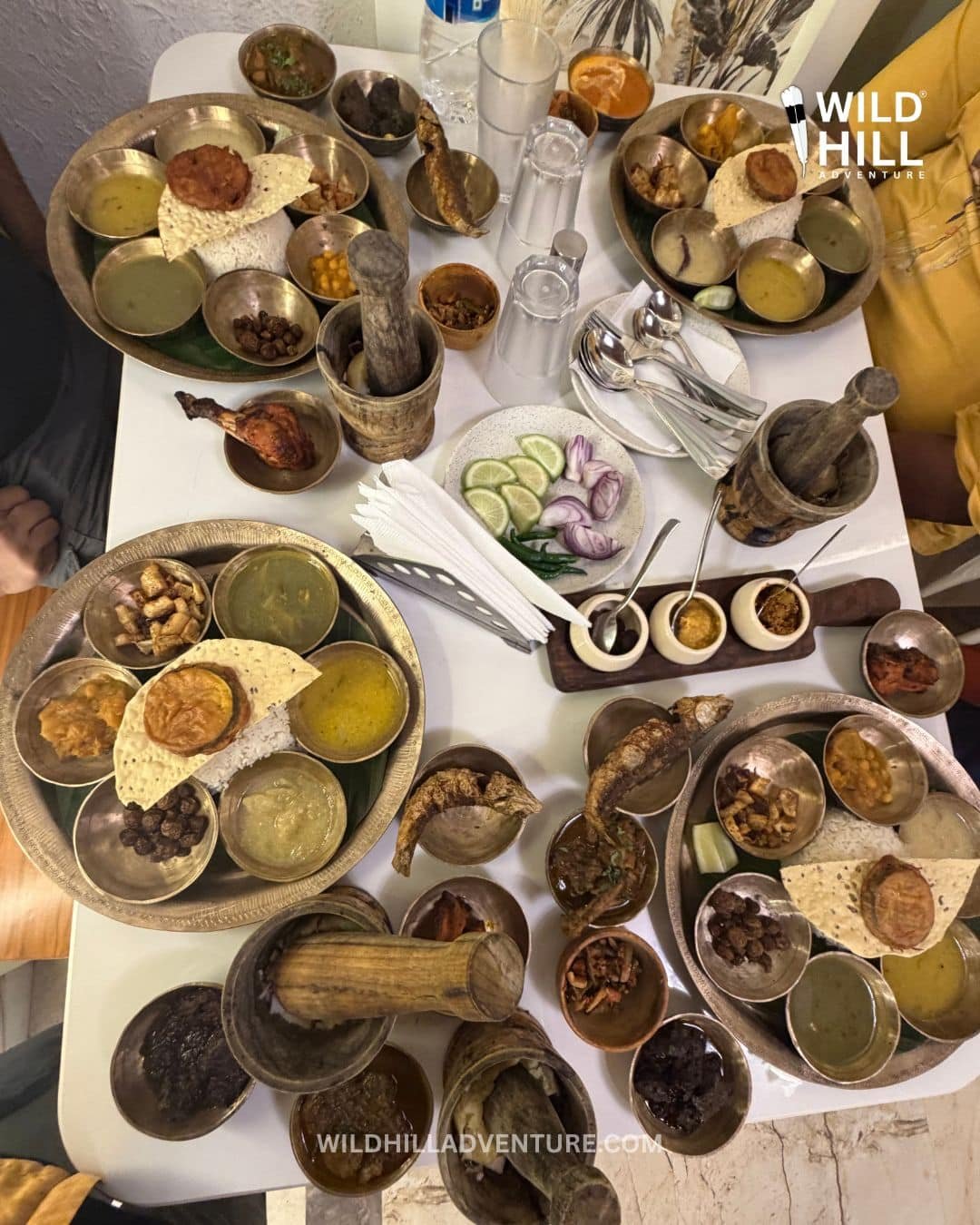
Food During the Trip
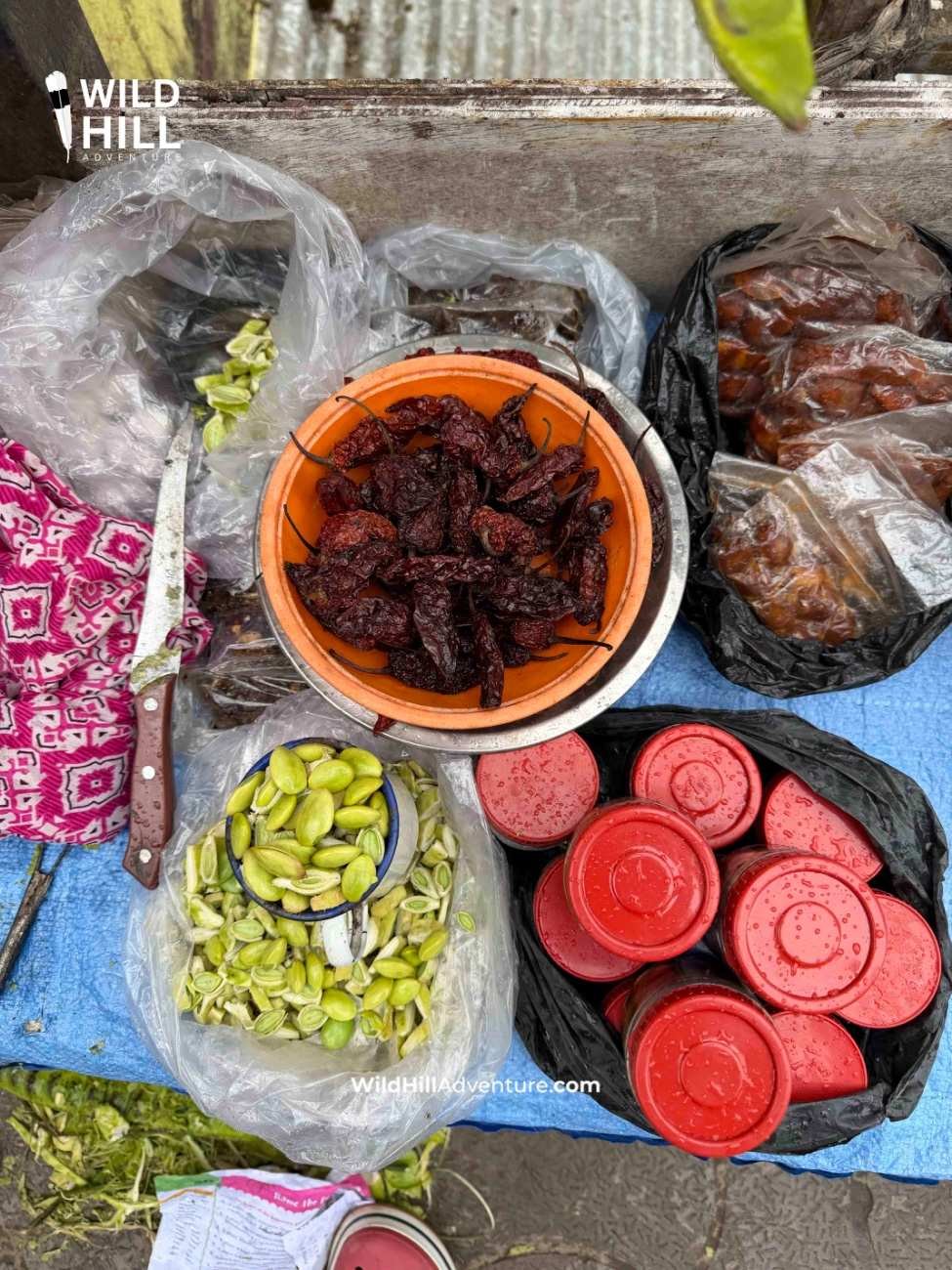
Food is a major part of travelling through Nagaland.
If you’re comfortable experimenting, try local dishes wherever possible.
Expect rice, vegetables, meat preparations, bamboo shoot, fermented ingredients and seasonal produce depending on the region and household.
Vegetarian travellers can also travel through Nagaland, but advance planning is important, particularly in remote villages.
Simple vegetarian meals such as rice, dal and locally available vegetables can often be arranged when hosts are informed beforehand.
Mobile Network and Internet
Do not build an offbeat Nagaland itinerary around constant connectivity.
Kohima generally offers much better connectivity than remote villages.
As you travel deeper into rural Nagaland, network quality can become inconsistent or disappear altogether.
Longwa, Dzüleke, trekking routes and other remote areas shouldn’t be treated like work-from-anywhere destinations unless you’ve confirmed connectivity beforehand.
And sometimes, no network becomes part of the experience.
You talk more.
You observe more.
You stop checking your phone every few minutes.
Nagaland Permits
Travellers should check the latest Inner Line Permit (ILP) and other applicable entry requirements before travelling.
Requirements can differ depending on nationality and can change over time.
If your itinerary crosses into neighbouring states or sensitive border areas, additional requirements may apply.
We recommend confirming the latest rules shortly before departure rather than relying on an old travel blog.
Responsible Travel in Nagaland
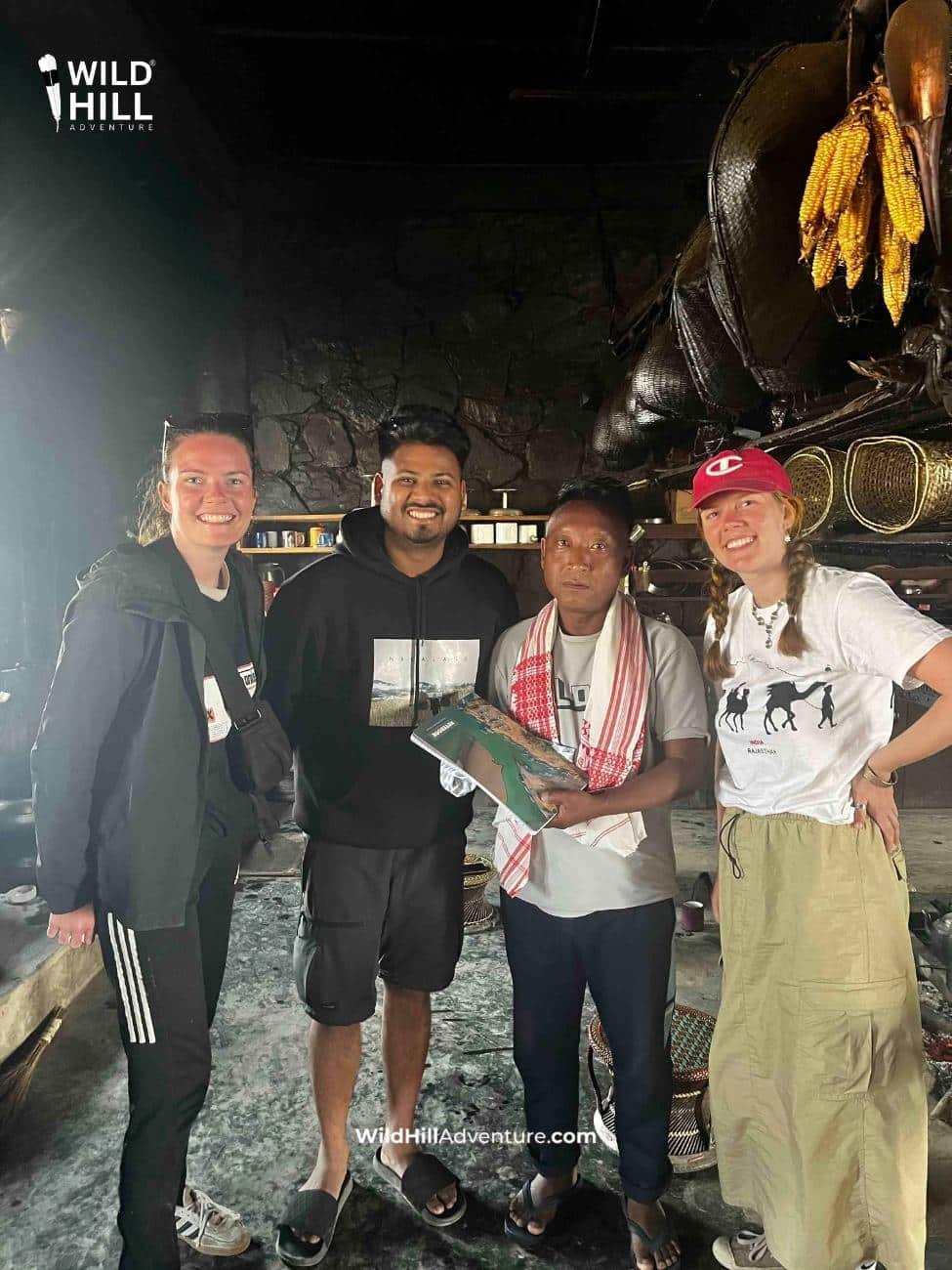
This becomes particularly important when visiting smaller villages.
Nagaland isn’t an open-air museum.
People live in these communities.
Always ask before photographing people, particularly elders.
Respect local customs.
Avoid entering private homes or traditional spaces without permission.
Don’t fly drones without checking local restrictions and community expectations.
Keep noise low.
Avoid leaving plastic and rubbish behind.
And when buying handicrafts or hiring guides, spending directly within the local community helps ensure tourism benefits the people who actually live there.
Why Travel Offbeat Nagaland With Wild Hill Adventure?
Offbeat Nagaland is difficult to experience properly through a standard sightseeing itinerary.
Knowing a destination exists is easy.
Knowing the right route, reliable local stays, guides, road conditions, food arrangements and realistic travel times comes from repeatedly operating there.
Wild Hill Adventure is based in Northeast India, and Nagaland has been one of the regions we have explored and operated in for years.
Our approach is simple:
We don’t want to show you only tourist attractions.
We want you to experience the place.
That can mean eating inside a homestay, stopping at an unexpected viewpoint, walking through a village with a local guide, camping in Dzukou or spending an evening listening to stories in Longwa.
For our offbeat Nagaland trips, we can arrange the complete journey including:
- Private transportation
- Hotels and local homestays
- Dzukou Valley trekking
- Local trekking guides
- Camping arrangements
- Village guides
- Meals as per itinerary
- Permit assistance
- Longwa experiences
- Local coordination throughout the journey
And because we operate locally, we can sometimes add lesser-known places when weather, road conditions and time permit.
Important Advice From Our Experience
If you’re following this itinerary, start early every day.
Distances on a map can be misleading in Nagaland.
A relatively short distance can take much longer because of mountain roads, weather, road construction or stops along the way.
Don’t try to spend three hours at every viewpoint.
The journey itself will constantly give you reasons to stop.
Keep some flexibility.
That’s particularly important for Kapamodzü, Dzukou and Longwa.
Is This the Best Offbeat Nagaland Itinerary?
There isn’t one perfect Nagaland itinerary for everyone.
But if you have around 12 days and want to experience more than the standard tourist circuit, this route gives you an unusually diverse introduction to the region.
You get:
Kohima for history and contemporary Naga life.
Dzüleke for slow village life and nature.
Khonoma for Angami culture, terraced landscapes and conservation.
Dzukou Valley for trekking and camping.
Pfutsero and Kapamodzü for high-altitude landscapes and a much less-touristed side of Nagaland.
Longwa for Konyak culture and the extraordinary India-Myanmar border region.
And Assam at both ends gives you tea country and easier flight connections.
That’s why I wouldn’t describe this simply as a Nagaland sightseeing package.
It is a journey across landscapes, communities and cultures.
Contact us
- Phone/WhatsApp: +91 9365476611 +91 91811 29331/+91 91814 99331
- Instagram: @wildhilladventure
- Email: wildhilladventure@gmail.com
- Website: www.wildhilladventure.com
FAQs About Offbeat Nagaland Travel
1. What are the best offbeat places to visit in Nagaland?
Some of the best offbeat places in Nagaland include Dzüleke, Khonoma, Dzukou Valley, Pfutsero, Kapamodzü Peak, Longwa and the remote villages of Mon district. These places offer a mix of tribal culture, trekking, landscapes, village life and local experiences.
2. How many days are enough for an offbeat Nagaland trip?
For a proper offbeat Nagaland trip, 10 to 12 days is ideal. A 12-day itinerary allows you to explore Kohima, Khonoma, Dzüleke, Dzukou Valley, Pfutsero, Kapamodzü, Mon and Longwa without making the entire journey feel rushed.
3. What is the best time to visit Nagaland?
October to April is generally the most convenient period for travelling around Nagaland. December is particularly popular because of the Hornbill Festival. Monsoon offers spectacular greenery and clouds, but roads and trekking trails can become challenging.
4. Is Nagaland safe for tourists?
Nagaland is generally welcoming to tourists. As with any remote destination, travellers should respect local customs, use experienced local drivers and guides, follow current travel advisories, and check conditions before visiting remote or border areas.
5. Do tourists need an Inner Line Permit for Nagaland?
Indian travellers should check the current Nagaland Inner Line Permit (ILP) requirements before travelling. Foreign nationals should separately check the latest entry and registration rules applicable to them. Regulations can change, so verify them shortly before your trip.
6. How can I reach Nagaland?
For this itinerary, you can arrive in Guwahati and depart from Dibrugarh, creating a convenient one-way circuit. Dimapur also provides an important gateway to Nagaland, depending on your route and flight availability.
7. Is Dzüleke Village worth visiting?
Yes. Dzüleke is one of the best villages near Kohima for travellers looking for peace, nature and local life. The village is surrounded by forests, fields and a river and is also known for its honesty shops. An overnight stay is even better if you have enough time.
8. Can Khonoma and Dzüleke be covered in one day?
Yes. Khonoma and Dzüleke can be combined as a day trip from Kohima. However, start early because both villages deserve time for guided walks, photography and interaction with the local community.
9. Is a guide required for Khonoma Village?
A local guide is highly recommended for Khonoma. Walking around without context means missing much of what makes the village special. A guide can explain Angami history, village traditions, conservation practices, architecture and terraced cultivation.
10. How difficult is the Dzukou Valley trek?
The Dzukou Valley trek is moderately challenging, particularly during the initial climb. Fitness level, weather and trail conditions make a significant difference. The Viswema route generally involves an initial ascent followed by a longer walk through the hills and valley.
11. Can beginners trek to Dzukou Valley?
Yes, reasonably fit beginners can trek to Dzukou Valley with adequate preparation. Wear proper trekking shoes, travel light and trek with an experienced local guide. During monsoon, wet and slippery trails can make the trek considerably harder.
12. Can I camp overnight in Dzukou Valley?
Yes. Camping is one of the most memorable ways to experience Dzukou Valley. Wild Hill Adventure can arrange trekking guides, camping, food, entry arrangements, transportation and other trekking support as part of the trip.
13. What is Kapamodzü Peak famous for?
Kapamodzü Peak is known for its high-altitude scenery, rolling mountains, clouds and panoramic views. It remains considerably less crowded than many of Nagaland’s better-known destinations, making it particularly suitable for an offbeat itinerary.
14. Is Pfutsero worth visiting?
Yes. Pfutsero offers a completely different side of Nagaland, with a cooler highland environment, agricultural landscapes and beautiful countryside. It can be combined with Kapamodzü Peak as part of a longer trip from Kohima.
15. Why is Longwa Village famous?
Longwa is famous for its Konyak Naga heritage and location along the India-Myanmar border. Visitors come to explore the Angh’s house, border area, traditional village architecture and Konyak culture.
16. Can tourists meet the tattooed Konyak elders in Longwa?
Depending on availability and local arrangements, travellers may have opportunities to meet elderly Konyak people carrying traditional tattoos associated with an earlier generation. These interactions should always be conducted respectfully, ideally through a local guide, and permission should be obtained before taking photographs.
17. Is one day enough for Longwa Village?
We recommend at least two nights in Longwa if your schedule allows. One day can cover major sights, but an additional day provides more time for village walks, cultural interactions, traditional morungs, crafts and understanding Konyak life beyond the border photographs.
18. What kind of accommodation is available in offbeat Nagaland?
Kohima has conventional hotels and homestays, while remote destinations generally offer basic local homestays, guesthouses or camping. Don’t expect luxury everywhere. In offbeat Nagaland, staying with local families is often an important part of the experience.
19. Is vegetarian food available during an offbeat Nagaland trip?
Yes, but it requires planning. Vegetarian options are easier to arrange in larger towns. In remote villages and homestays, inform your host or tour operator beforehand. Simple meals such as rice, dal and locally grown vegetables can often be arranged.
20. Can Wild Hill Adventure arrange a complete offbeat Nagaland tour?
Yes. Wild Hill Adventure can arrange the complete journey, including private transportation, accommodation, local guides, village experiences, Dzukou trekking and camping, Longwa exploration and permit assistance. Since we are a Northeast-based team and regularly travel these routes, we can also include lesser-known stops when time, weather, road conditions and local circumstances allow.
Why Choose Wild Hill Adventure for Your Nagaland & Northeast India Trip?
Travelling through Nagaland and Northeast India is very different from travelling through India’s more established tourist circuits.
Here, road conditions can change, permits matter, accommodation in remote villages is limited, mobile networks can disappear, and some of the most memorable places are not always easy to find online.
This is where travelling with a local Northeast-based company like Wild Hill Adventure makes a real difference.
We Are From Northeast India
Northeast India is not simply another destination we sell.
It is our home.
Our team has spent years travelling through Nagaland, Assam, Meghalaya, Arunachal Pradesh and other parts of the Northeast. We personally explore many of the routes and destinations before recommending them to our guests.
That local experience helps us understand not only where to go, but how to travel these regions properly.
We Personally Explore the Routes
Many of the places we include in our itineraries are places we have personally travelled to.
In Nagaland, our journeys have taken us through places such as:
- Kohima
- Kisama Heritage Village
- Dzukou Valley
- Khonoma
- Dzüleke
- Jakhama
- Pfutsero
- Kapamodzü Peak
- Longwa
- Mon and the Konyak region
Our Kapamodzü journey is a good example. We have experienced the route ourselves during monsoon, driven through difficult road sections, stayed near the peak, eaten there and explored the Pfutsero side.
That experience helps when we’re planning the same journey for a guest.
Strong Experience With the Hornbill Festival
Nagaland becomes extremely busy during the Hornbill Festival.
Accommodation fills up, Kohima traffic becomes heavy and first-time visitors can easily underestimate travel times.
Because we regularly operate Hornbill Festival trips, we can help guests plan the festival together with destinations such as Dzukou Valley, Khonoma, Dzüleke, Kapamodzü, Pfutsero and Longwa rather than simply visiting Kisama and returning home.
Local Guides and Community Connections
For us, a Nagaland trip shouldn’t only mean taking photographs from viewpoints.
We work with local people wherever possible.
Local guides can help travelers understand village history, tribal traditions, food, agriculture and everyday life in a way that simply driving through a destination cannot.
It also means tourism money reaches the communities travelers have actually come to experience.
We Take You Beyond the Usual Tourist Circuit
If you only search online, most Nagaland itineraries look similar:
Dimapur → Kohima → Hornbill Festival → Dzukou → Return.
There is much more to Nagaland.
Depending on your interests and available time, we can build journeys around remote villages, trekking, culture, food, photography, mountains and border regions.
Sometimes the best experience isn’t even a famous attraction.
It could be stopping beside a beautiful rice field, eating a local thali at Mao, visiting a vegetable farm near Pfutsero or spending an evening talking with people you have just met.
Those are the experiences we personally enjoy, and they influence the way we design our trips.
We Understand Northeast India’s Road Conditions
Google Maps doesn’t always tell the complete story here.
A road showing three hours can take considerably longer because of rain, landslides, construction or poor road conditions.
We plan journeys with these realities in mind.
For remote destinations and monsoon journeys, we can also select vehicles according to the route and current conditions rather than simply choosing the cheapest available option.
Permits Become Easier
Several parts of Northeast India have permit requirements.
Depending on the destination and nationality, travelers may need documents such as an Inner Line Permit (ILP) or other permissions.
Our team helps guests understand and arrange the applicable permits for their itinerary so they don’t have to figure everything out after arriving.
Private and Customized Northeast Trips
Not everyone wants the same holiday.
Some travelers want photography.
Some want trekking.
Some want culture and villages.
Others want comfortable hotels and relaxed sightseeing.
Instead of forcing every traveler into exactly the same itinerary, we can customize trips according to your time, interests, comfort level and budget.
On-Ground Support Matters Here
This is probably one of the most underestimated advantages of booking with a local operator.
When everything goes according to plan, arranging a trip looks easy.
The difference becomes obvious when something changes.
Bad weather, a road closure, delayed arrival, vehicle problem or accommodation issue can require quick local coordination.
Having a team operating within Northeast India gives travelers someone on the ground who can help find alternatives.
We Prefer Real Experiences Over Checklist Tourism
Our philosophy is simple:
Don’t just see Northeast India. Experience it.
Eat local food.
Stay in villages when appropriate.
Talk to people.
Walk through local markets.
Learn why communities protect their forests.
Understand the stories behind tribal traditions.
And sometimes, forget the itinerary for an hour and simply sit looking at the mountains.
That’s the kind of Northeast India we want our guests to experience.
Travel Northeast India With People Who Call It Home
Whether you’re planning the Hornbill Festival, Dzukou Valley Trek, Kapamodzü Peak, Longwa Village, an offbeat Nagaland road trip, or a longer journey combining Nagaland with Assam and other Northeast states, Wild Hill Adventure can help you design the trip around what you actually want to experience.
We don’t want to show you Northeast India only as a collection of tourist attractions.
We want to show you the Northeast that we know, travel through and love ourselves.
Contact us
- Phone/WhatsApp: +91 9365476611
- Instagram: @wildhilladventure
- Email: wildhilladventure@gmail.com
- Website: www.wildhilladventure.com

0 Comment