

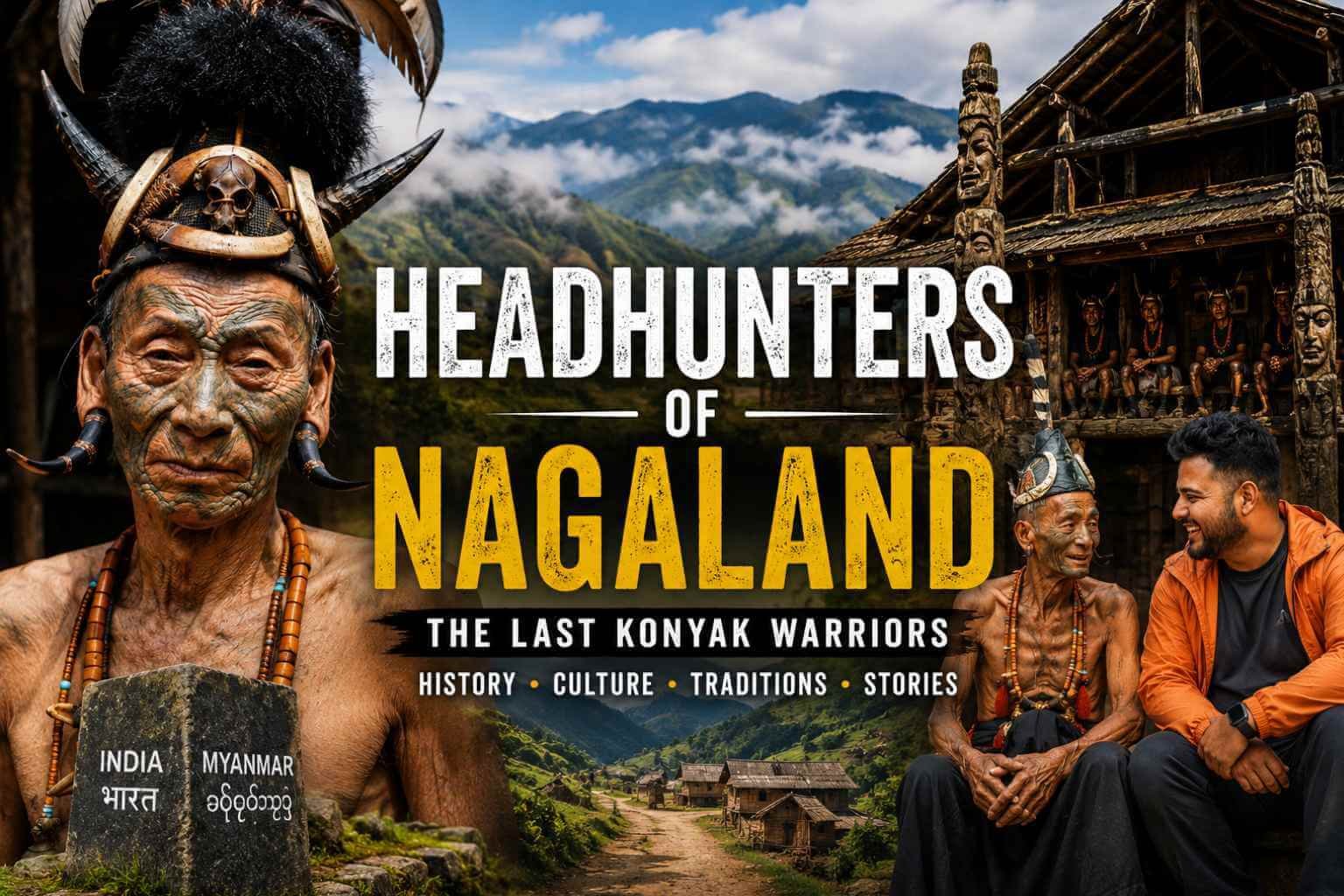

Headhunters of Nagaland
History, Konyak Warriors, Tattoos & Where to Meet the Last Generation
Nagaland is known for misty mountains, colourful festivals, tribal villages and some of the richest indigenous cultures in India. But there is one part of Nagaland’s history that has fascinated travellers, photographers, historians and documentary filmmakers for decades: the Headhunters of Nagaland.
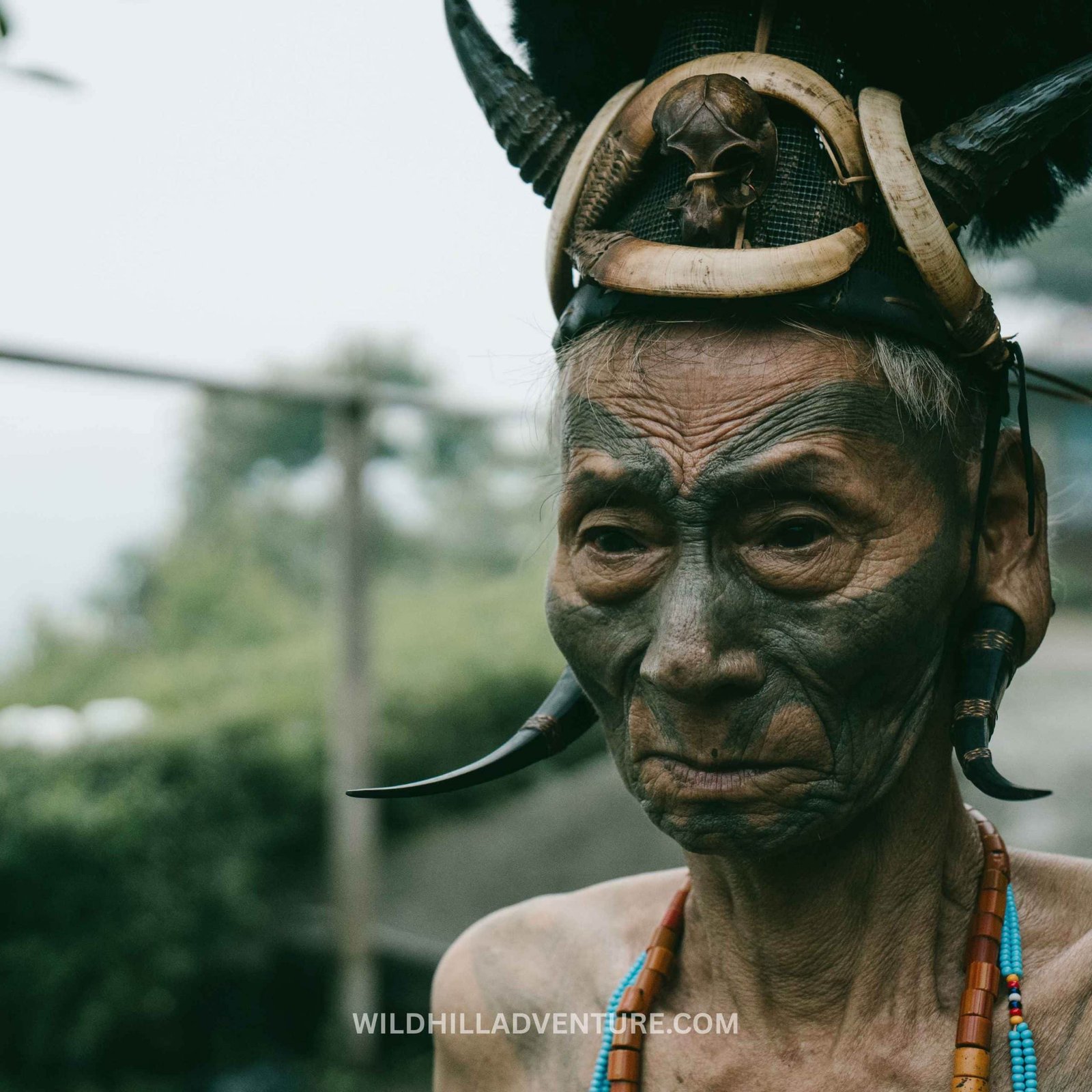
Even after travelling through Nagaland for years, meeting elderly Konyak men is an experience that feels different every time.
You are not simply meeting someone dressed in traditional clothing for tourists.
Some of the elderly tattooed men you encounter in the villages of Mon district belong to a generation that grew up when the old warrior traditions were still part of living memory.
Their tattoos, ornaments, stories, houses and villages connect today’s Nagaland with a world that has almost completely disappeared.
For travellers who want to understand this history, the best place to go is Mon district in northern Nagaland, particularly Konyak villages such as Longwa and other settlements across the district.
The Konyaks are one of Nagaland’s major Naga communities. Nagaland government material documents their historic headhunting traditions, distinctive tattoos, craftsmanship and traditional Angh or chieftainship system.
This guide explains the history of the Headhunters of Nagaland, what headhunting actually meant, why warriors were tattooed, where travellers can meet members of the last tattooed generation, and how to experience Konyak culture respectfully.
Who Are the Headhunters of Nagaland?
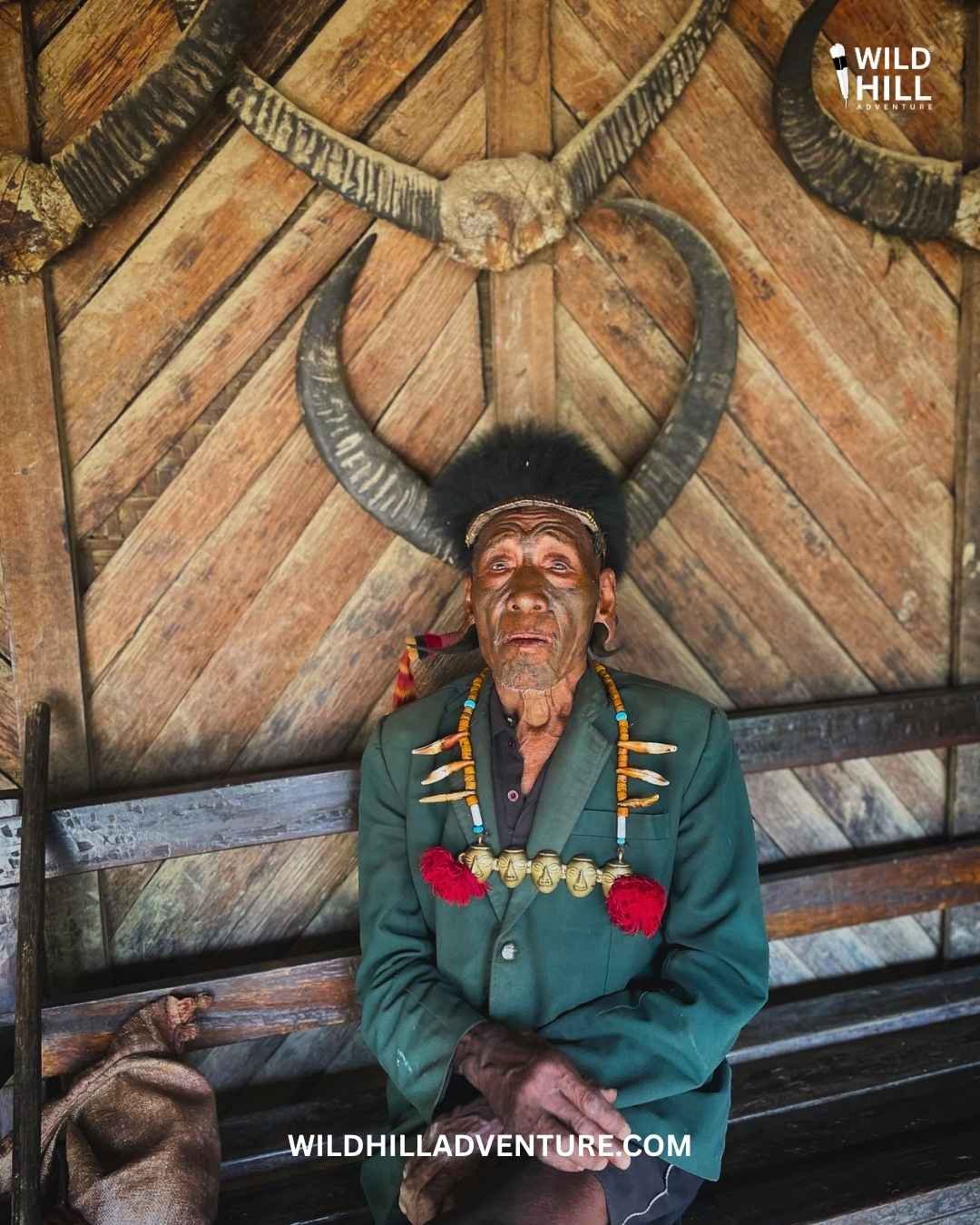
The phrase “Headhunters of Nagaland” is commonly used today when talking about the historical warrior traditions of several Naga communities.
However, travellers should understand an important distinction.
Nagaland is not one single tribe or culture.
The state has numerous distinct Naga communities, each with its own language, customs, clothing, festivals and history. Nagaland’s official state profile itself emphasizes this cultural diversity.
When travellers today talk about visiting the “last headhunters of Nagaland,” they are usually referring specifically to the elderly tattooed Konyak men of Mon district.
The Konyaks historically lived across an area that today extends through parts of Nagaland, Arunachal Pradesh and neighbouring Myanmar.
Before modern political borders, Christianity, roads and modern administration transformed the region, villages functioned as strong social and political units.
Warrior traditions formed an important part of this older world.
Today, that chapter is history.
But some elderly people who grew up close to that era are still alive, which is what makes travelling through Konyak country particularly meaningful.
Where Did the Headhunters of Nagaland Live?
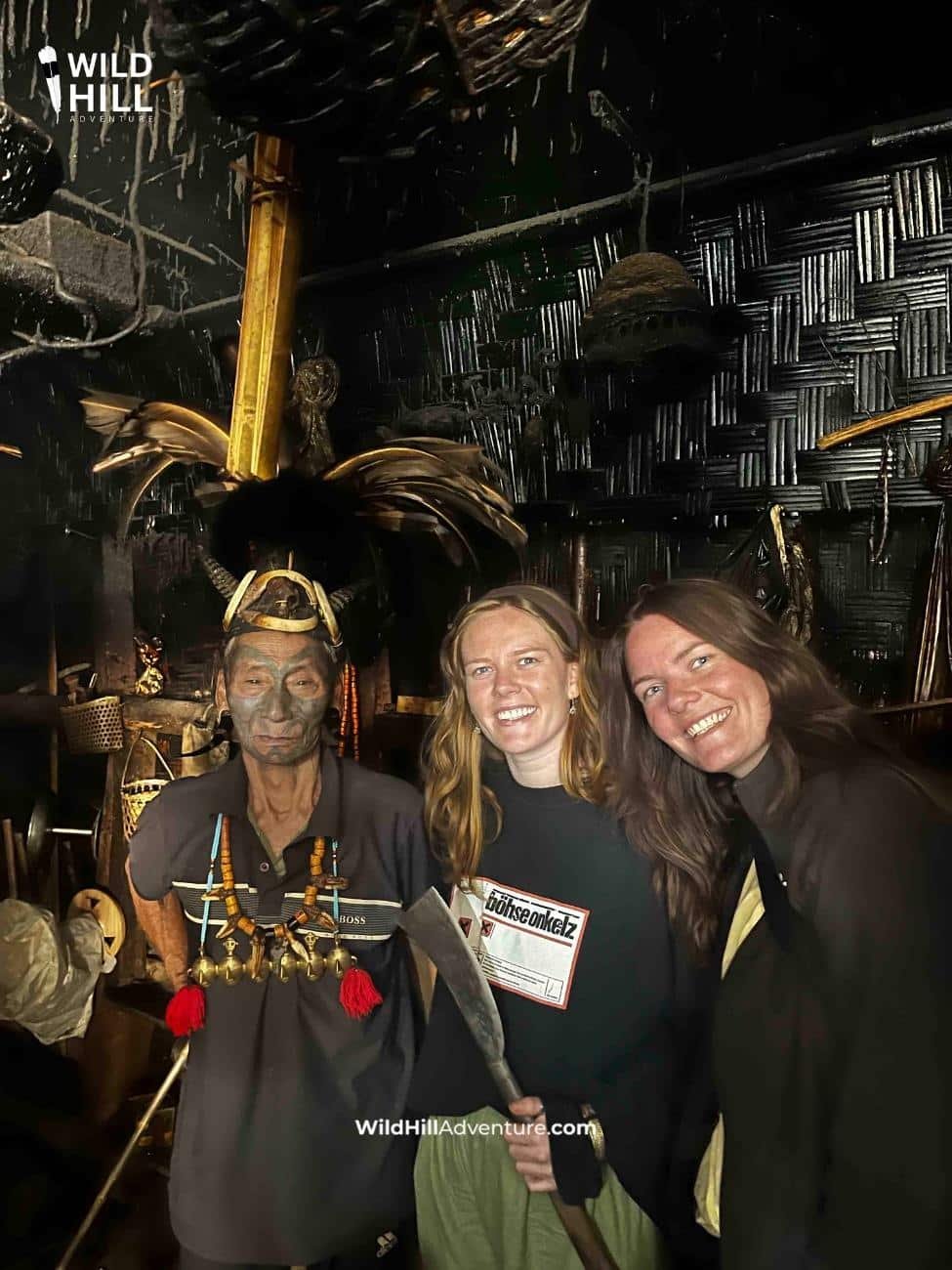
If your main reason for travelling is to understand Konyak warrior culture, Mon district should be your focus.
Mon lies in northeastern Nagaland close to Myanmar.
Some of the important Konyak areas travellers explore include:
- Longwa
- Mon
- Shangnyu
- Chui
- Hongphoi
- Chen areas
- nearby traditional Konyak settlements
Different villages offer very different experiences.
Some are easier to reach. Others require considerably more planning.
And this is one of the biggest mistakes travellers make.
They think visiting Mon town alone means they have experienced Konyak culture.
It doesn’t.
The real experience begins when you leave the town, travel through the hills and spend time inside the villages.
Why Did the Nagas Practice Headhunting?
This is where the story needs to be told carefully.
Reducing headhunting to violence gives visitors an incomplete picture.
Historically, warfare was connected to much larger systems of village defence, status, identity, territory and warrior prestige.
Government descriptions of traditional cultural performances still preserve memories of these warrior systems, including songs and practices associated historically with warfare and headhunting. (DIPR Nagaland)
For the communities involved, these practices existed inside a completely different social environment from today’s world.
Villages were independent and territorial conflicts occurred.
A warrior’s achievements could become connected with his standing in the community.
But these customs cannot be understood properly through modern sensationalism.
The better question is not simply:
“Why did they take heads?”
The more interesting questions are:
What did being a warrior mean?
How was courage recognised?
How did villages protect themselves?
How were young men educated?
What role did the Morung play?
What did particular tattoos signify?
How did the arrival of Christianity and modern administration transform these communities?
Those conversations reveal far more about Konyak history.
The Famous Facial Tattoos of Konyak Warriors
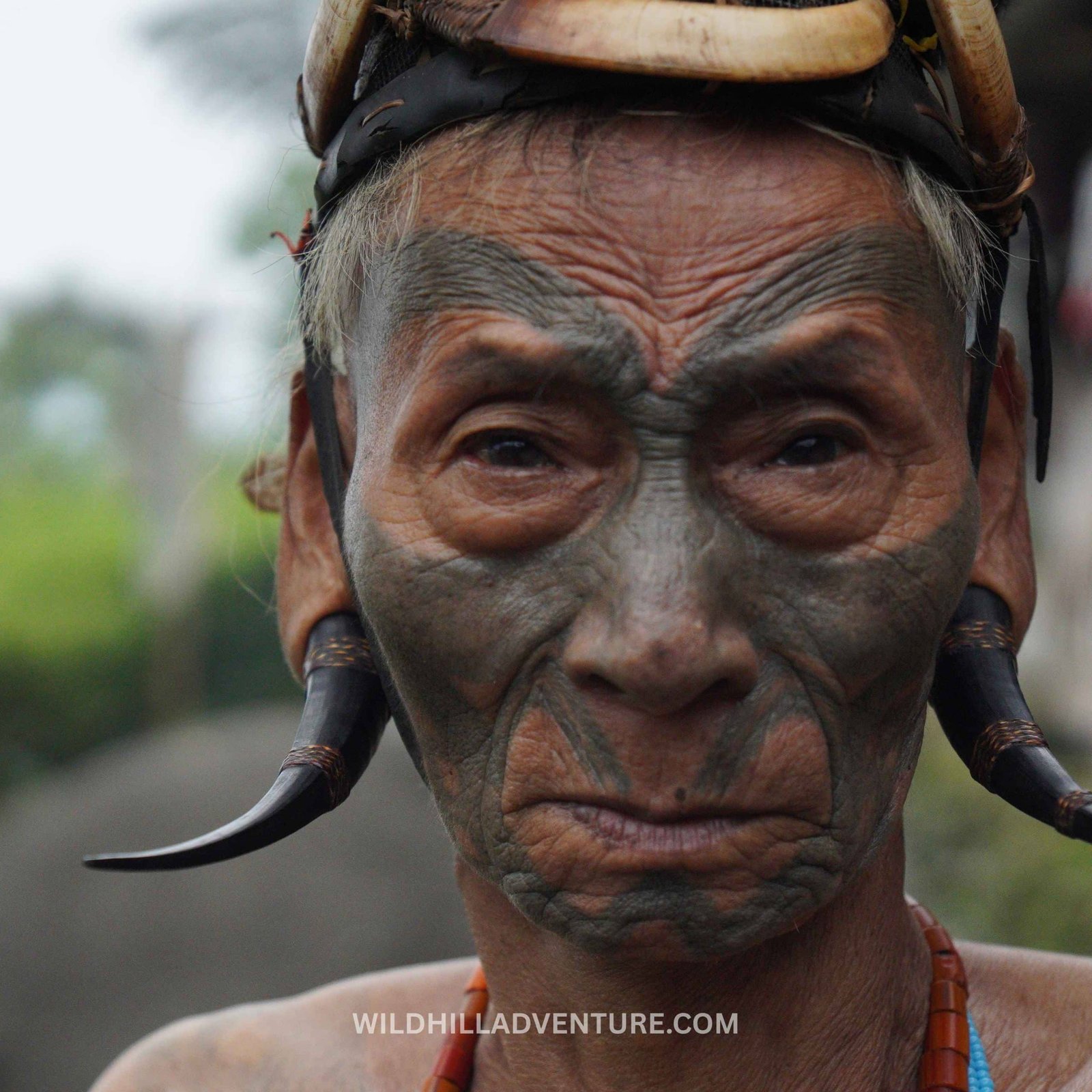
One of the first things travellers notice when meeting elderly Konyak men is their extraordinary facial and body tattoos.
These weren’t modern decorative tattoos.
Tattooing was deeply connected with traditional Konyak society.
Official Mon district documentation even describes traditional distinctions between groups associated with different facial tattoo patterns. (NSDMA)
For visitors, however, it is important not to assume that every tattooed elderly Konyak man has exactly the same story.
Different villages had different customs.
The meaning of markings could depend on locality, status, age and historical circumstances.
That is exactly why travelling with someone who understands the village is so valuable.
Instead of looking at an elderly man and thinking,
“I found a headhunter.”
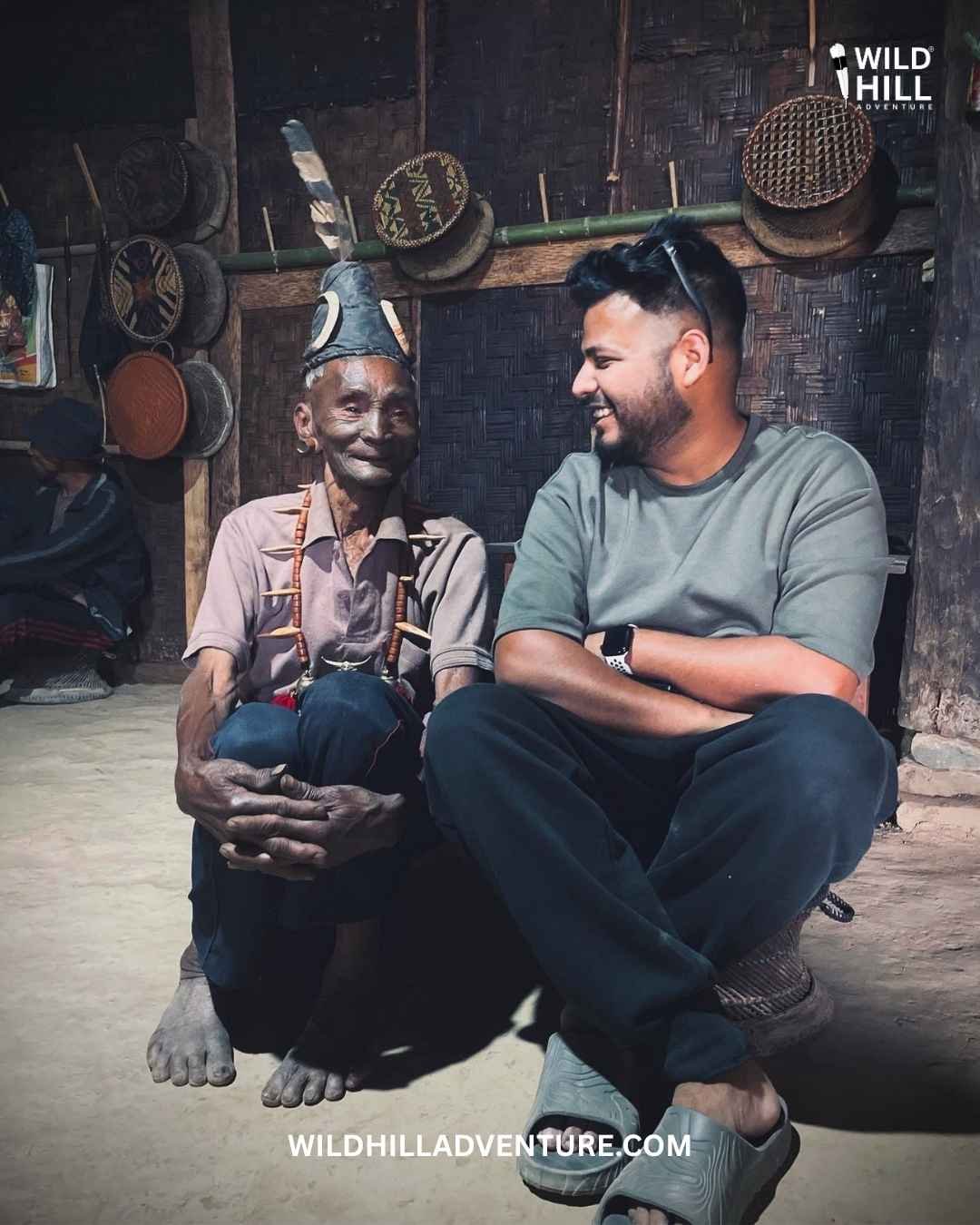
Sit down.
Listen.
Ask about his village.
Ask about his tattoos.
Ask about his youth.
Ask what changed during his lifetime.
Ask about farming.
Ask about festivals.
Ask about his family.
Suddenly the person in front of you becomes much more than a photograph.
The Last Generation of Tattooed Konyak Warriors
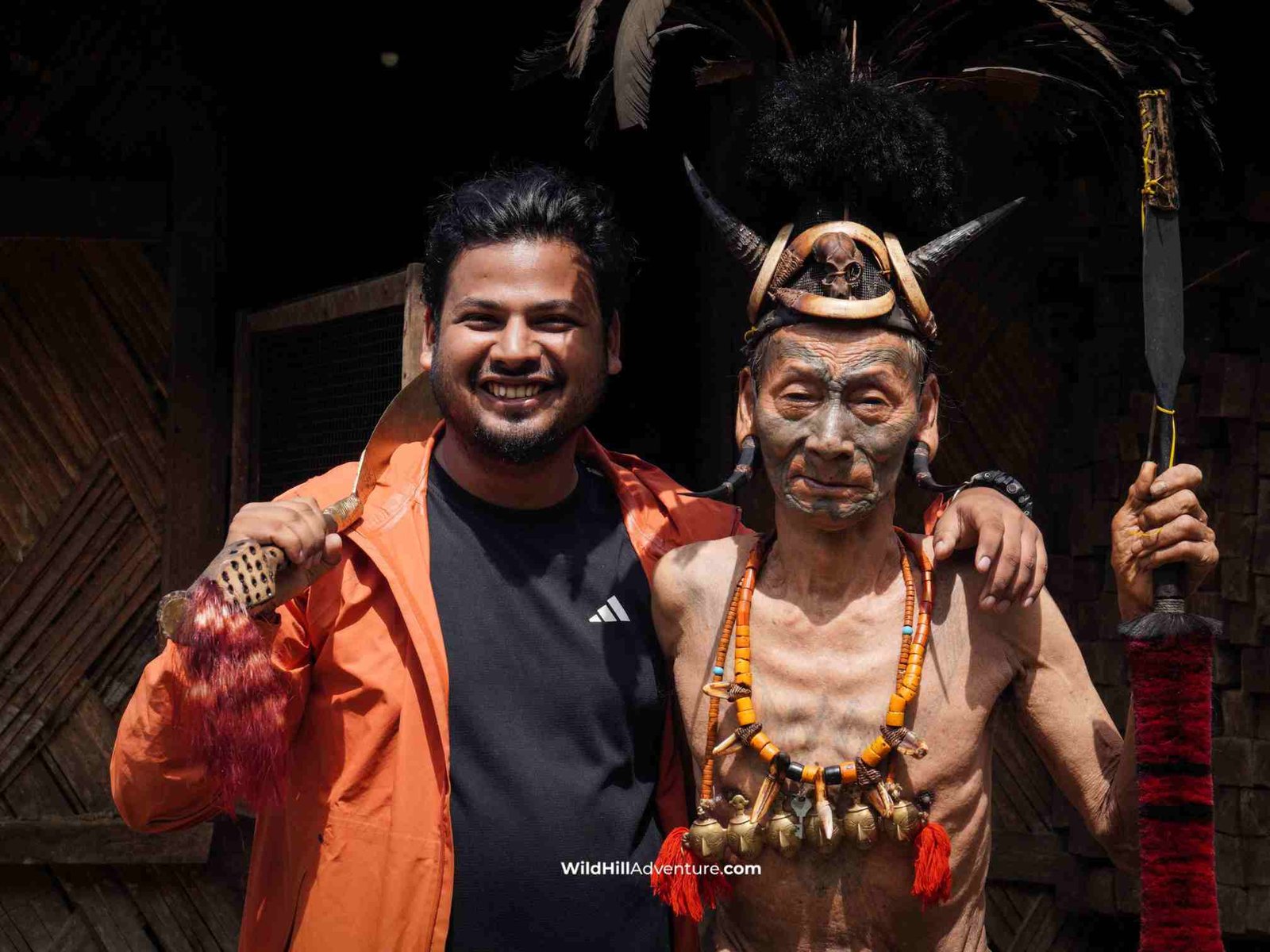
This is what makes travelling to Mon particularly special today.
The generation carrying firsthand memories of the old world is disappearing.
These men are now elderly.
There will come a time when travellers will still be able to visit Konyak villages, see traditional houses, jewellery, festivals and museums, but they will no longer be able to sit beside someone whose lifetime reaches back toward that era.
This makes the experience valuable, but it also creates responsibility.
These elders are people, not tourist attractions.
Never arrive at someone’s house, point a camera at them and start taking photographs.
Introduce yourself.
Talk.
Take permission.
If a local guide recommends an appropriate contribution for someone’s time or photography, respect that arrangement.
A photograph takes one second.
A conversation can stay with you for life.
Longwa Village: One of the Best Places to Understand Konyak Culture
For first-time visitors, Longwa Village is one of the most fascinating places to begin.
Longwa lies in Mon district along the India-Myanmar frontier and is primarily inhabited by Konyaks. Nagaland government tourism material highlights its border location, Konyak culture, distinctive tattoos and traditional crafts. (Chief Minister Nagaland)
But Longwa should not be reduced to its border.
There is much more here.
Spend enough time and you can begin understanding:
traditional homes,
Konyak jewellery,
woodcraft,
metalwork,
agriculture,
village administration,
Morungs,
log drums,
local kitchens,
family life,
stories of older warriors,
and the relationship between Konyak communities across today’s international boundary.
This is why we generally prefer staying in Longwa instead of rushing through it as a short sightseeing stop.
Meet the Angh: The Traditional Konyak Chief
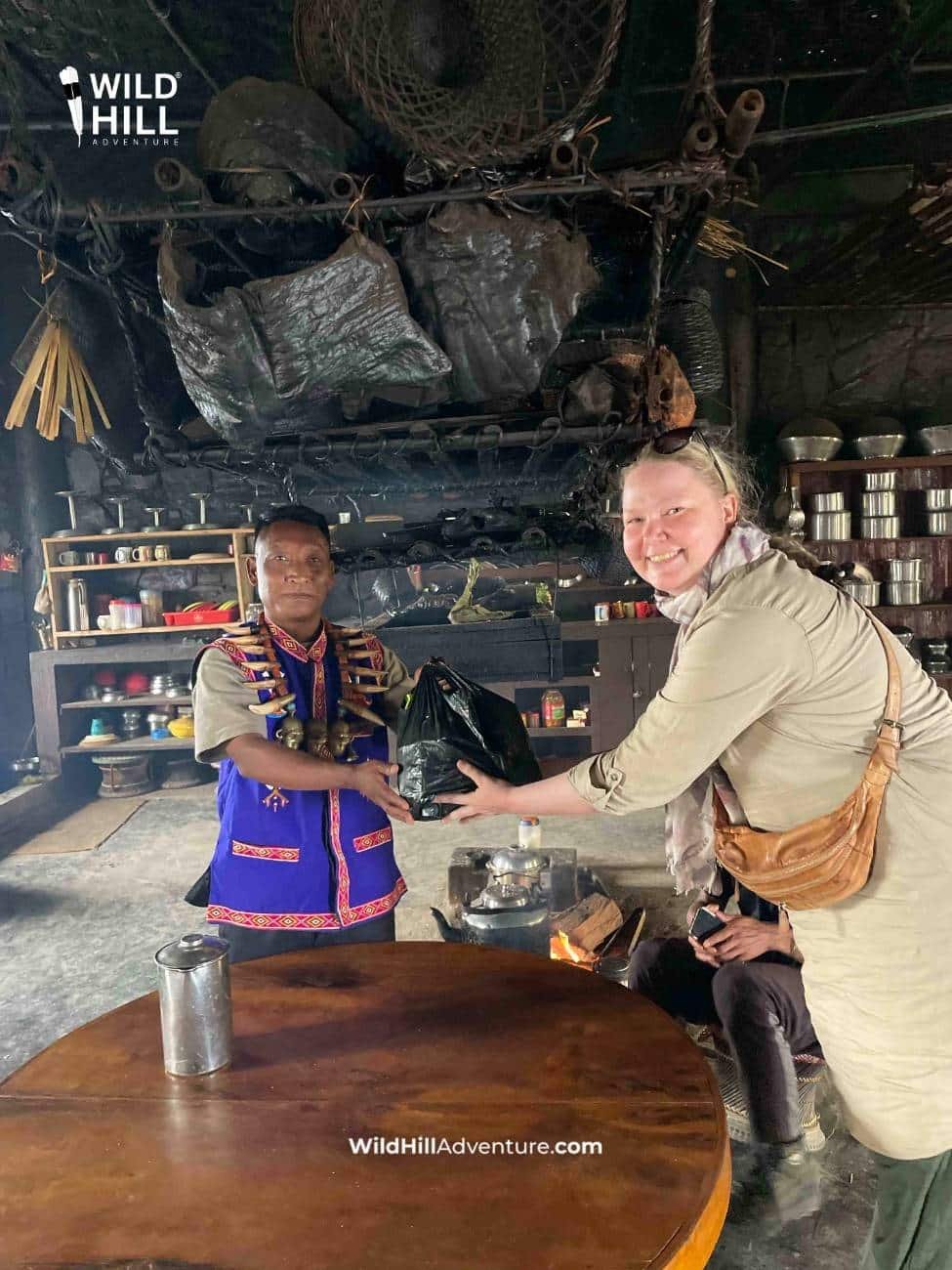
Another fascinating part of Konyak society is the Angh system.
The Angh is often described to visitors as a king or chief.
Traditional Konyak villages developed their own systems of leadership, and several important villages continue to retain the institution culturally.
Government documentation for Mon district lists seven Chief Anghs, including Longwa, and explains that the traditional system extends through relationships between villages, including communities across today’s Myanmar border. (NSDMA)
When visiting Longwa, the Angh’s house is one of the important cultural stops.
But don’t visit it only for the famous border story.
Look at the architecture.
Observe the objects inside.
Ask your guide to explain the chief’s traditional role.
Understand how villages were historically organised.
The experience becomes much richer.
The India-Myanmar Border and Konyak Identity
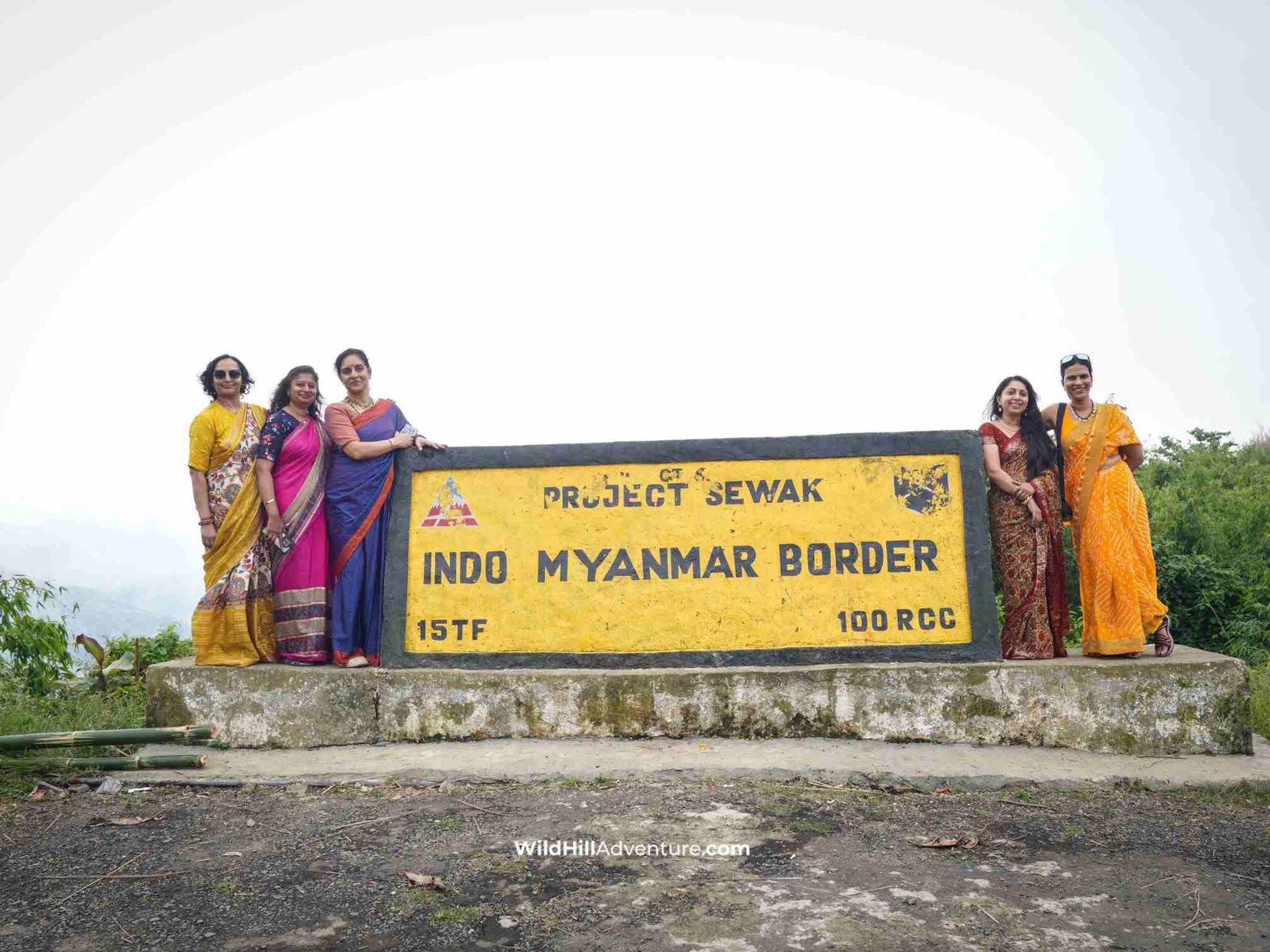
Modern borders are relatively recent compared with the history of the communities living here.
The Konyak cultural landscape extends beyond the political boundary between India and Myanmar.
This makes the region especially fascinating.
Government records describe Konyak villages on both sides maintaining strong customary and traditional relationships. (NSDMA)
When travelling around Longwa, you begin to understand something important:
A political border can divide territory without completely dividing culture.
Families, languages, traditions and histories can extend beyond a line on a map.
For travellers interested in anthropology, history and border cultures, this is one of the most interesting aspects of Longwa.
Of course, international-border rules and security conditions can change, so visitors should follow current local and official instructions rather than assuming unrestricted cross-border movement.
Visit a Traditional Morung
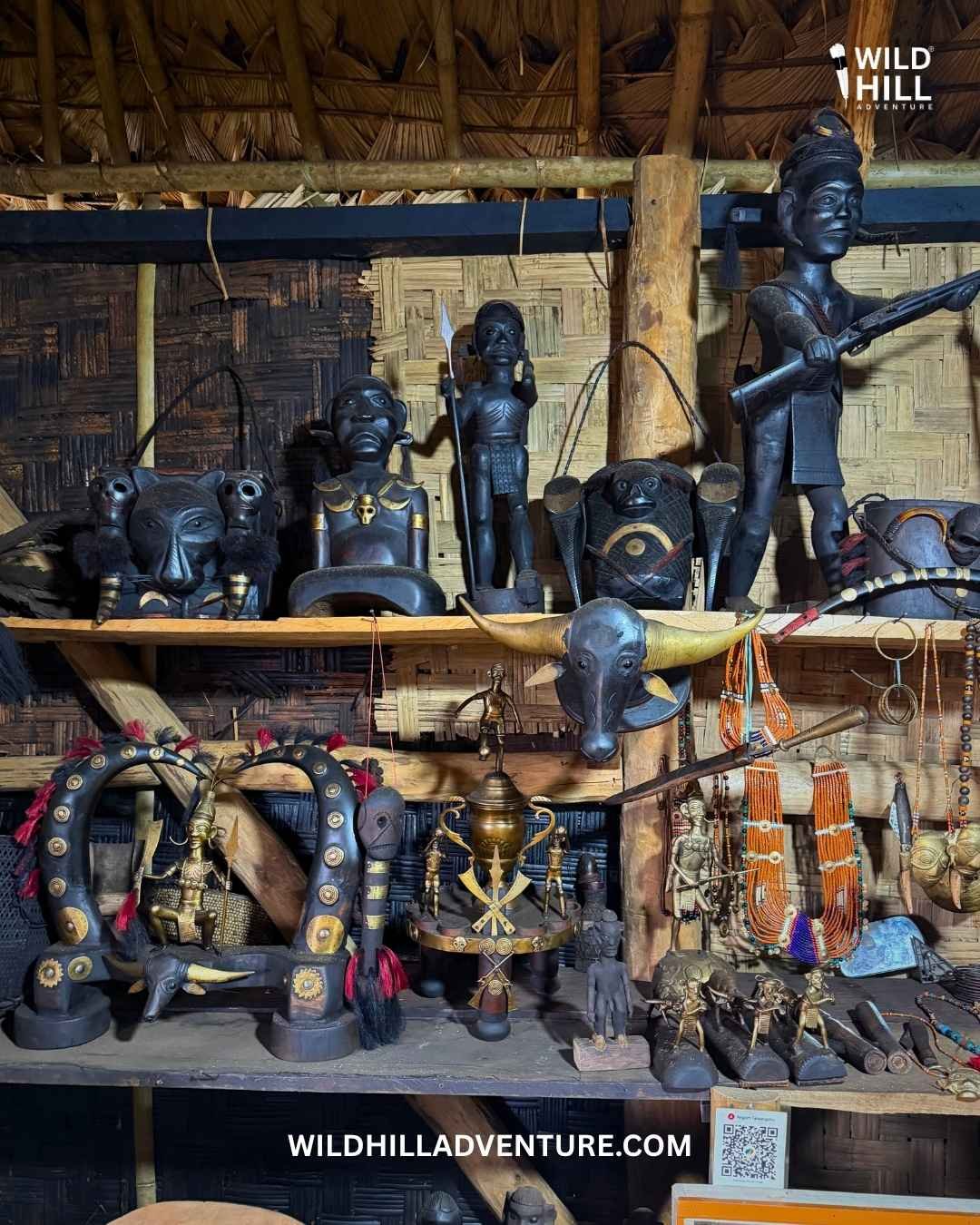
If you really want to understand the Headhunters of Nagaland, learn about the Morung.
Traditionally, a Morung was much more than a building.
It functioned as an important community institution.
Official Mon district documentation describes the Morung as a men’s dormitory and an institution where young people historically learned discipline, village responsibilities and community matters. (NSDMA)
This was where knowledge passed between generations.
Stories were told.
Young men learned community responsibilities.
Village history was preserved.
Social relationships were strengthened.
When visiting a Morung today, don’t simply photograph the building and leave.
Ask:
Who belonged to this Morung?
What did young men learn here?
How old is the structure?
What ceremonies happened here?
Who maintains it today?
That conversation helps bring the building alive.
Listen to the Traditional Log Drum
Many traditional Konyak Morungs contain enormous wooden log drums.
These instruments are visually impressive, but their importance goes beyond appearance.
Historically, log drums were associated with community communication and ceremonial life.
Even today, log-drum beating remains part of major Konyak cultural events. For example, official coverage of Aoleang celebrations in 2026 documented ceremonial log-drum beating in Mon. (DIPR Nagaland)
Standing beside one gives you some sense of how communities communicated before phones, electricity or modern roads connected these hills.
Konyak Jewellery and Warrior Ornaments
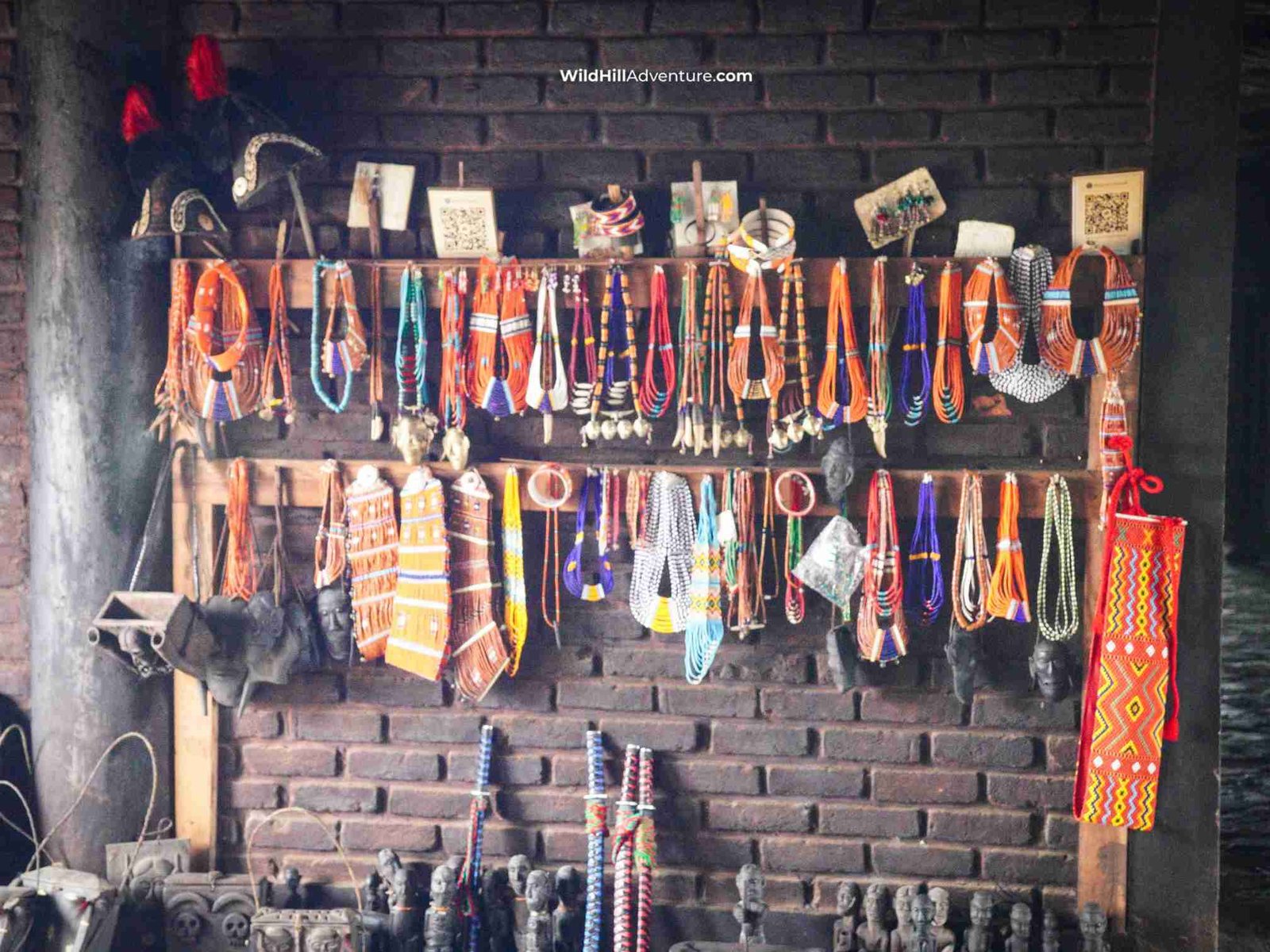
Traditional Konyak jewellery is another extraordinary part of the culture.
Look carefully at old photographs and elderly men and you may notice elaborate combinations of:
beads,
brass,
traditional necklaces,
ear ornaments,
headgear,
and other symbolic decorations.
These weren’t random accessories.
Dress and ornaments communicated identity and cultural meaning.
Nagaland’s official profile notes that tribes can be distinguished through characteristic costumes, jewellery and beadwork. (Nagaland State Portal)
Today, skilled Konyak artisans continue making jewellery, woodwork and other handicrafts.
Buying directly from local craftspeople is one of the best souvenirs you can take home because your money stays within the community.
Traditional Gunsmiths, Brass Workers and Craftspeople
Another fascinating part of Konyak country is craftsmanship.
Depending on the village and local arrangements, travellers may encounter artisans working with wood, metal, jewellery and traditional crafts.
Longwa in particular is officially noted for crafts including traditional guns, machetes, wood carvings, jewellery and woven textiles. (Chief Minister Nagaland)
Government reporting has also specifically recognised Konyak skills in gunsmithing, brass work, indigenous crafts and tattooing. (DIPR Nagaland)
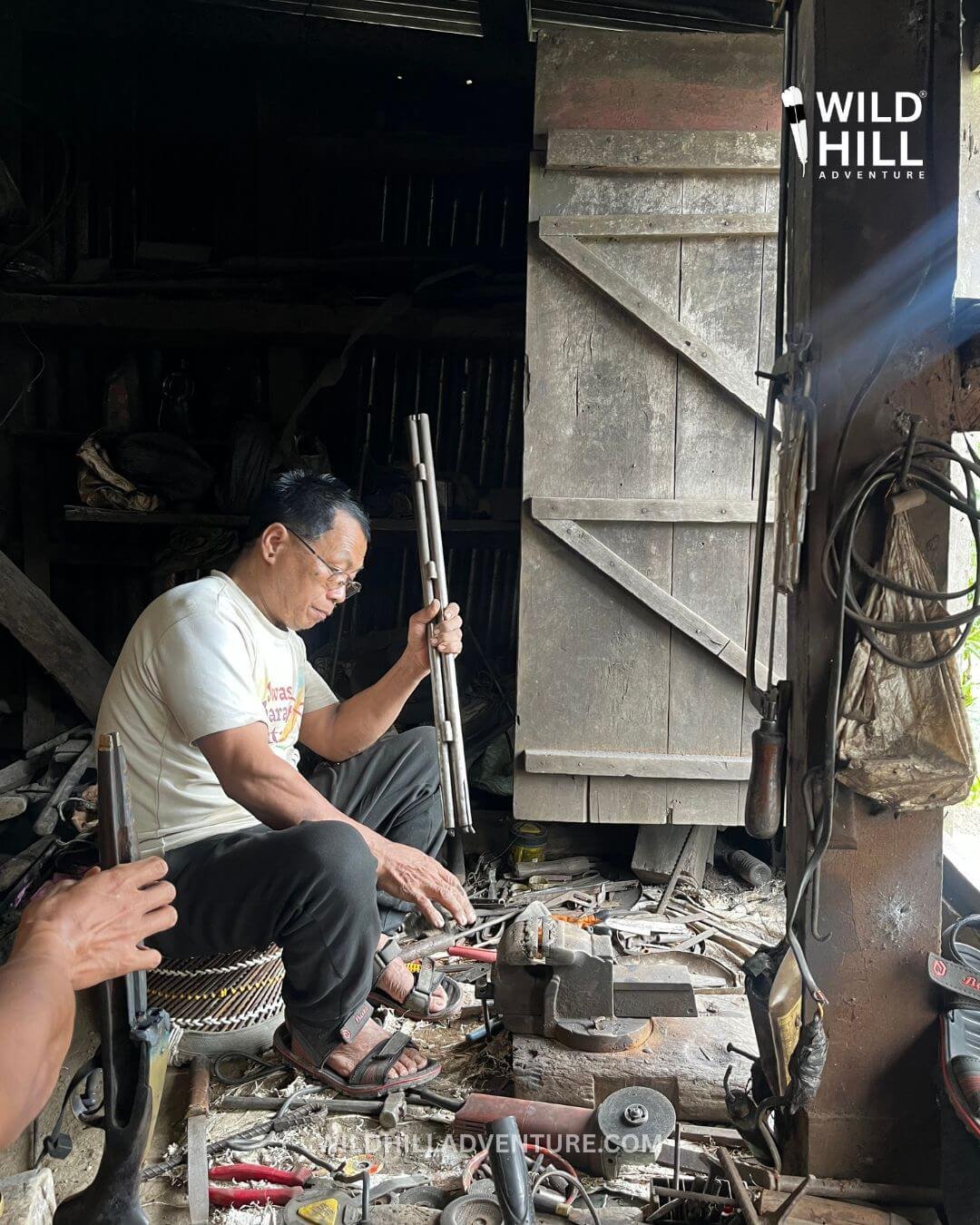
Watching someone work by hand gives you a completely different appreciation for these objects.
Don’t treat workshops merely as souvenir shops.
Talk to the artisan.
Ask how long they have practised the craft.
Ask who taught them.
Ask whether younger people are learning.
These are traditions being passed from one generation to another.
Aoleang Festival: One of the Best Times to Experience Konyak Culture
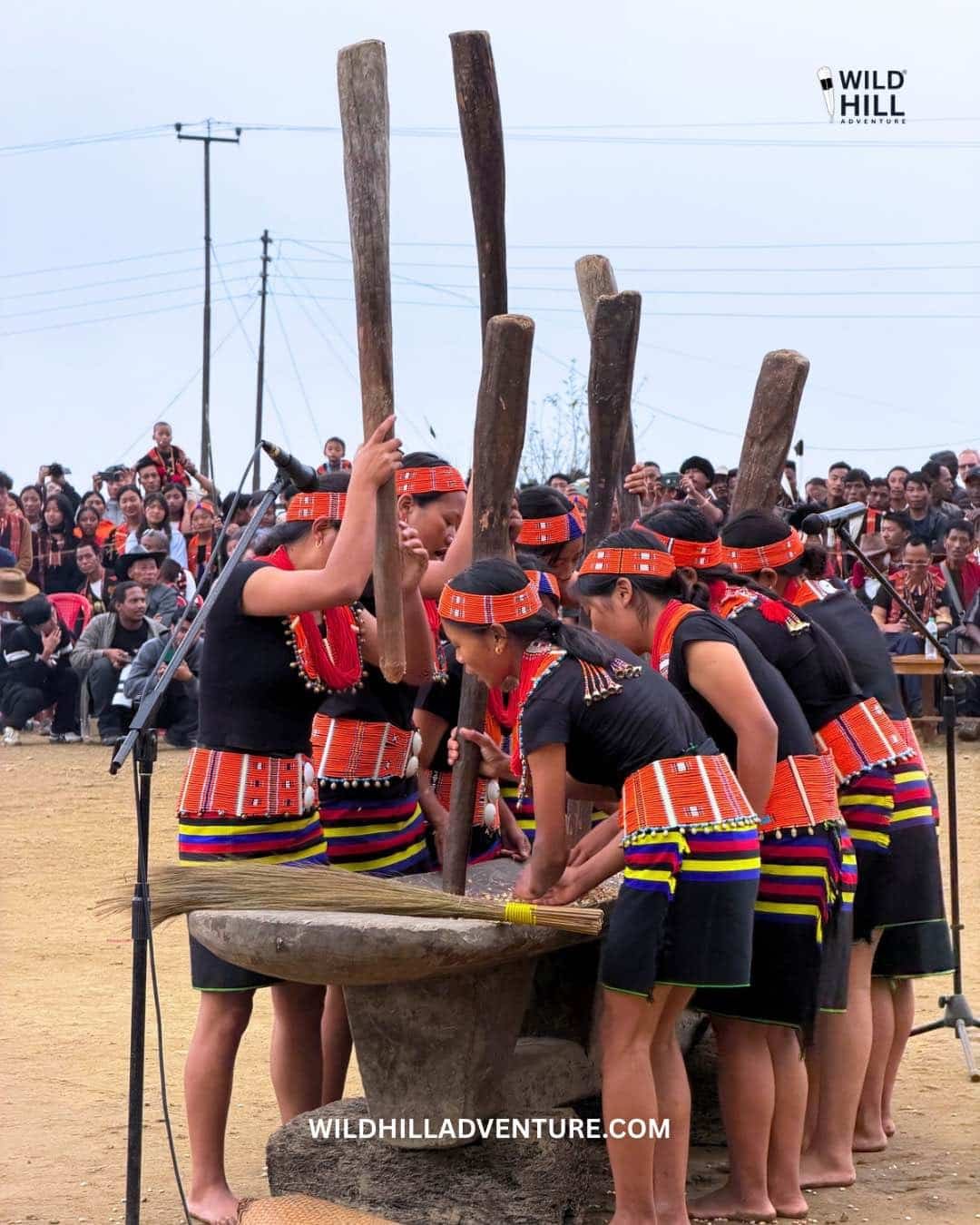
If you want to see Konyak culture on a larger scale, consider visiting during Aoleang.
Aoleang is the major festival of the Konyaks and is celebrated in April.
According to Nagaland’s Department of Information and Public Relations, the festival traditionally marks the completion of sowing and the beginning of a new year with spring. The celebrations include traditional clothing, community feasts, songs, dancing and rituals.
For photographers and culturally curious travellers, it can be extraordinary.
But don’t make the mistake of thinking a festival performance is the entire culture.
A festival gives you spectacle.
A village stay gives you context.
Ideally, experience both.
What Is It Actually Like Meeting an Elderly Konyak Man?
This is difficult to explain until you experience it yourself.
Sometimes you enter a traditional home and everything becomes quiet.
There may be a fire burning in the kitchen.
An elderly man sits beside it.
Your guide begins translating.
At first, the conversation may be slow.
Then stories start coming.
Not every story is about warfare.
You might hear about farming.
Family.
Hunting.
Village life.
Marriage.
Food.
The forest.
Old journeys.
How the village looked decades ago.
And how dramatically life has changed.
Those are often the moments our guests remember most.
Not the border pillar.
Not the Instagram photograph.
The conversation.
Our Experience Taking Guests to Meet Konyak Communities
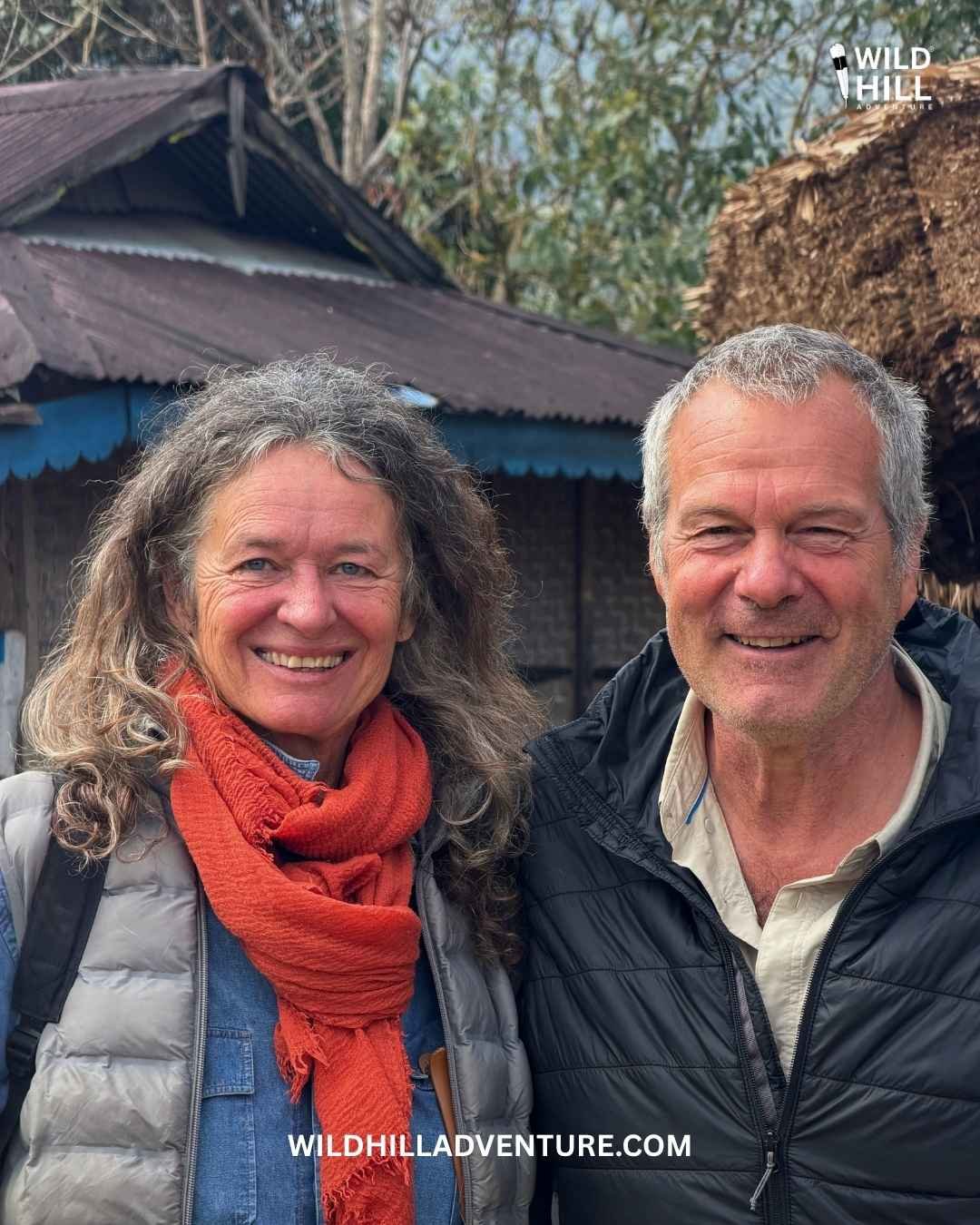
At Wild Hill Adventure, Nagaland isn’t a destination we discovered recently because it became popular online.
We have been travelling through these areas and hosting guests in Nagaland for years.
Over time, we have taken Indian travellers, international guests, photographers, families and culture lovers into Konyak country.
And one thing we have learned repeatedly is this:
Don’t rush Longwa and Mon.
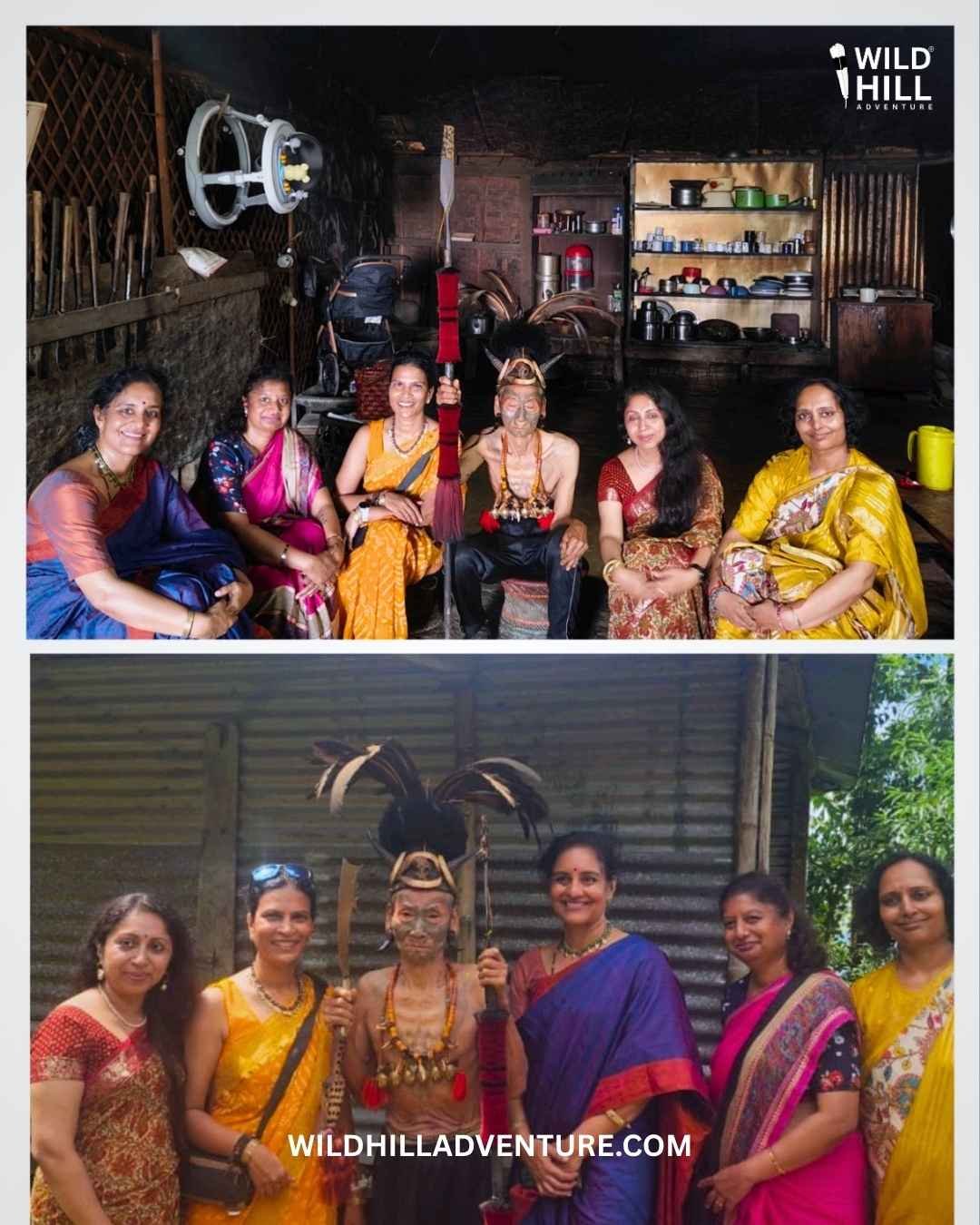
If your itinerary allows, stay.
Eat inside a local home.
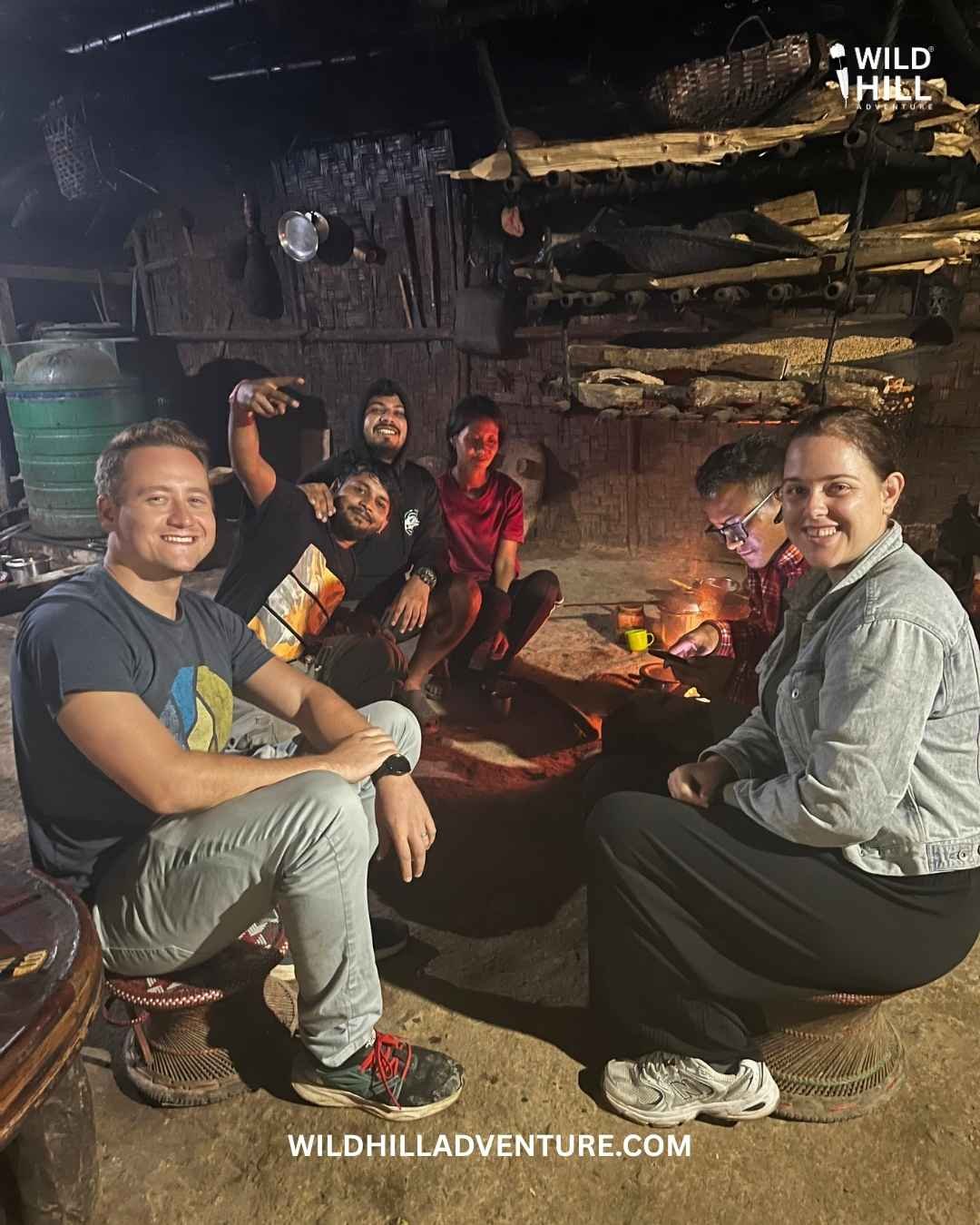
Sit around the kitchen fire.
Walk through the village.
Meet artisans.
Talk with elders.
Visit farms.
Watch everyday life.
Sometimes nothing dramatic happens.
And that’s exactly what makes the experience special.
Stay With a Local Konyak Family
If comfort is your only priority, a village homestay might not be for you.
Facilities can be basic.
Rooms may be simple.
Food may be simple.
Internet connectivity can be unreliable.
But culturally, staying locally changes everything.
Morning doesn’t begin with a hotel buffet.
It begins with village sounds.
You see people heading toward their fields.
You sit in a traditional kitchen.
You eat what families actually cook.
You hear stories at night.
And slowly you stop feeling like someone who came only to take photographs.
Try Traditional Konyak Food
Food is another way to understand the region.
Meals in remote villages depend heavily on what is locally available and what families grow.
If you have dietary requirements, tell your host or tour organiser beforehand.
Vegetarian travellers should particularly communicate in advance because options in remote areas can be limited compared with cities.
Instead of expecting restaurant-style menus, approach village food as part of the experience.
Eat what can reasonably be prepared.
Ask where ingredients come from.
Visit the farm if possible.
That connection between field, kitchen and plate is part of rural Nagaland.
Walk Through the Village Instead of Only Driving
Some of our favourite experiences in Longwa happen simply while walking.
Leave the vehicle.
Walk slowly.
You might see:
traditional houses,
children playing,
farmers returning home,
small workshops,
vegetable gardens,
wood carvings,
people making handicrafts,
older residents sitting outside,
Morungs,
and views stretching towards Myanmar.
Travelling slowly creates opportunities that a checklist itinerary cannot.
Photography With the Headhunters of Nagaland
For photographers, the tattooed Konyak elders are extraordinary subjects.
But this is exactly where responsible travel matters most.
Always ask permission.
Don’t put a camera into someone’s face.
Don’t treat traditional objects as photography props without asking.
Don’t pressure elderly people into wearing something simply because you want a dramatic picture.
Don’t enter homes without permission.
And don’t assume every person wants to be photographed.
Spend time talking before shooting.
The best portraits usually come after some human connection has already happened.
Are the Headhunters of Nagaland Dangerous?
No.
This is one of those internet questions that survives because of the word “headhunter.”
Modern Nagaland is not a place where tourists are going to encounter historical headhunting practices.
The people you meet today are farmers, artisans, teachers, students, business owners, guides, families and ordinary villagers living modern lives while maintaining aspects of their cultural heritage.
The warrior tradition belongs to history.
What remains today are memories, stories, cultural practices, oral histories, tattoos, craftsmanship and the descendants of those communities.
Can You Still Meet Real Headhunters in Nagaland?
This question needs careful wording.
You can still meet elderly tattooed Konyak men whose lives connect directly with the last period of the traditional warrior era, depending on the village, their health and availability.
But travellers shouldn’t arrive expecting a staged “headhunter show.”
These are elderly people.
Availability can never be guaranteed.
The better objective is:
Travel to understand Konyak culture.
If an opportunity to respectfully meet an elder arises, consider it a privilege rather than something you purchased as an attraction.
Best Place to See the Headhunters of Nagaland
For most travellers, I recommend building the journey around:
Mon + Longwa + nearby Konyak villages
Longwa is particularly good for first-time visitors because it combines several experiences:
Konyak culture
traditional village life
Angh’s house
India-Myanmar border landscape
elder interactions
Morungs
traditional craftsmanship
local food
homestays
village walks
photography
If you have additional days, explore beyond Longwa.
This is when the experience becomes much deeper.
Best Time to Visit the Headhunters of Nagaland
For general village exploration, the drier months are usually more convenient because road conditions and walking are easier.
If cultural festivals are your priority, April is especially important because of Aoleang.
If you are combining Mon with Kohima and the Hornbill Festival, December can also make sense for a wider Nagaland itinerary.
Each season creates a different experience.
For photography, village life and cultural immersion, there isn’t one single perfect month.
Your priorities matter more.
Do You Need a Local Guide?
For meaningful village exploration, I strongly recommend travelling with a knowledgeable local guide.
You can physically look at a building without a guide.
But you won’t necessarily understand what you’re looking at.
A guide can explain:
who an elder is,
what particular traditions mean,
which homes visitors may enter,
when photography is appropriate,
how the Angh system works,
what a Morung represents,
local etiquette,
village stories,
and how to communicate with elders.
More importantly, a good guide creates a bridge between visitor and community.
Combine the Headhunters of Nagaland With a Bigger Nagaland Journey
If you are already travelling this far, don’t visit only Mon.
One of our favourite ways to experience Nagaland is to combine two completely different regions.
Start around:
Kohima → Khonoma → Dzuleke → Dzukou Valley → Pfutsero/Kapamodzü
Then continue toward:
Mon → Longwa → other Konyak villages
You experience Angami culture, mountains, forests, rice terraces and trekking in one half of the journey, followed by Konyak culture and the borderlands in the second.
It creates a far more complete understanding of Nagaland.
Responsible Travel: Please Don’t Turn the Konyaks Into a Stereotype
This may be the most important part of this entire Headhunters of Nagaland guide.
“Headhunter” attracts attention.
It makes a powerful title.
It makes people curious.
But Konyak culture is far bigger than headhunting.
These communities have:
languages,
agricultural traditions,
festivals,
music,
oral histories,
craftsmanship,
jewellery,
architecture,
political systems,
family traditions,
food,
weaving,
woodworking,
metalwork,
and generations of stories.
The old warrior tradition is one chapter.
Don’t make it the entire book.
Why You Should Visit Now
There are landscapes that remain relatively unchanged for generations.
Human history doesn’t work that way.
The elderly tattooed generation is ageing.
Their memories cannot be rebuilt once they disappear.
Traditional houses are changing.
Roads are improving.
Young people are moving for education and employment.
Phones and the internet are transforming villages that were once extremely isolated.
Change isn’t necessarily bad.
Communities have every right to modernise.
But for travellers interested in living history, this creates a rare moment.
You can visit a modern Konyak village while still meeting people whose memories connect to a dramatically different world.
Twenty years from now, that experience will not be the same.
Travel With Wild Hill Adventure
We have spent years travelling through Nagaland and hosting guests across the state.
If you book your Nagaland tour with Wild Hill Adventure, we can arrange the journey from beginning to end, including transportation, accommodation or homestays, local guides, village experiences and the required permits depending on your itinerary and nationality.
For Mon and Longwa, our priority isn’t simply taking you somewhere for a photograph.
We want you to understand the place.
Meet people.
Hear stories.
Eat locally.
Stay locally.
Explore slowly.
And return home understanding that the Headhunters of Nagaland are not simply characters from an exotic story.
They represent one extraordinary chapter in the much larger history of the Konyak people.
Final Thoughts: The Headhunters of Nagaland Are a Living Connection to History
Longwa may initially attract you because of the India-Myanmar border.
Mon may attract you because you’ve seen photographs of tattooed warriors.
You may arrive wanting the famous portrait.
But if you travel properly, you’ll leave remembering something completely different.
A conversation beside a fire.
An elderly man’s smile.
A family meal.
A craftsman working with his hands.
The sound of a log drum.
A village road disappearing through the hills.
And perhaps a story translated by your guide that you continue thinking about long after returning home.
That’s why we keep returning to Konyak country.
The history brings you there. The people make you remember it.
Contact us
- Phone/WhatsApp: +91 9365476611
- Instagram: @wildhilladventure
- Email: wildhilladventure@gmail.com
- Website: www.wildhilladventure.com
Headhunters of Nagaland
1. Who are the Headhunters of Nagaland?
The term Headhunters of Nagaland refers to Naga communities that historically practised headhunting as part of warfare, village defence, status and warrior traditions. Today, travellers most commonly associate the term with the Konyak Nagas of Mon district, where some elderly tattooed men belong to the last generation connected to this historical warrior era.
2. Are there still headhunters in Nagaland?
Headhunting is no longer practised in Nagaland. However, some elderly Konyak men who grew up during the final period of the old warrior traditions are still alive. Travellers sometimes refer to them as the last headhunters of Nagaland.
3. Where can I see the last headhunters of Nagaland?
Mon district is the main region to explore Konyak history and warrior traditions. Longwa is one of the best-known villages, while other Konyak villages around Mon can also offer opportunities to learn about elderly warriors, traditional tattoos, Morungs, log drums and Konyak village life.
4. Which tribe is famous for headhunting in Nagaland?
The Konyak Naga tribe is particularly famous for its historical warrior culture and headhunting traditions. The Konyaks primarily inhabit Mon district in Nagaland, with related communities also living across the present-day India-Myanmar frontier.
5. Why did the Nagas practise headhunting?
Historically, headhunting was connected with warfare, village defence, territorial conflicts, courage, prestige and social traditions. It should be understood within the historical context of independent village societies rather than viewed simply as an act of violence by modern standards.
6. When did headhunting stop in Nagaland?
Headhunting gradually disappeared during the 20th century as Christianity, modern administration, changing social structures and new laws transformed Naga society. The exact timeline varied between different communities and villages.
7. Why do some Konyak headhunters have facial tattoos?
Traditional tattoos carried cultural and social significance within Konyak society. Certain tattoos could be associated with status and achievements, but their meaning varied between villages and traditions. Visitors should avoid assuming that every tattooed Konyak elder has exactly the same history.
8. Can tourists meet the last Konyak headhunters?
It may be possible to respectfully meet elderly tattooed Konyak men in villages of Mon district, depending on their health, availability and willingness to receive visitors. Such meetings should never be treated as guaranteed tourist performances. A knowledgeable local guide can help arrange respectful interactions.
9. Is Longwa Village famous for headhunters?
Yes. Longwa Village is one of the most famous Konyak villages in Nagaland and is frequently associated with the last generation of tattooed Konyak elders. However, Longwa offers much more than this history, including traditional architecture, craftsmanship, Morungs, the Angh system and fascinating borderland culture.
10. Can I take photographs with the headhunters of Nagaland?
Yes, but always ask permission first. Never enter someone’s house or photograph an elderly person without consent. If a local guide or host advises an appropriate contribution for someone’s time or photography, travellers should respect the local arrangement.
11. Is it safe to visit the headhunters of Nagaland?
The historical practice of headhunting no longer exists. Visitors today travel to Konyak villages to experience their culture, history, landscapes and everyday village life. As with any remote border region, travellers should follow current local advice, permit requirements and official travel restrictions.
12. What is the best time to visit the Konyak headhunters?
The drier months are generally more convenient for travelling through Mon district and exploring villages. April is particularly interesting because of the Aoleang Festival, one of the most important festivals of the Konyak community. December can also work well when combining Mon with Kohima and the Hornbill Festival.
13. What is the Aoleang Festival?
Aoleang is an important traditional festival of the Konyak Nagas, celebrated in April. It is associated with the agricultural cycle and spring and features traditional attire, songs, dances, community celebrations and cultural activities. It is one of the best periods for travellers interested in experiencing Konyak cultural traditions.
14. What is a Morung in Konyak culture?
A Morung traditionally functioned as a men’s dormitory and an important community institution. Young men learned about village responsibilities, traditions, stories, skills and community life there. Many traditional Morungs also contain or are associated with impressive wooden log drums.
15. Who is the Angh or King of a Konyak village?
The Angh is the traditional chief in the Konyak system of governance. Visitors often hear the Angh described as the “King.” Villages such as Longwa retain this institution as an important part of their cultural heritage, and visiting the Angh’s house can help travellers understand traditional Konyak leadership.
16. What can I do in Longwa besides meeting tattooed Konyak elders?
There is much more to Longwa than its headhunting history. Travellers can explore the Angh’s house, Morungs, log drums, traditional homes, local kitchens, farms, handicrafts, jewellery and village trails. You can also learn about the India-Myanmar borderland, meet artisans and, where locally arranged, enjoy activities such as village walks, farm visits, riverside picnics and fishing.
17. How many days should I spend in Longwa and Mon?
We recommend at least 2 to 3 nights if you genuinely want to understand the region. Photographers, researchers and travellers interested in deeper cultural experiences can easily spend four nights or longer exploring Longwa and surrounding Konyak villages.
A rushed day trip may allow you to see a few attractions, but staying overnight gives you time for conversations, village walks, local meals and spontaneous experiences.
18. Do I need a guide to visit Konyak villages?
A knowledgeable local guide is highly recommended. A guide can translate conversations, explain customs, introduce visitors appropriately, identify culturally important places and help ensure that photography and interactions with elderly residents are respectful.
For this type of journey, a good guide can completely change the quality of the experience.
19. Do I need a permit to visit Mon and Longwa in Nagaland?
Permit requirements depend on factors such as your nationality and the current regulations applicable to Nagaland and sensitive border areas. Because rules can change, travellers should verify the latest requirements before travelling.
If you book your Nagaland trip with Wild Hill Adventure, we can help coordinate the permits applicable to your itinerary along with transportation, accommodation, local guides and other ground arrangements.
20. Is meeting the Headhunters of Nagaland worth it?
For travellers interested in indigenous cultures, history, photography and remote village life, visiting Konyak country can be one of the most memorable experiences in Northeast India.
But don’t travel only to collect a photograph with a “headhunter.” Spend time understanding the Konyak people, their tattoos, Morungs, craftsmanship, farming, food, Angh system, changing village life and stories.
The Headhunters of Nagaland represent one fascinating chapter of Konyak history, but the living culture surrounding that history is what makes the journey truly special
Why Choose Wild Hill Adventure for Your Nagaland & Northeast India Trip?
Travelling through Nagaland and Northeast India is very different from travelling through India’s more established tourist circuits.
Here, road conditions can change, permits matter, accommodation in remote villages is limited, mobile networks can disappear, and some of the most memorable places are not always easy to find online.
This is where travelling with a local Northeast-based company like Wild Hill Adventure makes a real difference.
We Are From Northeast India
Northeast India is not simply another destination we sell.
It is our home.
Our team has spent years travelling through Nagaland, Assam, Meghalaya, Arunachal Pradesh and other parts of the Northeast. We personally explore many of the routes and destinations before recommending them to our guests.
That local experience helps us understand not only where to go, but how to travel these regions properly.
We Personally Explore the Routes
Many of the places we include in our itineraries are places we have personally travelled to.
In Nagaland, our journeys have taken us through places such as:
- Kohima
- Kisama Heritage Village
- Dzukou Valley
- Khonoma
- Dzüleke
- Jakhama
- Pfutsero
- Kapamodzü Peak
- Longwa
- Mon and the Konyak region
Our Kapamodzü journey is a good example. We have experienced the route ourselves during monsoon, driven through difficult road sections, stayed near the peak, eaten there and explored the Pfutsero side.
That experience helps when we’re planning the same journey for a guest.
Strong Experience With the Hornbill Festival
Nagaland becomes extremely busy during the Hornbill Festival.
Accommodation fills up, Kohima traffic becomes heavy and first-time visitors can easily underestimate travel times.
Because we regularly operate Hornbill Festival trips, we can help guests plan the festival together with destinations such as Dzukou Valley, Khonoma, Dzüleke, Kapamodzü, Pfutsero and Longwa rather than simply visiting Kisama and returning home.
Local Guides and Community Connections
For us, a Nagaland trip shouldn’t only mean taking photographs from viewpoints.
We work with local people wherever possible.
Local guides can help travelers understand village history, tribal traditions, food, agriculture and everyday life in a way that simply driving through a destination cannot.
It also means tourism money reaches the communities travelers have actually come to experience.
We Take You Beyond the Usual Tourist Circuit
If you only search online, most Nagaland itineraries look similar:
Dimapur → Kohima → Hornbill Festival → Dzukou → Return.
There is much more to Nagaland.
Depending on your interests and available time, we can build journeys around remote villages, trekking, culture, food, photography, mountains and border regions.
Sometimes the best experience isn’t even a famous attraction.
It could be stopping beside a beautiful rice field, eating a local thali at Mao, visiting a vegetable farm near Pfutsero or spending an evening talking with people you have just met.
Those are the experiences we personally enjoy, and they influence the way we design our trips.
We Understand Northeast India’s Road Conditions
Google Maps doesn’t always tell the complete story here.
A road showing three hours can take considerably longer because of rain, landslides, construction or poor road conditions.
We plan journeys with these realities in mind.
For remote destinations and monsoon journeys, we can also select vehicles according to the route and current conditions rather than simply choosing the cheapest available option.
Permits Become Easier
Several parts of Northeast India have permit requirements.
Depending on the destination and nationality, travelers may need documents such as an Inner Line Permit (ILP) or other permissions.
Our team helps guests understand and arrange the applicable permits for their itinerary so they don’t have to figure everything out after arriving.
Private and Customized Northeast Trips
Not everyone wants the same holiday.
Some travelers want photography.
Some want trekking.
Some want culture and villages.
Others want comfortable hotels and relaxed sightseeing.
Instead of forcing every traveler into exactly the same itinerary, we can customize trips according to your time, interests, comfort level and budget.
On-Ground Support Matters Here
This is probably one of the most underestimated advantages of booking with a local operator.
When everything goes according to plan, arranging a trip looks easy.
The difference becomes obvious when something changes.
Bad weather, a road closure, delayed arrival, vehicle problem or accommodation issue can require quick local coordination.
Having a team operating within Northeast India gives travelers someone on the ground who can help find alternatives.
We Prefer Real Experiences Over Checklist Tourism
Our philosophy is simple:
Don’t just see Northeast India. Experience it.
Eat local food.
Stay in villages when appropriate.
Talk to people.
Walk through local markets.
Learn why communities protect their forests.
Understand the stories behind tribal traditions.
And sometimes, forget the itinerary for an hour and simply sit looking at the mountains.
That’s the kind of Northeast India we want our guests to experience.
Travel Northeast India With People Who Call It Home
Whether you’re planning the Hornbill Festival, Dzukou Valley Trek, Kapamodzü Peak, Longwa Village, an offbeat Nagaland road trip, or a longer journey combining Nagaland with Assam and other Northeast states, Wild Hill Adventure can help you design the trip around what you actually want to experience.
We don’t want to show you Northeast India only as a collection of tourist attractions.
We want to show you the Northeast that we know, travel through and love ourselves.
Contact us
- Phone/WhatsApp: +91 9365476611
- Instagram: @wildhilladventure
- Email: wildhilladventure@gmail.com
- Website: www.wildhilladventure.com

0 Comment