

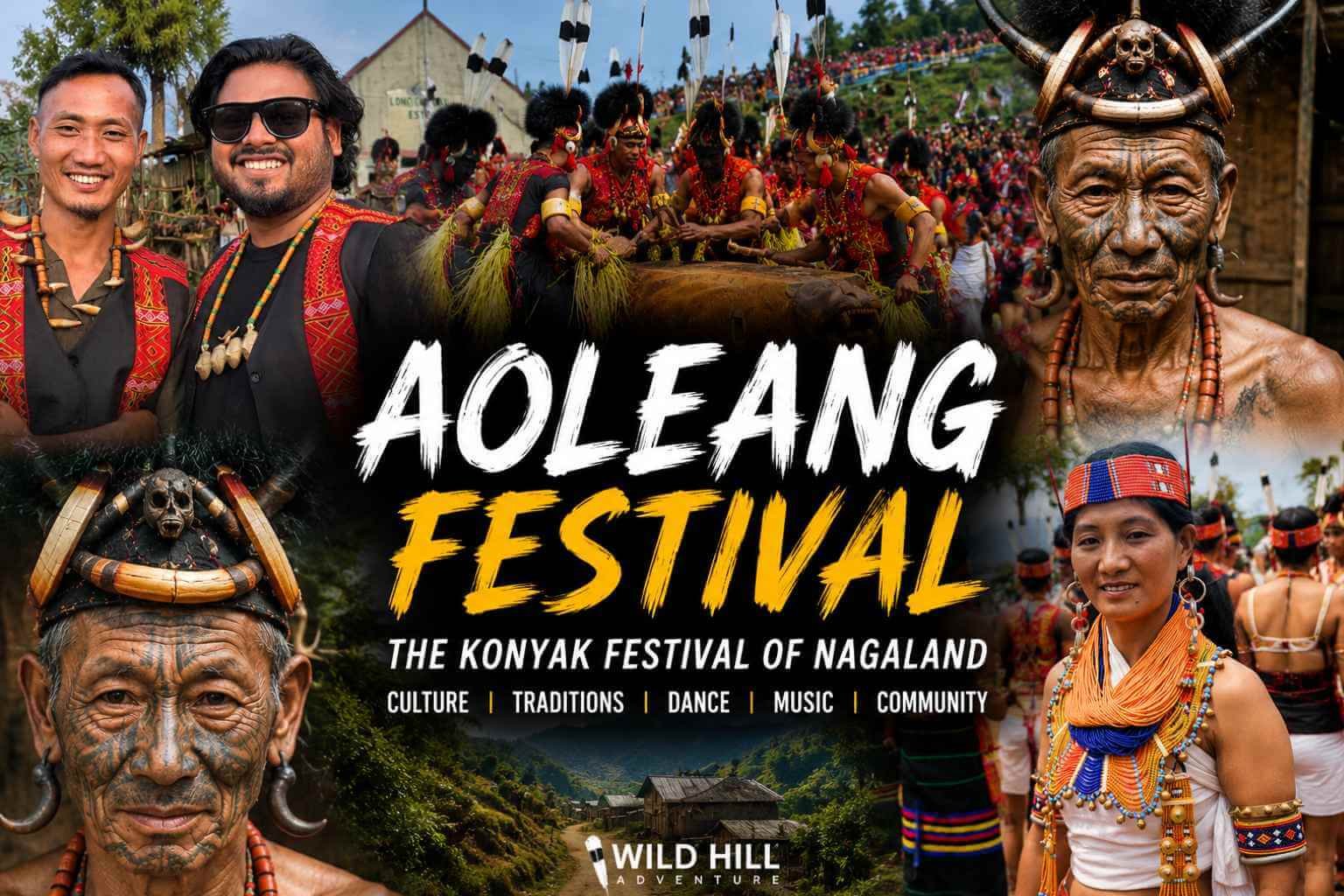

Aoleang Festival
Complete Travel Guide to the Konyak Festival of Nagaland
If you want to experience Nagaland beyond the famous Hornbill Festival, the Aoleang Festival should be high on your list.
Aoleang, also known as Aoleang Monyu, is the principal traditional festival of the Konyak Nagas of Mon district. It is connected with the completion of sowing, the arrival of spring, the transition from the old year to a new one, and prayers for a good harvest. Traditionally, Aoleang extends across six days in the first week of April.
For us, however, Aoleang is much more interesting than simply attending a cultural programme.
The real experience is travelling through Konyak country during festival time, staying in villages, meeting families, seeing traditional attire being prepared, listening to log drums, sharing meals and understanding a culture that is still very much alive.
If Hornbill gives you an introduction to the many tribes of Nagaland, Aoleang takes you deeper into the world of the Konyaks.
What is the Aoleang Festival?
The Aoleang Festival is celebrated by the Konyak Naga community, primarily in Mon district of Nagaland.
According to the Nagaland government’s Department of Information & Public Relations, Aoleang Monyu has traditionally been observed after the sowing of seeds in new fields. It marks the end of the old year and welcomes the new year with spring, while seeking blessings for a prosperous harvest.
Agriculture has historically been central to life in Nagaland, and many traditional Naga festivals are closely connected with agricultural seasons. But describing Aoleang only as an agricultural festival does not really capture it.
It is also a celebration of:
- Konyak identity and community
- traditional clothing and ornaments
- music and dance
- family relationships
- village traditions
- food and feasting
- respect for elders and ancestors
- Morung culture
- oral history
- craftsmanship
- the beginning of a new season
During the festival period, villages can feel completely different from ordinary days.
People who normally live or work outside their villages may return home, families prepare food, traditional clothes come out, cultural groups gather and communities celebrate together.
That community atmosphere is one of the biggest reasons we love Aoleang.
When is the Aoleang Festival Celebrated?
Aoleang is traditionally observed from 1 April to 6 April.
Government documentation for Mon district describes the main festival as running from 1st to 6th April.
This distinction is important for travellers.
The traditional festival cycle and the dates of major public cultural programmes are not necessarily the same thing.
If you are travelling specifically for Aoleang, don’t build your entire trip around a single public programme. Give yourself several days in Mon district so you can experience both organised celebrations and village life.
Where is Aoleang Festival Celebrated?
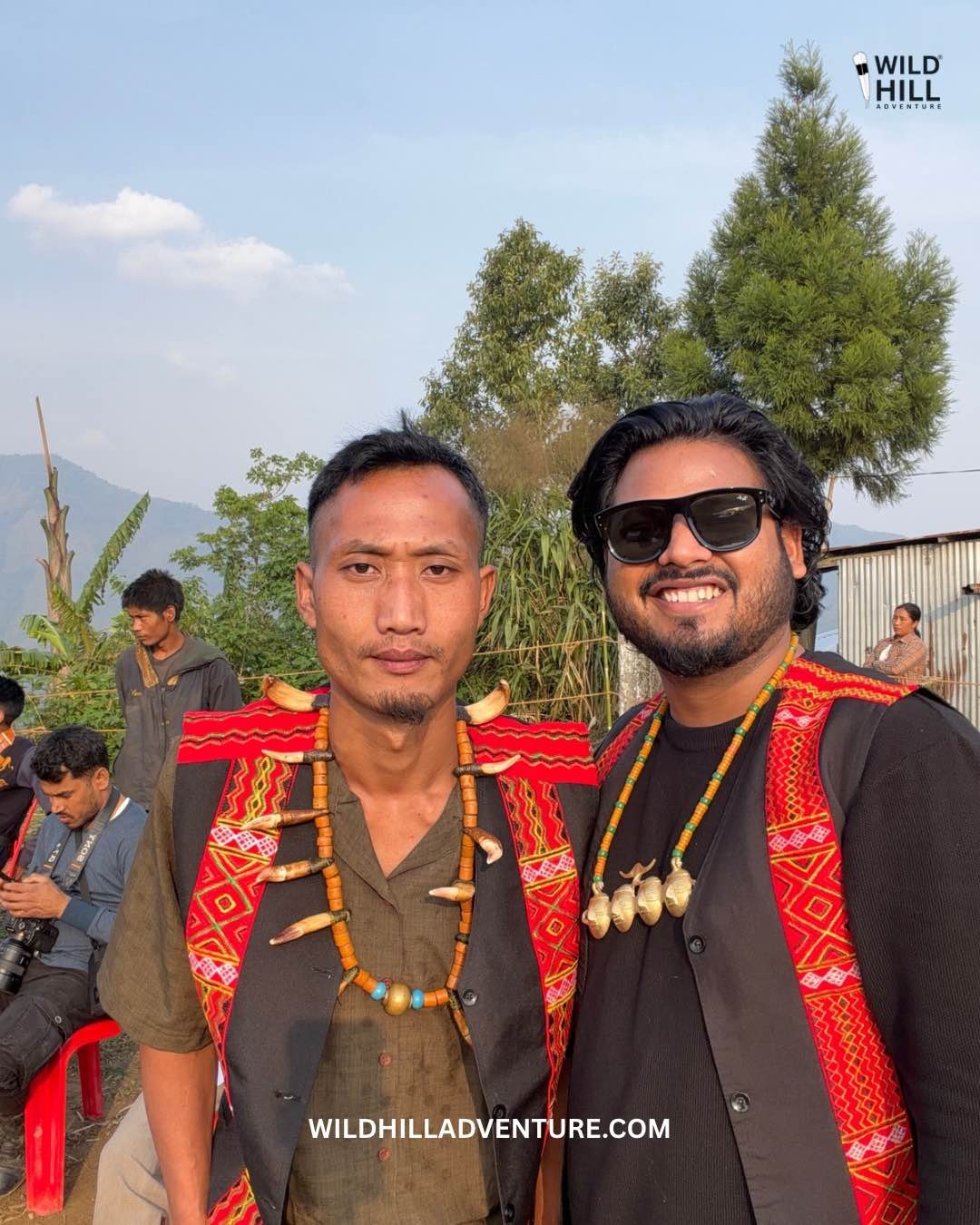
The best place to experience the Aoleang Festival is Mon district in northern Nagaland, the heartland of the Konyak Nagas.
Celebrations take place across Konyak villages rather than at one single festival ground.
For travellers, we particularly recommend combining Mon town with Konyak villages such as Longwa and other villages selected according to that year’s celebrations.
Mon town may have larger organised cultural programmes, while villages can offer a much more intimate understanding of Aoleang.
In 2026, for example, the Konyak Aoleang Monyu cum Mini Hornbill Festival programme was held at the Konyak Heritage Complex in Mon and included traditional ceremonies, log-drum beating and cultural performances.
This is why we don’t recommend simply arriving in Mon for a few hours and leaving.
Aoleang deserves time.
The Six Days of Aoleang Festival
One of the most fascinating things about Aoleang is that traditionally every day has its own name and significance.
Day 1: Hoi Lai Yah Nyih
The first day is essentially the preparation day.
Traditionally, families prepare everything required for the coming celebrations.
This includes gathering things such as food, vegetables, firewood and banana leaves. Traditional clothes and ornaments are prepared, and households get ready for several days of festivities.
Historically, agricultural rituals were also performed seeking blessings for the crops.
For a traveller, this is an interesting time because you can sometimes see the festival taking shape rather than only witnessing the final performance.
Day 2: Yin Mok Pho Nyih
The second day historically involved preparations of animals for the feast and traditional rites connected with young members of the community.
Some historical customs described in official records reflect the Konyaks’ former warrior society.
These traditions should be understood in their historical context.
Modern Konyak society has changed enormously, and the festival today is also an important way of preserving stories and cultural memory for younger generations.
Day 3: Yin Mok Shek Nyih
The third day traditionally marked the formal beginning of major festivities.
A decorated bamboo flag was raised, animals were prepared for communal feasting and the Morungs became important centres of activity.
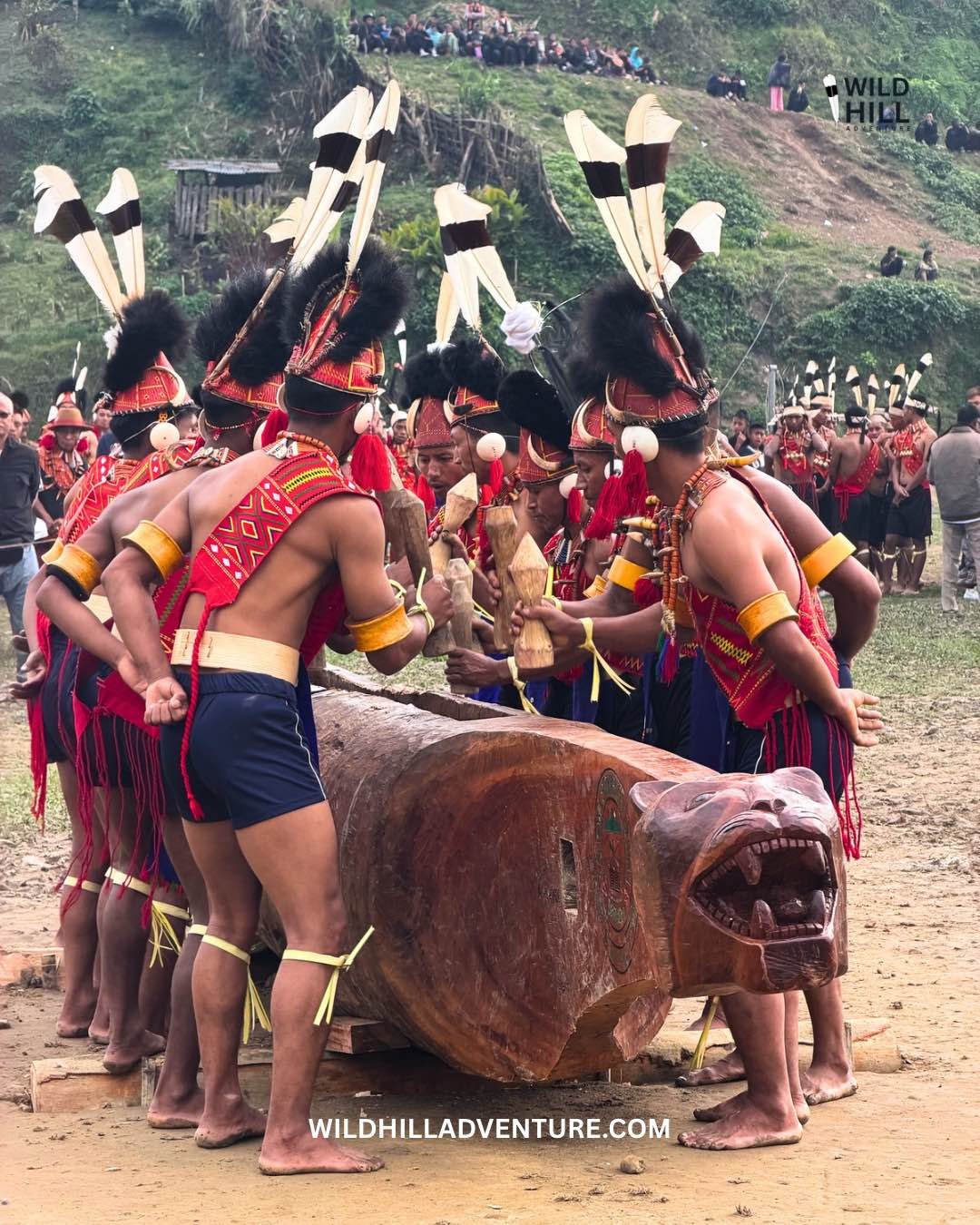
The log drum is particularly significant in Konyak culture.
If you hear one being played during your Aoleang journey, don’t just record a ten-second video and move on.
Ask your guide what it means.
Understanding the reason behind these traditions makes the journey much more meaningful.
Day 4: Lingnyu Nyih, One of the Biggest Days
Traditionally, Lingnyu Nyih is described as the greatest day of the six-day Aoleang celebration.
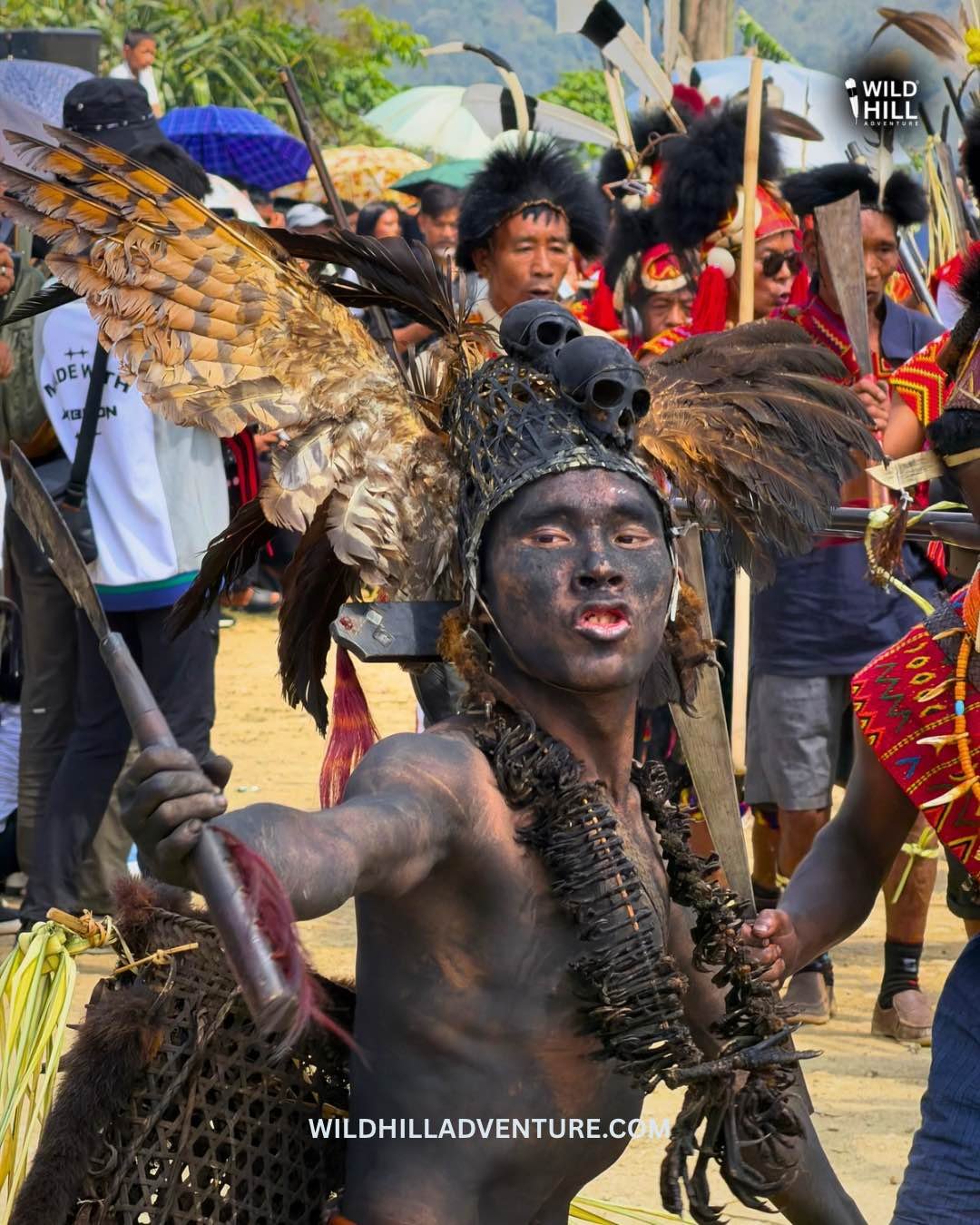
This is when the visual side of Konyak culture becomes especially spectacular.
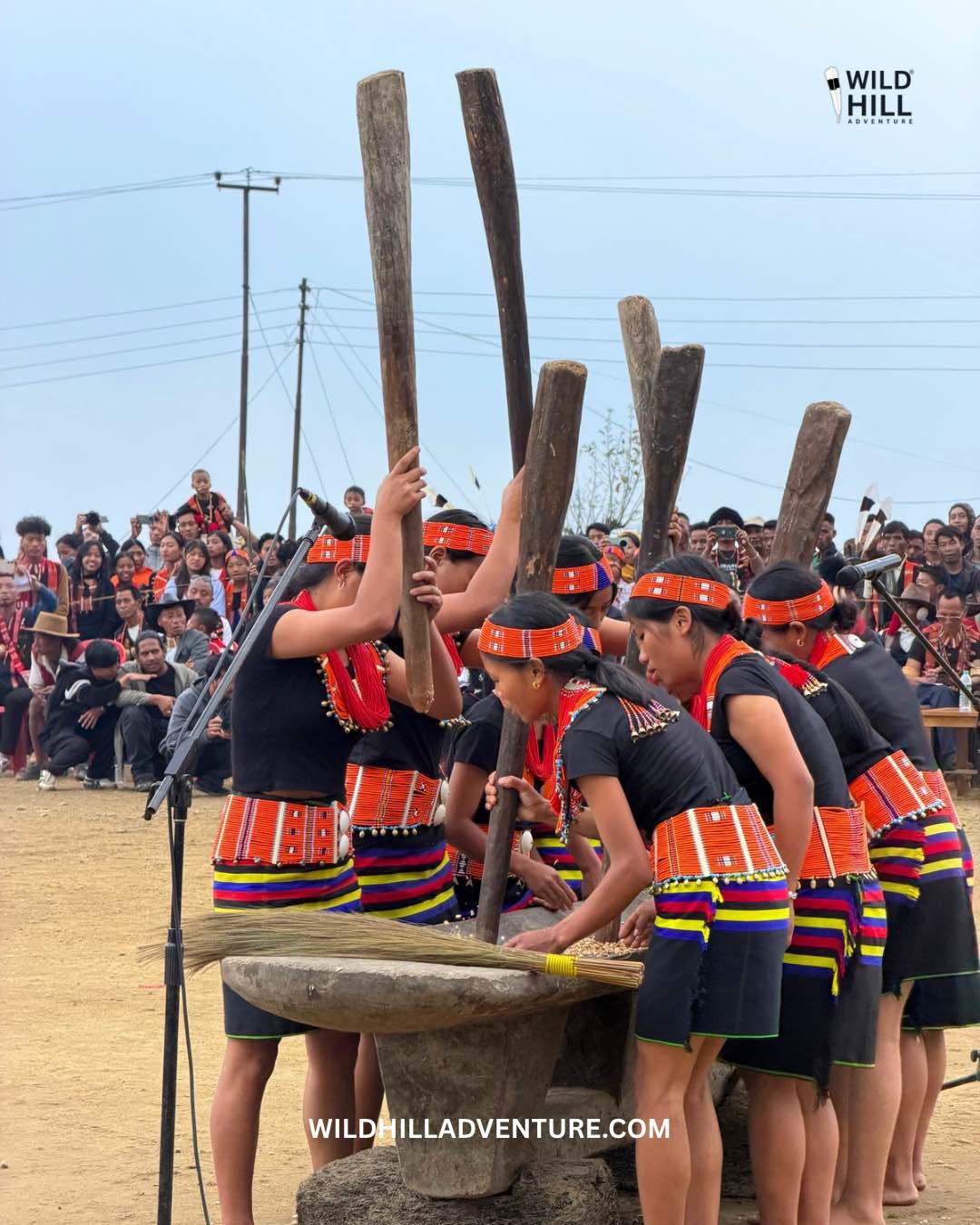
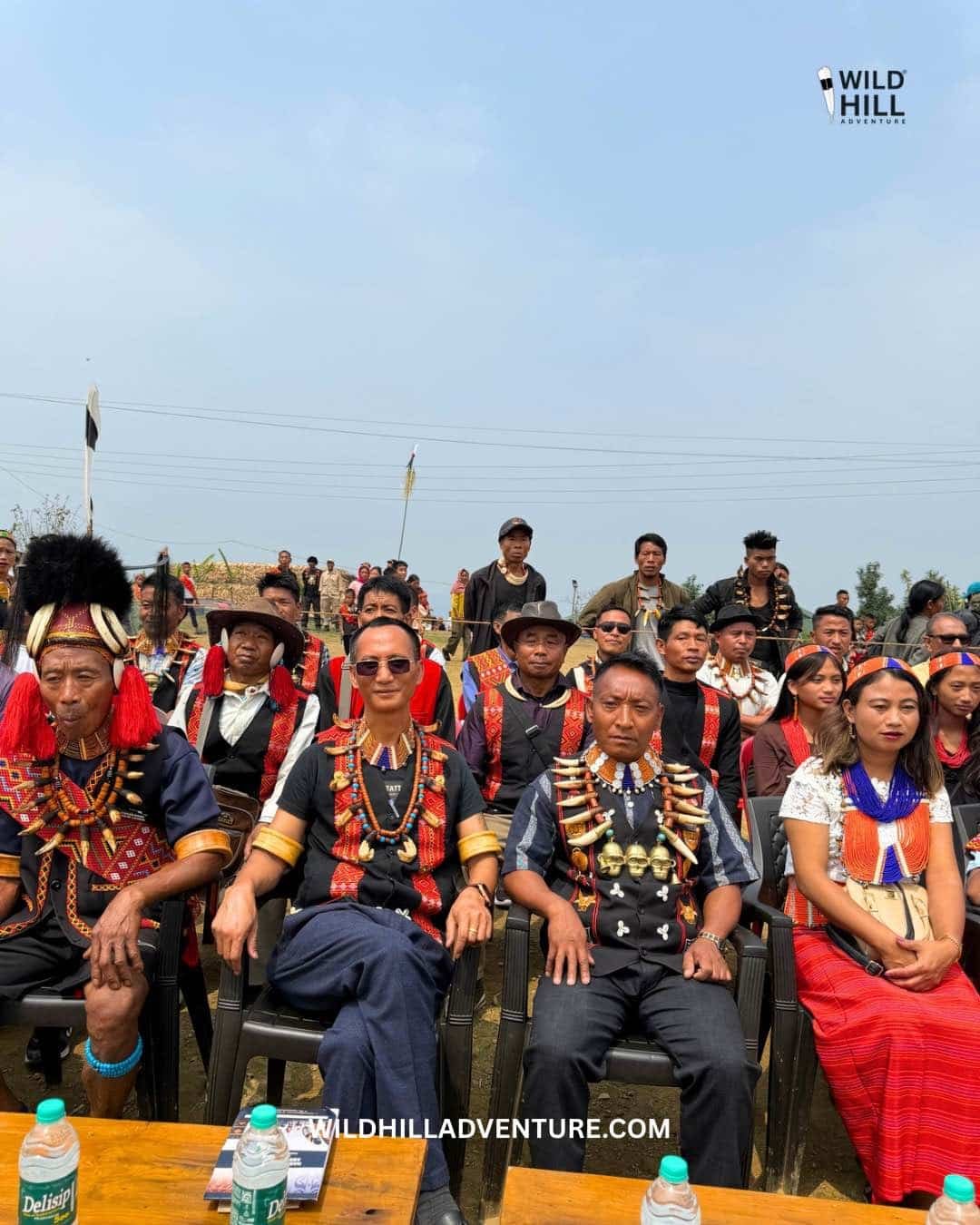
Men and women wear traditional ornaments and clothing. Communities gather for feasts, songs, dances and celebrations.
This is the Aoleang many photographers dream of seeing.
Traditional Konyak attire can include elaborate beadwork, necklaces, headgear and other ornaments carrying cultural significance.
But there is something important travellers need to understand.
These are not costumes made for tourists.
They represent identity, family, village, history and cultural memory.
Photograph them respectfully.
Day 5: Lingha Nyih, Honouring Relationships
One of my favourite aspects of Aoleang is that the festival isn’t simply about dancing.
It is deeply connected with relationships.
Traditionally, the fifth day is associated with honouring elders, visiting relatives, remembering departed family members and exchanging food between families and long-standing household friends.
This side of Aoleang rarely appears in Instagram photographs.
Yet it tells you much more about Konyak society than a stage performance ever could.
A festival survives because families continue to value it.
Day 6: Lingshan Nyih
The final day traditionally involves cleaning houses and villages after several days of celebration.
It may sound simple, but it beautifully completes the cycle.
Preparation.
Celebration.
Family.
Community.
And finally returning the village to everyday life.
Aoleang Festival and the Konyak Headhunters
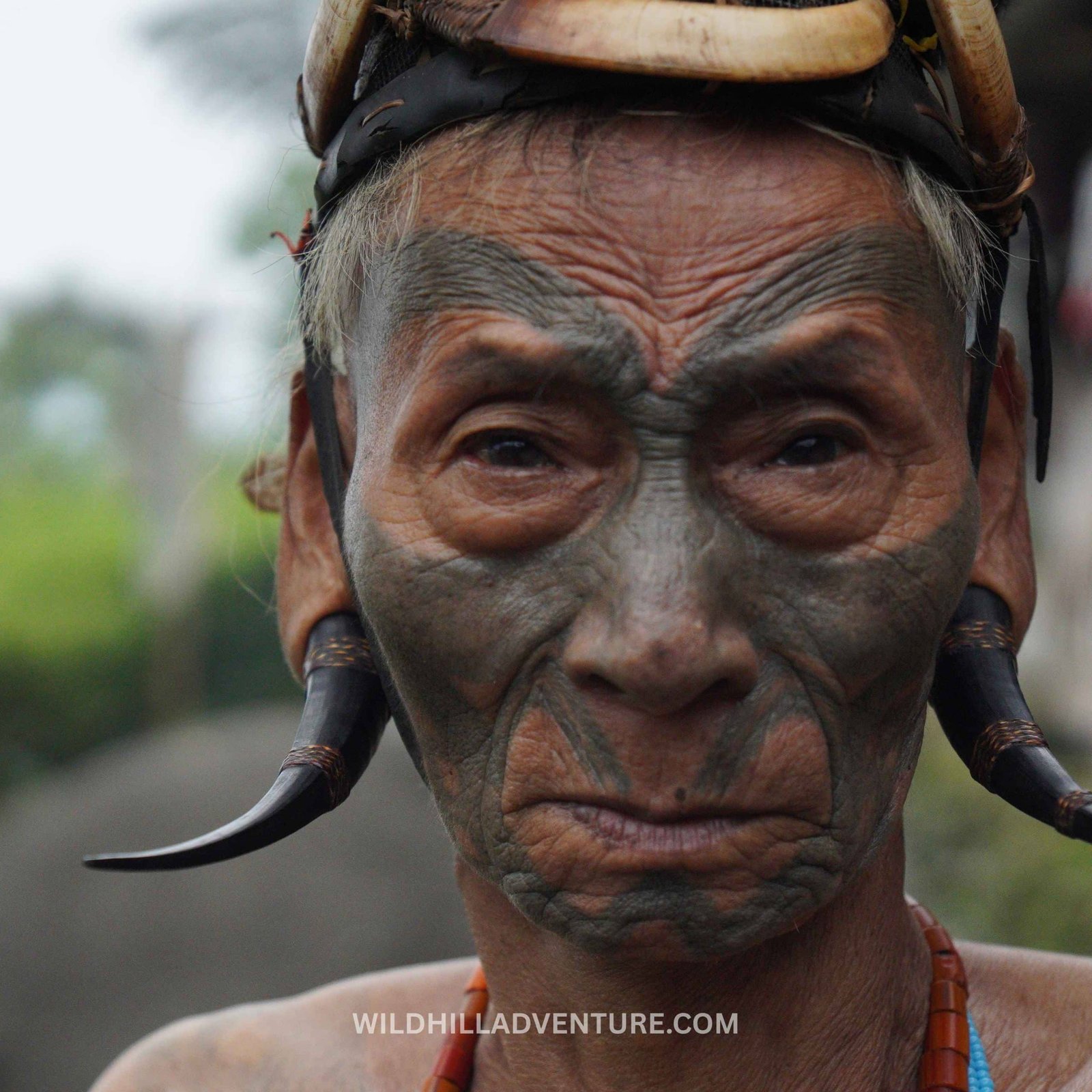
This is probably one of the reasons many travellers first become interested in Mon.
The Konyaks are internationally known for their historical warrior traditions, particularly the older generation of tattooed men often described today as the last headhunters of Nagaland.
But Aoleang should not be reduced to “a headhunter festival.”
That misses most of the story.
Historical warrior traditions are certainly part of Konyak history, and official descriptions of Aoleang record ceremonial references to the old headhunting era.
Today, however, Aoleang is about a living community preserving its identity while moving forward.
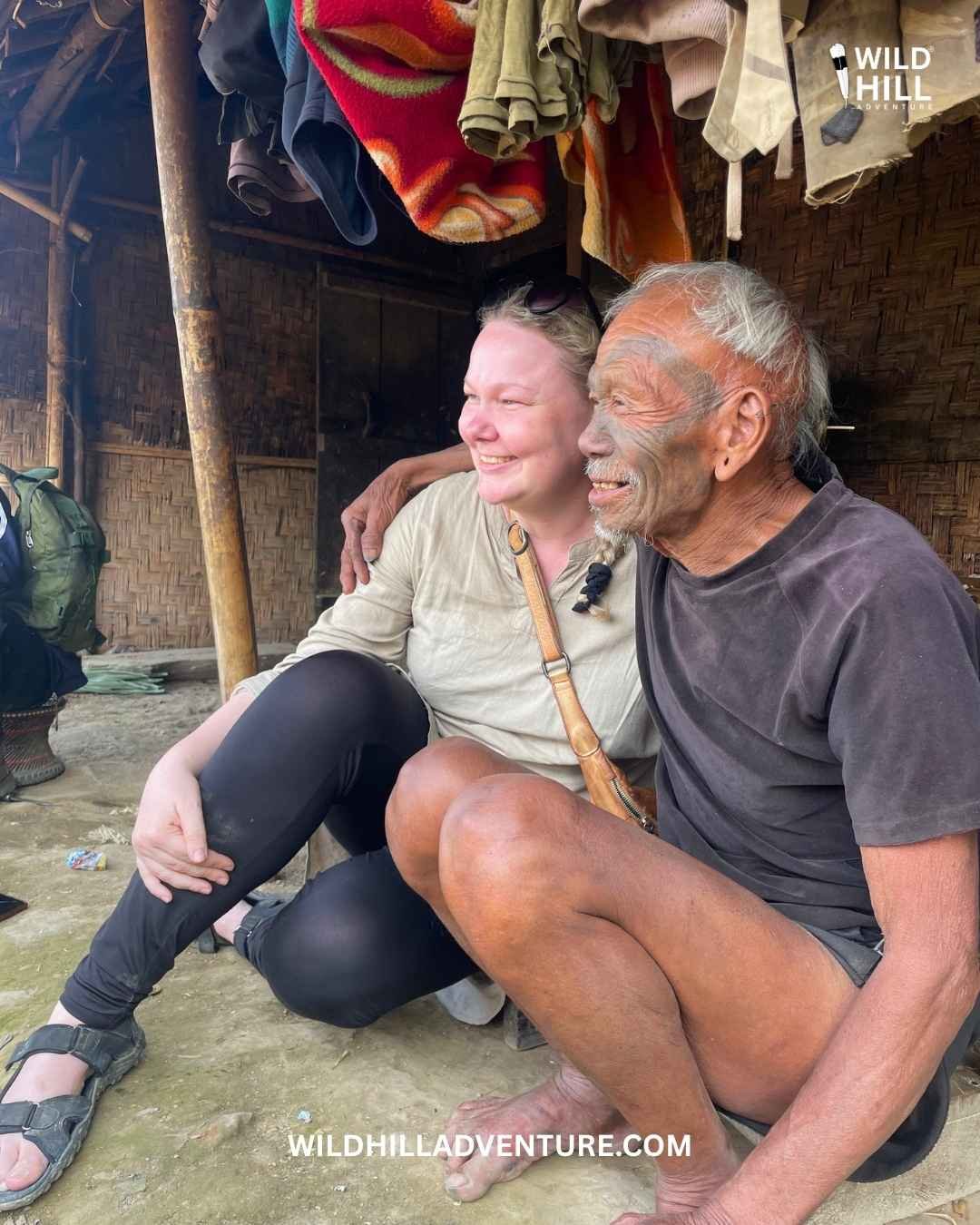
When you meet an elderly tattooed Konyak man, remember:
You are meeting a person, not a tourist attraction.
Sit with him.
Listen.
Ask questions through your guide.
Understand what his tattoos mean.
Learn about his village.
And only then ask for photographs.
That conversation will probably stay with you much longer than the picture.
Longwa Village During Aoleang Festival
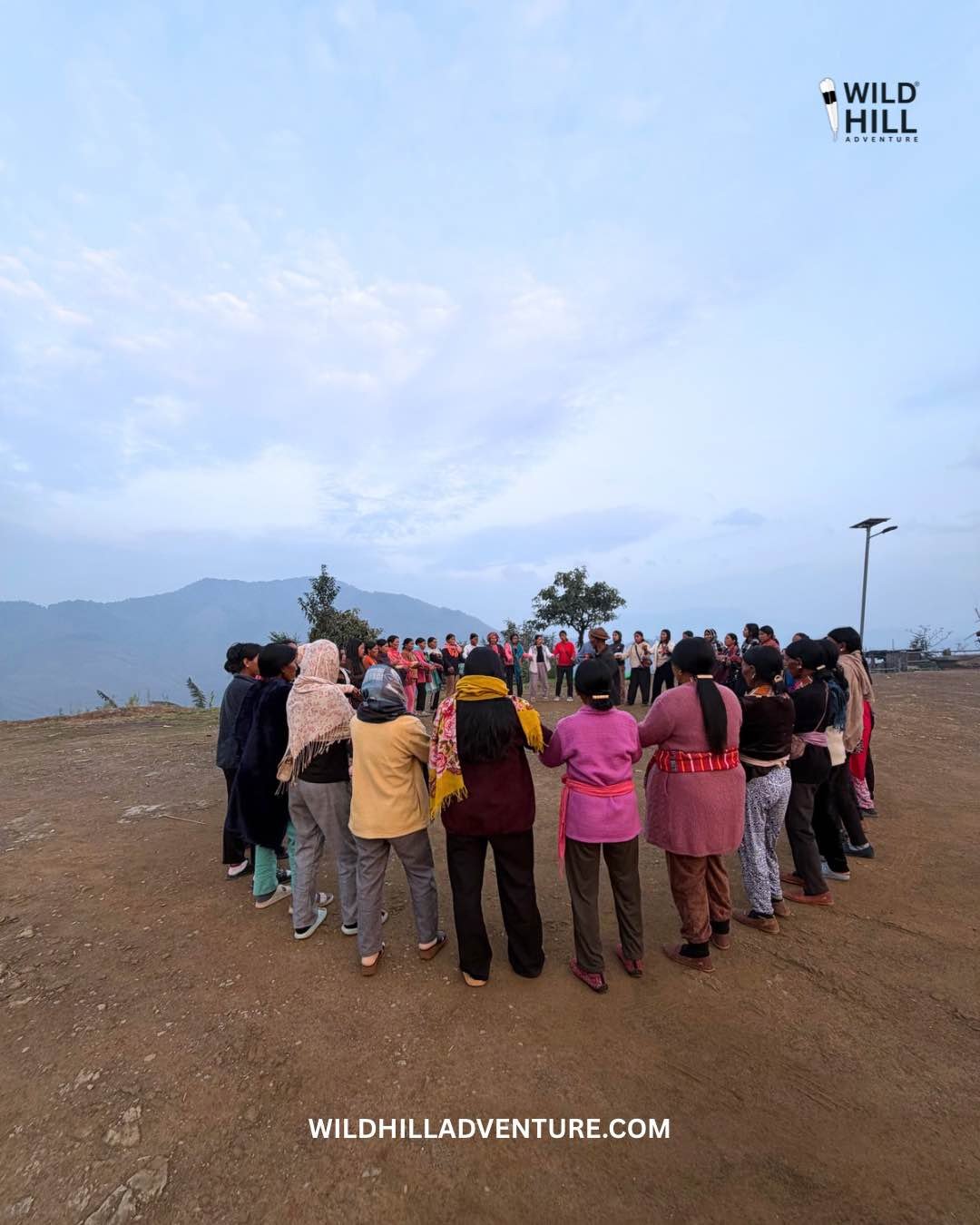
If you are travelling to Mon for Aoleang, I highly recommend adding Longwa Village.
Longwa is one of Nagaland’s most fascinating villages.
It lies in the India-Myanmar borderland and is known for its Konyak community, Angh system, traditional houses, elderly tattooed men, Morungs, log drums and crafts.
During a longer stay, your experience can include village walks, conversations with elders, local kitchens, handicrafts, traditional jewellery and nearby landscapes.
Don’t try to rush Longwa.
We recommend at least two nights if your schedule allows.
One night often becomes just arrival, sleep and departure.
Two nights gives you a full day to actually experience the village.
Meet the Angh, the Traditional Konyak Chief
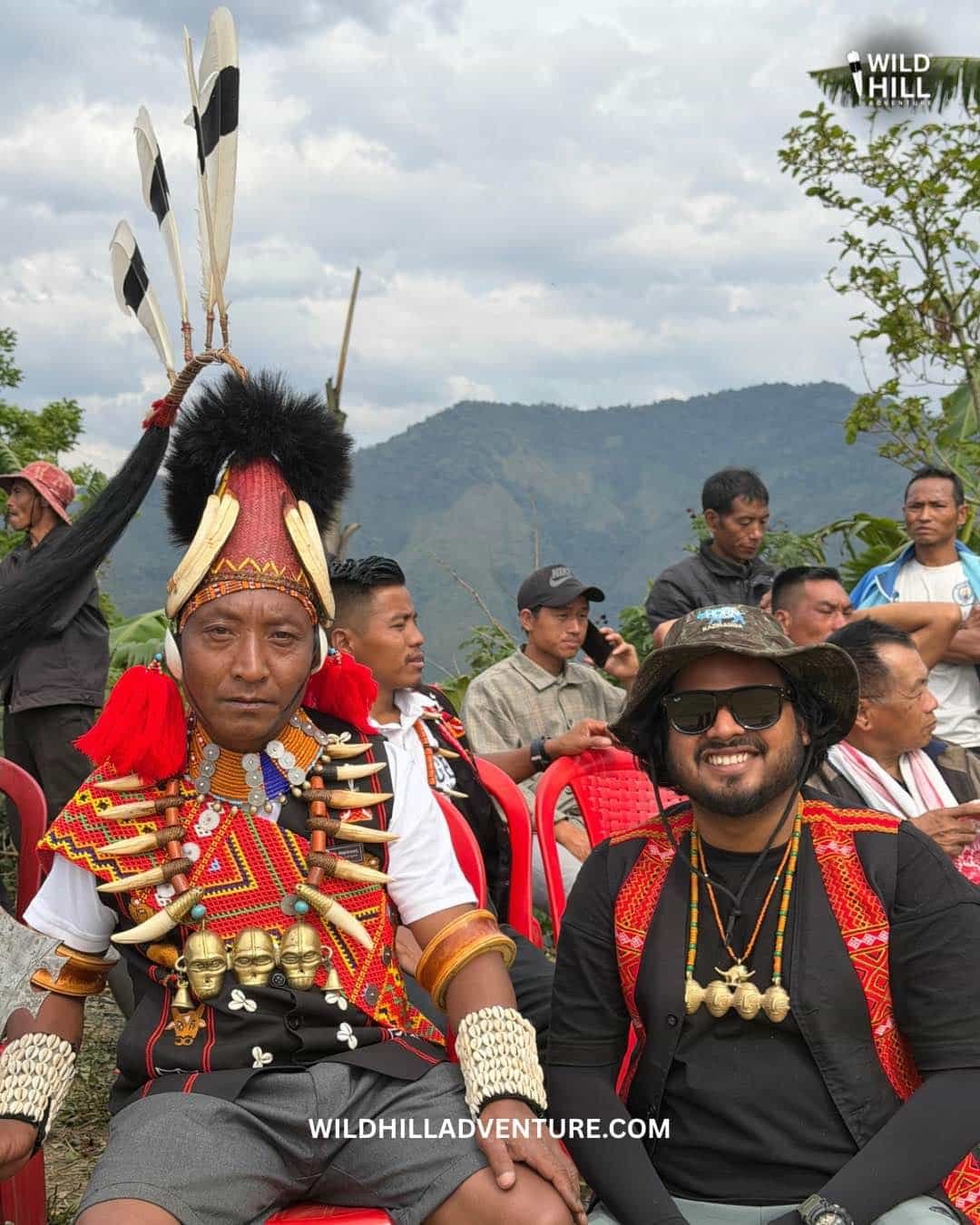
Another fascinating part of Konyak society is the traditional institution of the Angh, commonly described to travellers as the king or chief.
The Angh historically played an important role in village governance and social organisation.
When travelling through Konyak villages during Aoleang, visiting an Angh’s house can provide a much deeper understanding of how these villages functioned historically.
This is especially interesting in Longwa.
But again, remember that these are living communities and homes.
Visit with permission and preferably with a local guide.
Morungs and Log Drums
If there are two things you should understand before leaving Konyak country, they are the Morung and log drum.
Traditionally, Morungs were important community institutions where younger generations learned skills, responsibilities, oral histories and traditions.
Large wooden log drums were another central feature of village communication and ceremonial life.
Aoleang brings many of these traditions into focus.
Recent official Aoleang celebrations continue to feature ceremonial log-drum beating. The 2025 Konyak Aoleang programme at the Konyak Heritage Complex included nine Morungs, log-drum performances, cultural troupes and an Angh House.
Traditional Konyak Clothing During Aoleang
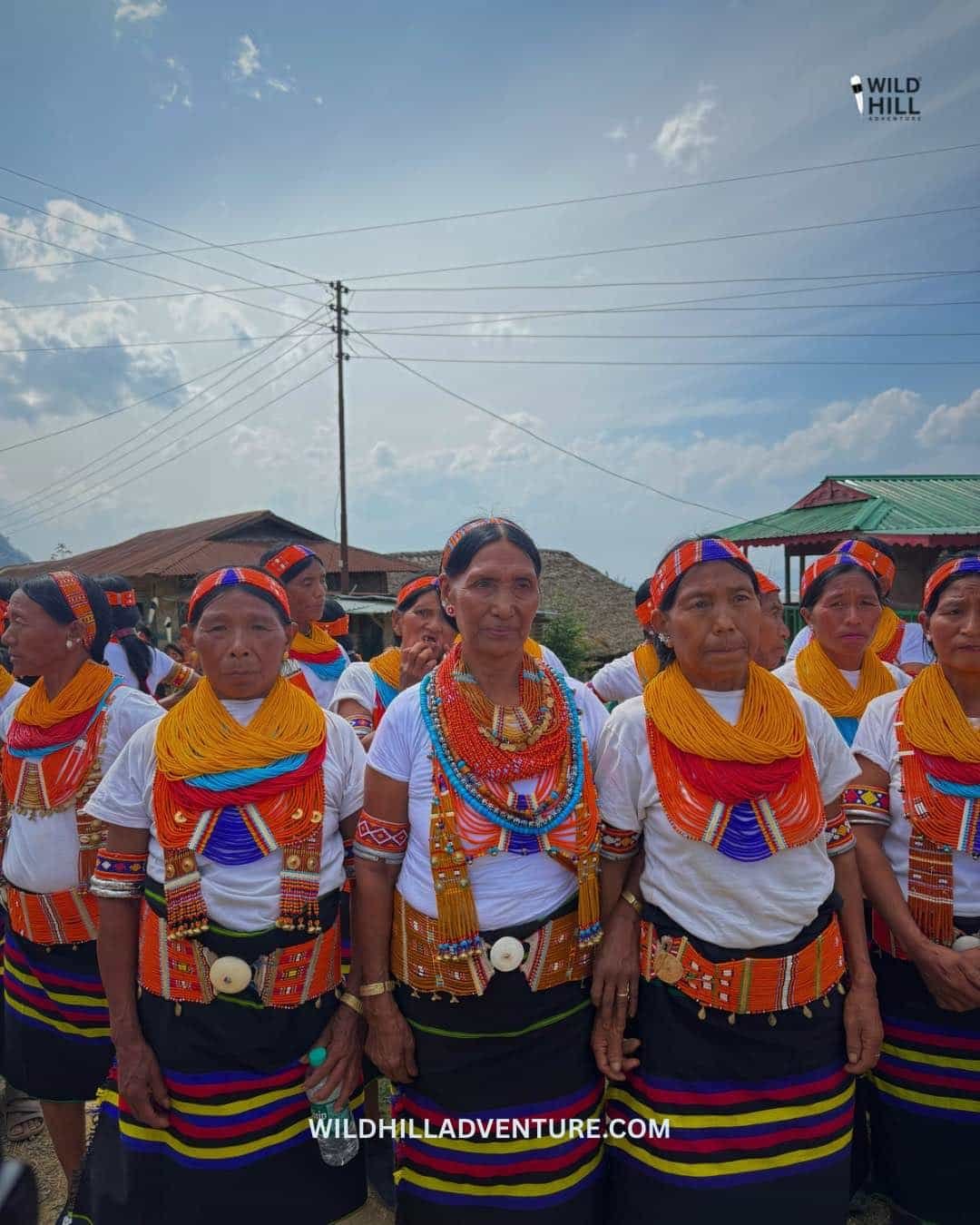
For photographers, Aoleang can be extraordinary.
The combination of traditional textiles, beads, ornaments, headgear and village architecture creates incredible visual opportunities.
But don’t only chase portraits.
Photograph the details:
hands preparing food,
elders sitting outside their homes,
children watching the dances,
families walking together,
ornaments being prepared,
smoke rising from traditional kitchens,
log drums,
Morungs,
village landscapes,
and conversations between generations.
These photographs often tell a better story than posed portraits.
Food During the Aoleang Festival
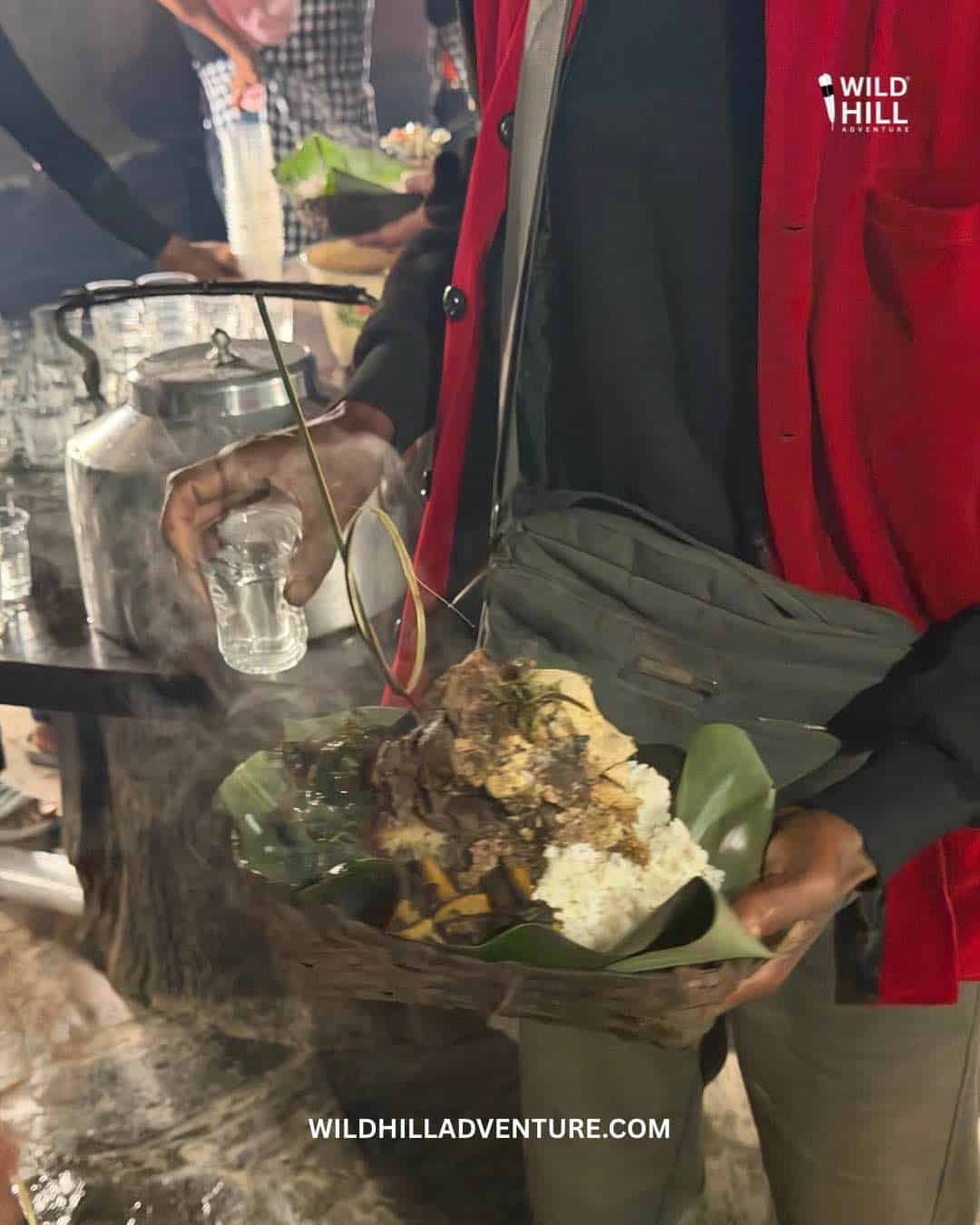
Food is an important part of Aoleang.
Community feasting and sharing food with relatives, neighbours and friends are repeatedly mentioned in traditional descriptions of the festival.
Konyak food is usually simple, local and connected closely to what is available around the village.
For travellers, eating inside a local home can become one of the most memorable experiences of the trip.
Don’t expect restaurant-style dining everywhere.
You are travelling through remote Nagaland.
Sometimes the meal may simply be rice, vegetables, local greens and whatever the household has prepared.
That is part of the experience.
Vegetarian Food During Aoleang
Vegetarian travellers can visit Aoleang, but advance planning is important.
Food options become limited once you leave larger towns.
When we arrange Nagaland tours for vegetarian guests, we inform the homestays beforehand and coordinate simple vegetarian meals.
Expect practical food rather than elaborate restaurant menus:
rice, dal where available, potatoes, vegetables, local greens, salad and simple home-cooked dishes.
If you are Jain or have strict dietary restrictions, inform your tour organiser well in advance.
Photography at Aoleang Festival
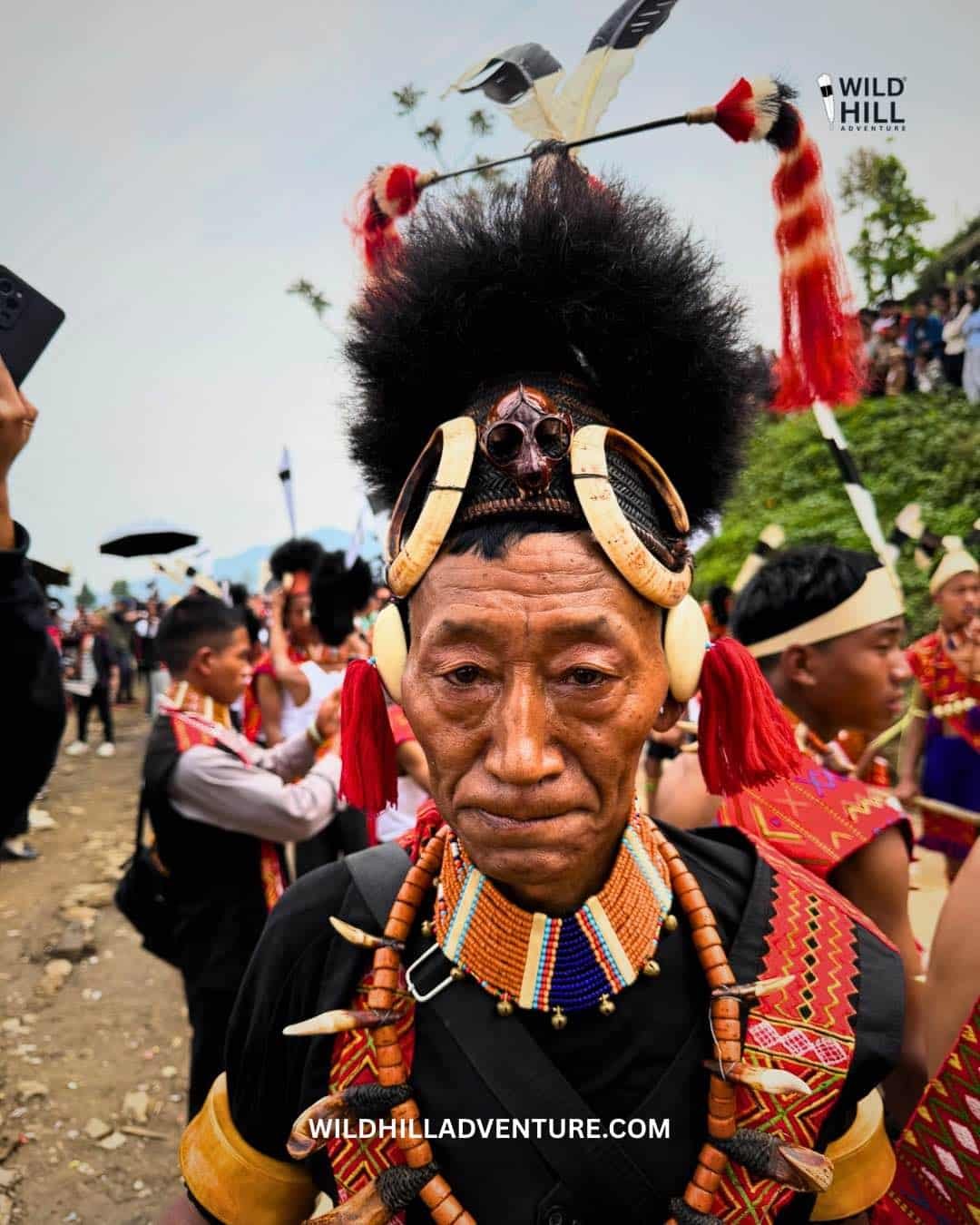
Aoleang is excellent for:
Portrait photography: Konyak elders, artisans and community members.
Cultural photography: dances, music, traditional attire and ceremonies.
Documentary photography: kitchens, family interactions, village preparation and everyday life.
Architecture: traditional Konyak houses and Morungs.
Landscape photography: Mon’s hills, villages and the India-Myanmar border region.
But permission matters.
Don’t push a camera into someone’s face because you travelled hundreds of kilometres to photograph them.
A simple conversation can transform both the photograph and the experience.
Best Places to Experience Aoleang Festival
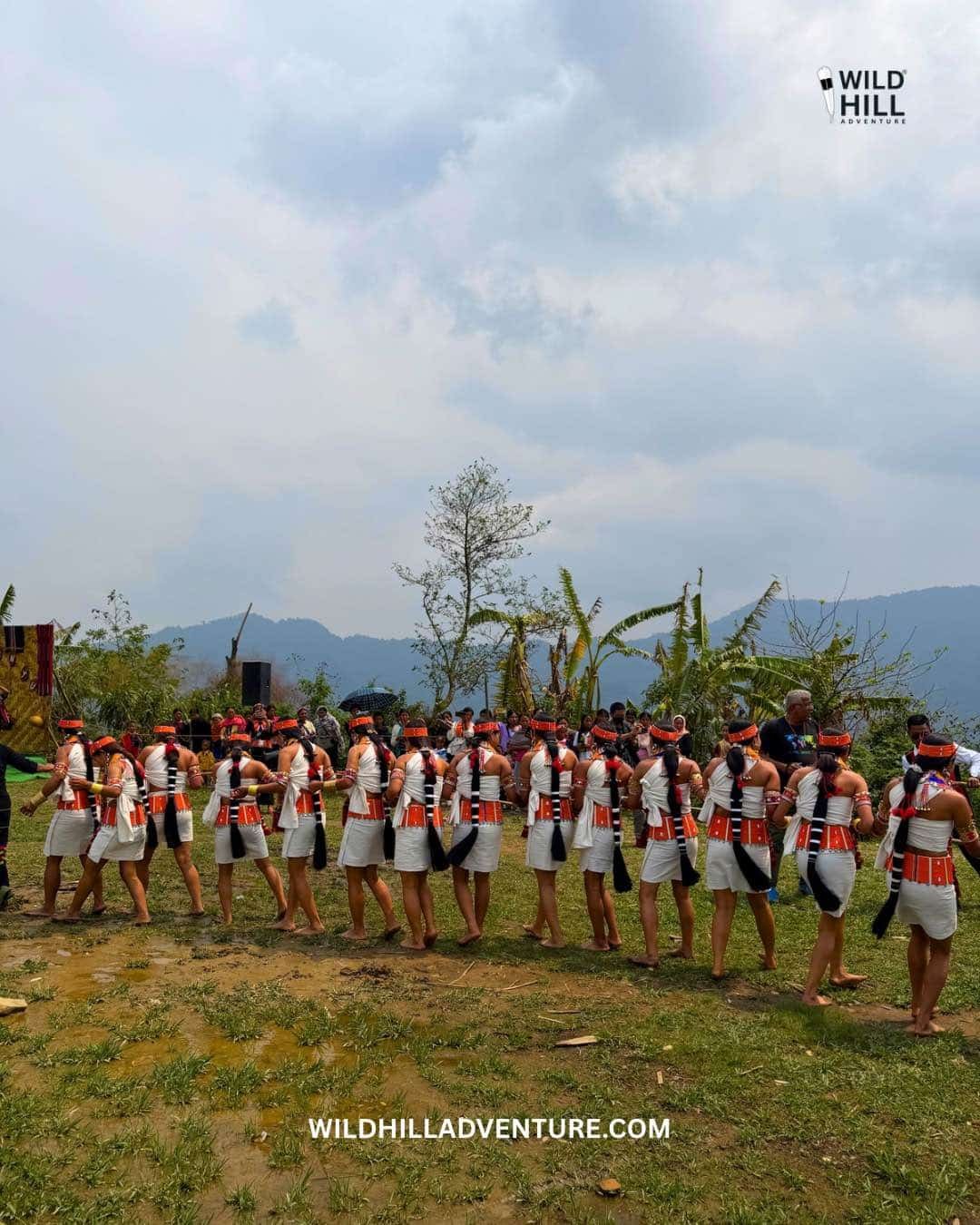
Rather than staying in one location for the entire journey, we prefer combining different experiences:
Mon Town: Best for major organised programmes, logistics and access to the wider district.
Longwa: Best for borderland culture, village life and deeper interaction with Konyak traditions.
Other Konyak villages: Depending on the year’s celebrations, we may include other villages where community events or interesting cultural activities are taking place.
This flexibility matters.
Aoleang isn’t a fixed commercial event where everything happens according to a tourist timetable.
How Many Days Do You Need for Aoleang?
I recommend 5 to 7 days in the Mon region if Aoleang is your main purpose.
If you are coming all the way to Nagaland, don’t spend two days travelling and then give yourself only one day for the festival.
A comfortable trip could look something like:
Day 1: Arrive in Mon
Day 2: Aoleang celebrations and Mon exploration
Day 3: Travel to Longwa and village exploration
Day 4: Full Longwa cultural experience
Day 5: Visit another Konyak village
Day 6: Additional festival/village experience
Day 7: Departure
The exact itinerary should depend on the year’s programme and road conditions.
How to Reach Aoleang Festival
For most travellers, the journey involves reaching Assam first and then entering Nagaland.
Depending on your larger Northeast itinerary, practical gateways can include Dibrugarh, Jorhat or Dimapur, followed by a road journey towards Mon.
Distances in Northeast India can be misleading.
A journey that looks short on Google Maps may take considerably longer because of hill roads, weather, roadworks and stops.
Keep buffer time.
Where to Stay During Aoleang Festival
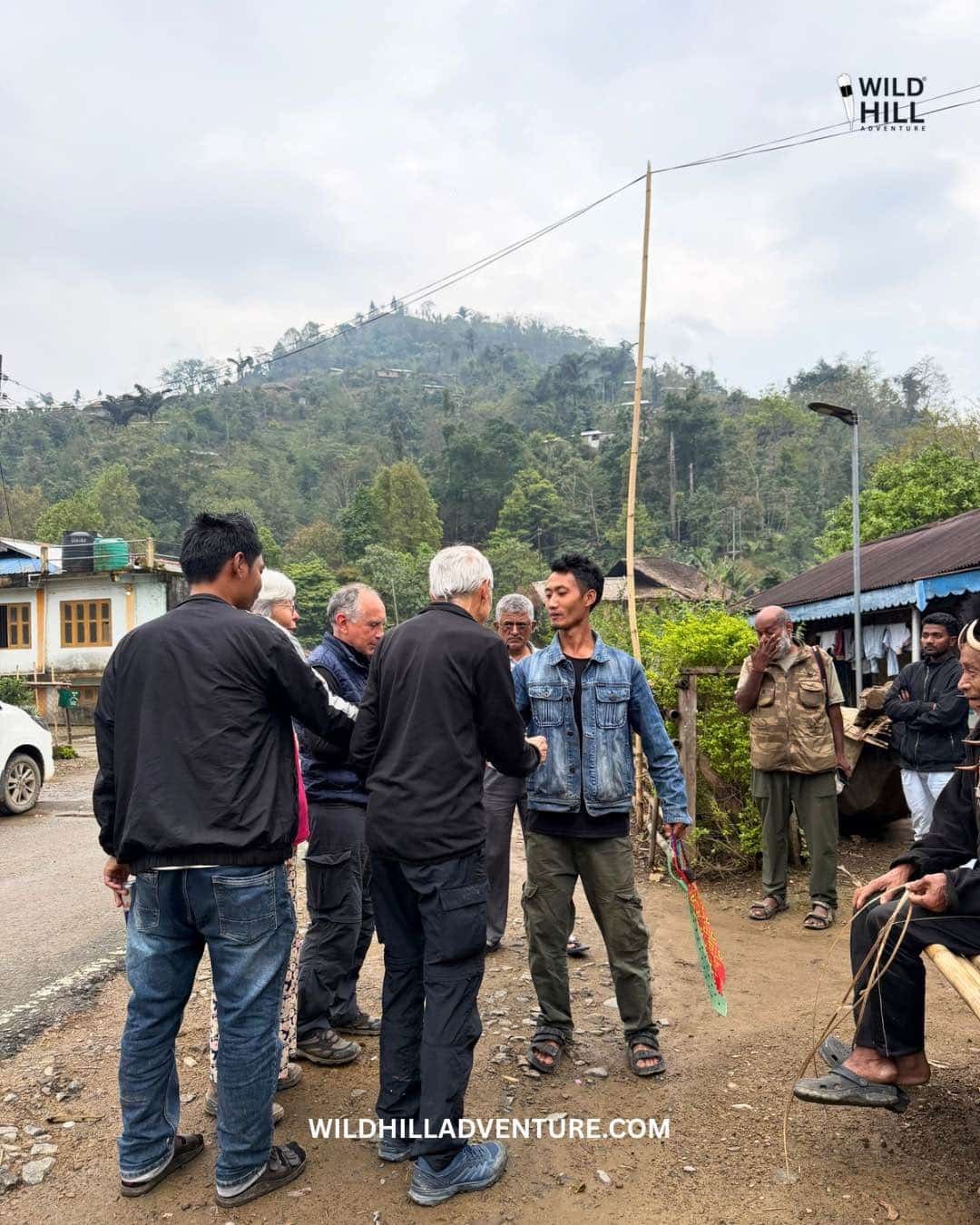
Accommodation in Mon district is limited compared with mainstream tourist destinations.
You will generally find:
hotels and guesthouses in Mon,
basic homestays,
and village accommodation in selected locations.
If you are visiting specifically during Aoleang Festival, book well in advance.
April attracts photographers, researchers, cultural travellers and visitors specifically interested in the Konyak community.
The best small homestays can fill quickly.
Should You Stay in a Homestay?
Absolutely, if you are comfortable with basic facilities.
A hotel gives you a room.
A good homestay can give you a story.
You may sit around a kitchen fire, watch food being prepared, talk with your host, hear village stories and understand daily Konyak life.
Don’t expect luxury.
Expect authenticity.
Aoleang Festival vs Hornbill Festival
People often ask us which is better.
They are completely different experiences.
The Hornbill Festival brings many Naga tribes together and is ideal for travellers visiting Nagaland for the first time.
The Aoleang Festival is specifically connected with the Konyak community.
Hornbill gives you breadth.
Aoleang gives you depth.
If your main interest is Konyak culture, Longwa, Mon, tattooed elders, traditional villages and documentary photography, I would strongly consider Aoleang.
Aoleang for Foreign Travellers
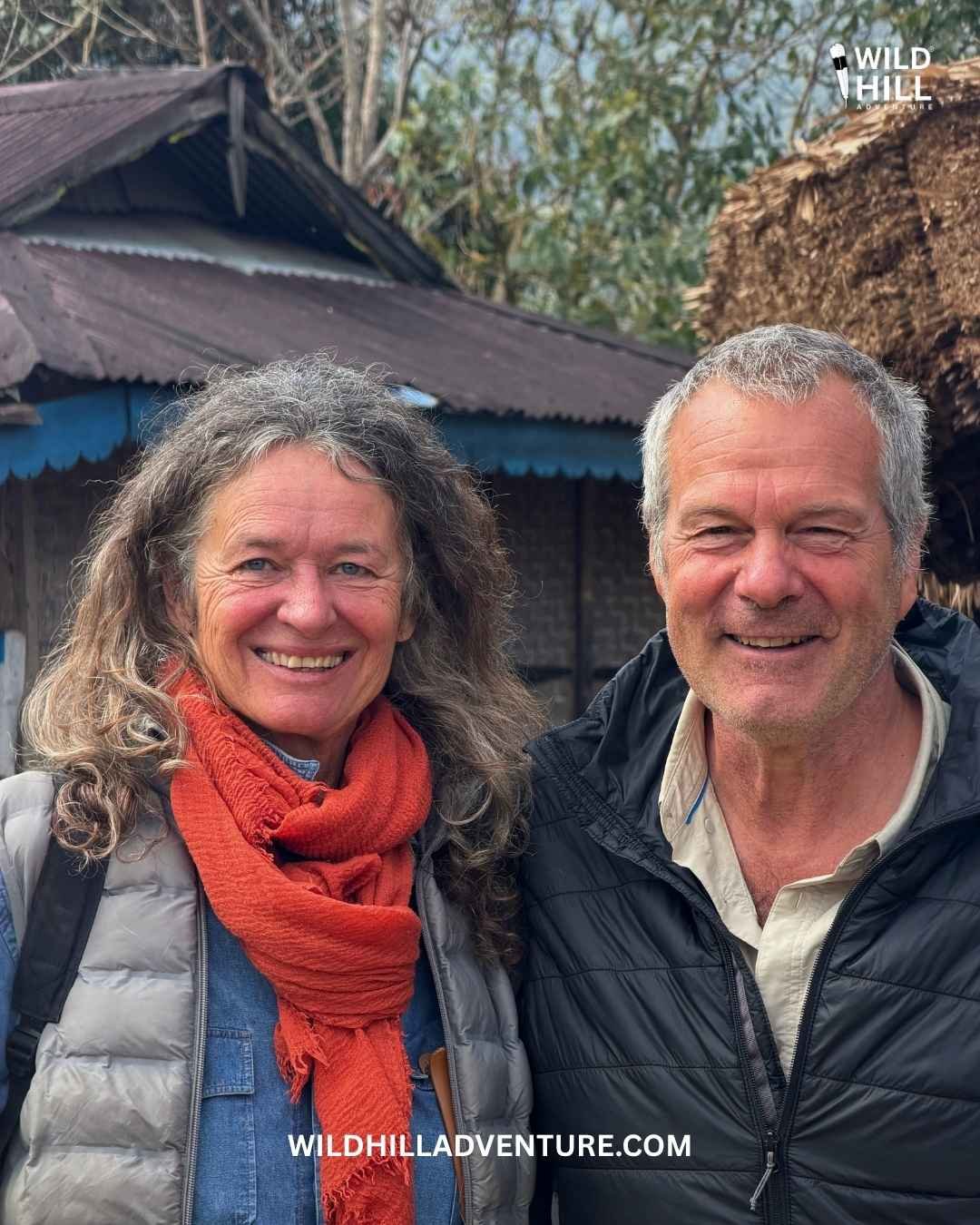
Mon and Longwa attract travellers and photographers from around the world because Konyak culture is unlike almost anything else you will encounter in India.
However, foreign nationals should check the current permit and border-area requirements before travelling, because regulations can change.
The same applies to Indian travellers regarding any applicable entry requirements for Nagaland.
Don’t rely on an old travel blog for permit rules.
Check shortly before your journey.
Travel With a Local Guide
For Aoleang, I strongly recommend having a knowledgeable local guide.
Not because you can’t physically walk through a village alone.
You can.
But you will understand perhaps 20% of what you are seeing.
A guide can explain:
who people are,
what different ornaments represent,
what is happening during ceremonies,
the role of the Morung,
village etiquette,
where photography is appropriate,
how to communicate with elders,
and the stories behind the places you visit.
For cultural travel, context is everything.
Responsible Travel During Aoleang
Konyak culture has attracted photographers for decades, particularly because of the striking appearance of elderly tattooed men.
Tourism can help local communities, but it can also turn people into photographic objects if handled badly.
We ask our guests to follow a few simple principles.
Ask before photographing people. Respect homes and private spaces. Don’t touch traditional objects without permission. Don’t interrupt ceremonies for photographs. Don’t fly drones without appropriate permission. Dress respectfully. Support local homestays, guides and artisans.
And most importantly:
Talk to people.
Aoleang is about people, not photographs.
Our Experience Travelling Through Konyak Country
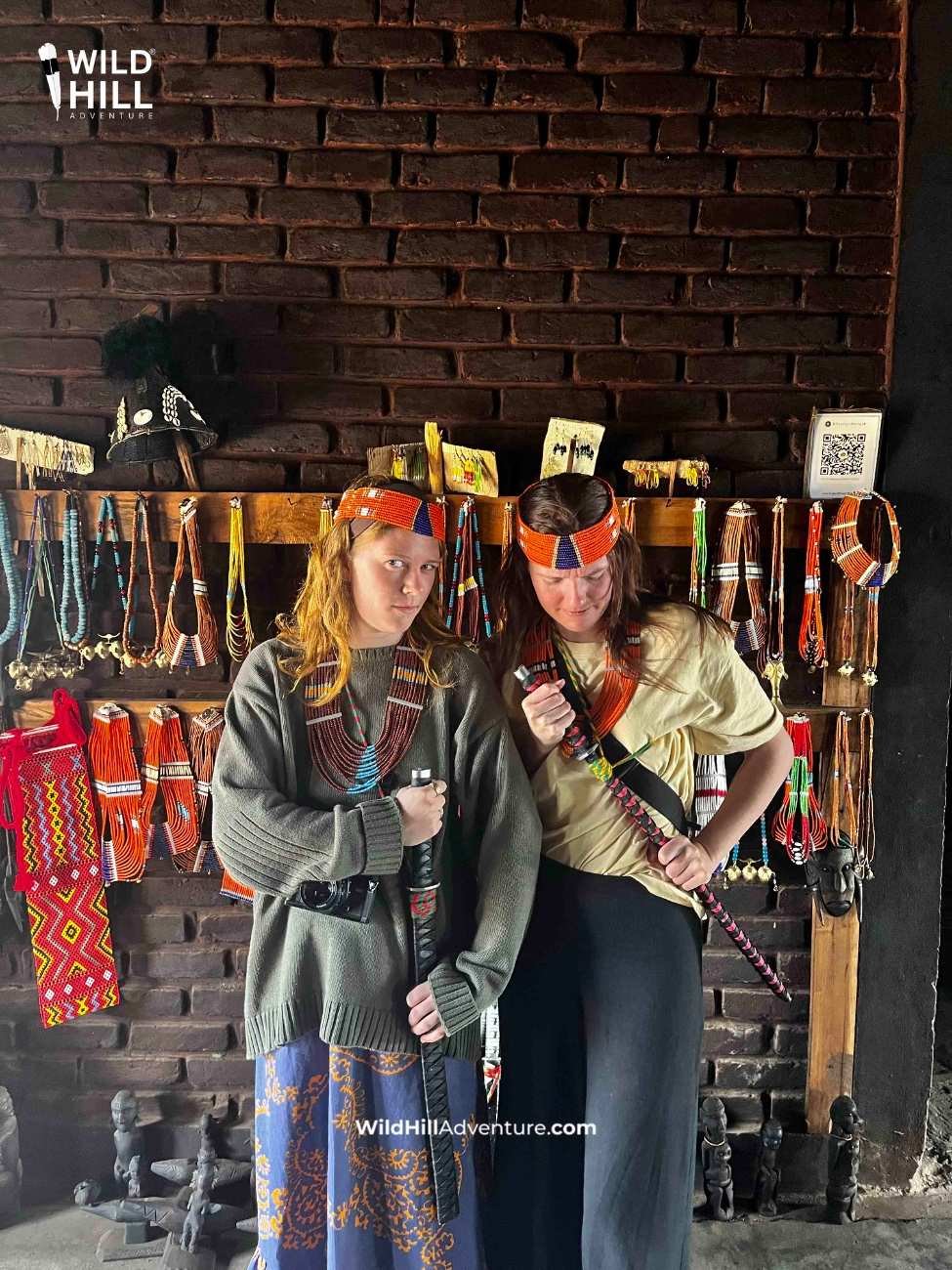
We have travelled through Nagaland for years and hosted both Indian and international guests across the state.
And one thing we’ve learned is that the trips people remember most aren’t necessarily the trips with the longest sightseeing checklist.
They remember sitting in someone’s kitchen.
They remember an elderly man telling them a story.
They remember a local guide laughing with them.
They remember a meal they didn’t recognise.
They remember hearing a log drum.
They remember driving through remote hills wondering where the road was taking them.
And sometimes they remember simply sitting quietly in a village where nothing was happening.
That is the Nagaland we want people to experience.
Why Book Your Aoleang Festival Trip With Wild Hill Adventure?
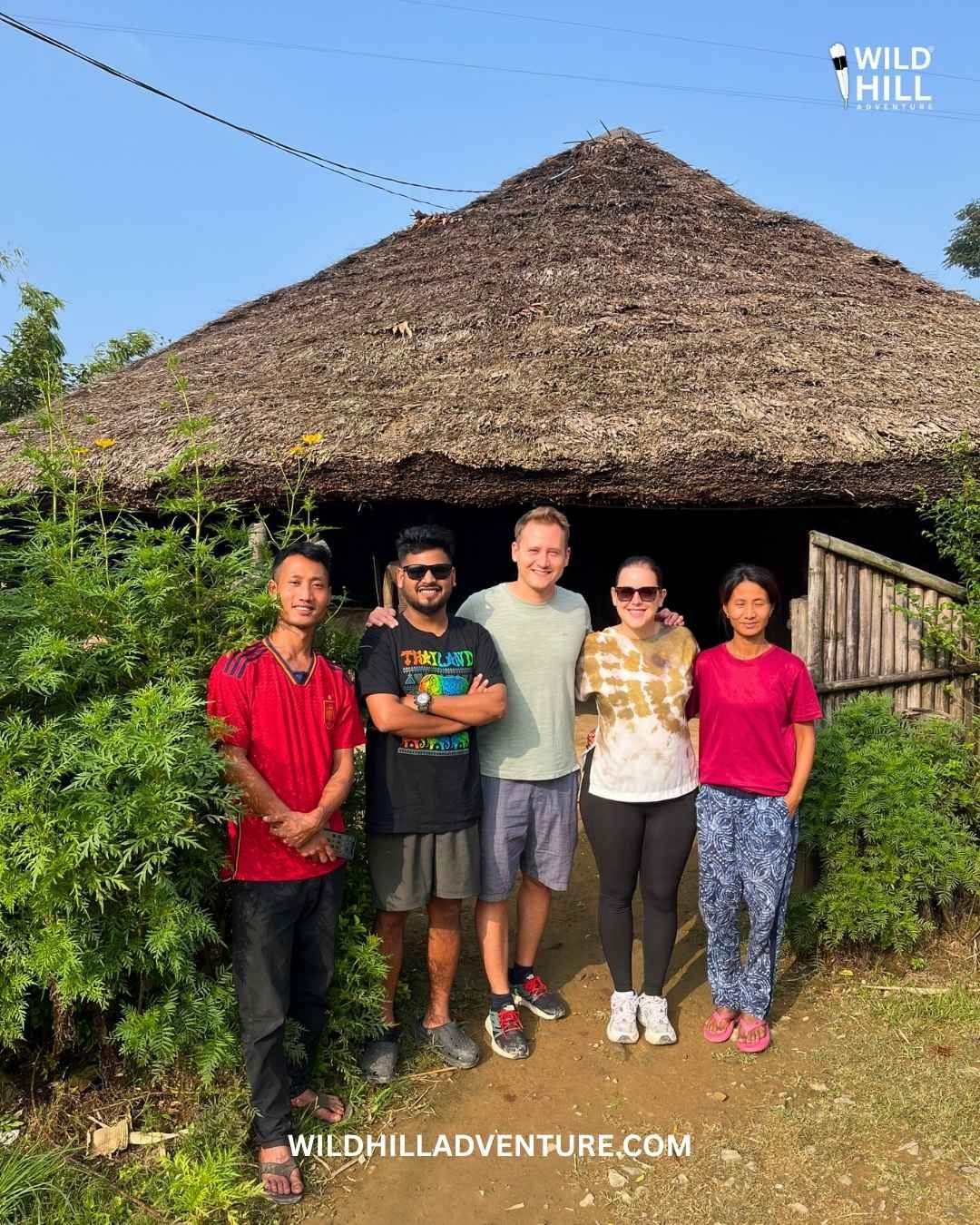
Travelling through Mon district requires more ground coordination than a normal city holiday.
When you travel with Wild Hill Adventure, we can arrange the complete journey according to your itinerary, including transportation, accommodation, local guides, village experiences and applicable permit assistance.
More importantly, we don’t want your Aoleang journey to become:
hotel → festival ground → photograph → hotel.
We prefer combining the festival with Longwa, village stays, local families, cultural walks and lesser-known experiences whenever conditions and time allow.
Because that is where Nagaland becomes memorable.
Contact us
- Phone/WhatsApp: +91 9365476611
- Instagram: @wildhilladventure
- Email: wildhilladventure@gmail.com
- Website: www.wildhilladventure.com
Final Thoughts: Is Aoleang Festival Worth Visiting?
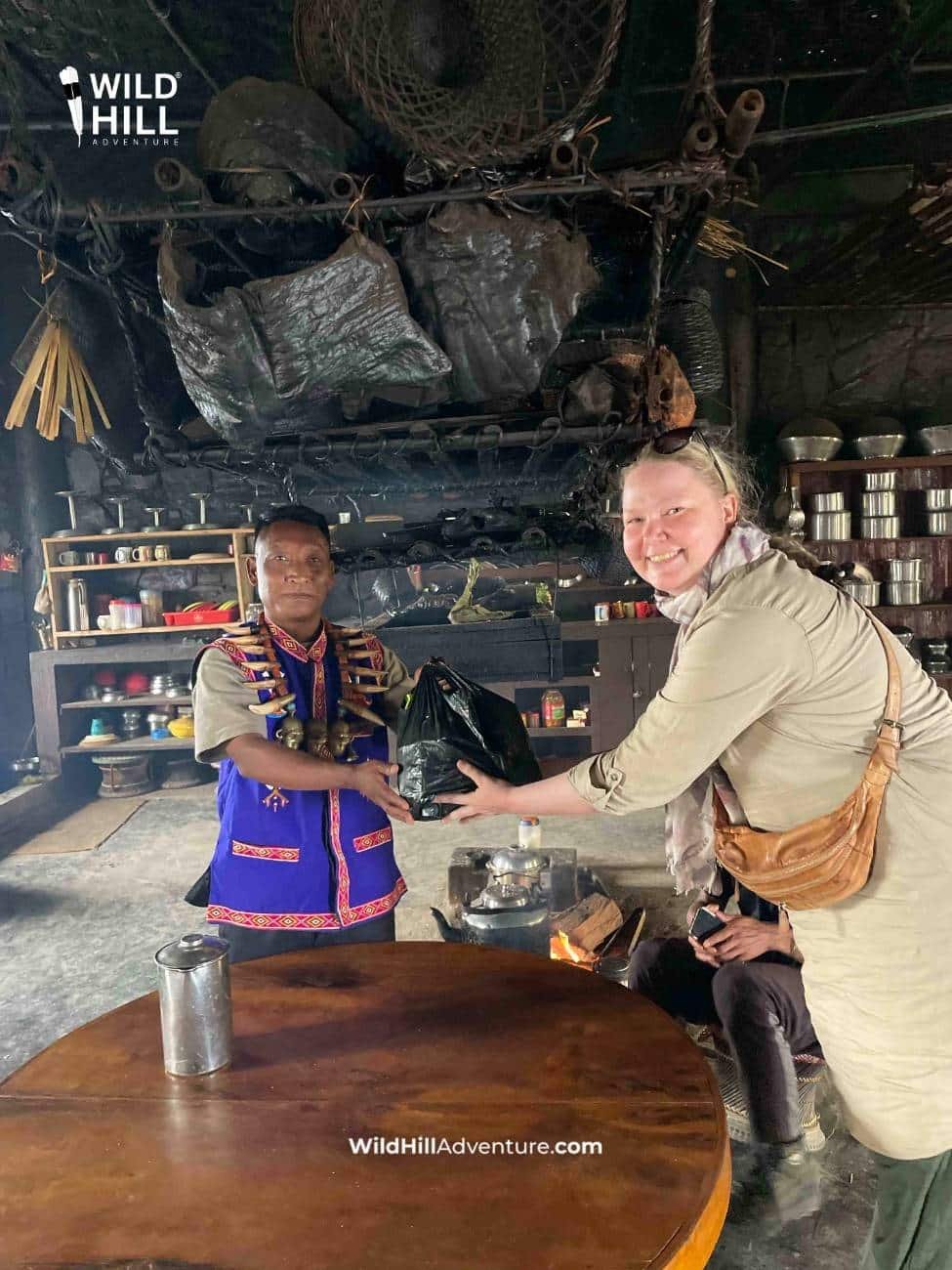
Yes, especially if culture is the reason you travel.
Don’t come expecting a polished commercial festival.
Come expecting something more human.
Come for the Konyak villages.
Come for the stories.
Come for the elderly men and women carrying memories of a very different Nagaland.
Come for the Morungs and log drums.
Come for traditional clothing and jewellery.
Come for village kitchens and community feasts.
Come for Longwa and the hills of Mon.
Come to listen.
Because the Aoleang Festival isn’t simply something you watch.
If you give yourself enough time, it becomes a doorway into understanding the Konyak people and one of the most fascinating cultural landscapes in Northeast India.
FAQs About Aoleang Festival
1. What is the Aoleang Festival?
The Aoleang Festival, also known as Aoleang Monyu, is the major traditional festival of the Konyak Naga community of Nagaland. It marks the arrival of spring and is traditionally associated with the completion of seed sowing, prayers for a good harvest, community feasting, traditional dances, music and family gatherings.
2. When is the Aoleang Festival celebrated?
The Aoleang Festival is traditionally celebrated from 1 April to 6 April every year. Different days have different cultural significance, while major public celebrations and cultural programmes may be concentrated on particular dates. Travellers should confirm the official programme before planning their trip.
3. Where is the Aoleang Festival celebrated in Nagaland?
The Aoleang Festival is celebrated throughout the Konyak areas of Mon district in Nagaland. Mon town hosts important celebrations, while villages across the district hold their own community festivities. Travellers can combine Mon with villages such as Longwa for a deeper cultural experience.
4. Which tribe celebrates the Aoleang Festival?
The Konyak Naga tribe celebrates Aoleang. The Konyaks are one of the major Naga communities and predominantly inhabit Mon district in northern Nagaland, including villages near the India-Myanmar border.
5. Why is the Aoleang Festival celebrated?
Aoleang is traditionally celebrated after the sowing of seeds and welcomes the arrival of spring and a new agricultural cycle. The festival is associated with prayers for prosperity and a good harvest, while also strengthening family relationships, community bonds and Konyak cultural identity.
6. How many days is the Aoleang Festival celebrated?
The traditional Aoleang Festival lasts for six days, generally from April 1 to April 6. Each day traditionally has its own significance, from preparation and rituals to major celebrations, family gatherings and the conclusion of the festival.
7. What is the best place to experience Aoleang Festival?
Mon district is the best destination for experiencing Aoleang Festival. Travellers can stay around Mon for the larger celebrations and combine their trip with Konyak villages such as Longwa. Spending time in villages provides a more intimate experience of Konyak culture than attending only a public festival programme.
8. Can tourists attend the Aoleang Festival?
Yes. Indian and foreign tourists can visit Nagaland during the Aoleang Festival, subject to the entry and permit regulations applicable at the time of travel. Visitors should respect local customs and ask permission before photographing people, homes or ceremonies.
9. What can tourists see during the Aoleang Festival?
Travellers may experience traditional Konyak dances, songs, ceremonial activities, log-drum performances, traditional attire, jewellery, community gatherings, local food and village celebrations. The exact activities vary between villages and from year to year.
10. Can I meet the last Konyak headhunters during Aoleang Festival?
Visitors to Mon district may have opportunities to meet elderly Konyak men belonging to the generation associated with Nagaland’s historical headhunting era, particularly in villages such as Longwa and surrounding Konyak areas. Such meetings should always be arranged respectfully through local guides and should focus on their stories and cultural history rather than treating them as tourist attractions.
11. Is Longwa Village worth visiting during the Aoleang Festival?
Yes. Longwa Village is one of the most interesting places to combine with an Aoleang Festival trip. Travellers can explore Konyak village life, traditional houses, Morungs, log drums, local crafts, the Angh’s house and the fascinating India-Myanmar borderland. Ideally, keep at least two nights for Longwa.
12. How do I reach the Aoleang Festival in Mon, Nagaland?
Most travellers first reach Assam or another major gateway in Northeast India and then continue by road to Mon district. Depending on your itinerary, Dibrugarh, Jorhat and Dimapur can be useful gateways. Road journeys in this region can be long, so sufficient travel time should be kept between destinations.
13. Where should I stay during the Aoleang Festival?
Travellers can choose from hotels, guesthouses and homestays in Mon district. For a deeper cultural experience, staying in a local homestay in a Konyak village can be rewarding. Accommodation is limited compared with mainstream tourist destinations, so advance booking is strongly recommended during Aoleang.
14. Do I need a permit to visit Nagaland for Aoleang Festival?
Permit requirements depend on your nationality and the areas you plan to visit. Indian and foreign travellers should check the latest Nagaland entry and restricted-area regulations before travelling, particularly when visiting remote border regions. If you book your Nagaland package with Wild Hill Adventure, we can assist with the applicable permits and local arrangements.
15. Is a local guide necessary for the Aoleang Festival?
A local guide is highly recommended, especially when exploring Konyak villages. A knowledgeable guide can explain the meaning of ceremonies, traditional attire, Morungs, log drums, village customs and Konyak history while helping visitors communicate respectfully with local families and elders.
16. Is vegetarian food available during the Aoleang Festival?
Yes, vegetarian food can be arranged, but options become limited in remote areas of Mon district. Inform your hotel, homestay or tour operator in advance. Simple meals such as rice, dal, vegetables, potatoes and local greens are generally easier to arrange than elaborate vegetarian restaurant food.
17. Is the Aoleang Festival good for photography?
Yes. Aoleang is one of Nagaland’s most fascinating festivals for cultural, documentary and portrait photography. Traditional Konyak clothing, jewellery, village architecture, ceremonies, landscapes and everyday village life offer excellent photographic opportunities. Always ask permission before taking close-up portraits or photographing private ceremonies.
18. What is the difference between Aoleang Festival and Hornbill Festival?
The Hornbill Festival showcases cultures from many Naga communities at one major tourism event, while Aoleang is specifically a traditional Konyak festival celebrated in Mon district and Konyak villages. Hornbill is ideal for getting a broad introduction to Nagaland, while Aoleang offers a deeper experience of Konyak culture.
19. How many days are enough for an Aoleang Festival trip?
A minimum of 5 to 7 days around Mon district is recommended if Aoleang is the main purpose of your trip. This gives you time to experience festival celebrations, explore Mon, stay in Longwa, visit Konyak villages and interact with local communities without rushing.
20. How can I plan an Aoleang Festival tour with Wild Hill Adventure?
You can book a customised Aoleang Festival tour with Wild Hill Adventure covering transportation, accommodation, local guides, village experiences, Longwa Village and assistance with applicable permits. We recommend combining the festival with local homestays and lesser-explored Konyak villages rather than visiting only the main festival venue.
Why Choose Wild Hill Adventure for Your Nagaland & Northeast India Trip?
Travelling through Nagaland and Northeast India is very different from travelling through India’s more established tourist circuits.
Here, road conditions can change, permits matter, accommodation in remote villages is limited, mobile networks can disappear, and some of the most memorable places are not always easy to find online.
This is where travelling with a local Northeast-based company like Wild Hill Adventure makes a real difference.
We Are From Northeast India
Northeast India is not simply another destination we sell.
It is our home.
Our team has spent years travelling through Nagaland, Assam, Meghalaya, Arunachal Pradesh and other parts of the Northeast. We personally explore many of the routes and destinations before recommending them to our guests.
That local experience helps us understand not only where to go, but how to travel these regions properly.
We Personally Explore the Routes
Many of the places we include in our itineraries are places we have personally travelled to.
In Nagaland, our journeys have taken us through places such as:
- Kohima
- Kisama Heritage Village
- Dzukou Valley
- Khonoma
- Dzüleke
- Jakhama
- Pfutsero
- Kapamodzü Peak
- Longwa
- Mon and the Konyak region
Our Kapamodzü journey is a good example. We have experienced the route ourselves during monsoon, driven through difficult road sections, stayed near the peak, eaten there and explored the Pfutsero side.
That experience helps when we’re planning the same journey for a guest.
Strong Experience With the Hornbill Festival
Nagaland becomes extremely busy during the Hornbill Festival.
Accommodation fills up, Kohima traffic becomes heavy and first-time visitors can easily underestimate travel times.
Because we regularly operate Hornbill Festival trips, we can help guests plan the festival together with destinations such as Dzukou Valley, Khonoma, Dzüleke, Kapamodzü, Pfutsero and Longwa rather than simply visiting Kisama and returning home.
Local Guides and Community Connections
For us, a Nagaland trip shouldn’t only mean taking photographs from viewpoints.
We work with local people wherever possible.
Local guides can help travelers understand village history, tribal traditions, food, agriculture and everyday life in a way that simply driving through a destination cannot.
It also means tourism money reaches the communities travelers have actually come to experience.
We Take You Beyond the Usual Tourist Circuit
If you only search online, most Nagaland itineraries look similar:
Dimapur → Kohima → Hornbill Festival → Dzukou → Return.
There is much more to Nagaland.
Depending on your interests and available time, we can build journeys around remote villages, trekking, culture, food, photography, mountains and border regions.
Sometimes the best experience isn’t even a famous attraction.
It could be stopping beside a beautiful rice field, eating a local thali at Mao, visiting a vegetable farm near Pfutsero or spending an evening talking with people you have just met.
Those are the experiences we personally enjoy, and they influence the way we design our trips.
We Understand Northeast India’s Road Conditions
Google Maps doesn’t always tell the complete story here.
A road showing three hours can take considerably longer because of rain, landslides, construction or poor road conditions.
We plan journeys with these realities in mind.
For remote destinations and monsoon journeys, we can also select vehicles according to the route and current conditions rather than simply choosing the cheapest available option.
Permits Become Easier
Several parts of Northeast India have permit requirements.
Depending on the destination and nationality, travelers may need documents such as an Inner Line Permit (ILP) or other permissions.
Our team helps guests understand and arrange the applicable permits for their itinerary so they don’t have to figure everything out after arriving.
Private and Customized Northeast Trips
Not everyone wants the same holiday.
Some travelers want photography.
Some want trekking.
Some want culture and villages.
Others want comfortable hotels and relaxed sightseeing.
Instead of forcing every traveler into exactly the same itinerary, we can customize trips according to your time, interests, comfort level and budget.
On-Ground Support Matters Here
This is probably one of the most underestimated advantages of booking with a local operator.
When everything goes according to plan, arranging a trip looks easy.
The difference becomes obvious when something changes.
Bad weather, a road closure, delayed arrival, vehicle problem or accommodation issue can require quick local coordination.
Having a team operating within Northeast India gives travelers someone on the ground who can help find alternatives.
We Prefer Real Experiences Over Checklist Tourism
Our philosophy is simple:
Don’t just see Northeast India. Experience it.
Eat local food.
Stay in villages when appropriate.
Talk to people.
Walk through local markets.
Learn why communities protect their forests.
Understand the stories behind tribal traditions.
And sometimes, forget the itinerary for an hour and simply sit looking at the mountains.
That’s the kind of Northeast India we want our guests to experience.
Travel Northeast India With People Who Call It Home
Whether you’re planning the Hornbill Festival, Dzukou Valley Trek, Kapamodzü Peak, Longwa Village, an offbeat Nagaland road trip, or a longer journey combining Nagaland with Assam and other Northeast states, Wild Hill Adventure can help you design the trip around what you actually want to experience.
We don’t want to show you Northeast India only as a collection of tourist attractions.
We want to show you the Northeast that we know, travel through and love ourselves.
Contact us
- Phone/WhatsApp: +91 9365476611
- Instagram: @wildhilladventure
- Email: wildhilladventure@gmail.com
- Website: www.wildhilladventure.com

0 Comment