

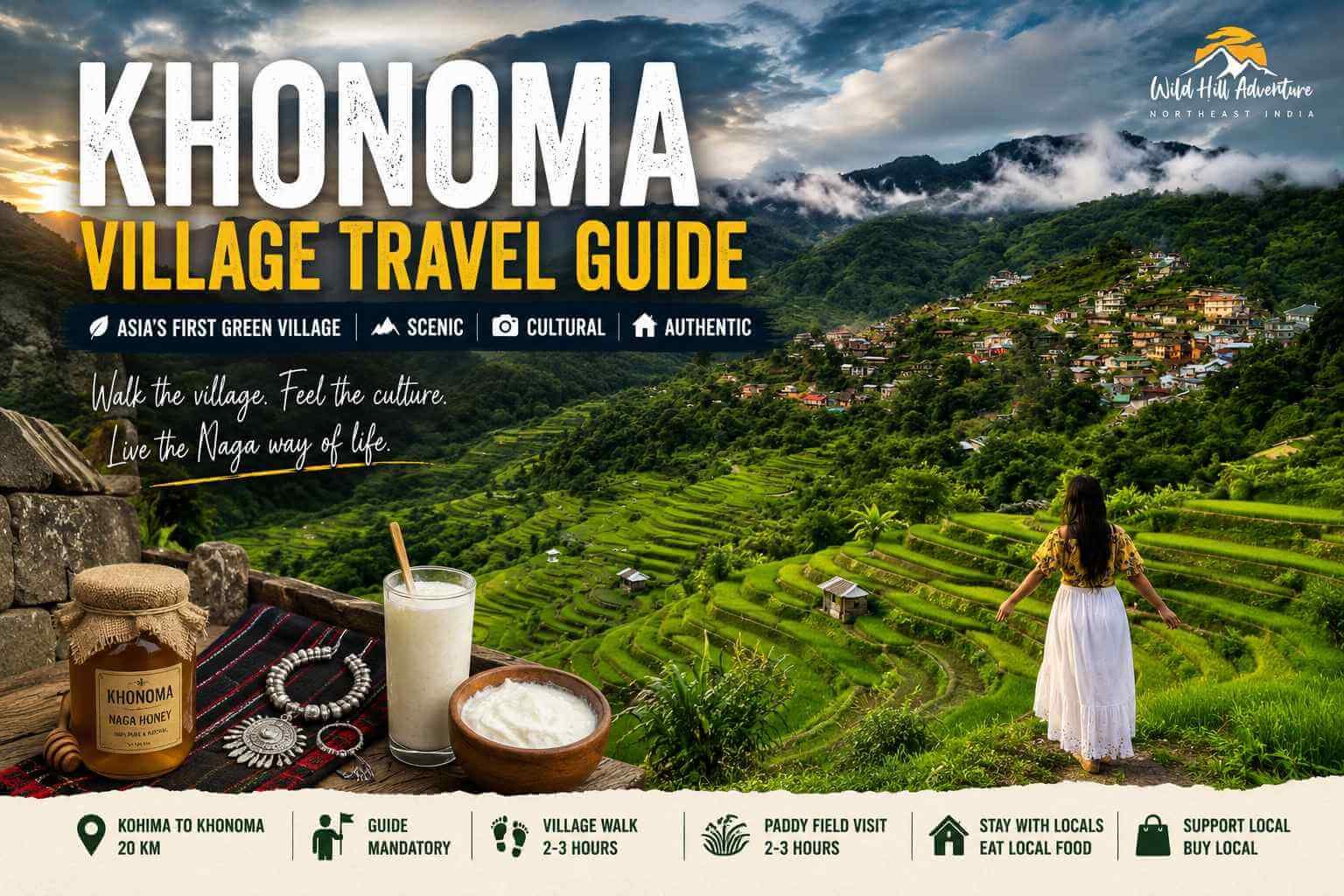

Khonoma Village Travel Guide
My Experience Exploring Nagaland’s Famous Green Village
There are some places in Nagaland that you visit once, take a few photographs, and move on.
Khonoma is not one of them.
I honestly cannot count how many times we have been to Khonoma.
Through our journeys with Wild Hill Adventure, we have visited the village with families, solo travelers, photographers, international guests, groups coming for the Hornbill Festival, and people exploring Nagaland for the first time.
Yet I still enjoy returning.
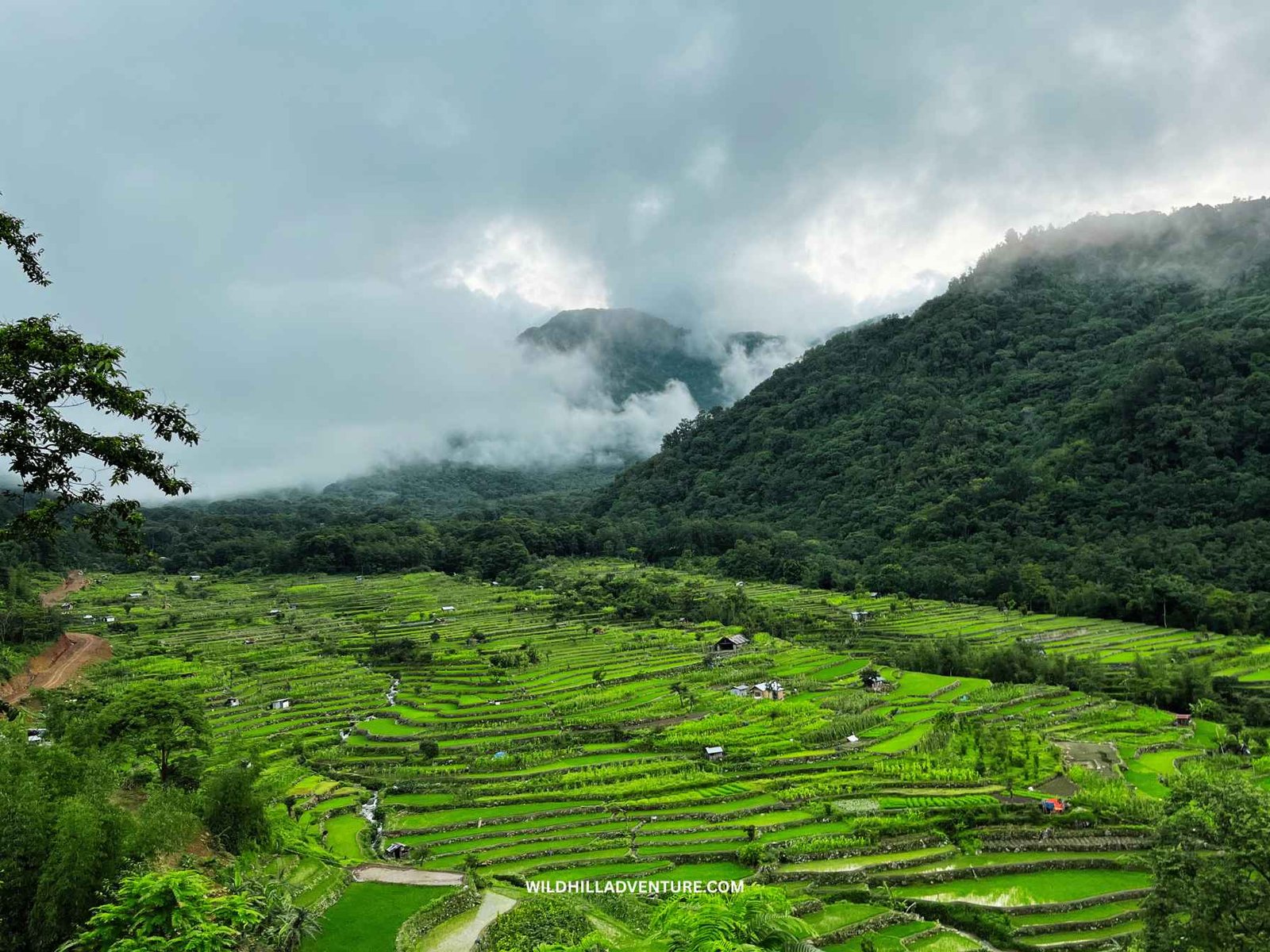
Maybe it is the endless green paddy terraces.
Maybe it is the silence.
Maybe it is walking through narrow village lanes while listening to stories from a local guide.
Or maybe it is simply because Khonoma gives you something that is becoming increasingly difficult to find while travelling: a chance to slow down.
Located approximately 20 km from Kohima, Khonoma can easily be visited as a day trip. But if your itinerary allows it, I strongly recommend staying overnight.
During the daytime, Khonoma is beautiful.
After the day visitors leave, you begin to understand the village differently.
This detailed Khonoma Village Travel Guide is based on our repeated visits and experiences travelling here with guests. I’ll cover how to reach Khonoma, what to see, the village walk, paddy fields, local food, accommodation, what you can buy, how much time you need and why I think Khonoma deserves more than a quick photo stop.
Quick Khonoma Village Travel Guide
| Information | Details |
|---|---|
| Location | Near Kohima, Nagaland |
| Distance from Kohima | Around 20 km |
| Ideal duration | Full day or 1 night |
| Village walk | Around 2–3 hours |
| Paddy field experience | Around 2–3 hours |
| Guide | Local guide required for guided village exploration |
| Best for | Culture, nature, photography, slow travel |
| Stay options | Local homestays and guesthouses |
| Can it be a day trip? | Yes |
| Our recommendation | Stay overnight if your itinerary allows |
Where Is Khonoma Village?
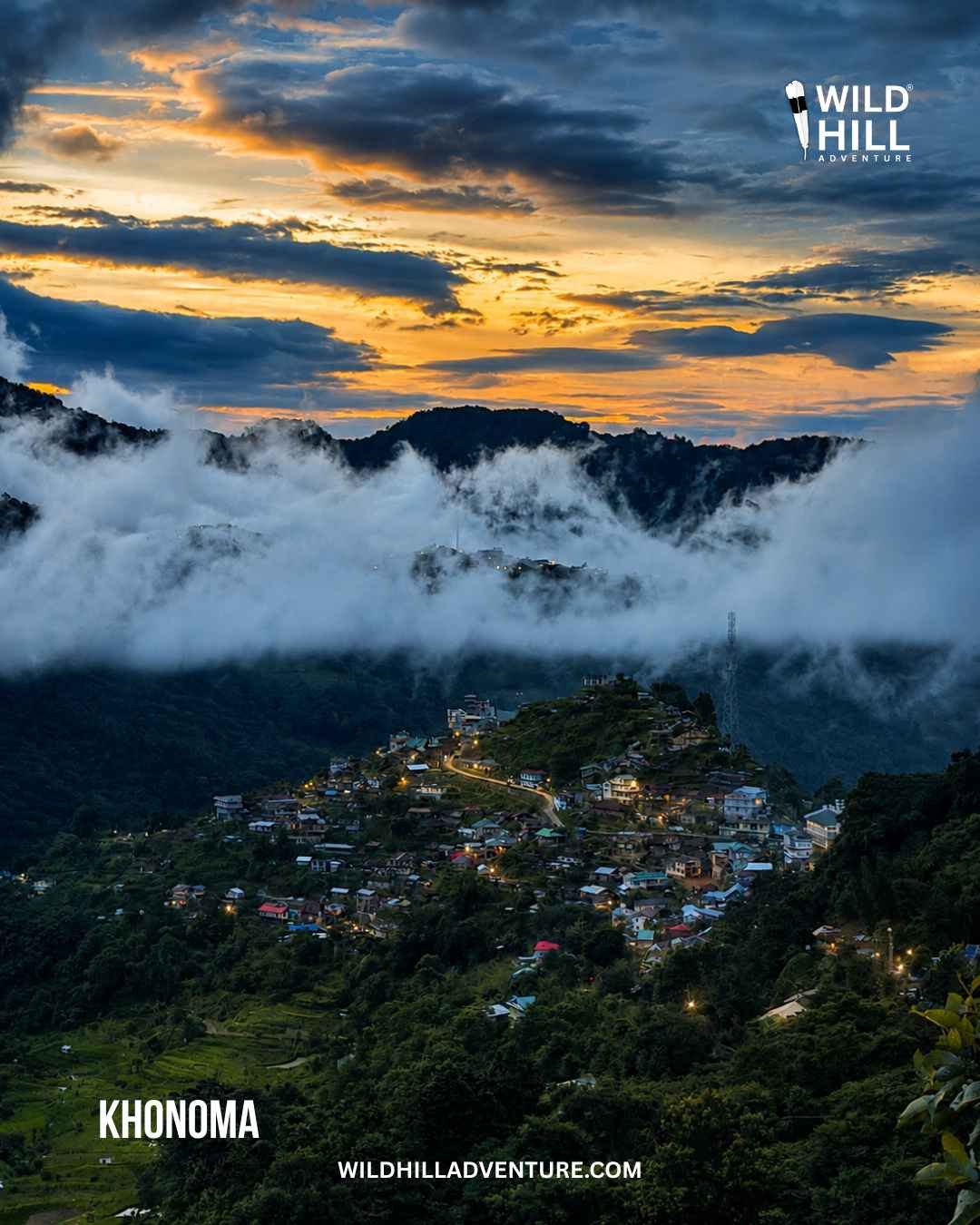
Khonoma is located around 20 km from Kohima, the capital of Nagaland.
That proximity makes it one of the easiest cultural village experiences to add to a Kohima itinerary.
But don’t mistake “close to Kohima” for “another Kohima attraction.”
The atmosphere changes quickly.
You leave the busy roads around the city and gradually enter a landscape dominated by hills, forests, agricultural terraces and traditional villages.
Then Khonoma appears.
And one of the first things you’ll probably notice is the green.
So much green.
Why Is Khonoma Village Famous?
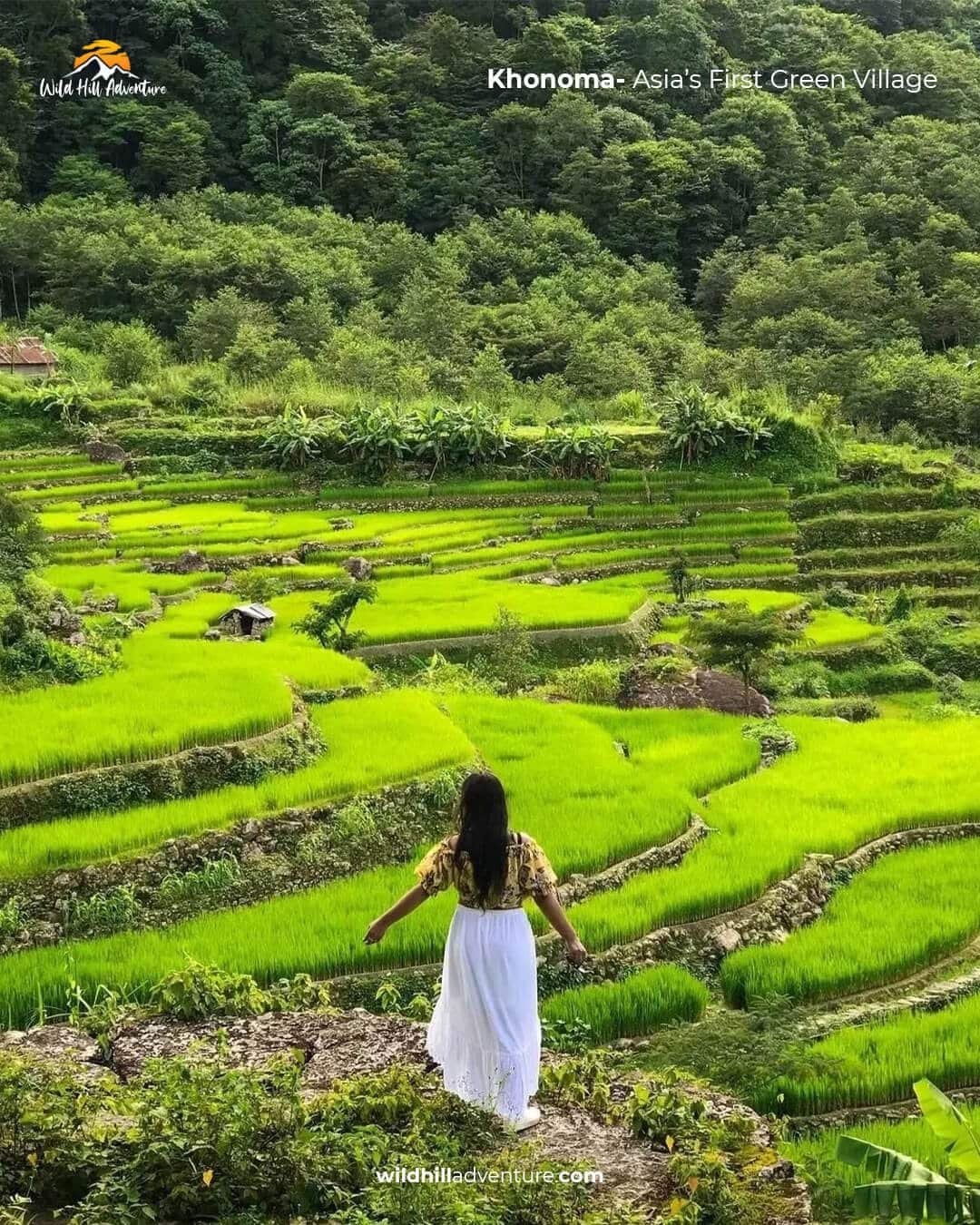
Khonoma is widely known for its community conservation efforts and is often described as India’s first green village.
But I think that description alone undersells it.
Khonoma is also a living Angami Naga village.
People aren’t living here to create a tourist attraction.
They are farming.
Families are going about their daily lives.
Children are walking home.
People are producing food and local products.
Traditional and modern houses sit alongside one another.
And around the village are some of the most beautiful agricultural terraces you’ll see in Nagaland.
That combination of culture, history, agriculture, conservation and everyday village life makes Khonoma special.
Kohima to Khonoma Village: How to Reach
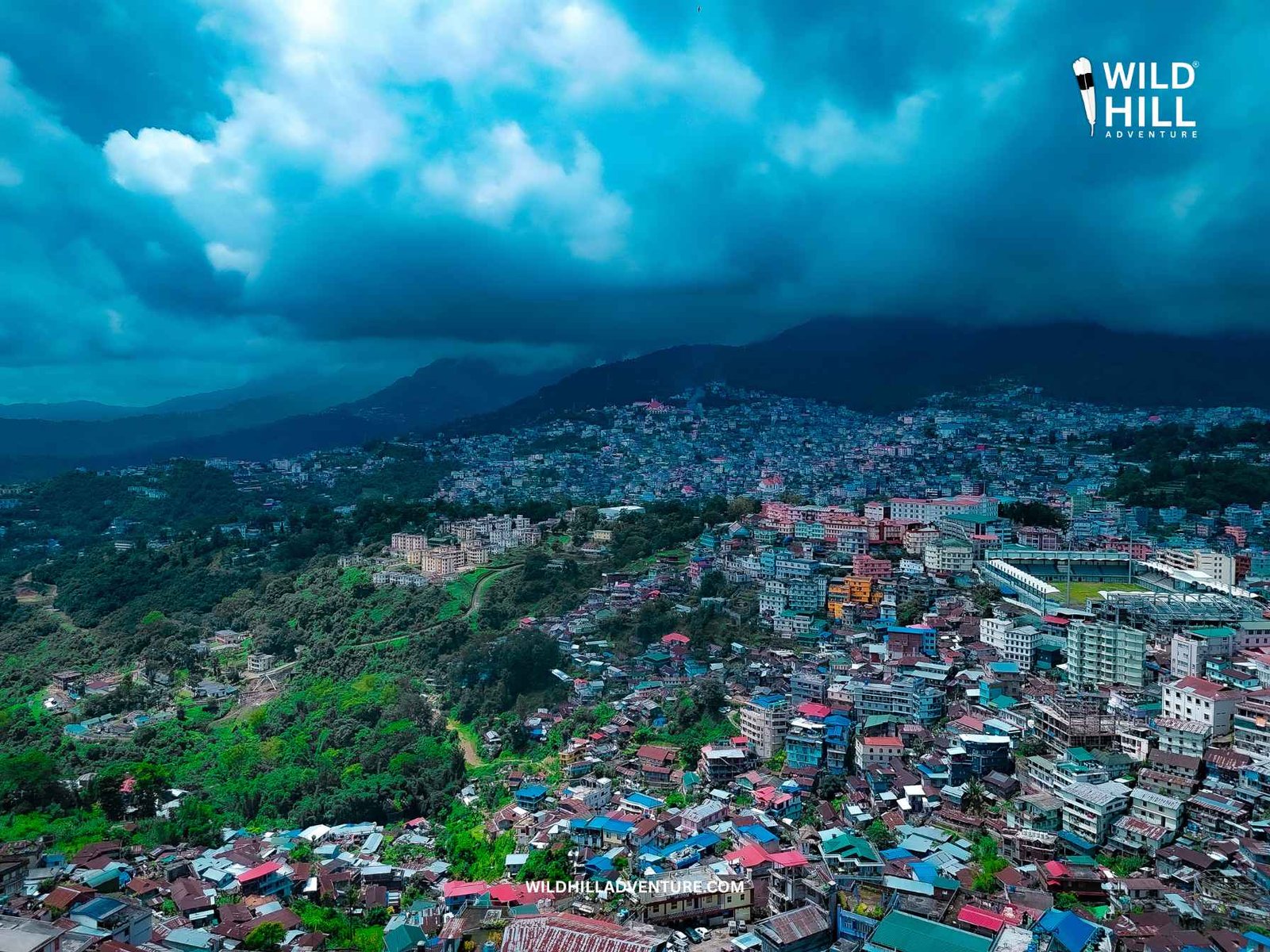
Khonoma is approximately 20 km from Kohima.
For most travelers, Kohima is therefore the natural starting point.
You can leave after breakfast, reach Khonoma, explore the village with a guide, have lunch and return to Kohima by evening.
That’s the simple option.
But whenever guests have enough time, I like the second option:
Kohima → Khonoma → Overnight in Khonoma → Continue the journey next morning.
Why?
Because Khonoma becomes completely different after evening.
I’ll come back to that.
Do You Need a Guide in Khonoma Village?
For a proper village walk and cultural exploration, go with a local guide.
And even if you could simply walk around independently, I wouldn’t recommend experiencing Khonoma without one.
Without a guide, you see:
Old house.
Stone.
Field.
Forest.
Viewpoint.
With a knowledgeable local guide, those places have stories.
You begin understanding the history of the village, Angami traditions, agriculture, conservation practices and the meaning behind things you would otherwise walk past.
That’s a completely different experience.
Whenever we take Wild Hill Adventure guests to Khonoma, we try to make the visit about understanding the village rather than simply photographing it.
Khonoma Village Walk: Allow Around 2–3 Hours
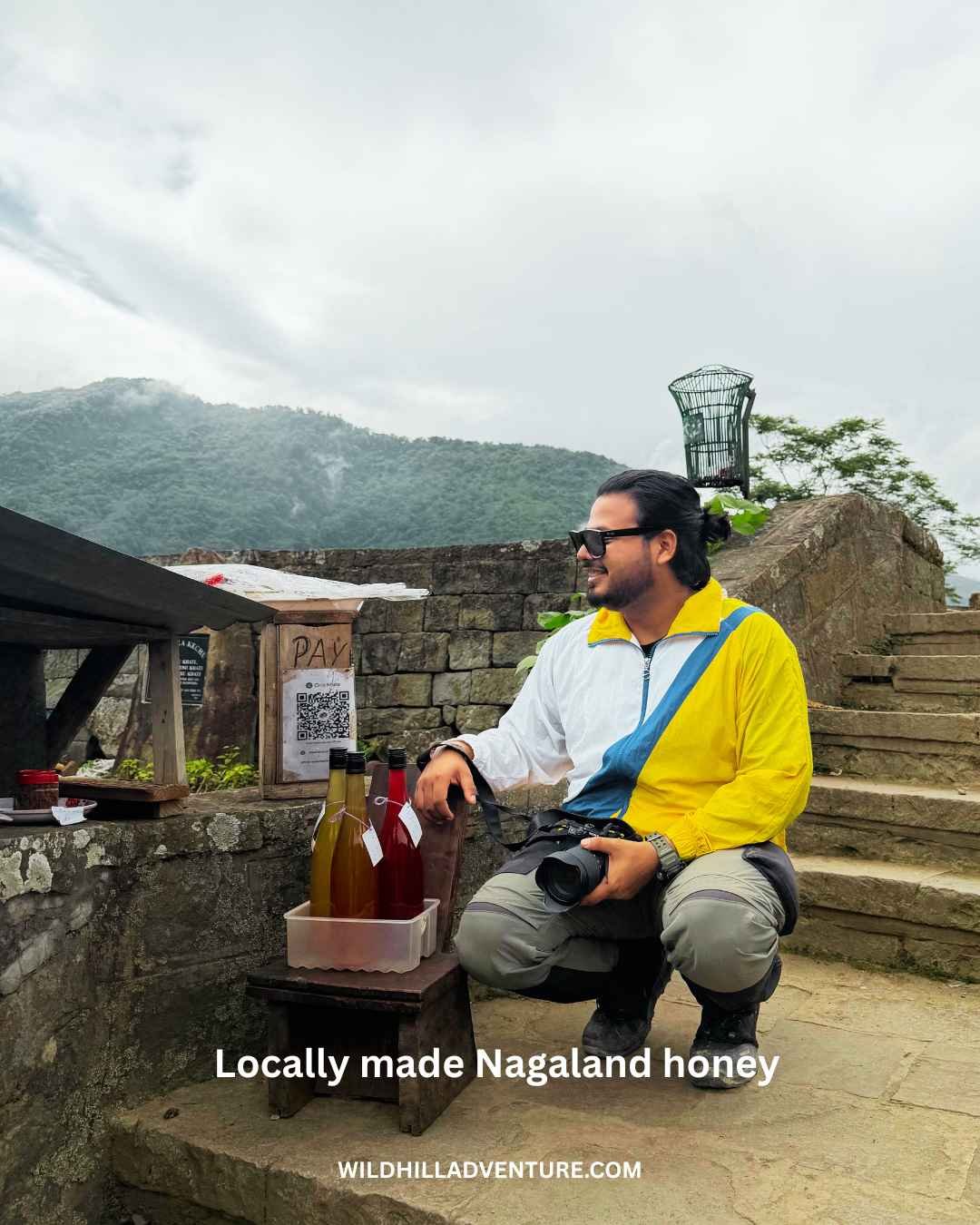
Don’t rush the village walk.
Normally, I would keep approximately 2–3 hours for it.
You walk through narrow paths and different sections of the settlement while the guide explains the village and its history.
Depending on your guide, interests and available time, the experience can include traditional architecture, historical locations, local life, viewpoints and conversations with residents.
And that’s exactly why I don’t recommend arriving late in the afternoon and expecting to “cover Khonoma” in 45 minutes.
You can technically take photographs in 45 minutes.
You cannot understand Khonoma in 45 minutes.
Then Comes My Favourite Part: The Paddy Fields
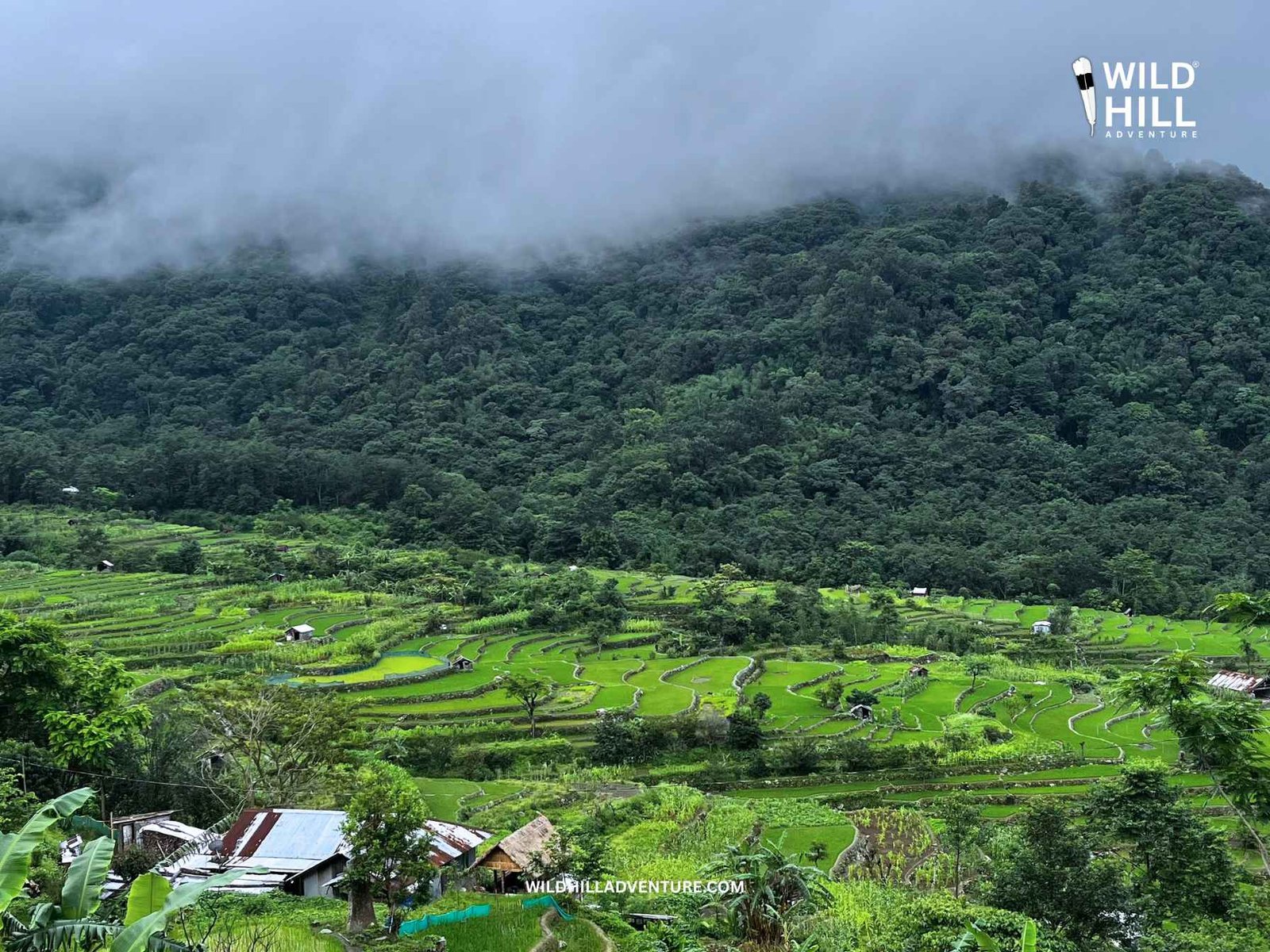
If you ask me what you shouldn’t miss in Khonoma, this is high on my list.
Walk down towards the paddy terraces.
The landscape looks almost unreal at the right time of year.
Terrace after terrace follows the shape of the mountains.
From certain angles, it looks as though someone has manually drawn green lines across the hills.
Photographs are beautiful.
Drone footage can be incredible where flying is permitted.
But standing among the fields is different.
You understand the scale.
You hear the water.
You see people working.
And suddenly the landscape isn’t simply a viewpoint anymore.
It’s someone’s livelihood.
How Long Does the Khonoma Paddy Field Walk Take?
If you want to properly explore the agricultural landscape, keep approximately 2–3 hours.
That means doing both a proper village walk and a proper paddy-field experience can easily consume 4–6 hours.
This is important when planning your itinerary.
People sometimes ask us:
“Can we do Kohima sightseeing, Khonoma, Dzüleke and everything else on the same day?”
Technically, you can put many names on an itinerary.
But you’ll spend most of the day inside the vehicle.
I would rather experience fewer places properly.
A Story From One of Our Guests
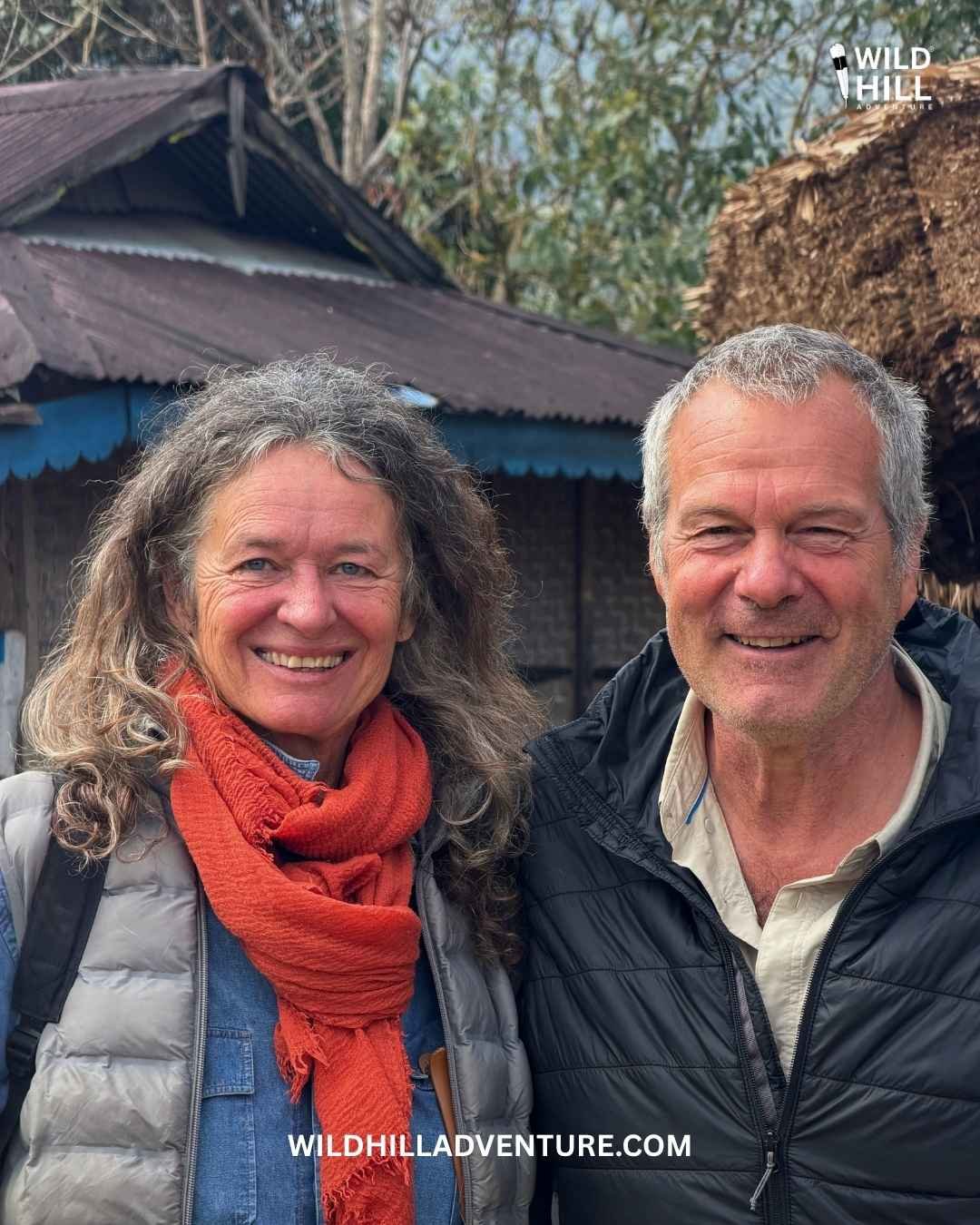
One experience with our guests explains Khonoma better than a tourism brochure can.
We had travelers who initially treated Khonoma as another stop on their Nagaland itinerary.
They wanted the usual things.
Visit.
Take pictures.
See the village.
Continue.
Then we reached the paddy fields.
Everyone slowed down.
One of our guests simply stood looking across the terraces for a while.
No photographs.
No phone.
Nothing.
Later, they told us that before coming to Nagaland, they had imagined the Hornbill Festival and Dzukou Valley would be the experiences they remembered most.
They hadn’t expected a quiet village walk and rice fields to become one of their favourite parts of the journey.
I’ve seen versions of this happen repeatedly.
That’s why I don’t sell Khonoma to guests as simply:
“Asia’s first green village. 2-hour sightseeing.”
That misses the point.
Khonoma works best when you give it time.
Stay Overnight in Khonoma If You Can
Khonoma has some beautiful local stays and homestay-style accommodation.
If your itinerary isn’t rushed, spend a night.
This gives you something a day visitor rarely experiences.
Khonoma after dark.
By around evening, activity starts settling down.
And after roughly 8 PM, the village can become remarkably quiet.
No city traffic.
No horns.
No nightclub noise.
Sometimes very little sound at all.
If you live in a city, you may initially find the silence strange.
Then you begin enjoying it.
Sit outside.
Talk to your host.
Eat dinner.
Look at the mountains.
Go to bed early.
Wake up to village life instead of traffic.
For me, this is one of the best ways to experience Khonoma.
Stay With Locals, Not Just Near the Village
If possible, choose accommodation that allows you to interact with your hosts.
A fancy room can be comfortable.
But in Khonoma, the conversations are often more valuable than the room.
Ask about farming.
Ask about food.
Ask about village life.
Ask about how things have changed.
Travel becomes much more meaningful when the person living in the destination becomes part of your experience rather than simply someone handing you a room key.
Try Local Food in Khonoma
Please don’t come all the way to Khonoma and eat only instant noodles.
😂
Try local food.
Naga cuisine varies enormously between communities, and eating with local families or at local establishments is one of the easiest ways to understand the region better.
Depending on what’s available during your visit, ask your host or guide what they recommend that day.
Local ingredients and seasonal produce are part of the experience.
And if you have dietary restrictions, communicate them clearly beforehand.
What Can You Buy in Khonoma?
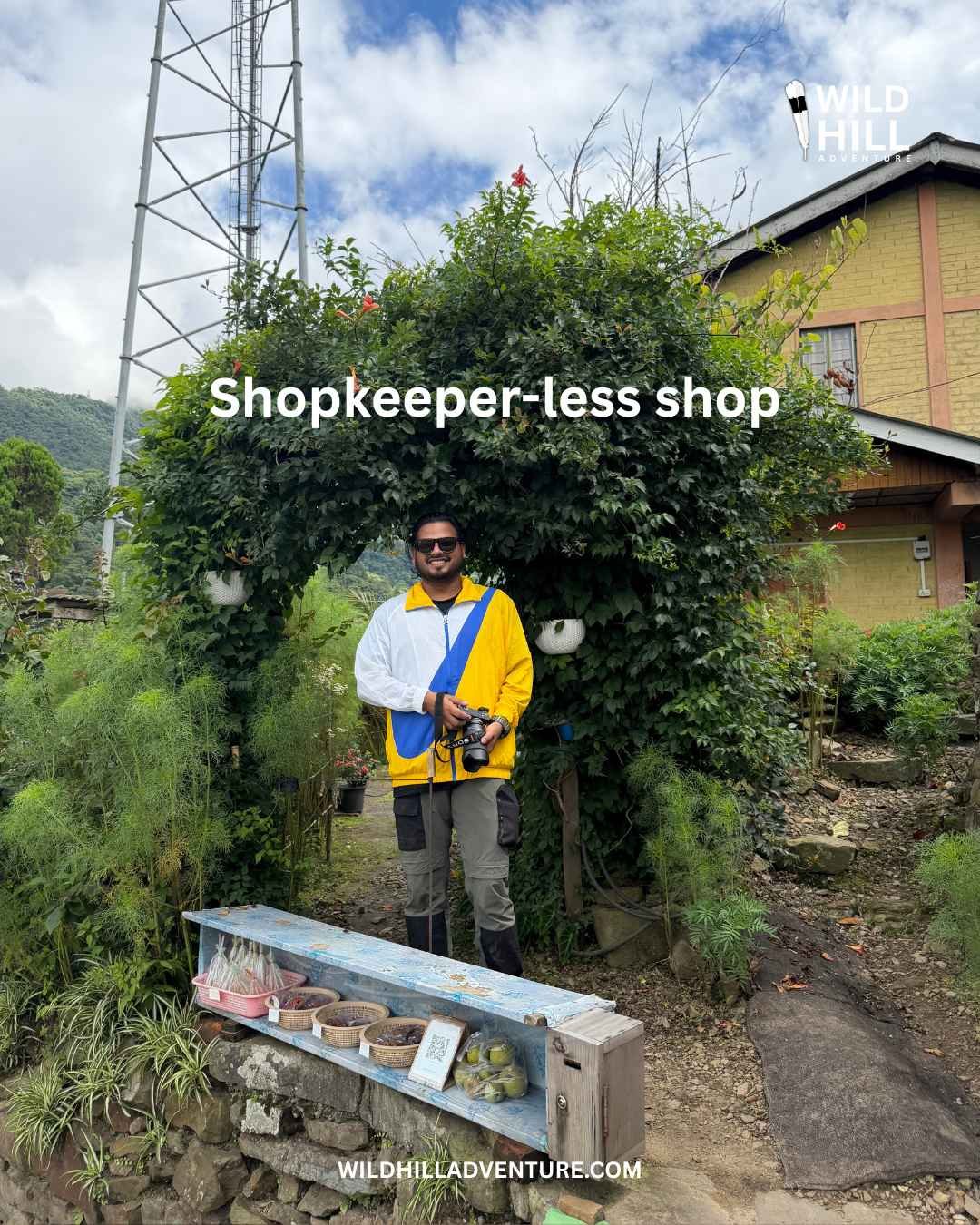
Another thing I enjoy about Khonoma is the locally produced items.
Depending on availability, you may find things such as:
- Locally produced honey
- Handmade jewellery
- Traditional Naga shawls
- Local dresses and textiles
- Curd
- Lassi
- Local agricultural products
- Handmade souvenirs
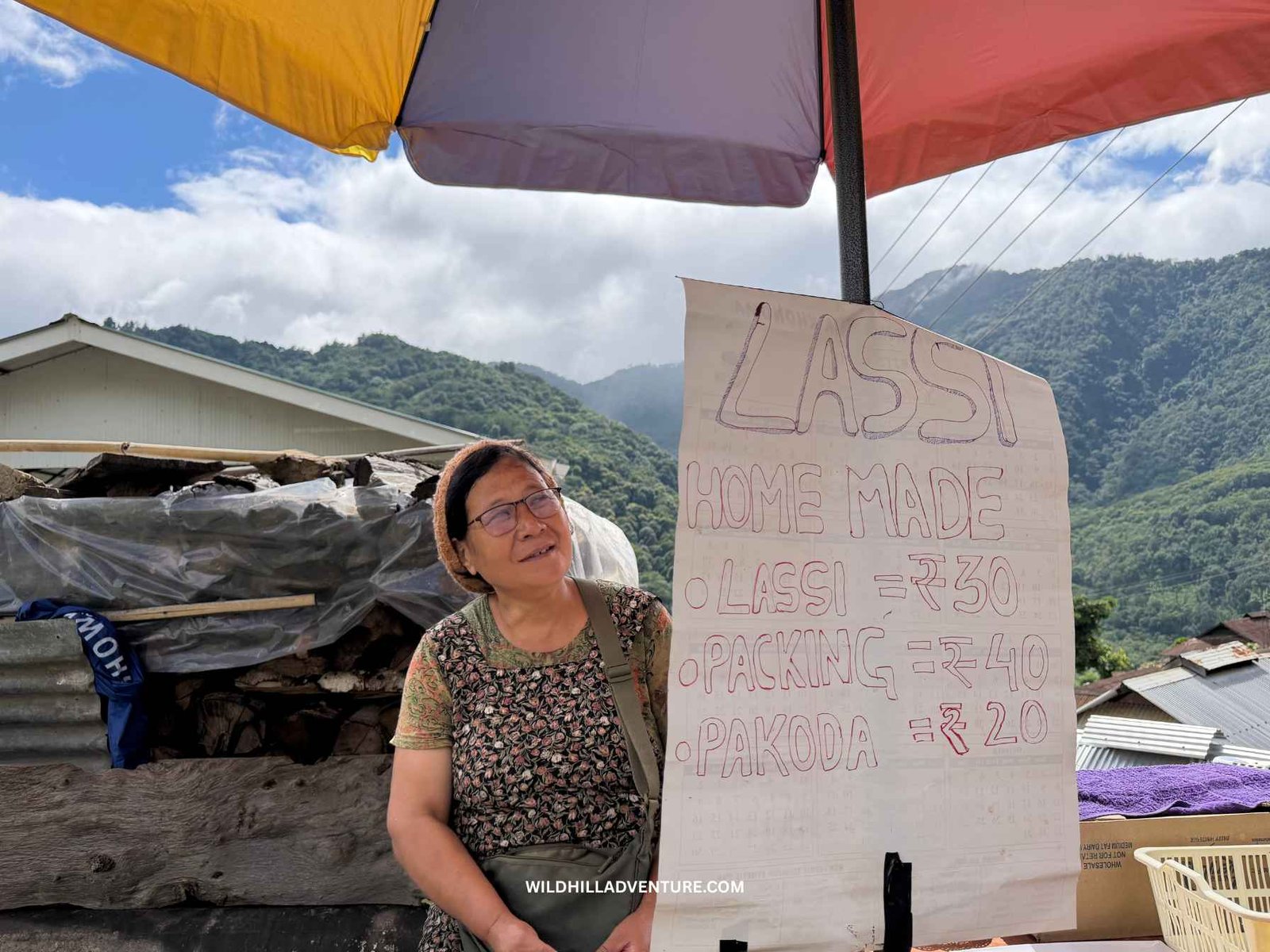
I particularly recommend buying directly from local producers or families whenever possible.
You’re getting something connected to the place while your money stays within the local economy.
That’s far better than buying another generic “Nagaland” refrigerator magnet manufactured somewhere else.
Buy a Naga Shawl From the Village
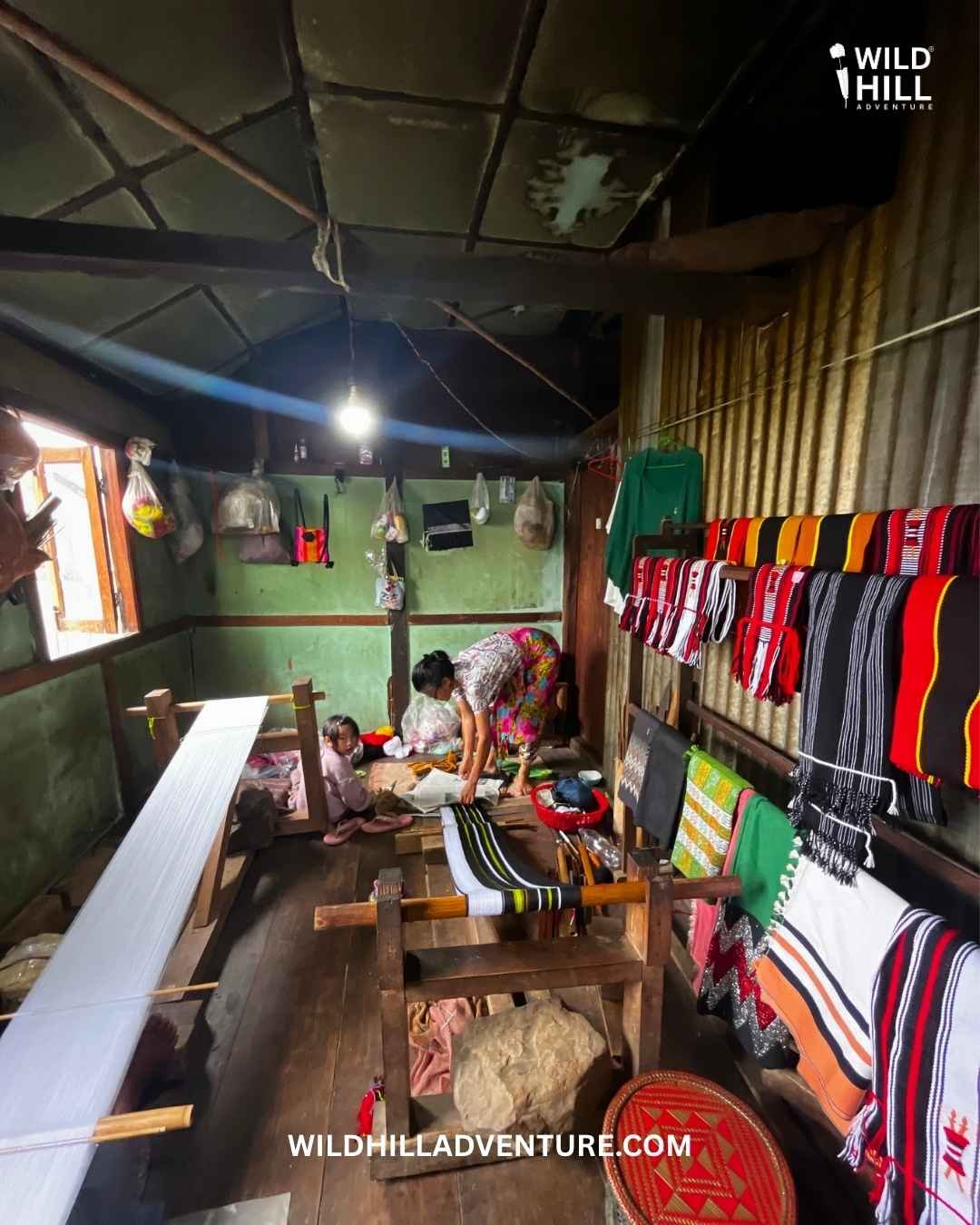
If you’ve been thinking about buying a traditional Naga shawl, Khonoma can be a good place to look.
But don’t think of Naga textiles simply as colourful souvenirs.
Patterns, designs and styles can have cultural meanings and community associations.
Ask before buying.
Learn what you’re buying.
That’s part of responsible cultural tourism.
Khonoma and The Family Man Season 3
Khonoma has also attracted attention because locations in and around Nagaland were used during filming connected with The Family Man Season 3.
For fans of the series, this adds another interesting dimension to exploring the region.
But even without the film connection, Khonoma has more than enough reasons to visit.
Come for the village itself.
What Are the People of Khonoma Like?
One of the things our guests regularly appreciate is how friendly people can be.
Khonoma is culturally rich, but it isn’t a cultural museum.
It is people’s home.
Treat it accordingly.
Smile.
Talk when people are interested in talking.
Ask permission before photographing someone closely.
Don’t enter private areas because they look “traditional.”
Don’t fly drones over houses without checking local rules and permissions.
Don’t behave loudly late at night.
Respect goes a long way.
And when you travel respectfully, interactions tend to happen naturally.
Khonoma Village as a Day Trip From Kohima
Yes.
If you’re short on time, Khonoma is absolutely possible as a day trip from Kohima.
A comfortable plan could look something like:
Morning: Leave Kohima
Late morning: Reach Khonoma and meet your guide
Midday: Guided village walk
Lunch: Local food
Afternoon: Paddy-field exploration
Evening: Return to Kohima
That gives you enough time to actually experience the village.
Khonoma + Dzüleke: One of My Favourite Combinations
If you’re building a Nagaland itinerary, I particularly like combining:
Kohima → Khonoma → Dzüleke
Khonoma gives you culture, history, agriculture and village life.
Dzüleke gives you forests, mountains, rivers and a quieter offbeat experience.
Together, they show travelers a side of Nagaland that is very different from the Hornbill Festival.
Khonoma During the Hornbill Festival
If you’re visiting Nagaland for the Hornbill Festival, I strongly recommend keeping one day for Khonoma and the surrounding region.
Kisama during Hornbill is loud, colourful, energetic and crowded.
Khonoma offers the opposite.
Quiet lanes.
Fields.
Village conversations.
Mountains.
Slow travel.
That contrast can make your Nagaland trip considerably more interesting.
How Much Time Do You Need in Khonoma?
Here’s what I’d recommend based on how you travel.
2–3 Hours
Only if you’re extremely short on time.
Do a guided village walk and leave.
5–6 Hours
Much better.
You can combine the village walk, lunch and paddy fields.
One Full Day
Ideal for most travelers.
You don’t need to constantly check the clock.
1 Night
My recommendation.
You experience both the attractions and the atmosphere.
Best Time to Visit Khonoma Village
Khonoma changes dramatically with the seasons.
Monsoon
If greenery is your priority, this can be spectacular.
The rice fields and surrounding mountains become intensely green.
But expect rain, mist and slippery walking paths.
Post-Monsoon
One of my favourite periods for landscapes and photography.
October to November
Excellent weather and a beautiful time for exploring Nagaland.
December
Perfect for combining Khonoma with the Hornbill Festival.
It is also peak tourism season, so book accommodation early.
Winter
Cooler temperatures and often clearer mountain views.
Carry warm clothes, particularly if staying overnight.
What Should You Carry?
Khonoma isn’t an extreme adventure destination, so you don’t need complicated equipment.
Carry comfortable walking shoes, a light backpack, water bottle, rain protection during monsoon, warm layers during winter, sunscreen, personal medicines, cash, camera and a power bank.
Most importantly, wear footwear suitable for walking.
If you’re doing the paddy-field section, don’t arrive expecting to explore everything comfortably in expensive city shoes.
Responsible Travel in Khonoma
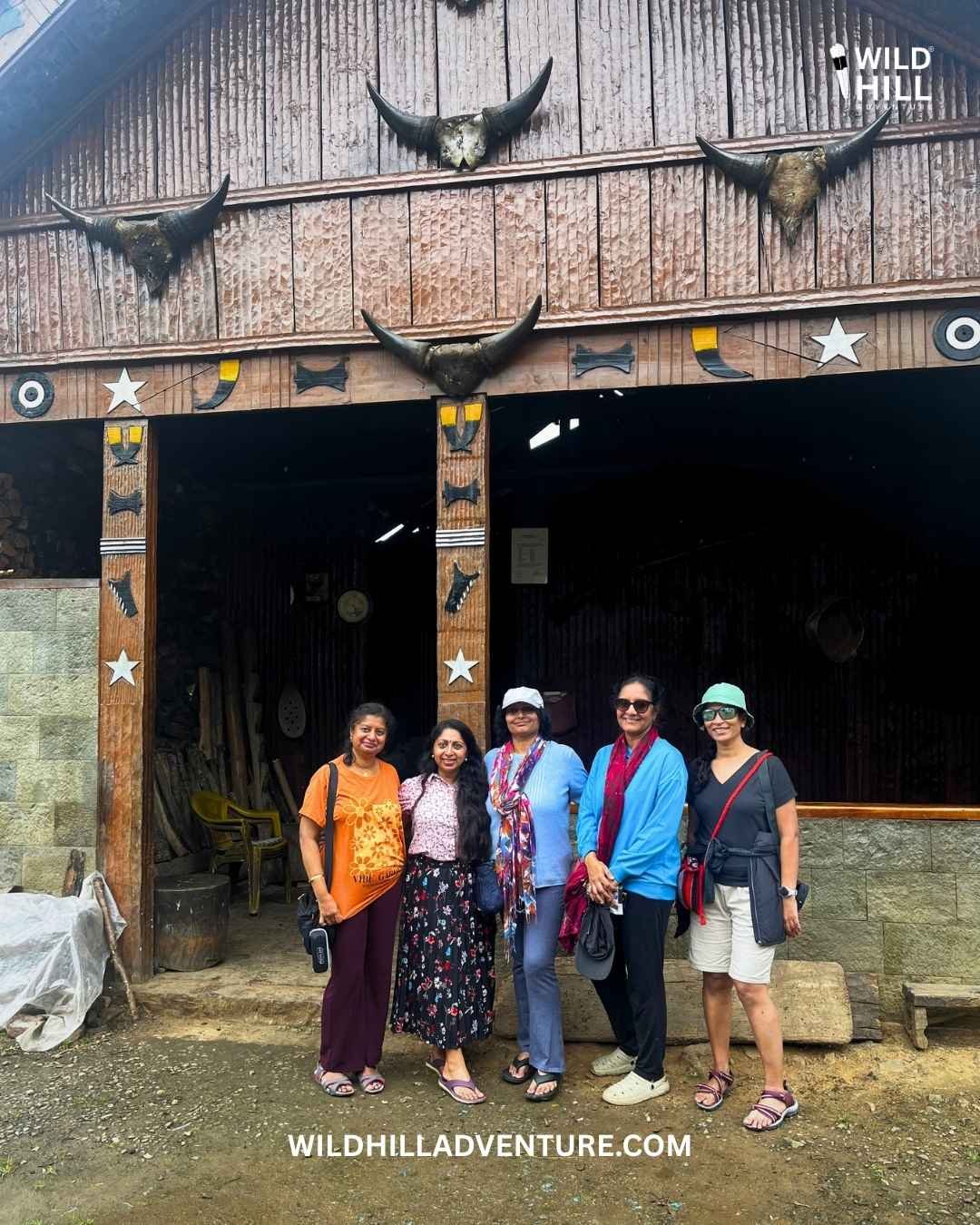
Khonoma’s reputation is closely connected with conservation.
Travelers should contribute to that rather than becoming another problem for the village.
Avoid littering.
Don’t leave plastic behind.
Don’t damage crops.
Don’t wander through agricultural fields without guidance.
Don’t photograph people without permission.
Respect quiet hours.
Support local guides.
Buy locally produced goods.
Stay locally when possible.
Eat locally.
These are small decisions individually, but multiplied across thousands of visitors they matter enormously.
Why We Keep Returning to Khonoma
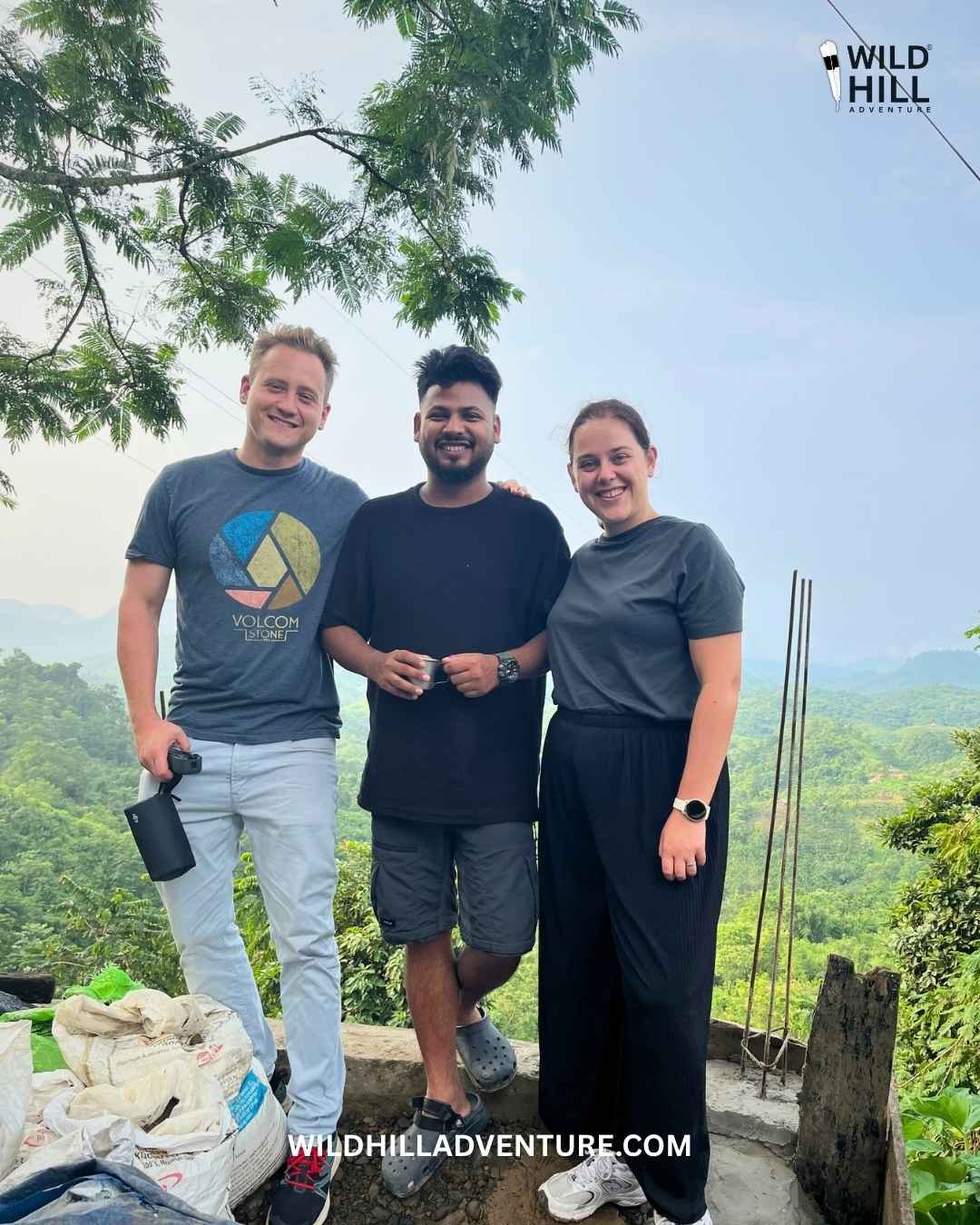
I’ve lost count of how many times we’ve visited Khonoma.
And that’s probably the best endorsement I can give it.
When you operate tours, there are places you visit repeatedly because they’re on the itinerary.
Then there are places you genuinely don’t mind returning to.
Khonoma is one of those places for me.
Every visit changes slightly.
Different weather.
Different crops.
Different guests.
Different conversations.
Sometimes we spend more time in the village.
Sometimes guests fall in love with the paddy fields.
Sometimes it’s simply a quiet lunch and conversation with local people that becomes memorable.
That’s what keeps the destination interesting.
Why Travel to Khonoma With Wild Hill Adventure?
Wild Hill Adventure is a Northeast India-based travel company, and Nagaland is one of the regions we have explored extensively over the years.
We’ve been to Khonoma more times than I can count.
That means when we plan a trip here, we’re not simply reading a destination description online and putting it into an itinerary.
We understand how Khonoma fits with the rest of a Nagaland journey.
Depending on your available time, we can combine it with:
Kohima → Khonoma → Dzüleke
or
Hornbill Festival → Khonoma → Dzüleke → Dzukou Valley
or for a longer offbeat journey:
Kohima → Khonoma → Dzüleke → Pfutsero → Kapamodzü → Longwa
We also work with local guides and accommodations so travelers can experience the village through the people who actually live there.
Our goal isn’t simply to help you see Khonoma.
It’s to help you understand why the place matters.
Contact us
- Phone/WhatsApp: +91 9365476611 +91 91811 29331/+91 91814 99331
- Instagram: @wildhilladventure
- Email: wildhilladventure@gmail.com
- Website: www.wildhilladventure.com
Is Khonoma Village Worth Visiting?
Yes. Absolutely.
But your experience depends on how you visit.
If you arrive, take one photograph, spend 30 minutes and leave, you might wonder what the hype is about.
Instead, hire a local guide.
Walk through the village.
Listen to the stories.
Go down towards the paddy fields.
Buy some local honey.
Try the food.
Talk to people.
And if possible, stay overnight.
Then after around 8 PM, when everything becomes quiet, step outside for a few minutes.
No traffic.
No crowds.
No festival speakers.
Just a mountain village in Nagaland settling down for the night.
That’s the Khonoma I want our guests to experience.
And even after visiting countless times, that’s the Khonoma I still enjoy returning to.
FAQs About Khonoma Village, Nagaland
1. Where is Khonoma Village located?
Khonoma Village is located in Nagaland, around 20 km from Kohima. It is an Angami Naga village surrounded by forested mountains and beautiful terraced paddy fields. Because it is close to Kohima, Khonoma is one of the easiest villages to include in a Nagaland itinerary.
2. Why is Khonoma Village famous?
Khonoma is famous for its community-led conservation, Angami Naga culture, traditional village life and spectacular terraced paddy fields. It is popularly promoted as India’s first green village and has become one of the most important cultural destinations near Kohima.
3. How far is Khonoma Village from Kohima?
Khonoma is approximately 20 km from Kohima. It can easily be visited as a day trip, although we personally recommend spending a full day or staying overnight if you want to experience the village at a slower pace.
4. How do I reach Khonoma Village from Kohima?
The easiest way to reach Khonoma from Kohima is by private taxi or arranged vehicle. The journey takes you away from Kohima’s busy streets into a quieter landscape of forests, hills and villages. Road and travel times can vary with weather and local conditions.
5. Is a local guide mandatory in Khonoma Village?
For the guided village walk and paddy-field exploration, travelers should arrange a local guide. We strongly recommend this even beyond any local requirement because many of Khonoma’s most interesting places make much more sense when their history, culture and traditions are explained by someone from the community.
6. How much time is required to explore Khonoma Village?
Keep at least 5–6 hours if you want a proper Khonoma experience. A guided village walk generally takes around 2–3 hours, while exploring the paddy-field area can take another 2–3 hours. If your itinerary allows, staying one night is even better.
7. Can Khonoma Village be visited as a day trip from Kohima?
Yes. Khonoma is one of the best day trips from Kohima because it is only around 20 km away. You can leave Kohima in the morning, explore the village with a local guide, visit the paddy fields, have local food and return to Kohima by evening.
8. Is it worth staying overnight in Khonoma?
Yes, especially if you enjoy slow travel, village life and peaceful places. Khonoma has beautiful local stays and homestays where you can interact with residents and try local food. The village becomes particularly peaceful in the evening, with very little noise after around 8 PM.
9. What are the best things to do in Khonoma Village?
The best experiences include taking a guided Khonoma village walk, exploring the terraced paddy fields, learning about Angami culture and conservation, trying local food, staying in a local homestay and buying locally produced goods such as honey, jewellery, textiles and traditional Naga products.
10. What is the best time to visit Khonoma Village?
Khonoma can be visited throughout much of the year, but the experience changes with the seasons. Monsoon and post-monsoon are especially beautiful for greenery and paddy fields, while October to December is popular for pleasant weather and combining Khonoma with other Nagaland destinations. December is particularly busy because of the Hornbill Festival.
11. What are Khonoma’s famous terraced paddy fields?
Khonoma is surrounded by spectacular terraced agricultural fields built along the contours of the hills. During the green season, the rice terraces can look almost unreal. A proper paddy-field visit can take around 2–3 hours and is one of our favourite experiences in Khonoma.
12. What local products can I buy in Khonoma Village?
Depending on availability, travelers can find locally produced honey, handmade jewellery, traditional Naga shawls, clothing, curd, lassi and other locally made or agricultural products. Buying directly from villagers and local producers is also a good way to support the community.
13. What food should I try in Khonoma?
Try local Angami and Naga food rather than sticking only to standard restaurant meals. What is available will depend on the season and your homestay or local eatery. If you’re staying overnight, ask your host about a traditional local dinner and seasonal ingredients.
14. Can I visit Khonoma during the Hornbill Festival?
Yes, and we highly recommend it. Khonoma is close enough to Kohima and Kisama to be incorporated into a Hornbill Festival itinerary. The contrast is excellent: Kisama offers crowds, performances and festival energy, while Khonoma gives you peaceful village life, culture and terraced landscapes. December is busy, so accommodation and guides should be arranged early.
15. Is Khonoma Village worth visiting?
Absolutely. We have visited Khonoma countless times with travelers, and it remains one of the places we enjoy returning to in Nagaland. But don’t treat it as a 30-minute photo stop. Give yourself time for a local-guided village walk, explore the paddy fields, eat local food, talk to people and, if possible, spend a night in the village.
16. Is vegetarian, Jain, or halal food available during the Hornbill Festival and in Nagaland?
Yes, vegetarian, Jain, and halal-friendly meals can be arranged in Nagaland, but travellers should not expect these options to be easily available everywhere, especially in remote villages and during road trips.
Nagaland’s traditional cuisine is heavily meat-based, and dedicated Jain or halal restaurants are limited outside the main towns. Vegetarian dishes are available, but travellers with strict dietary requirements should plan in advance.
At Wild Hill Adventure, we regularly host vegetarian, Jain, and groups with specific dietary requirements. At our dedicated stays and camps, we can arrange and prepare meals according to guests’ requirements with advance notice.
For travellers who require strict Jain food, vegetarian food, or halal-friendly meals, inform our team before the trip so we can plan meals and accommodation accordingly.
Why Choose Wild Hill Adventure for Your Nagaland & Northeast India Trip?
Travelling through Nagaland and Northeast India is very different from travelling through India’s more established tourist circuits.
Here, road conditions can change, permits matter, accommodation in remote villages is limited, mobile networks can disappear, and some of the most memorable places are not always easy to find online.
This is where travelling with a local Northeast-based company like Wild Hill Adventure makes a real difference.
We Are From Northeast India
Northeast India is not simply another destination we sell.
It is our home.
Our team has spent years travelling through Nagaland, Assam, Meghalaya, Arunachal Pradesh and other parts of the Northeast. We personally explore many of the routes and destinations before recommending them to our guests.
That local experience helps us understand not only where to go, but how to travel these regions properly.
We Personally Explore the Routes
Many of the places we include in our itineraries are places we have personally travelled to.
In Nagaland, our journeys have taken us through places such as:
- Kohima
- Kisama Heritage Village
- Dzukou Valley
- Khonoma
- Dzüleke
- Jakhama
- Pfutsero
- Kapamodzü Peak
- Longwa
- Mon and the Konyak region
Our Kapamodzü journey is a good example. We have experienced the route ourselves during monsoon, driven through difficult road sections, stayed near the peak, eaten there and explored the Pfutsero side.
That experience helps when we’re planning the same journey for a guest.
Strong Experience With the Hornbill Festival
Nagaland becomes extremely busy during the Hornbill Festival.
Accommodation fills up, Kohima traffic becomes heavy and first-time visitors can easily underestimate travel times.
Because we regularly operate Hornbill Festival trips, we can help guests plan the festival together with destinations such as Dzukou Valley, Khonoma, Dzüleke, Kapamodzü, Pfutsero and Longwa rather than simply visiting Kisama and returning home.
Local Guides and Community Connections
For us, a Nagaland trip shouldn’t only mean taking photographs from viewpoints.
We work with local people wherever possible.
Local guides can help travelers understand village history, tribal traditions, food, agriculture and everyday life in a way that simply driving through a destination cannot.
It also means tourism money reaches the communities travelers have actually come to experience.
We Take You Beyond the Usual Tourist Circuit
If you only search online, most Nagaland itineraries look similar:
Dimapur → Kohima → Hornbill Festival → Dzukou → Return.
There is much more to Nagaland.
Depending on your interests and available time, we can build journeys around remote villages, trekking, culture, food, photography, mountains and border regions.
Sometimes the best experience isn’t even a famous attraction.
It could be stopping beside a beautiful rice field, eating a local thali at Mao, visiting a vegetable farm near Pfutsero or spending an evening talking with people you have just met.
Those are the experiences we personally enjoy, and they influence the way we design our trips.
We Understand Northeast India’s Road Conditions
Google Maps doesn’t always tell the complete story here.
A road showing three hours can take considerably longer because of rain, landslides, construction or poor road conditions.
We plan journeys with these realities in mind.
For remote destinations and monsoon journeys, we can also select vehicles according to the route and current conditions rather than simply choosing the cheapest available option.
Permits Become Easier
Several parts of Northeast India have permit requirements.
Depending on the destination and nationality, travelers may need documents such as an Inner Line Permit (ILP) or other permissions.
Our team helps guests understand and arrange the applicable permits for their itinerary so they don’t have to figure everything out after arriving.
Private and Customized Northeast Trips
Not everyone wants the same holiday.
Some travelers want photography.
Some want trekking.
Some want culture and villages.
Others want comfortable hotels and relaxed sightseeing.
Instead of forcing every traveler into exactly the same itinerary, we can customize trips according to your time, interests, comfort level and budget.
On-Ground Support Matters Here
This is probably one of the most underestimated advantages of booking with a local operator.
When everything goes according to plan, arranging a trip looks easy.
The difference becomes obvious when something changes.
Bad weather, a road closure, delayed arrival, vehicle problem or accommodation issue can require quick local coordination.
Having a team operating within Northeast India gives travelers someone on the ground who can help find alternatives.
We Prefer Real Experiences Over Checklist Tourism
Our philosophy is simple:
Don’t just see Northeast India. Experience it.
Eat local food.
Stay in villages when appropriate.
Talk to people.
Walk through local markets.
Learn why communities protect their forests.
Understand the stories behind tribal traditions.
And sometimes, forget the itinerary for an hour and simply sit looking at the mountains.
That’s the kind of Northeast India we want our guests to experience.
Travel Northeast India With People Who Call It Home
Whether you’re planning the Hornbill Festival, Dzukou Valley Trek, Kapamodzü Peak, Longwa Village, an offbeat Nagaland road trip, or a longer journey combining Nagaland with Assam and other Northeast states, Wild Hill Adventure can help you design the trip around what you actually want to experience.
We don’t want to show you Northeast India only as a collection of tourist attractions.
We want to show you the Northeast that we know, travel through and love ourselves.
Contact us
- Phone/WhatsApp: +91 9365476611 +91 91811 29331/+91 91814 99331
- Instagram: @wildhilladventure
- Email: wildhilladventure@gmail.com
- Website: www.wildhilladventure.com

0 Comment