


Kapamodzu Peak Nagaland Travel Guide
My Monsoon Journey to One of Nagaland’s Most Beautiful Peaks
Some places impress you because of what you see.
Others stay with you because of how you felt while you were there.
For me, Kapamodzü Peak belongs to the second category.
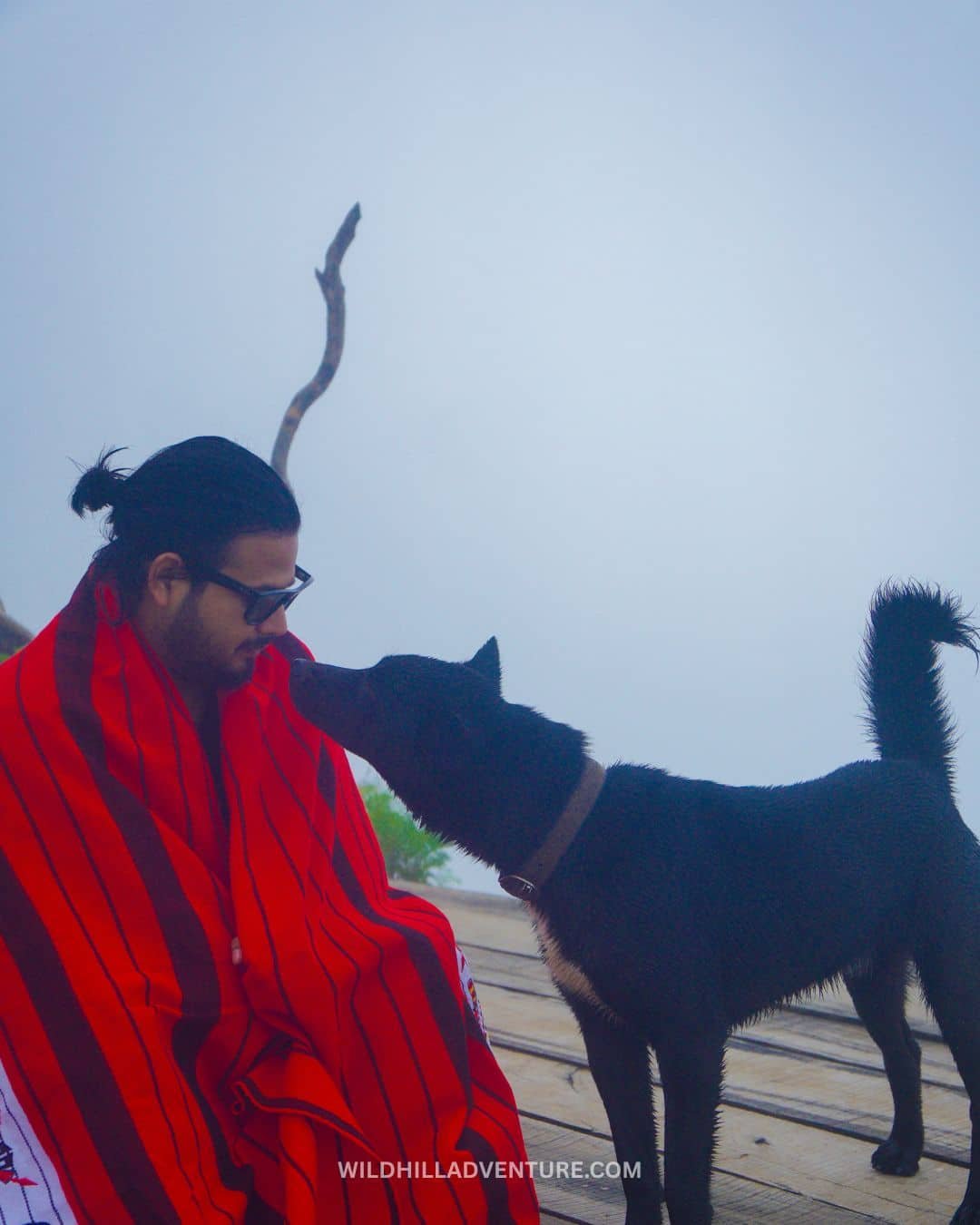
I had visited Kapamodzü several times before, but this particular journey was different. It was my first time visiting during the monsoon, and what started as another road trip from Kohima turned into one of those journeys where the road, food, people, fog, rain and unexpected stops became just as memorable as the destination itself.
If you are searching for a detailed Kapamodzü Peak Nagaland travel guide, I want to share this one differently.
This isn’t simply a list of things to do.
It’s our actual journey from Kohima to Kapamodzü, what we ate along the way, the villages we discovered, what the road was really like during monsoon, where we stayed, what happened when we woke up for sunrise and why I left wishing I had booked another night.
Kapamodzü is located near Zhavame Village in Phek district. Nagaland Tourism lists its elevation at approximately 2,620 metres above sea level and describes views towards the Saramati range, Japfü Peak, Kohima and surrounding villages in Nagaland and Manipur
And yet, those facts don’t really explain why you should go.
You need to spend a night there to understand that.
Where Is Kapamodzü Peak in Nagaland?
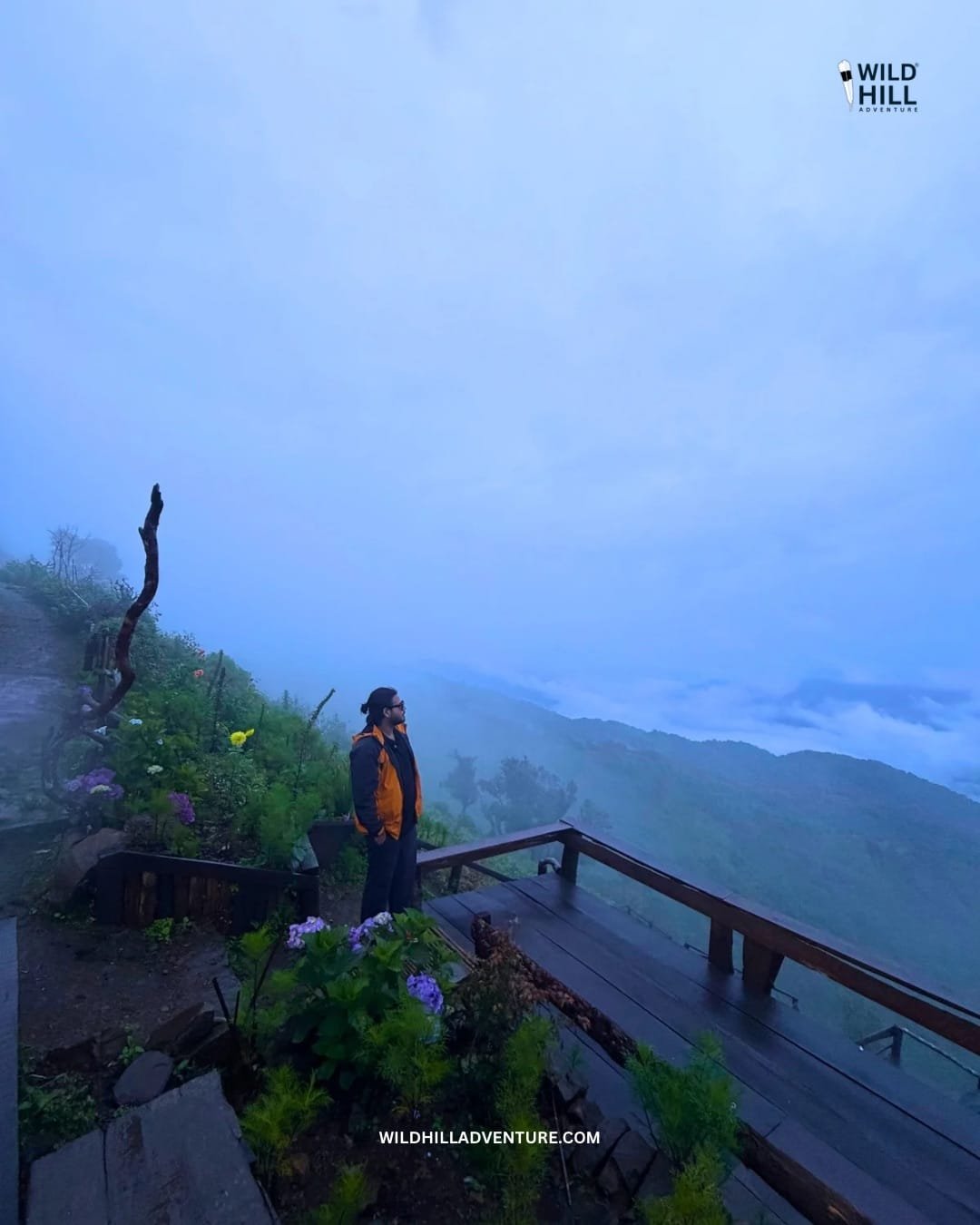
Kapamodzü Peak is located near Zhavame Village in Phek district of Nagaland, not far from Pfutsero.
The peak sits above a beautiful agricultural landscape. Zhavame itself is particularly known for organic vegetables, especially cabbage and potatoes. it was declared a “Vegetable Village” by the state’s Department of Horticulture in 2010.
The landscape surrounding Kapamodzü is quite different from many of the better-known destinations around Kohima.
You have mountains, agricultural fields, forests, tiny villages and, depending on the season, an incredible amount of mist.
From the peak, on a clear day, you can see the Saramati range, Japfü Peak, Kohima and villages across both Nagaland and Manipur. That clear day part is important.
As you’ll discover later, nature had other plans for us.
How to Reach Kapamodzu Peak from Kohima
From our experience, there are two practical approaches worth considering.
Route 1: Kohima – Jakhama – Mao – Zhavame – Kapamodzü
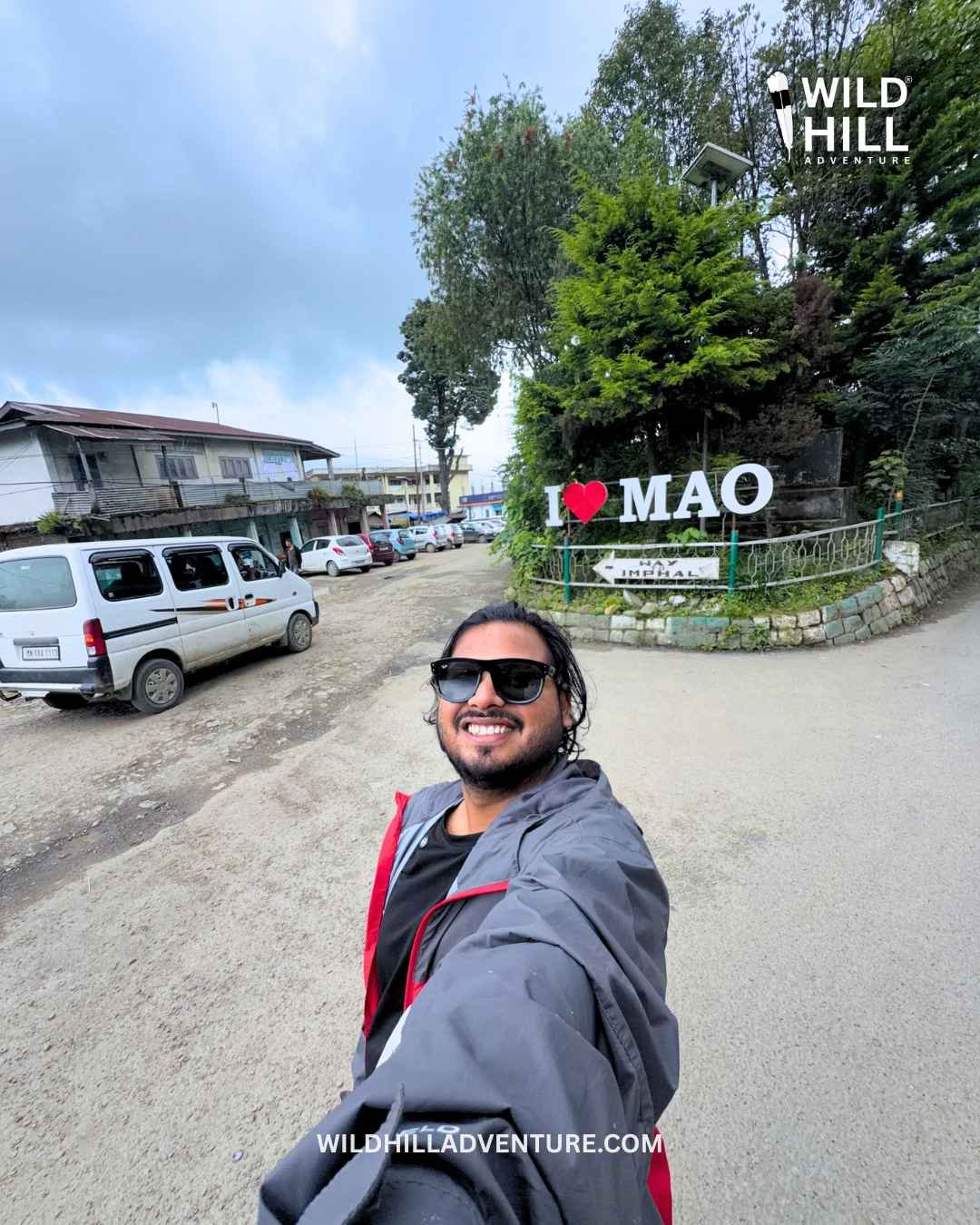
This is the route we took.
Depending on road and weather conditions, we generally allow around 2–3 hours or more for the journey from the Kohima/Jakhama side.
Because this route crosses into Manipur around Mao, travelers should check the current permit requirements before travelling. If your route requires a Manipur Inner Line Permit, arrange it beforehand rather than discovering the requirement during the journey.
Route 2: Kohima – Pfutsero – Zhavame – Kapamodzü
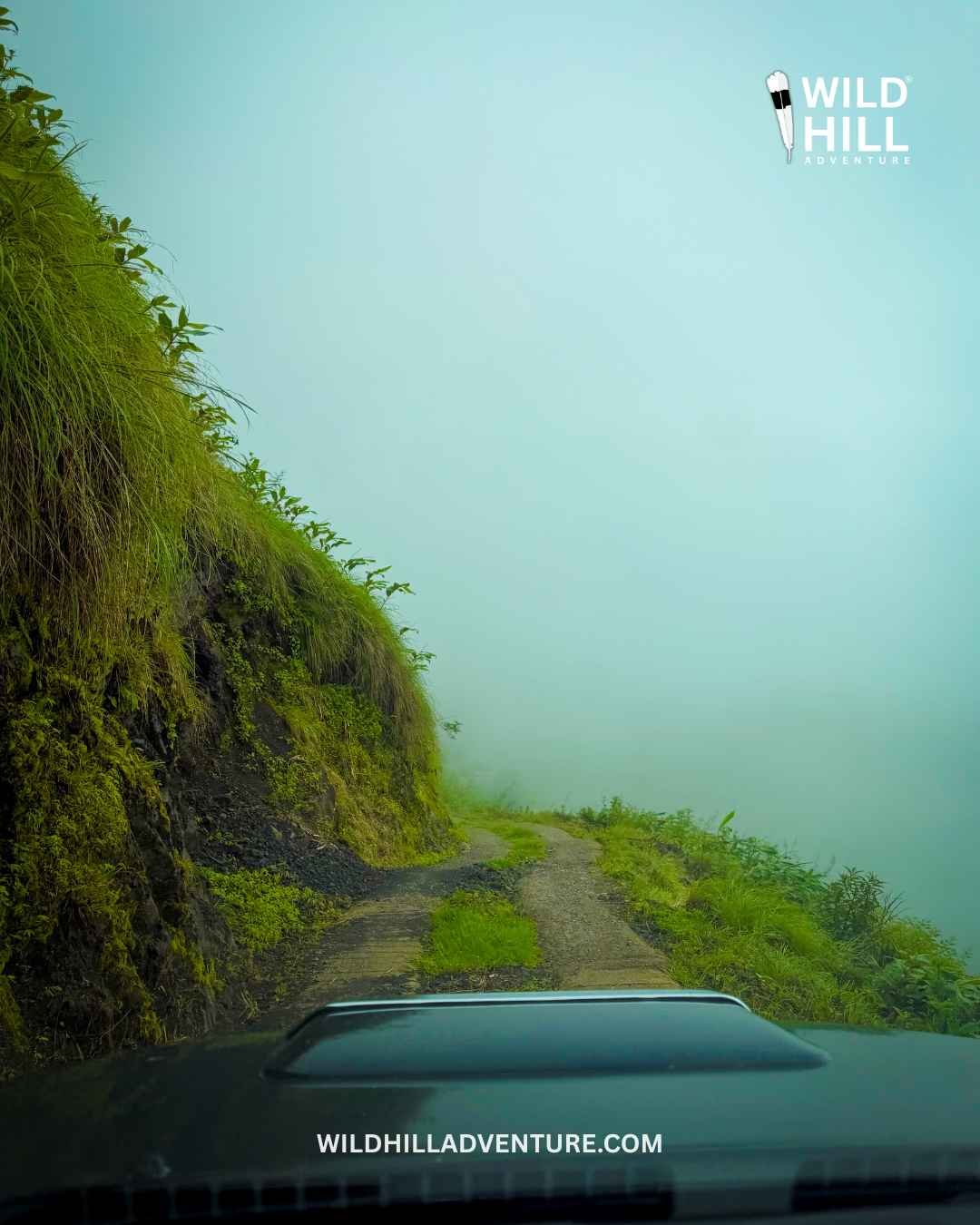
The other option is travelling via Pfutsero.
Depending on road conditions and stops, this can take approximately 4–5 hours from Kohima in our experience.
Don’t treat either travel time as guaranteed.
This is mountain travel.
Rain, roadwork, landslides and the condition of the final approach can completely change your day.
Our Kapamodzu Road Trip Started from Kohima
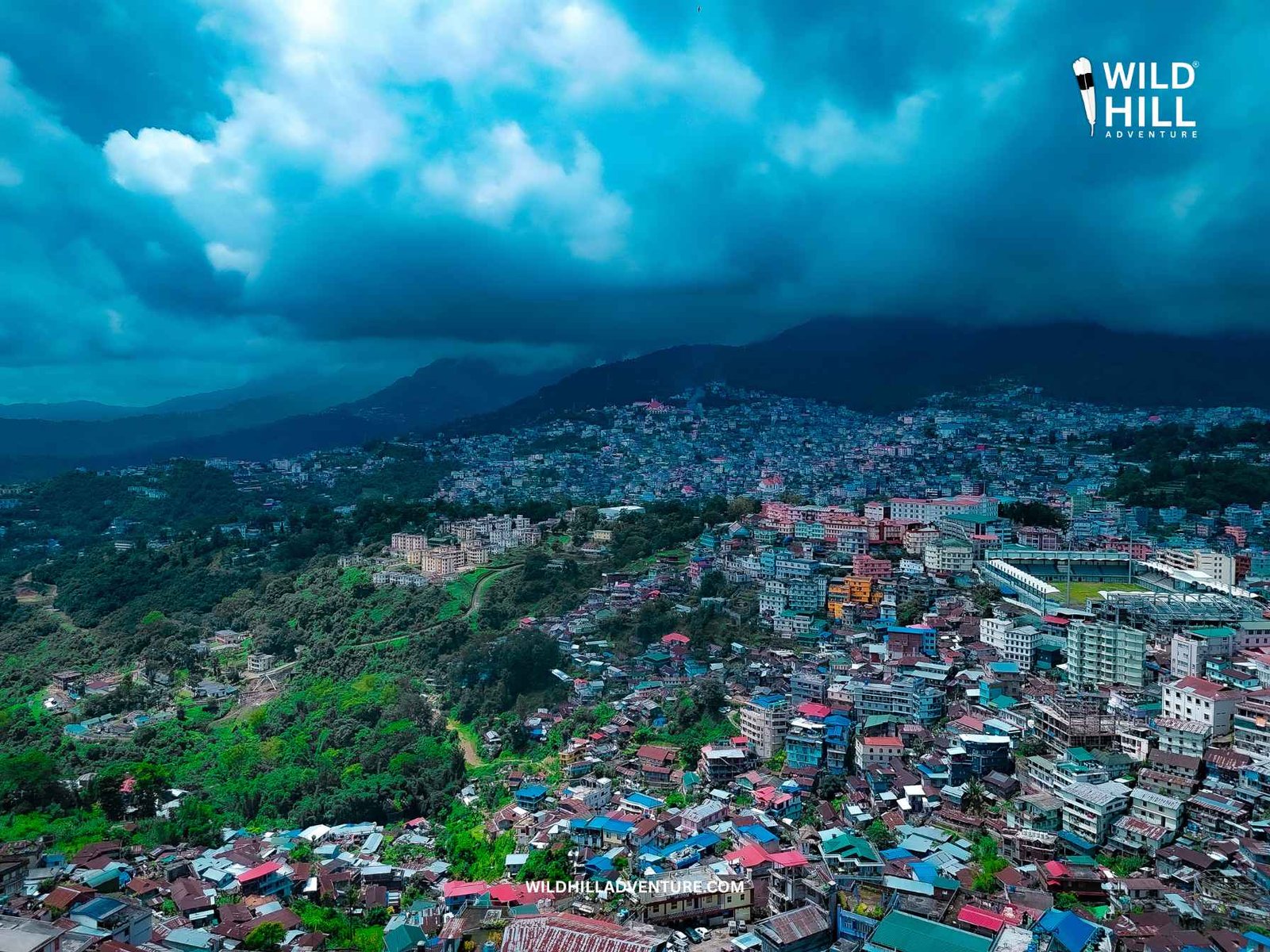
We started from Kohima and drove towards Jakhama.
I have travelled around this region many times, but I still enjoy this road.
Jakhama itself is beautiful.
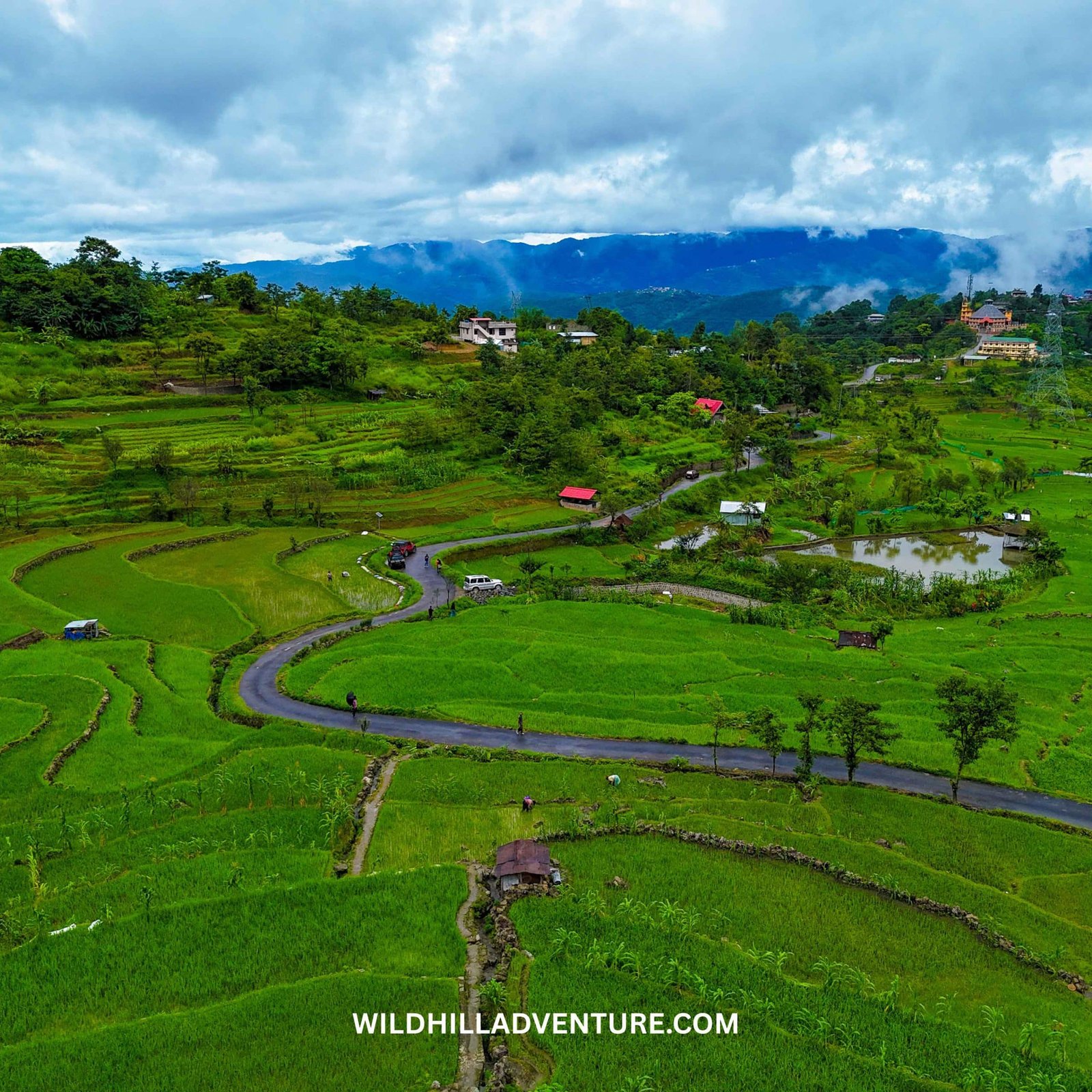
The villages, mountain slopes and agricultural landscape make the drive feel like part of the trip rather than simply transportation to Kapamodzü.
We continued towards Mao Gate and entered Manipur.
And this is where I recommend doing something many travelers completely overlook:
Stop and eat.
Our Food Stop at Mao Gate: Manipuri Food Deserves More Attention
I love Manipuri food.
And I genuinely think it is one of the most underrated cuisines in Northeast India.
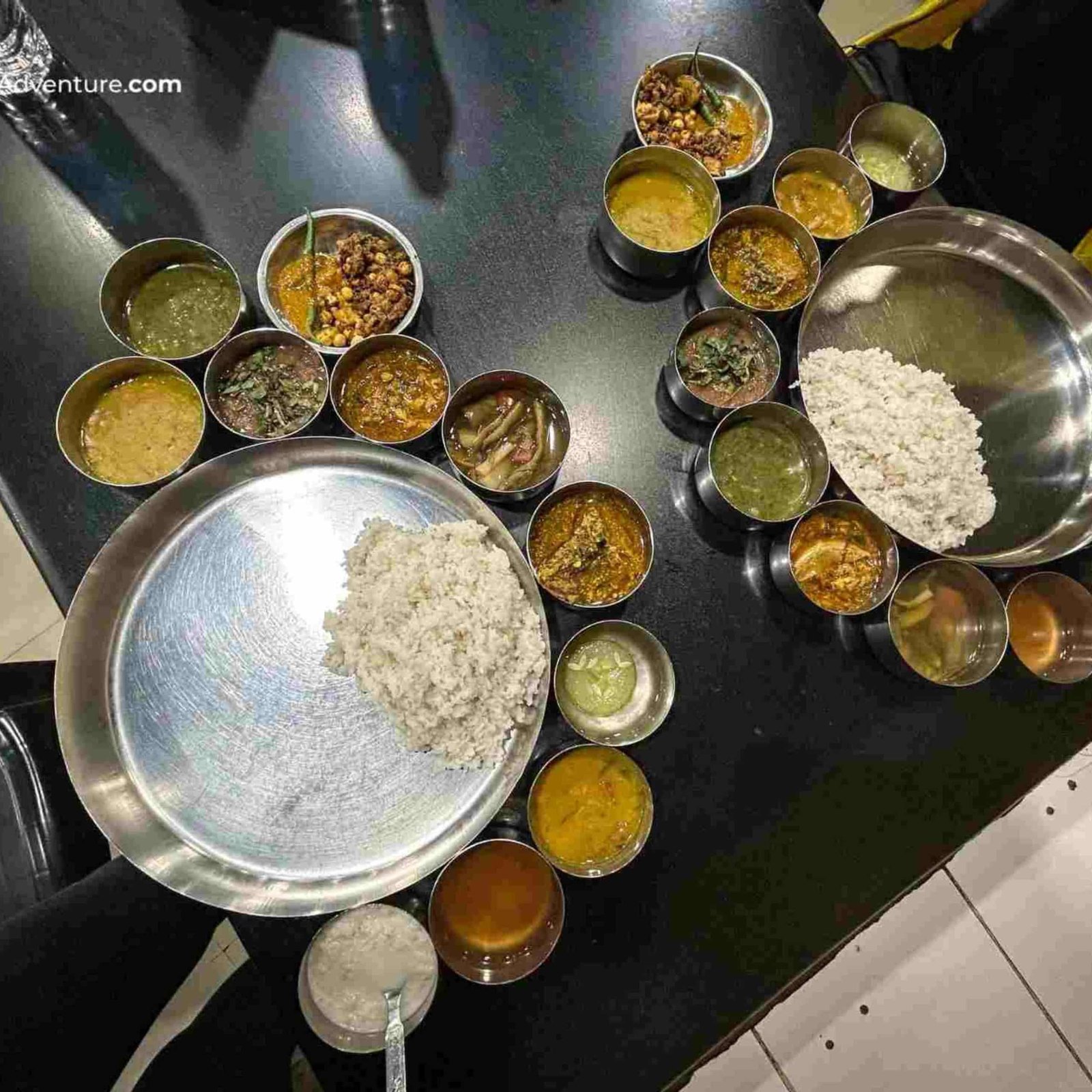
At Mao, we stopped for a Manipuri thali.
There were dishes such as eromba and singju, along with other local preparations.
Simple food.
Fresh ingredients.
Lots of flavour.
And exactly the kind of meal I want during a road trip.
If you’re doing the same route, don’t just stop for tea and continue driving. Give yourself enough time to have a proper local meal.
This is one of the things I always tell our guests at Wild Hill Adventure:
A Northeast India trip isn’t complete if you only visit viewpoints.
Eat where locals eat.
Talk to people.
Walk around the markets.
That’s where a destination starts becoming real.
Mao and the Naga Connection
Another interesting aspect of this journey is the cultural transition.
Mao is in Manipur, but this part of the state has a significant Naga presence. Travelling through the region therefore doesn’t feel like suddenly leaving one cultural landscape and entering a completely unrelated one.
You see connections between communities across modern state boundaries.
Mao Gate is also an interesting place to browse local shops and markets. On our trip, we found various goods that traders said came through Myanmar.
If you have time, I recommend walking around rather than treating Mao simply as a checkpoint.
Then the Road Became the Adventure
After Mao, we continued driving.
The scenery became increasingly beautiful.
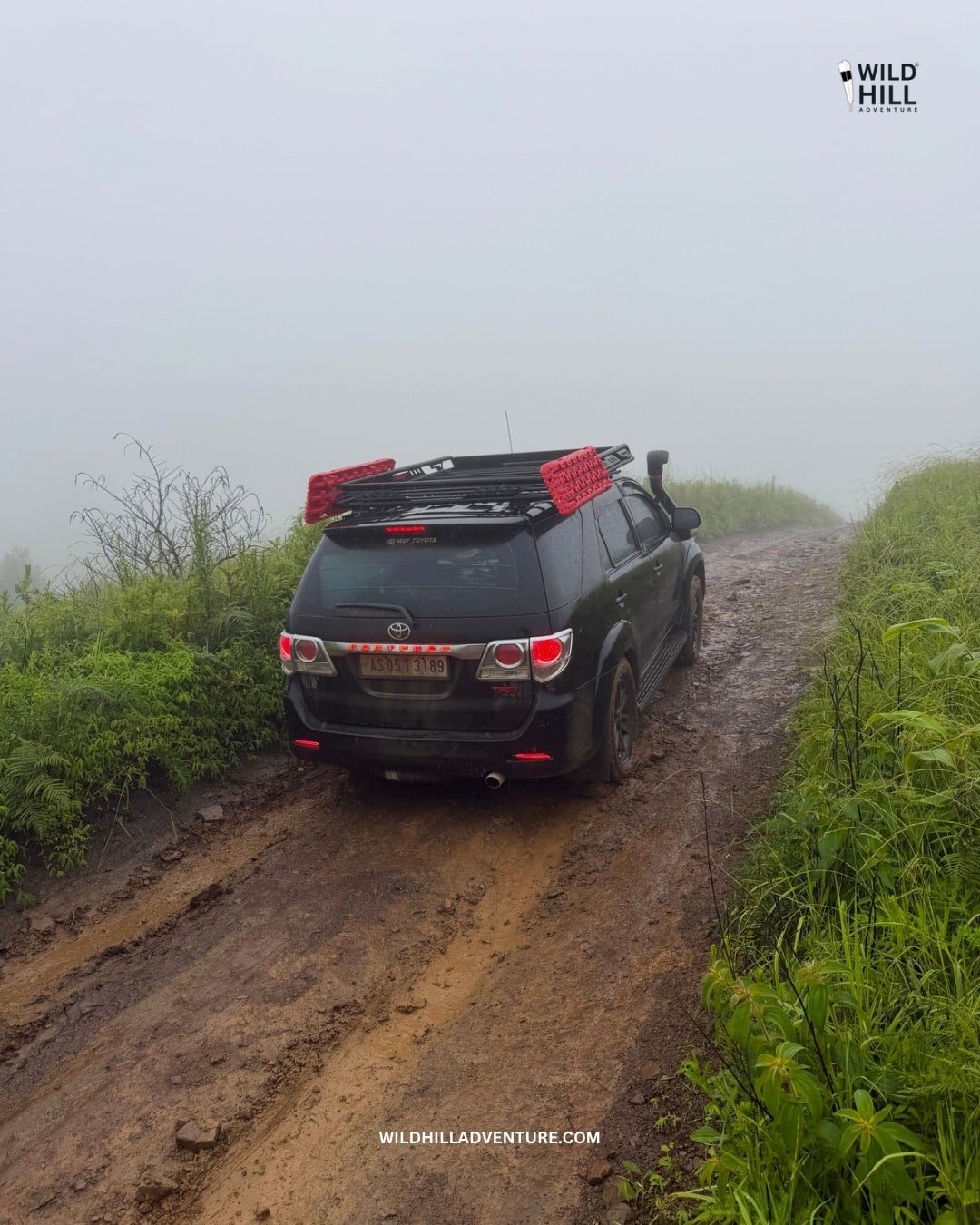
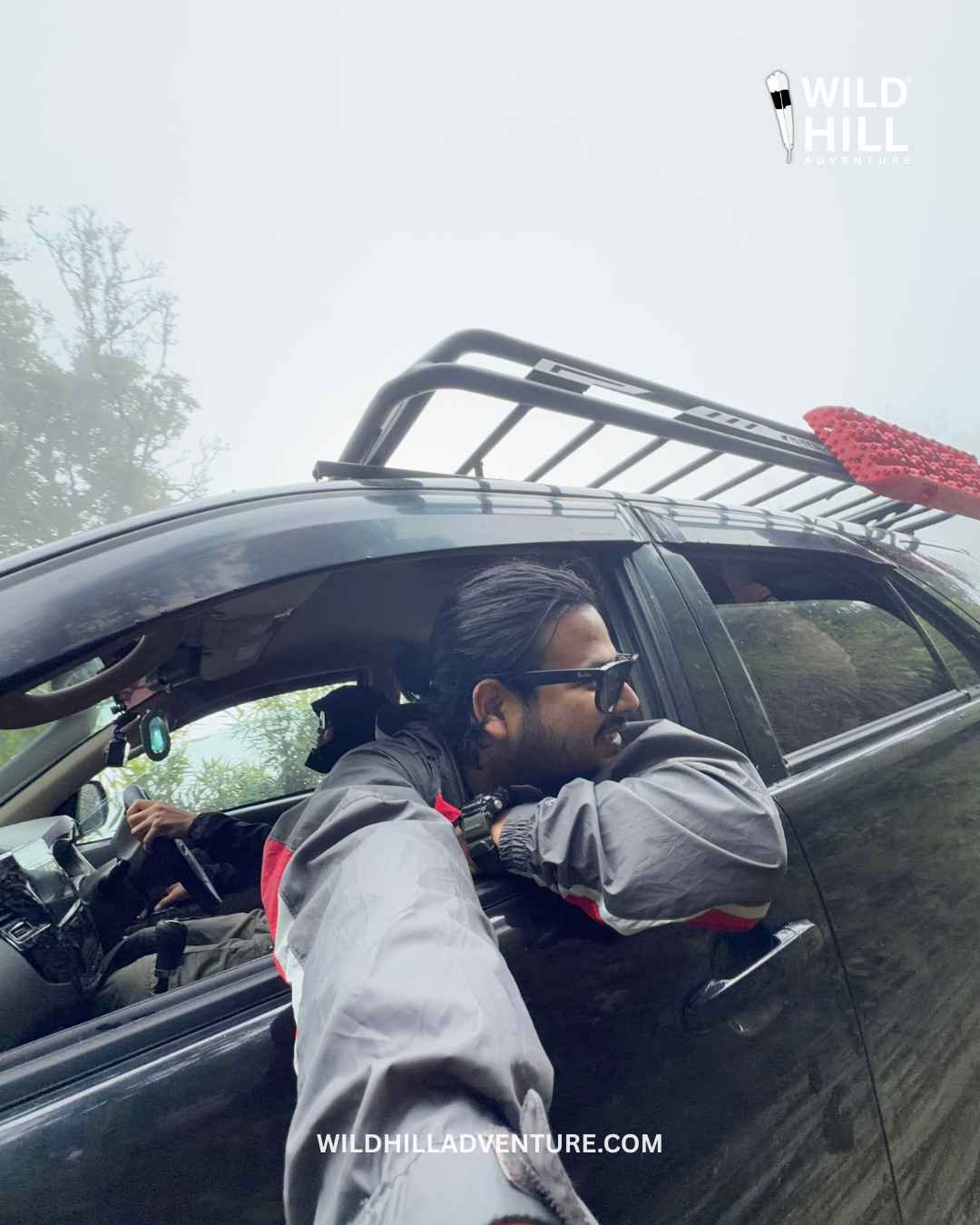
But because we were travelling during the monsoon, the road also became rougher.
Some sections were muddy.
Others were slippery.
There were proper off-road stretches.
This is why we had taken a capable vehicle.
During dry months, conditions can be very different. But if you’re travelling to Kapamodzü during heavy rain, don’t assume that Google Maps telling you there is a road means it will be an easy road.
Mountain conditions change quickly.
An experienced driver and suitable vehicle make a huge difference.
And Then We Suddenly Saw This Village…
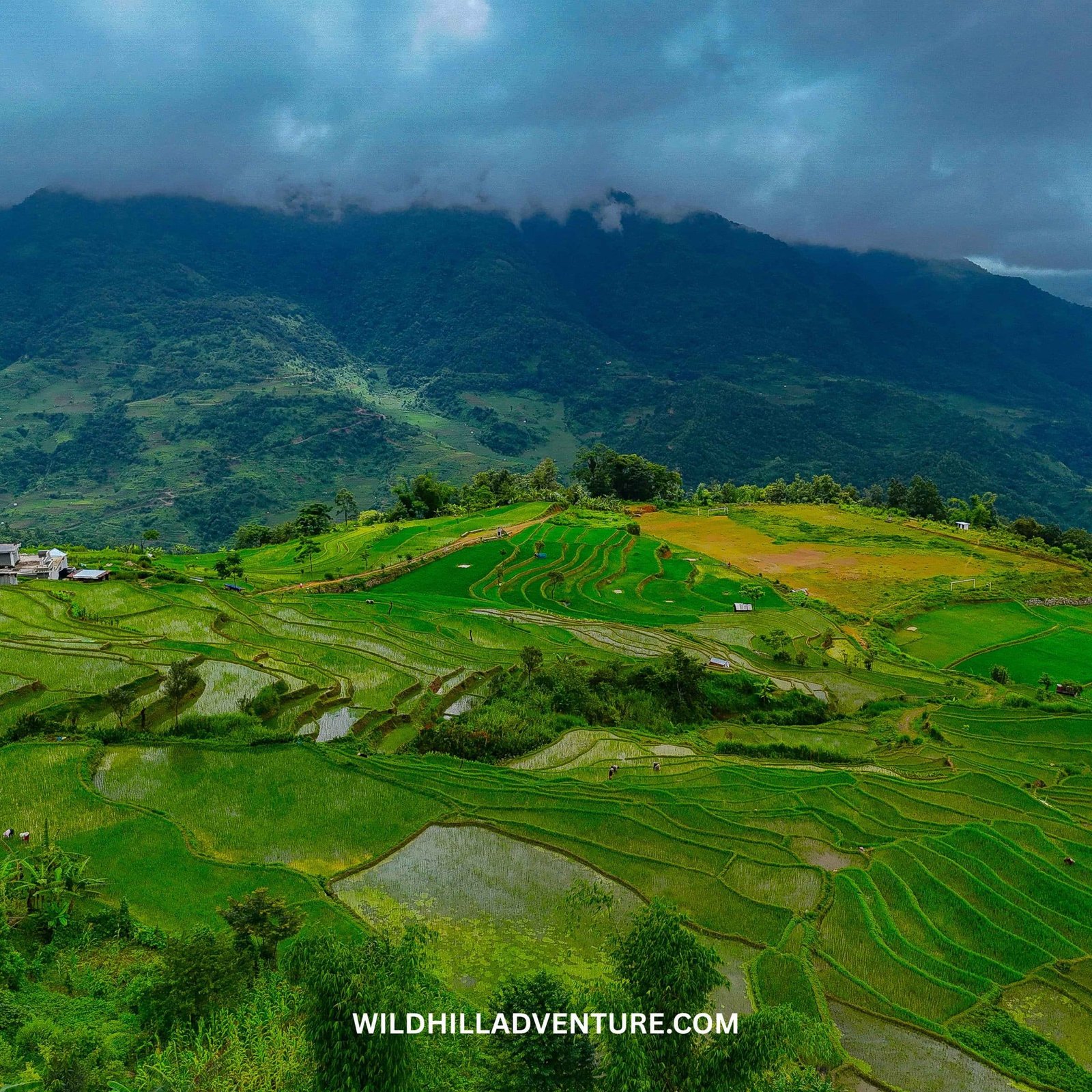
At one point during the drive, something caught my attention.
I immediately asked to stop.
Below us was an incredible landscape.
A village surrounded by mountains with beautiful rice fields spreading across the valley.
Everything was intensely green from the monsoon.
I took out my drone and flew it.
From above, the landscape looked even better.
The geometric patterns of the rice fields were surrounded by enormous mountains, with the village sitting quietly between them.
Sometimes while travelling, you reach the destination you’re supposed to photograph.
And sometimes you accidentally discover something better on the road.
This was one of those moments.
Interestingly, we knew the village head.
He invited us to his home.
I really wanted to go.
But we were already running late and still had Kapamodzü ahead of us.
So we had to continue.
That’s one reason I always avoid overpacking itineraries in Northeast India. If you leave some flexibility, unexpected moments like this can become the best part of your trip.
The Final Drive to Kapamodzu During Monsoon
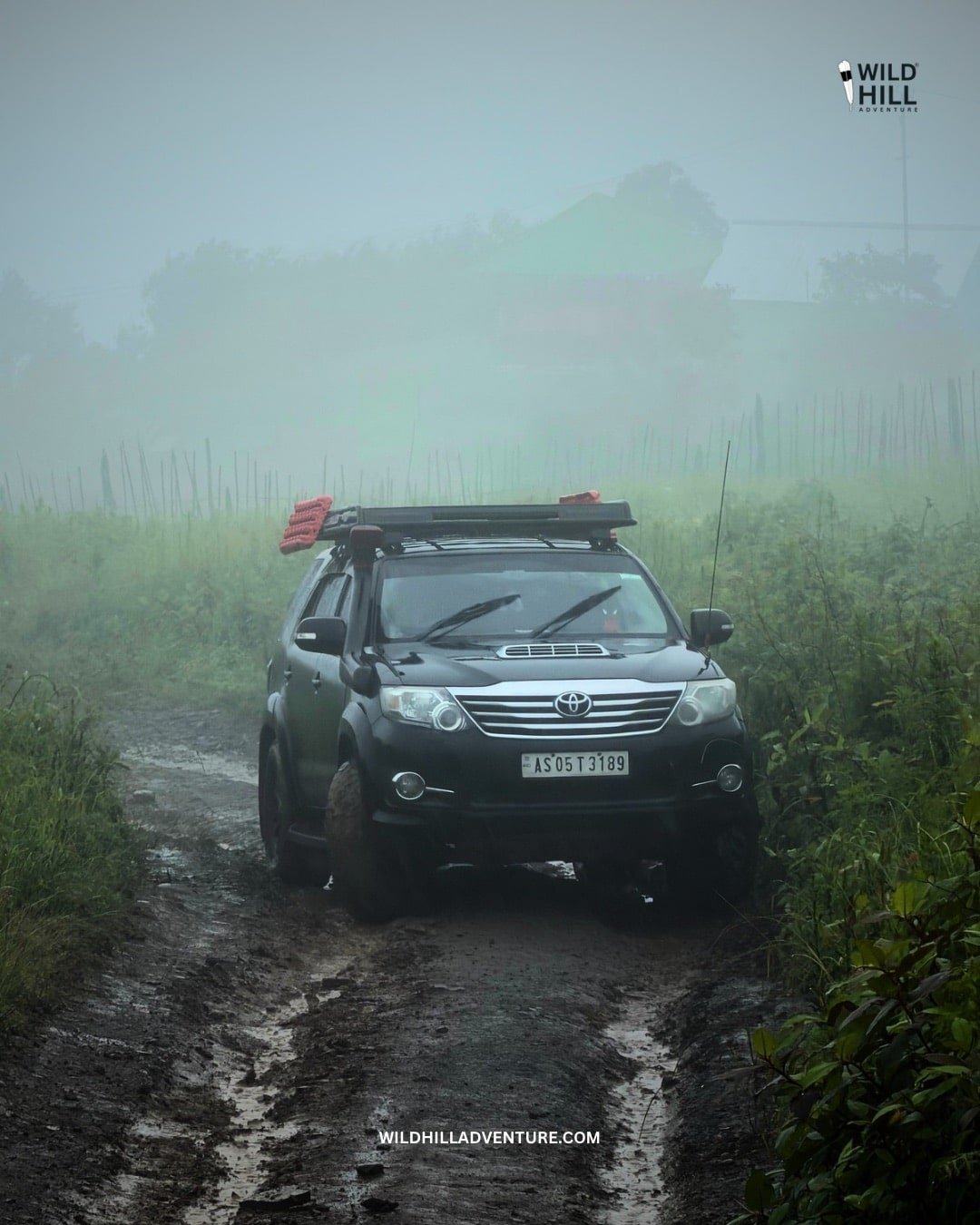
As we approached Kapamodzü, conditions became more challenging.
The rain had made the final road slippery, muddy and rough.
This wasn’t the kind of road where I wanted to experiment with a normal city-driving mindset.
We had come prepared with a proper vehicle for the conditions.
If you’re travelling in the monsoon, I strongly recommend checking the latest road situation locally before starting.
Don’t blindly follow an old blog, including this one.
Conditions here can change.
Contact us
- Phone/WhatsApp: +91 9365476611 +91 91811 29331/+91 91814 99331
- Instagram: @wildhilladventure
- Email: wildhilladventure@gmail.com
- Website: www.wildhilladventure.com
Reaching Kapamodzu Peak
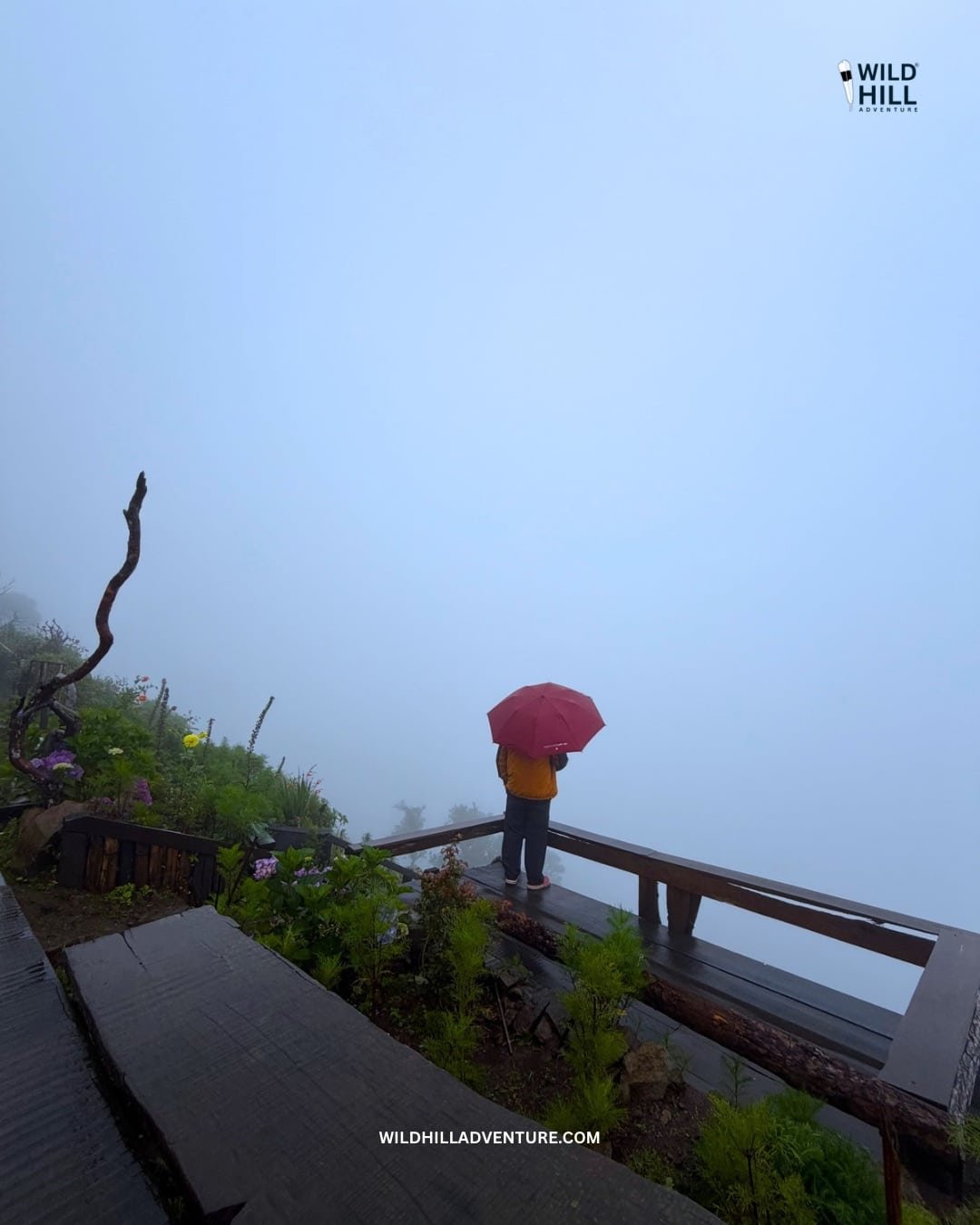
Eventually, we arrived in the evening.
And this is where Kapamodzü surprised me again.
People hear “peak” and assume they are signing up for a difficult multi-hour trek.
Depending on how far road access is possible when you visit, that isn’t necessarily the experience.
During our visit, after reaching the parking area, it was only around a 10-minute walk to where we were staying and enjoying the peak area.
However, traditional trekking routes from Zhavame are longer.
The Restaurant With One of the Best Views I’ve Seen
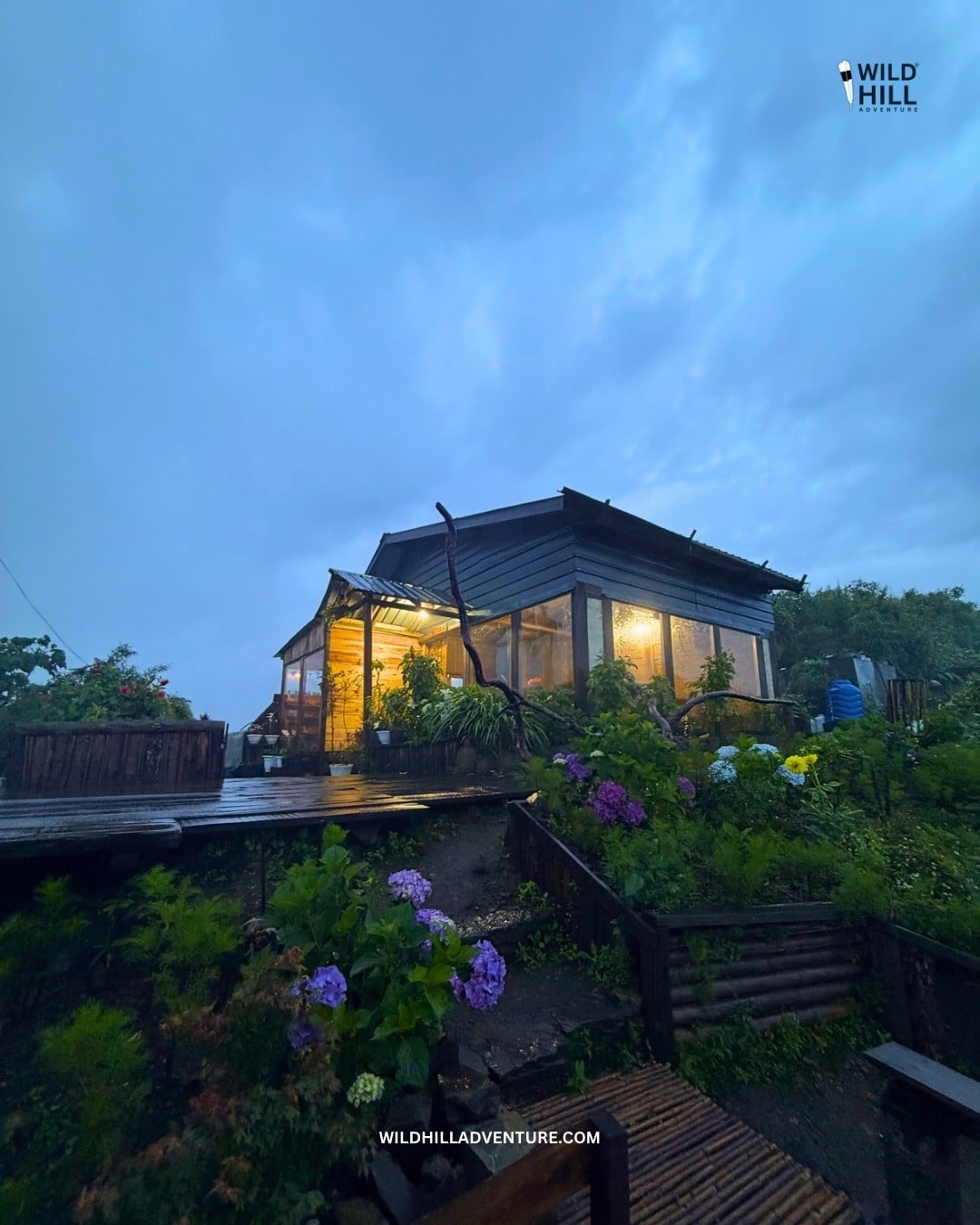
And then there is the restaurant.
Guys, trust me.
The location is incredible.
You are sitting high in the mountains with enormous landscapes opening around you.
Clouds move through the hills.
The temperature drops.
You have hot food in front of you.
For me, this was easily one of the most memorable restaurant settings I’ve experienced in Nagaland.
You aren’t going there for luxury dining.
You’re going there because the view is the experience.
Where to Stay at Kapamodzü Peak
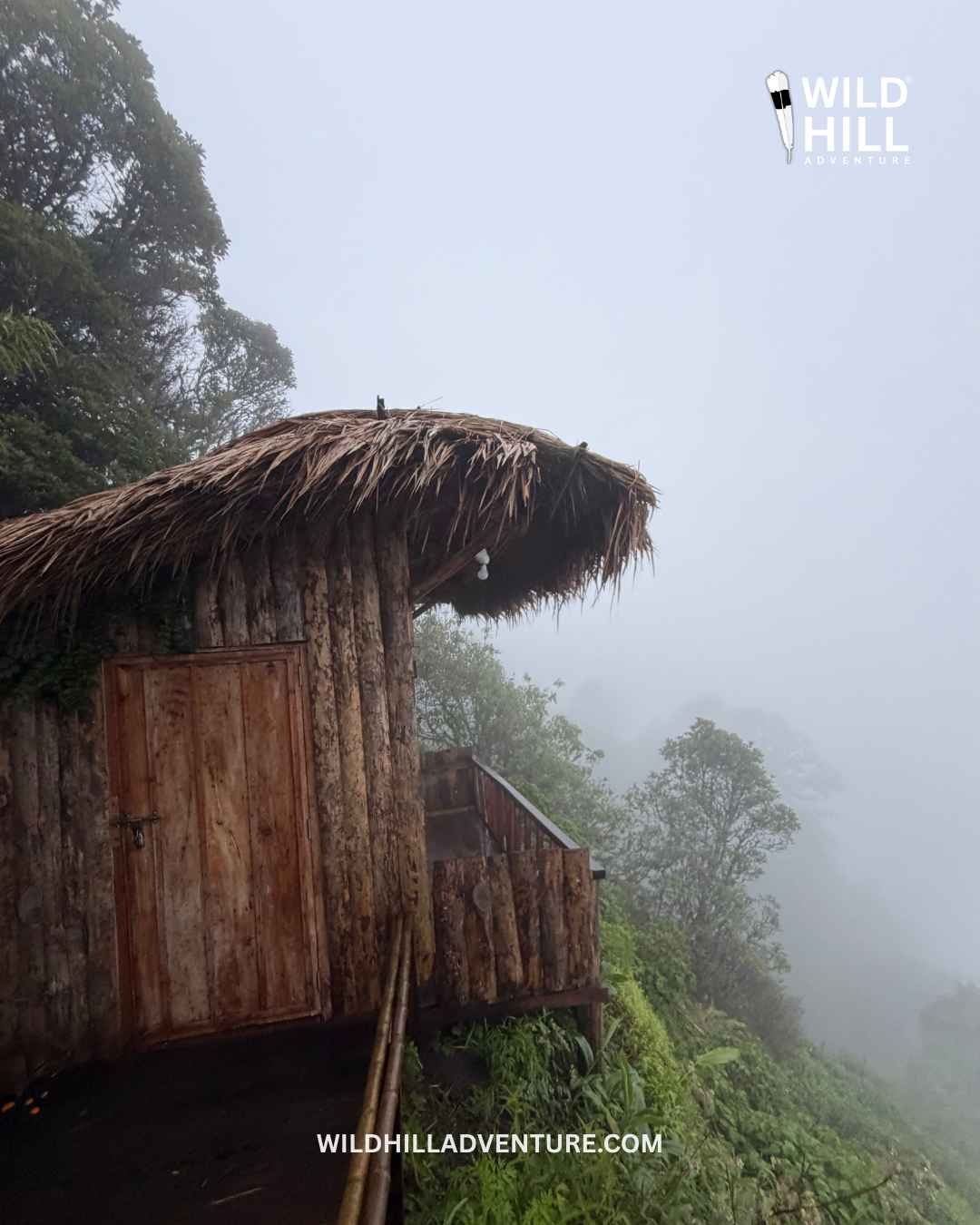
You don’t necessarily need to return to Kohima or Pfutsero the same day.
You can stay at Kapamodzü.
During our visit, there were options including:
- Tents
- Cottage accommodation
My strong recommendation?
Stay overnight.
In fact, if you enjoy slow travel and mountain landscapes, I’d consider two nights.
But there’s an important catch.
Accommodation is limited.
Demand can become high, particularly during popular travel periods and events.
So don’t reach Kapamodzü expecting to automatically find a cottage.
Book well in advance.
My First Monsoon Night at Kapamodzü
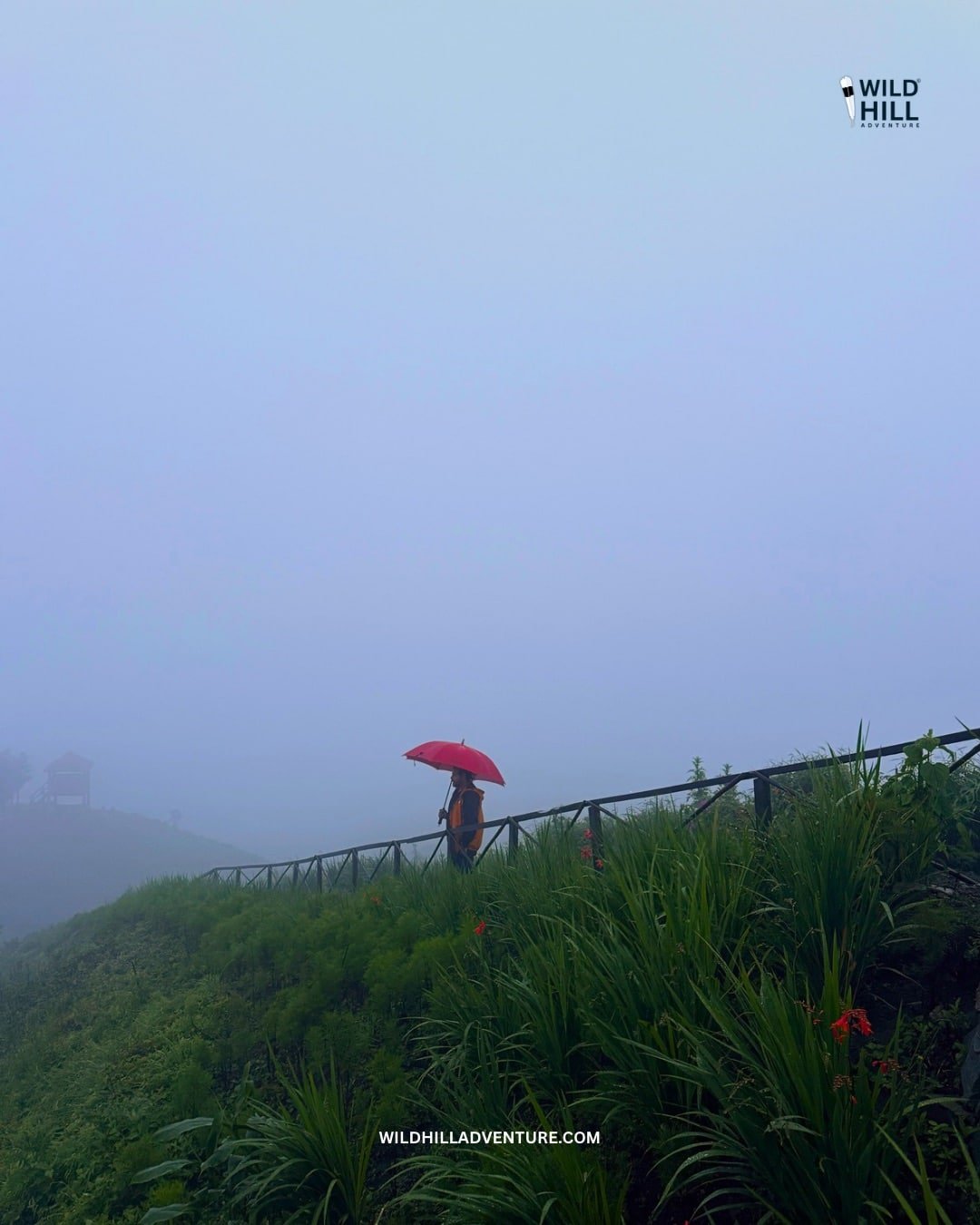
We reached in the evening and settled down.
I’d been to Kapamodzü several times.
But this was my first monsoon experience here.
The atmosphere was completely different.
Clouds moved across the mountains.
Everything was green.
The cold slowly increased as daylight disappeared.
Instead of running around trying to “cover” attractions, we simply sat there.
And watched.
That’s something I’ve started appreciating more as I’ve travelled more.
You don’t always need an activity.
Sometimes the activity is sitting in a chair looking at a mountain.
Strangers Became Friends
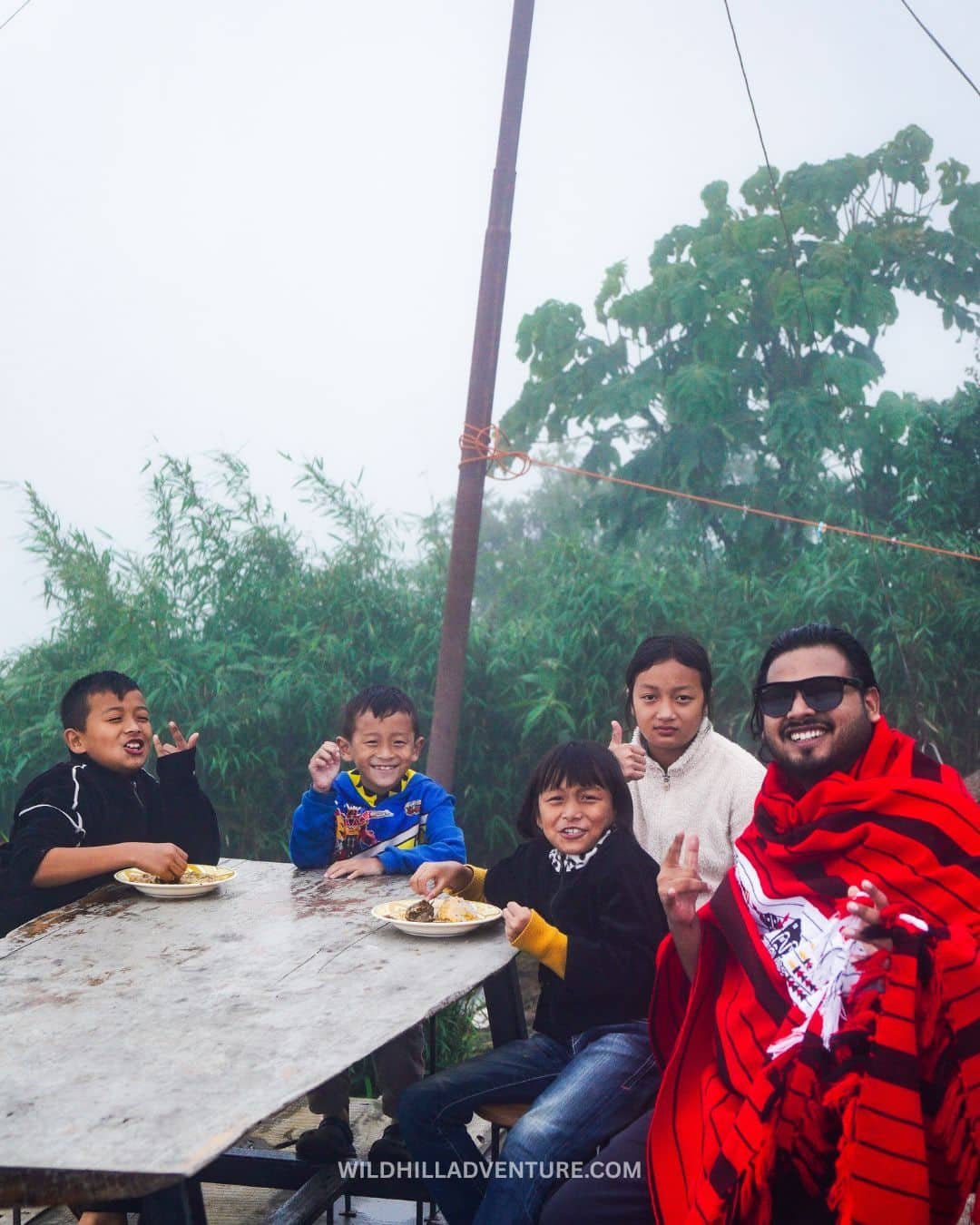
That evening, we met some young travelers.
Within a short time, everyone started talking.
Then came music.
Then singing.
Then dancing.
Nobody had planned it.
There was no itinerary saying:
7:30 PM – Make new friends and start singing.
It just happened.
Those spontaneous evenings are often the ones I remember longest.
Dinner: Authentic Naga Thali
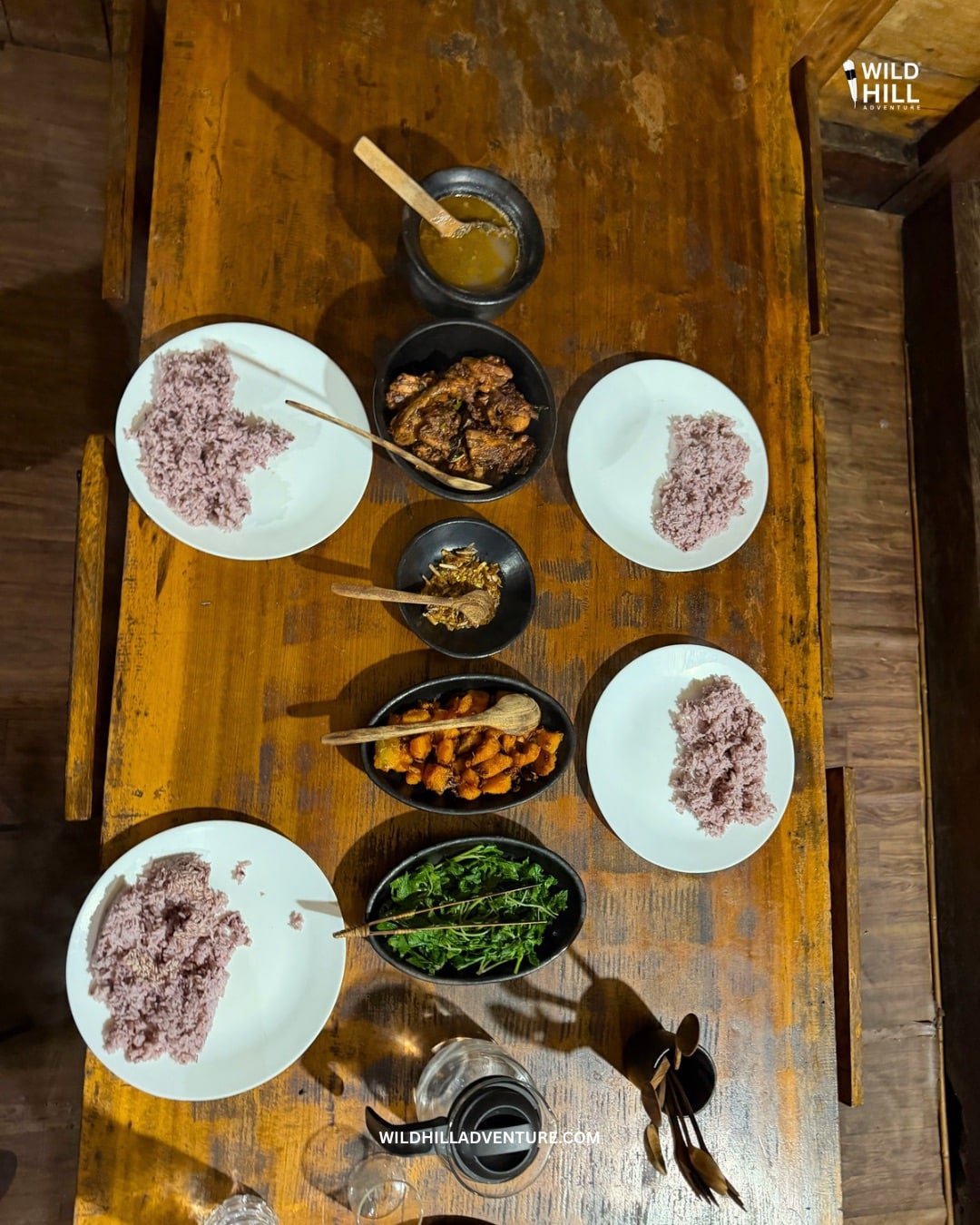
For dinner, we ordered a traditional Naga thali.
After the long drive, rain, off-roading and cold weather, that hot meal was exactly what we needed.
And it was so good.
If you’re staying overnight, I strongly recommend eating local food rather than carrying instant noodles and treating the night purely like a camping exercise.
Food is part of travelling through Nagaland.
The Cold Night and My Obsession With Sunrise
Night arrived.
And it became seriously cold.
But I wasn’t thinking about the temperature.
I was thinking about the next morning.
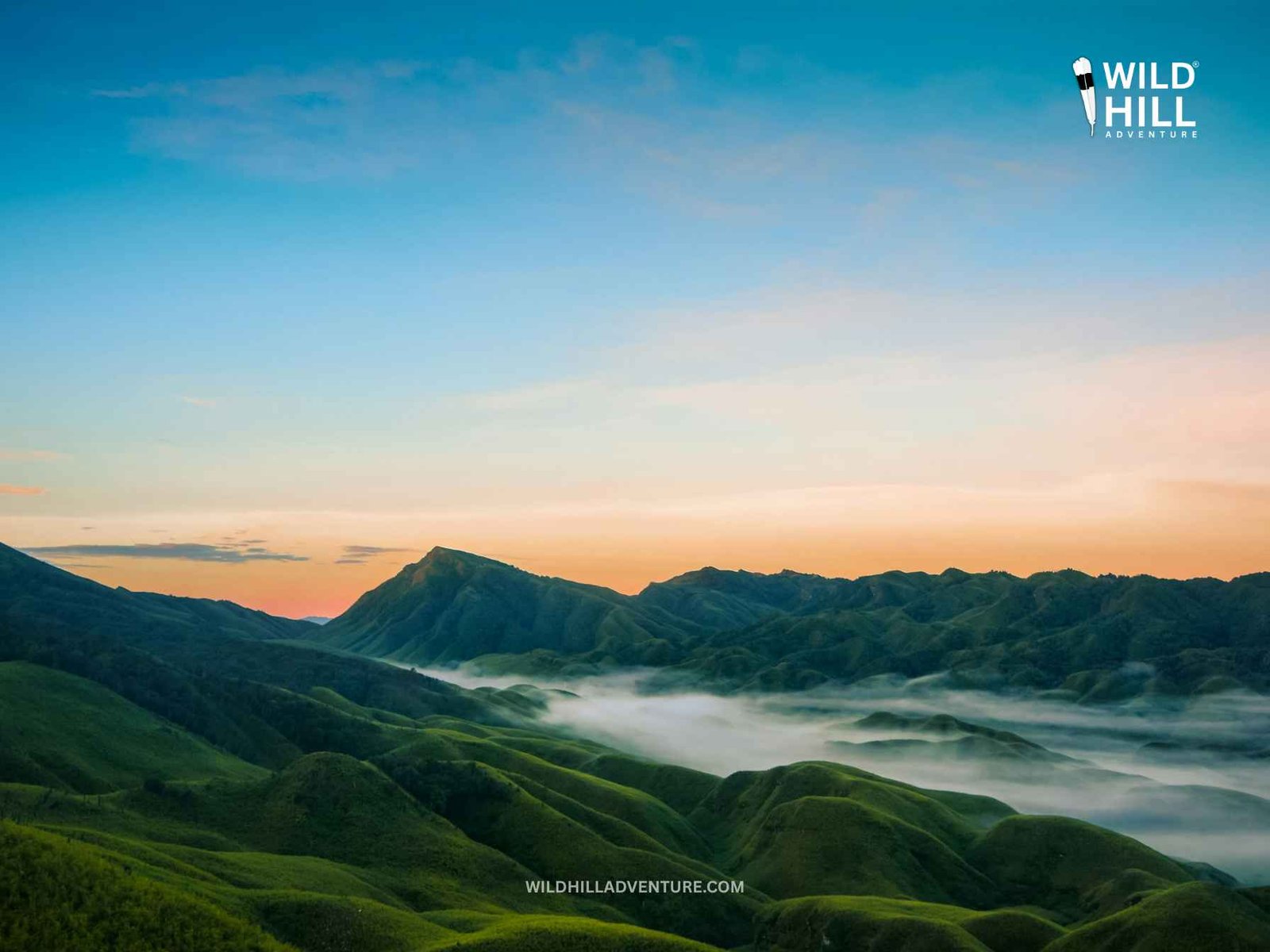
Kapamodzü is known for its expansive mountain views, and I’d been imagining waking up above a sea of floating clouds.
I couldn’t sleep properly.
I woke up.
Checked the time.
Still midnight.
Slept again.
Woke up.
Checked again.
Still too early.
I probably woke up three or four times thinking:
“Surely it’s morning now.”
No.
Back to sleep.
Eventually, morning finally came.
I got up excitedly and went outside.
And…
Nothing.
Fog.
😂
The entire view we’d been waiting for had disappeared.
No dramatic sunrise.
No perfect sea of clouds.
No cinematic drone shot.
Nature simply refused.
And that’s travel.
I could pretend every trip we organize produces Instagram-perfect conditions.
It doesn’t.
Mountains don’t care about your itinerary.
Maybe next time.
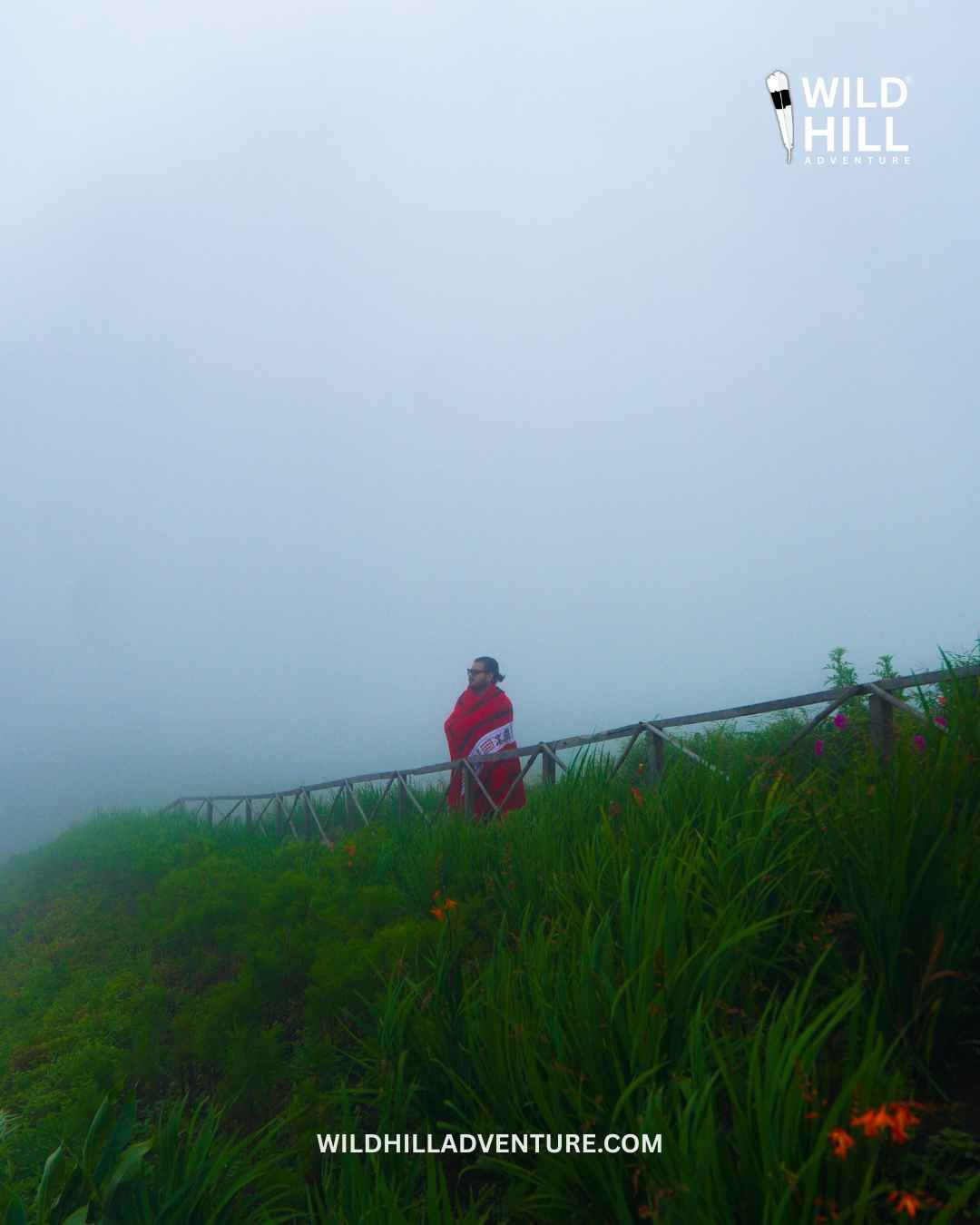
Sitting in the Fog Became My Favourite Part
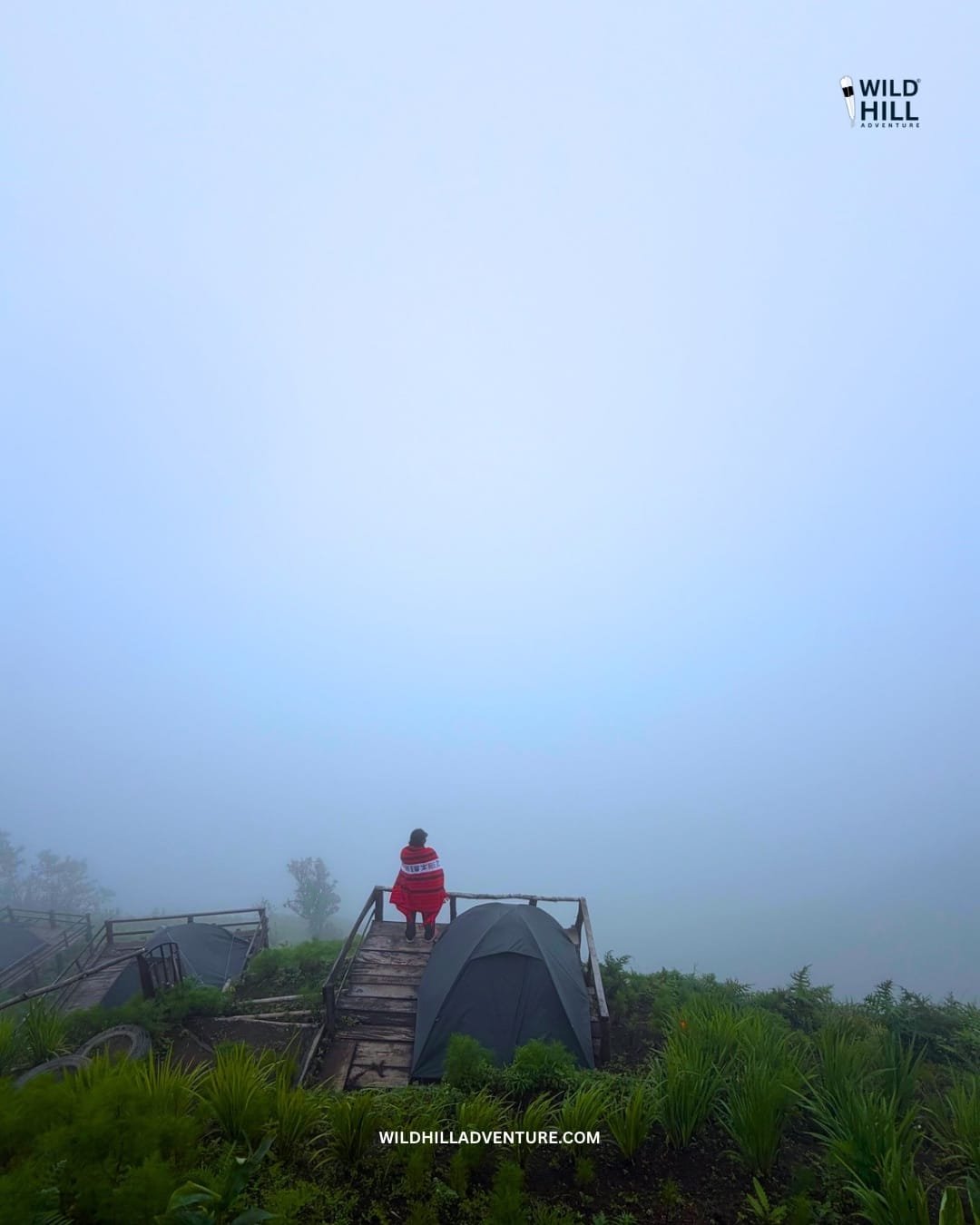
Strangely, I wasn’t disappointed for long.
I took a chair.
Sat outside.
And stayed there for hours.
There wasn’t much to see beyond the mist.
But I loved it.
Cold air.
Silence.
Mountains somewhere behind the clouds.
No city noise.
No rush.
No constant need to do something.
I just sat there thinking about nature, travel, work and life.
Those moments are difficult to put into an itinerary.
But they’re one of the reasons I keep returning to places like Kapamodzü.
I Didn’t Want to Leave
Eventually we had breakfast.
Our friend Kevin had some work, which meant we needed to leave.
I genuinely wanted to stay another night.
If I’d been travelling alone without a schedule, I probably would have.
That is perhaps the simplest review I can give Kapamodzü:
I wasn’t ready to leave.
Kapamodzü to Pfutsero
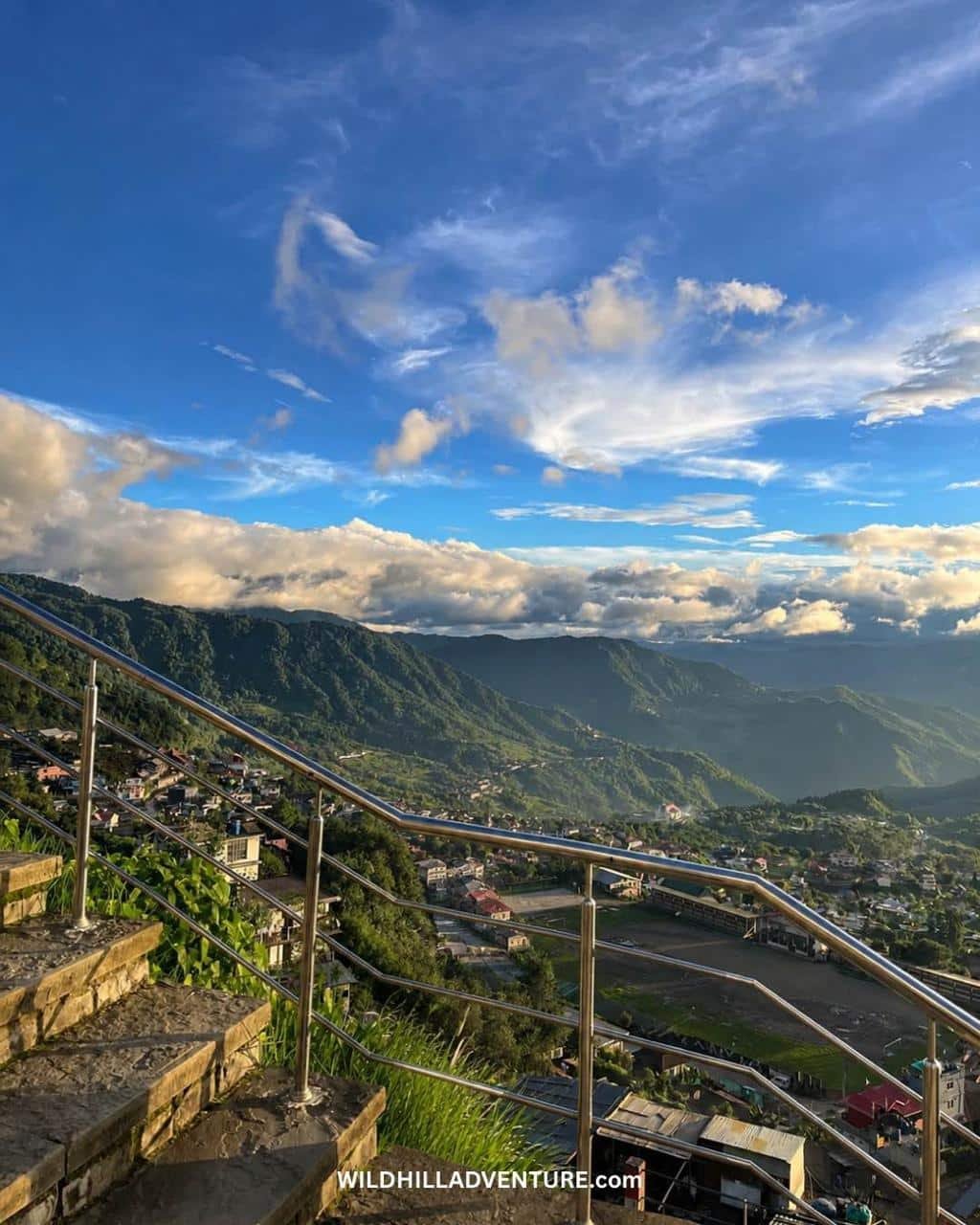
Instead of returning the same way, we drove towards Pfutsero.
This creates a fantastic circuit because the scenery changes again.
Pfutsero is a beautiful high-altitude town in Phek district and makes an excellent stop when combining Kapamodzü with other destinations in this part of Nagaland.
Visiting Glory Peak
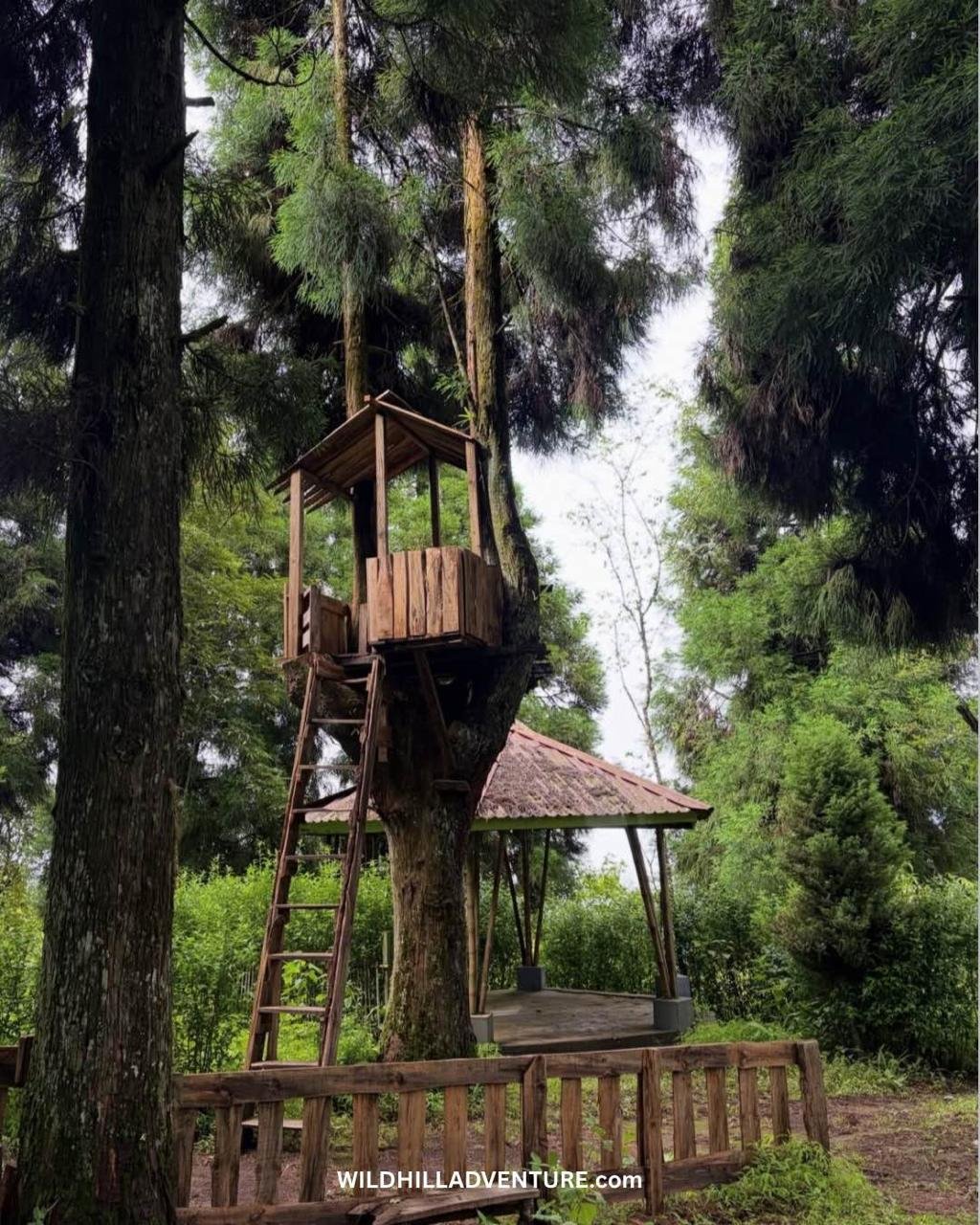
While around Pfutsero, we visited Glory Peak.
If you’re already making the journey to Kapamodzü, I recommend adding it rather than rushing directly back to Kohima.
The mountain landscapes around this entire belt deserve more attention from travelers.
Our Unexpected Cabbage Stop
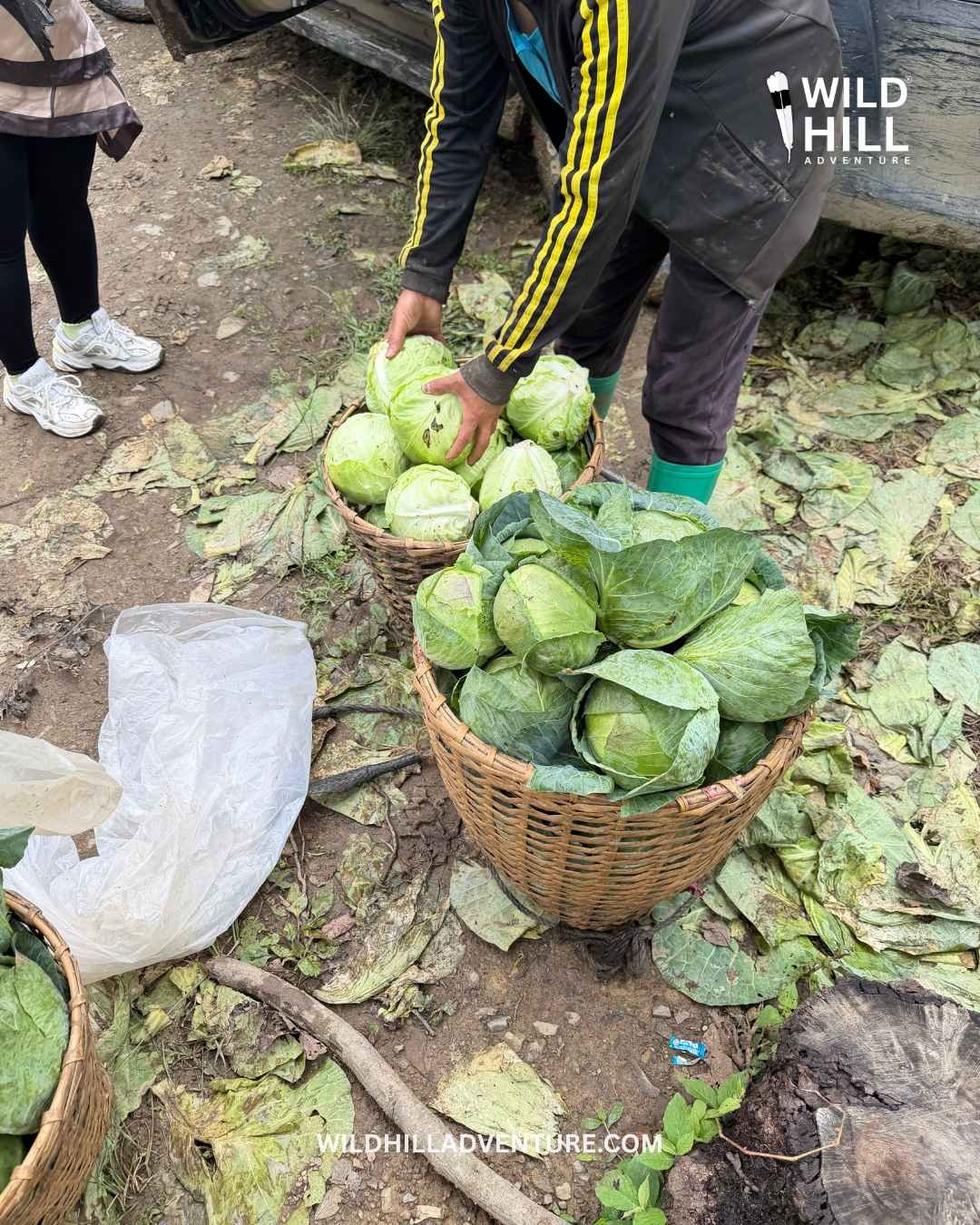
Then came another simple but memorable stop.
A cabbage farm.
This region is known for vegetable cultivation, and Zhavame in particular has official recognition for its organic vegetable production.
We stopped at a farm.
And ended up taking home a lot of cabbage.
😂
It sounds like a tiny detail.
But this is exactly what I enjoy about road trips through Northeast India.
Not everything needs to be a “tourist attraction.”
Sometimes you stop at a farm, meet people and leave carrying vegetables.
Back to Kohima
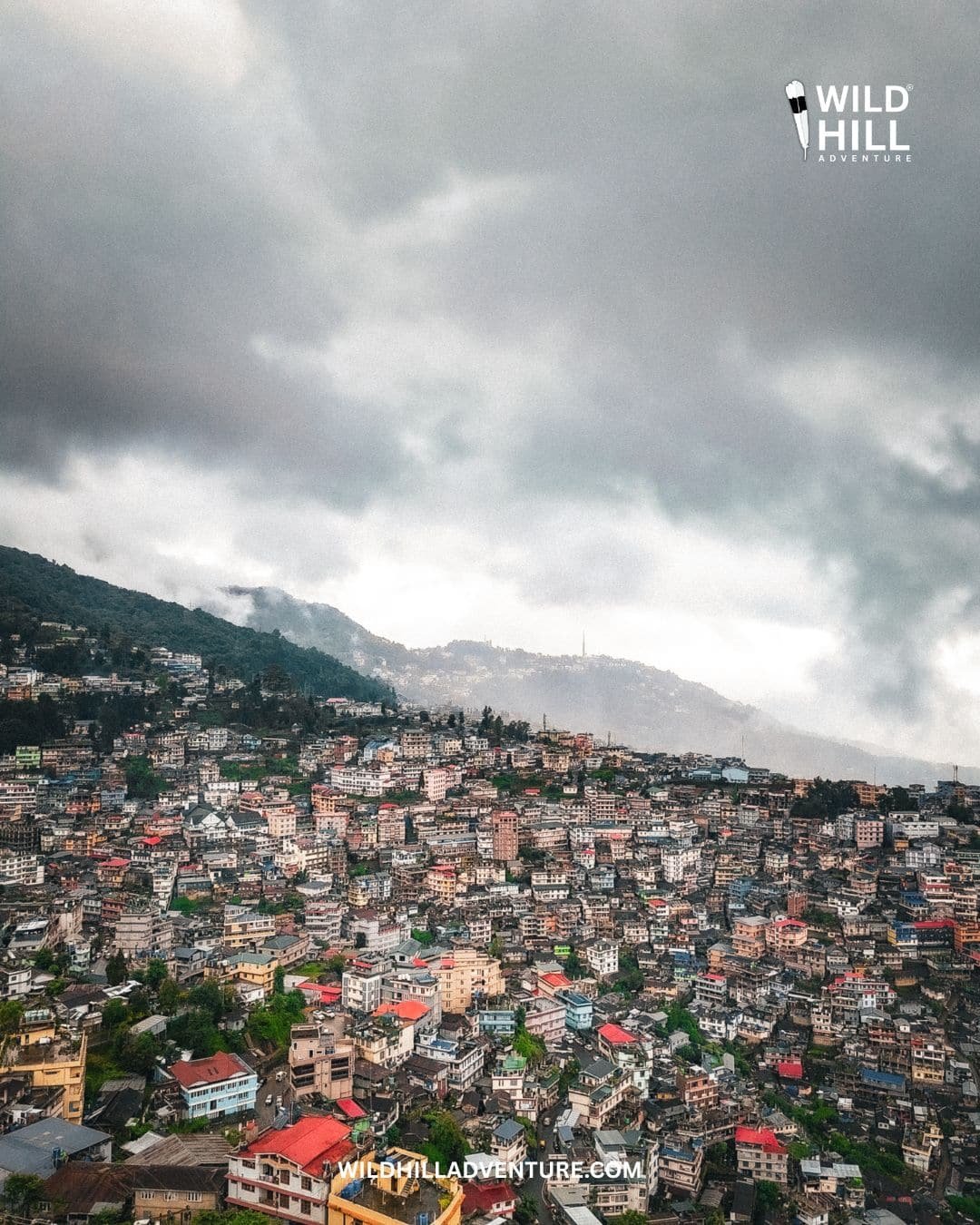
After exploring the Pfutsero side, we continued towards Kohima.
We reached Kohima and stayed overnight.
And the journey wasn’t finished.
The next day?
Dzüleke.
That’s why I particularly like this part of Nagaland. You can combine Kapamodzü with Kohima, Khonoma, Dzüleke, Pfutsero and, depending on your time, the Hornbill Festival or Dzukou Valley.
Best Time to Visit Kapamodzü Peak
Every season offers a different experience.
September to November: My Top Recommendation
If your priority is views, comfortable weather and flowers, this is one of the best periods.
September-October as a peak season around Kapamodzü for wildflowers and cosmos blooms.
December to February: Clear but Cold
Winter can bring beautiful visibility and crisp mountain landscapes.
But nights can become very cold.
Pack accordingly if you’re camping.
March to May: Pleasant
Spring can be a good option for travelers wanting comfortable conditions without peak winter temperatures.
June to September: Monsoon Adventure
This was when we did this particular journey.
Would I recommend it?
Yes, but not to everyone.
The landscapes are unbelievably green.
Clouds and mist create an entirely different mood.
But roads can become muddy and slippery, views aren’t guaranteed and rain can disrupt plans.
If you’re adventurous and flexible, monsoon Kapamodzü can be magical.
If you’re travelling primarily for a guaranteed sunrise photograph, choose a drier period.
How Long Should You Stay?
Technically, Kapamodzü can be incorporated into a short trip.
But after this experience, my preference would be:
Minimum: 1 night
Better: 2 nights if you love nature and slow travel
Staying overnight gives you opportunities for:
- Sunset
- Stargazing when skies are clear
- Early morning landscapes
- Sunrise
- Cloud inversions when conditions cooperate
- Local food
- Slow exploration
A rushed day trip misses much of what makes this place special.
Kapamodzu vs Dzukou Valley
People sometimes ask which one they should visit.
They are completely different experiences.
Dzukou Valley is primarily about trekking, the vast valley landscape and an adventure on foot.
Kapamodzü can be considerably easier to access when road conditions allow vehicles close to the peak, while still giving you spectacular high-altitude scenery.
If you don’t want a strenuous trek but still want a beautiful mountain experience, Kapamodzü can be an excellent choice.
If you have enough time?
Do both.
What to Pack for Kapamodzü
Even if you’re travelling outside winter, mountain weather can change quickly.
I recommend carrying:
- Warm jacket
- Rain jacket during monsoon
- Comfortable walking shoes
- Extra socks
- Power bank
- Torch/headlamp
- Personal medicines
- Water bottle
- Small backpack
- Camera
- Drone only if current local and aviation rules permit its use
- Cash
- Basic snacks
And don’t underestimate the cold simply because you’re visiting Nagaland rather than the higher Himalayas.
At around 2,620 metres, Kapamodzü is high enough for evenings to feel genuinely cold.
Important Tips From Our Experience
Don’t trust travel times too strictly. Mountain roads change.
Check road conditions before leaving. Especially during monsoon.
Book accommodation early. Cottages and camping capacity are limited.
Stay overnight if possible. Kapamodzü deserves more than a photo stop.
Carry warm clothes. Even monsoon nights can feel surprisingly cold.
Try local food. Don’t make this only a sightseeing trip.
Explore Pfutsero and Glory Peak. They fit naturally into the journey.
Stop in villages. Some of our best experiences happened between destinations.
Don’t expect perfect sunrise conditions. We learned this one personally.
And most importantly:
Don’t rush.
Travelling to Kapamodzü With Wild Hill Adventure
At Wild Hill Adventure, we are based in Northeast India and have explored Kapamodzü multiple times in different conditions.
That’s important because a trip like this isn’t simply about arranging a car and hotel.
Road conditions change.
Routes change.
Weather changes.
And some of the best experiences aren’t marked on Google Maps.
When we plan Nagaland trips, we can combine Kapamodzü with places such as:
Kohima → Jakhama → Kapamodzü → Pfutsero → Glory Peak → Khonoma → Dzüleke
Or during December:
Hornbill Festival → Kapamodzü → Pfutsero → Dzüleke
We prefer private and customized journeys because they give us the flexibility to stop at an unexpected rice field, spend longer with a local family or simply sit at Kapamodzü for another hour because the clouds are finally beginning to move.
Is Kapamodzü Peak Worth Visiting?
After visiting multiple times, my answer is simple.
Absolutely.
But don’t visit Kapamodzü expecting another commercial hill station.
That’s not why I love it.
Go for the drive.
Go for Zhavame.
Go for the mountains.
Eat local food.
Stay overnight.
Talk to people.
Wake up ridiculously early hoping for sunrise.
And if the fog ruins everything like it did for us?
Make a cup of tea.
Pull out a chair.
Sit there anyway.
Sometimes that’s an even better memory.
Our first monsoon trip to Kapamodzü didn’t give me the sunrise I had imagined.
But strangely, it gave me something better.
It reminded me why I started travelling in the first place.
If you’re planning an offbeat Nagaland journey and want something beyond Kohima and the usual tourist circuit, I strongly recommend adding Kapamodzü Peak to your itinerary.
And yes…
I’m going back for that sunrise.
20 FAQs About Kapamodzü Peak Nagaland
1. Where is Kapamodzü Peak located in Nagaland?
Kapamodzü Peak is located near Zhavame Village in Phek district, Nagaland, close to Pfutsero. It is one of the highest and most scenic viewpoints in this part of Nagaland, surrounded by mountains, villages and agricultural landscapes.
2. What is the height of Kapamodzü Peak?
Kapamodzü Peak is approximately 2,620 metres above sea level. Because of its elevation, the weather can be considerably cooler than Kohima, particularly at night and during winter.
3. How do I reach Kapamodzü Peak from Kohima?
There are two practical routes. From our experience, you can travel Kohima → Jakhama → Mao → Zhavame → Kapamodzü, or take the longer route through Kohima → Pfutsero → Zhavame → Kapamodzü. Travel time varies significantly depending on weather and road conditions.
4. How far is Kapamodzü Peak from Kohima?
The exact driving distance and time depend on the route chosen. In our experience, the Jakhama-Mao side can take roughly 2–3 hours or more, while travelling through Pfutsero can take approximately 4–5 hours, depending heavily on road conditions and stops.
5. Do I need a permit to visit Kapamodzü Peak?
Travelers entering Nagaland require an Inner Line Permit (ILP) depending on their nationality and applicable regulations. If you take a route that crosses into Manipur through Mao, you should also check the current Manipur entry and ILP requirements before travelling.
6. What is the best time to visit Kapamodzü Peak?
For comfortable weather and clearer mountain views, September to April is generally a good period. October is particularly beautiful around the Kapamodzü-Zhavame region because of seasonal flowers. Winter offers clearer views but can become very cold.
7. Can I visit Kapamodzü Peak during the monsoon?
Yes, and our first monsoon visit was incredibly beautiful. The mountains, rice fields and surrounding landscapes become intensely green. However, monsoon also means fog, rain, slippery roads and unpredictable visibility, so travelers should be flexible and use a suitable vehicle.
8. Is the road to Kapamodzü Peak good?
Road conditions can vary considerably. Some sections may be manageable while the final approach can become rough, muddy or slippery, particularly during monsoon. We recommend checking current conditions locally before starting rather than relying entirely on online maps.
9. Do I need a 4×4 vehicle for Kapamodzü Peak?
Not necessarily throughout the year. However, during heavy rain or poor road conditions, a capable high-clearance vehicle can make the journey considerably easier and safer. During our monsoon journey, we specifically travelled with a vehicle suitable for rough roads.
10. How difficult is the Kapamodzü Peak trek?
Kapamodzü can be approached in different ways. Traditional routes involve hiking from the Zhavame side, while vehicle access may sometimes bring you much closer. During our trip, the final walk from where we parked was only around 10 minutes. Current access conditions should always be confirmed locally.
11. Can I stay overnight at Kapamodzü Peak?
Yes. During our visit, tent and cottage accommodation was available around the peak area. Staying overnight is something I strongly recommend because you get to experience sunset, the cold mountain evening and potentially sunrise or floating clouds the following morning.
12. Do I need to book accommodation at Kapamodzü in advance?
Yes. Accommodation options are limited, so you should book well in advance, particularly during popular travel periods such as October, November and the Hornbill Festival season in December.
13. Can I see sunrise and a sea of clouds from Kapamodzü Peak?
Kapamodzü can offer spectacular sunrise, mountain and cloud views when weather conditions cooperate. However, nothing is guaranteed. On our monsoon trip, I woke up several times waiting for sunrise only to discover that thick fog had covered everything in the morning.
14. How cold does Kapamodzü Peak get?
Because Kapamodzü is around 2,620 metres above sea level, evenings and nights can feel quite cold. Winter is particularly chilly, but even during our monsoon visit the night felt surprisingly cold. Carry a proper jacket and warm layers if you’re staying overnight.
15. Is there food available at Kapamodzü Peak?
During our visit, there was a restaurant at the peak area serving food with an incredible mountain view. We had an authentic Naga thali for dinner, which became one of the memorable parts of our stay. Food availability can change, so confirm arrangements when booking accommodation.
16. What places can I visit with Kapamodzü Peak?
Kapamodzü can be combined with several beautiful destinations in southern Nagaland, including Zhavame Village, Pfutsero, Glory Peak, Jakhama, Khonoma and Dzüleke. Travelers with more time can also combine the trip with Kohima, Dzukou Valley and the Hornbill Festival.
17. Is Pfutsero worth visiting with Kapamodzü?
Yes. Pfutsero is a beautiful high-altitude town in Phek district and fits naturally into a Kapamodzü road trip. We returned through Pfutsero, visited Glory Peak, stopped around local agricultural areas and then continued towards Kohima.
18. Is Kapamodzü Peak worth visiting during the Hornbill Festival?
Yes. If you have additional days beyond the Hornbill Festival, Kapamodzü is an excellent offbeat addition. It allows you to combine the cultural atmosphere of Kisama and Kohima with a quieter mountain experience around Zhavame and Pfutsero.
19. Is Kapamodzü Peak better than Dzukou Valley?
They offer different experiences. Dzukou Valley is better for travelers looking for a proper trekking adventure, while Kapamodzü can offer spectacular high-altitude scenery with considerably easier access when road conditions allow vehicles close to the peak. If you have enough time, I recommend experiencing both.
20. How many days should I plan for Kapamodzü Peak?
You can include Kapamodzü in a short trip, but based on our experience, I recommend spending at least one night. Two nights are even better for photographers and slow travelers because mountain weather is unpredictable and staying longer gives you another chance for clear sunrise and sunset views.
Why Choose Wild Hill Adventure for Your Nagaland & Northeast India Trip?
Travelling through Nagaland and Northeast India is very different from travelling through India’s more established tourist circuits.
Here, road conditions can change, permits matter, accommodation in remote villages is limited, mobile networks can disappear, and some of the most memorable places are not always easy to find online.
This is where travelling with a local Northeast-based company like Wild Hill Adventure makes a real difference.
We Are From Northeast India
Northeast India is not simply another destination we sell.
It is our home.
Our team has spent years travelling through Nagaland, Assam, Meghalaya, Arunachal Pradesh and other parts of the Northeast. We personally explore many of the routes and destinations before recommending them to our guests.
That local experience helps us understand not only where to go, but how to travel these regions properly.
We Personally Explore the Routes
Many of the places we include in our itineraries are places we have personally travelled to.
In Nagaland, our journeys have taken us through places such as:
- Kohima
- Kisama Heritage Village
- Dzukou Valley
- Khonoma
- Dzüleke
- Jakhama
- Pfutsero
- Kapamodzü Peak
- Longwa
- Mon and the Konyak region
Our Kapamodzü journey is a good example. We have experienced the route ourselves during monsoon, driven through difficult road sections, stayed near the peak, eaten there and explored the Pfutsero side.
That experience helps when we’re planning the same journey for a guest.
Strong Experience With the Hornbill Festival
Nagaland becomes extremely busy during the Hornbill Festival.
Accommodation fills up, Kohima traffic becomes heavy and first-time visitors can easily underestimate travel times.
Because we regularly operate Hornbill Festival trips, we can help guests plan the festival together with destinations such as Dzukou Valley, Khonoma, Dzüleke, Kapamodzü, Pfutsero and Longwa rather than simply visiting Kisama and returning home.
Local Guides and Community Connections
For us, a Nagaland trip shouldn’t only mean taking photographs from viewpoints.
We work with local people wherever possible.
Local guides can help travelers understand village history, tribal traditions, food, agriculture and everyday life in a way that simply driving through a destination cannot.
It also means tourism money reaches the communities travelers have actually come to experience.
We Take You Beyond the Usual Tourist Circuit
If you only search online, most Nagaland itineraries look similar:
Dimapur → Kohima → Hornbill Festival → Dzukou → Return.
There is much more to Nagaland.
Depending on your interests and available time, we can build journeys around remote villages, trekking, culture, food, photography, mountains and border regions.
Sometimes the best experience isn’t even a famous attraction.
It could be stopping beside a beautiful rice field, eating a local thali at Mao, visiting a vegetable farm near Pfutsero or spending an evening talking with people you have just met.
Those are the experiences we personally enjoy, and they influence the way we design our trips.
We Understand Northeast India’s Road Conditions
Google Maps doesn’t always tell the complete story here.
A road showing three hours can take considerably longer because of rain, landslides, construction or poor road conditions.
We plan journeys with these realities in mind.
For remote destinations and monsoon journeys, we can also select vehicles according to the route and current conditions rather than simply choosing the cheapest available option.
Permits Become Easier
Several parts of Northeast India have permit requirements.
Depending on the destination and nationality, travelers may need documents such as an Inner Line Permit (ILP) or other permissions.
Our team helps guests understand and arrange the applicable permits for their itinerary so they don’t have to figure everything out after arriving.
Private and Customized Northeast Trips
Not everyone wants the same holiday.
Some travelers want photography.
Some want trekking.
Some want culture and villages.
Others want comfortable hotels and relaxed sightseeing.
Instead of forcing every traveler into exactly the same itinerary, we can customize trips according to your time, interests, comfort level and budget.
On-Ground Support Matters Here
This is probably one of the most underestimated advantages of booking with a local operator.
When everything goes according to plan, arranging a trip looks easy.
The difference becomes obvious when something changes.
Bad weather, a road closure, delayed arrival, vehicle problem or accommodation issue can require quick local coordination.
Having a team operating within Northeast India gives travelers someone on the ground who can help find alternatives.
We Prefer Real Experiences Over Checklist Tourism
Our philosophy is simple:
Don’t just see Northeast India. Experience it.
Eat local food.
Stay in villages when appropriate.
Talk to people.
Walk through local markets.
Learn why communities protect their forests.
Understand the stories behind tribal traditions.
And sometimes, forget the itinerary for an hour and simply sit looking at the mountains.
That’s the kind of Northeast India we want our guests to experience.
Travel Northeast India With People Who Call It Home
Whether you’re planning the Hornbill Festival, Dzukou Valley Trek, Kapamodzü Peak, Longwa Village, an offbeat Nagaland road trip, or a longer journey combining Nagaland with Assam and other Northeast states, Wild Hill Adventure can help you design the trip around what you actually want to experience.
We don’t want to show you Northeast India only as a collection of tourist attractions.
We want to show you the Northeast that we know, travel through and love ourselves.
Contact us
- Phone/WhatsApp: +91 9365476611 +91 91811 29331/+91 91814 99331
- Instagram: @wildhilladventure
- Email: wildhilladventure@gmail.com
- Website: www.wildhilladventure.com

0 Comment