



Places to Visit in Kohima:
Complete Travel Guide to Kohima & the Best Day Trips
Best For: Culture, history, village experiences, nature, photography, food and offbeat travel
Recommended Duration: 3–5 Days
Best Base: Kohima
Ideal Season: October to April, although monsoon is beautiful for travelers who enjoy lush landscapes
Kohima is often treated as a one-night stop during a Nagaland trip.
I think that is a mistake.
After travelling around Nagaland repeatedly over the years, I have realized that Kohima works best when you think of it not simply as a city, but as a base for exploring some of the most beautiful places in southern Nagaland.
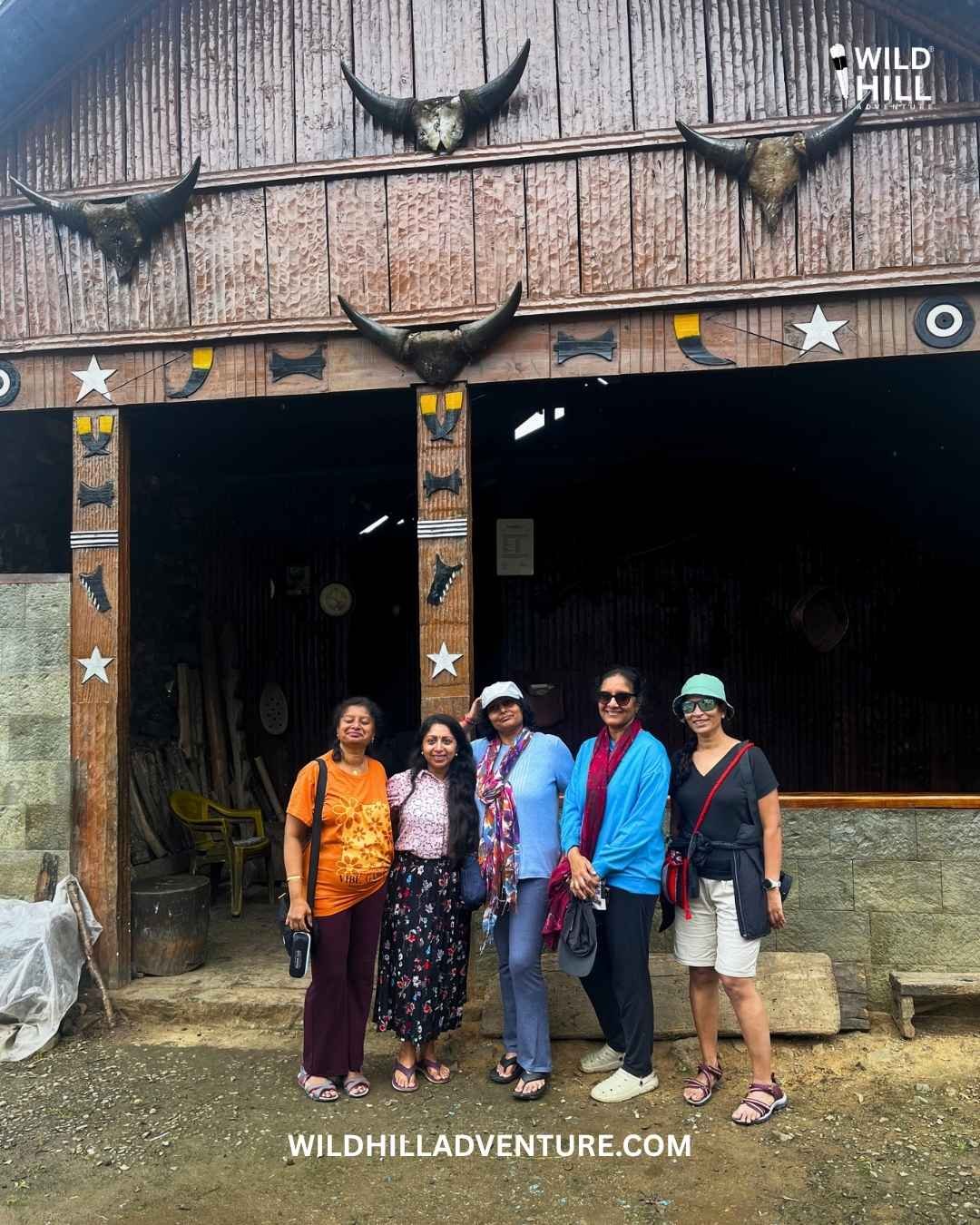
Inside Kohima you have history, markets, churches, viewpoints and local food. Drive a little farther and you reach Kisama and Jakhama. Continue exploring and places such as Khonoma, Dzüleke, Dzukou Valley, Pfutsero and Kapamodzü completely change the experience.
Some are easy half-day excursions. Some make excellent day trips. Others deserve at least one night.
So if you’re searching for the best places to visit in Kohima, this guide covers both the main attractions within Kohima and the destinations worth adding around it.
Best Places to Visit in Kohima
If this is your first trip, these are the places I would consider first:
- Kohima War Cemetery
- Nagaland State Museum
- Kohima Cathedral
- Local markets in Kohima
- Kisama Heritage Village
- Jakhama Village
- Kigwema Village
- Khonoma Village
- Dzüleke Village
- Dzukou Valley
- Japfü area
- Pfutsero
- Glory Peak
- Kapamodzü Peak
- Zhavame Village
You don’t need to squeeze all of them into one trip.
The better approach is to spend a little time understanding Kohima itself and then choose two or three excursions depending on whether you prefer culture, trekking, village life or mountain scenery.
1. Kohima War Cemetery
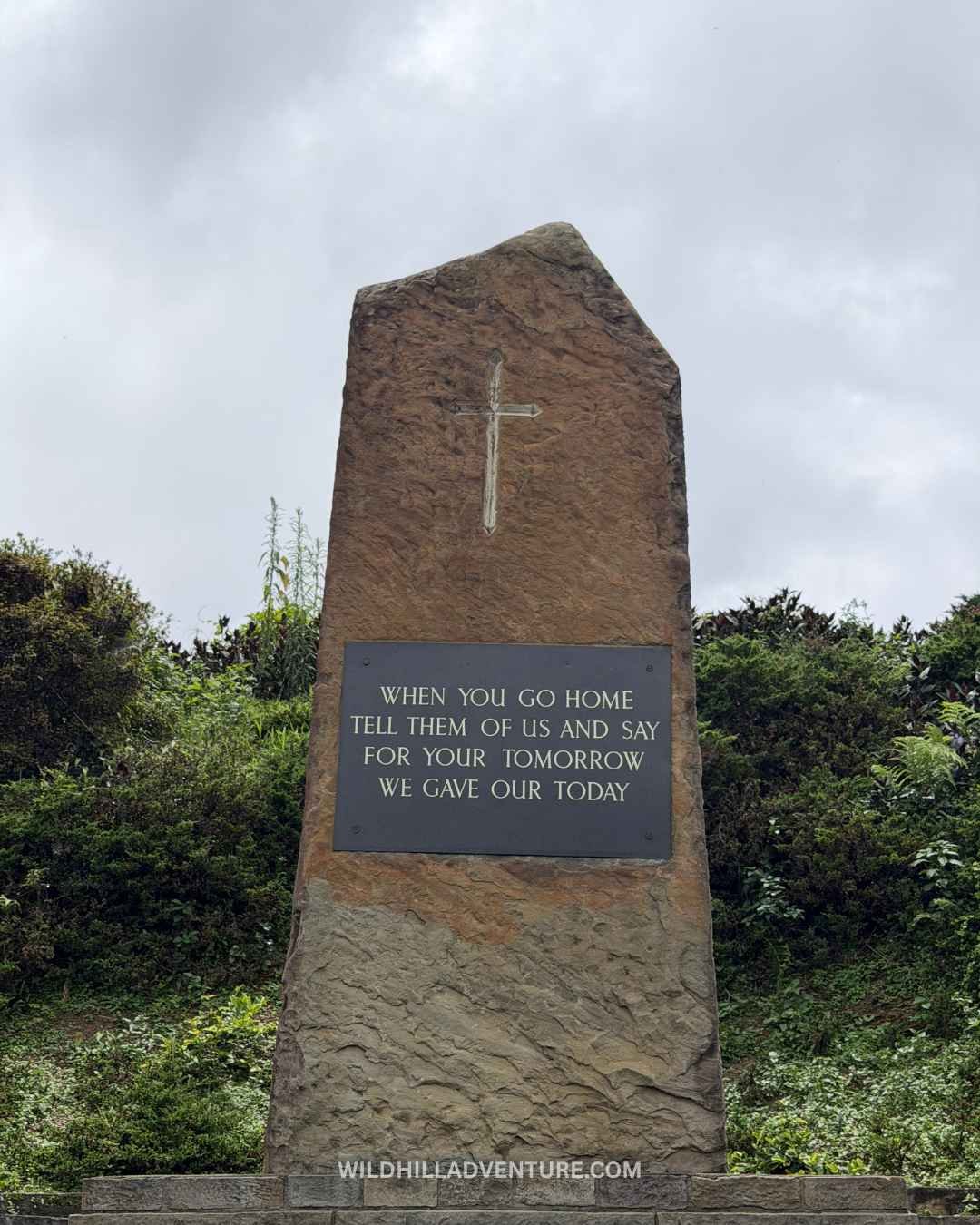
If you visit only one historical site in Kohima, make it the Kohima War Cemetery.
The cemetery commemorates soldiers who died during the Battle of Kohima in 1944, one of the decisive battles of the Burma Campaign during World War II.
Today, the cemetery sits quietly on a hillside overlooking Kohima.
What makes the place powerful is its simplicity.
You don’t need to be a military-history enthusiast to appreciate it. Walk slowly through the grounds, read some of the inscriptions and spend a few minutes simply looking over the surrounding hills.
It also gives you some context about why Kohima holds such an important place in World War II history.
Time required: Around 45 minutes to 1 hour
Best for: History lovers, families and first-time visitors
2. Nagaland State Museum
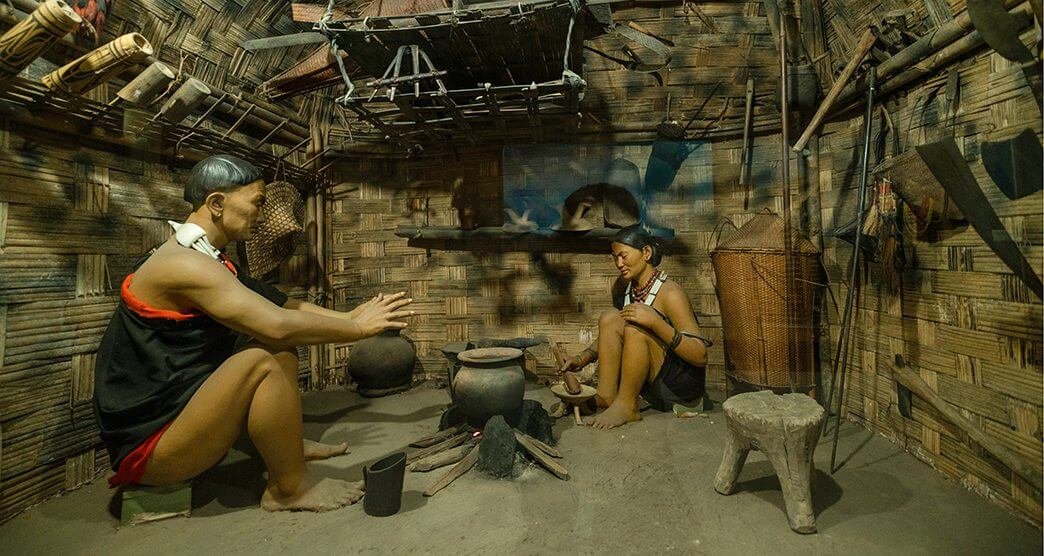
Before travelling deep into Nagaland, visiting the Nagaland State Museum can help you understand what you’re about to experience.
Nagaland isn’t one single culture.
The state is home to numerous Naga communities, each with its own traditional clothing, ornaments, architecture, customs and cultural practices.
The museum provides an introduction through displays of traditional objects, clothing, weapons, household items and other cultural material.
I particularly recommend it if Kohima is your first stop in Nagaland.
Once you later visit villages, Hornbill Festival or more remote districts, many of the things you see start making more sense.
Time required: Around 1–2 hours
3. Mary Help of Christians Cathedral
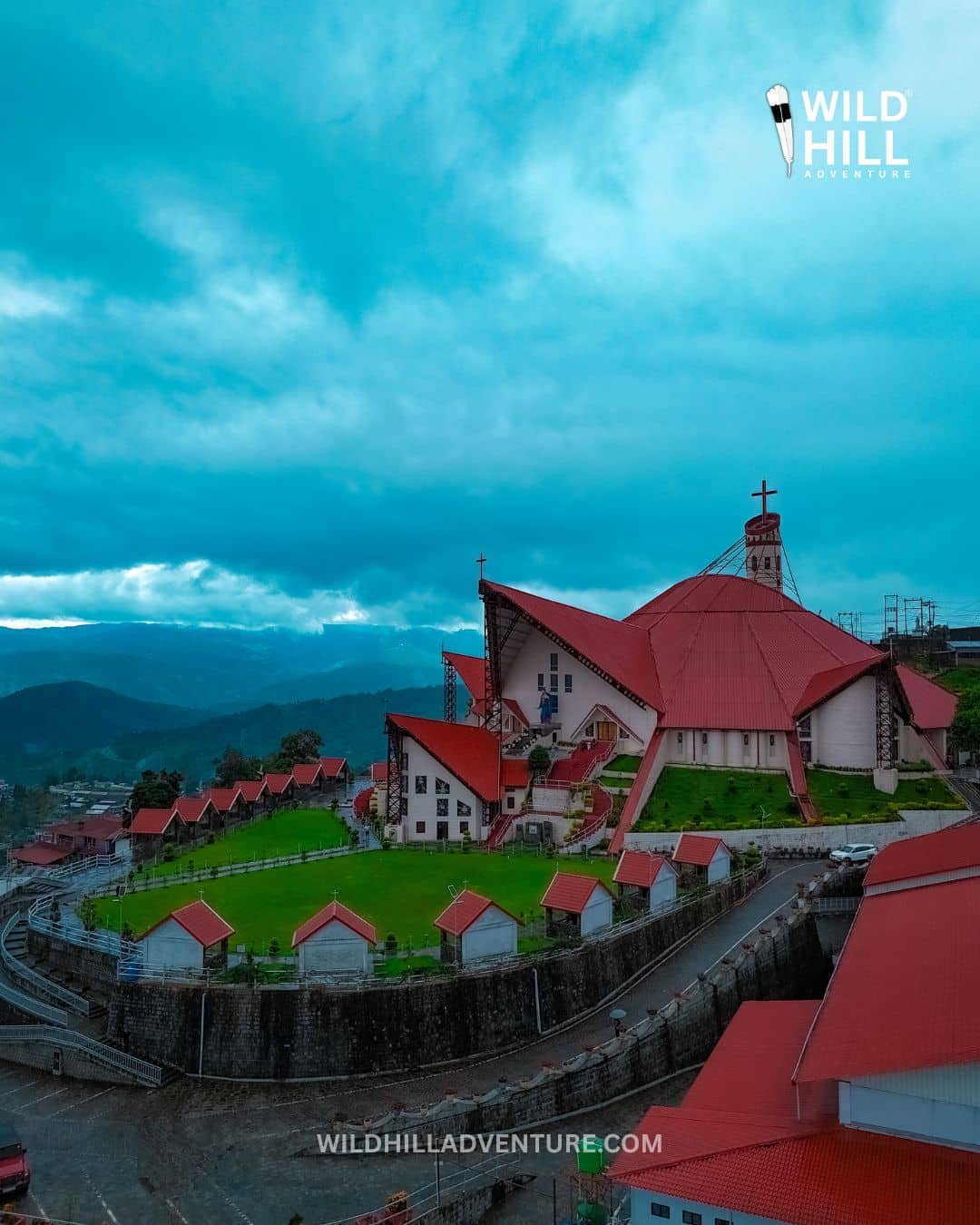
Kohima Cathedral is one of the city’s most recognizable landmarks.
Its architecture is quite different from many churches you will see elsewhere in India, and the hilltop setting adds to the experience.
More than simply ticking off another attraction, I recommend coming here for the atmosphere.
Kohima is a busy hill city. Traffic and narrow roads can make parts of it feel hectic.
The cathedral provides a quieter contrast.
Spend some time here before continuing your sightseeing.
4. Explore Kohima’s Local Markets
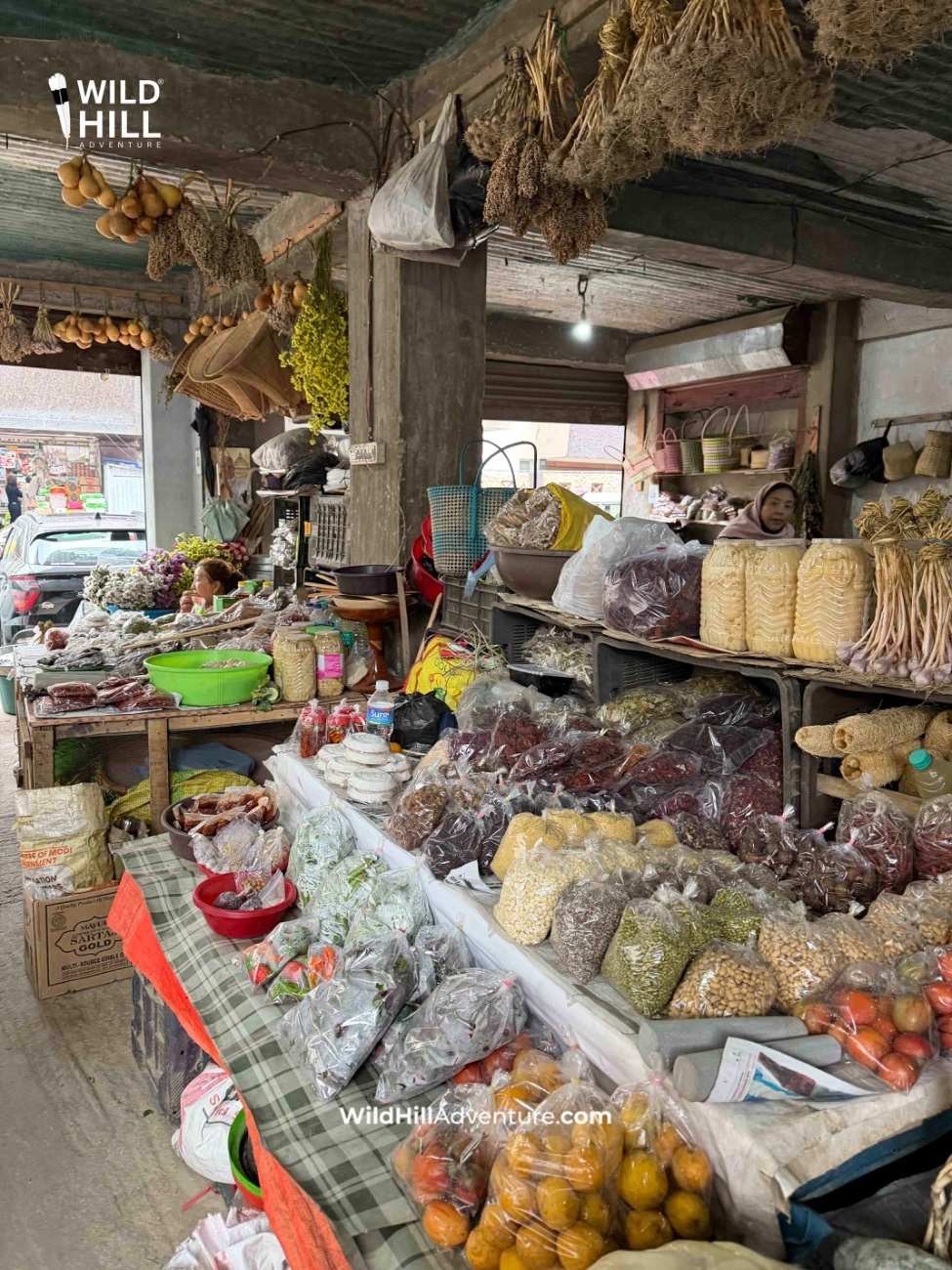
One of my favourite ways of understanding any Northeast Indian destination is through its market.
Kohima is no different.
You’ll encounter vegetables and herbs you may never have seen before, locally grown produce, fermented ingredients, chillies, bamboo shoots and other foods commonly used in Naga kitchens.
Don’t rush through the market.
Ask questions respectfully.
For someone interested in photography or food culture, the market can actually become one of the most interesting places to visit in Kohima.
5. Eat Local Naga Food
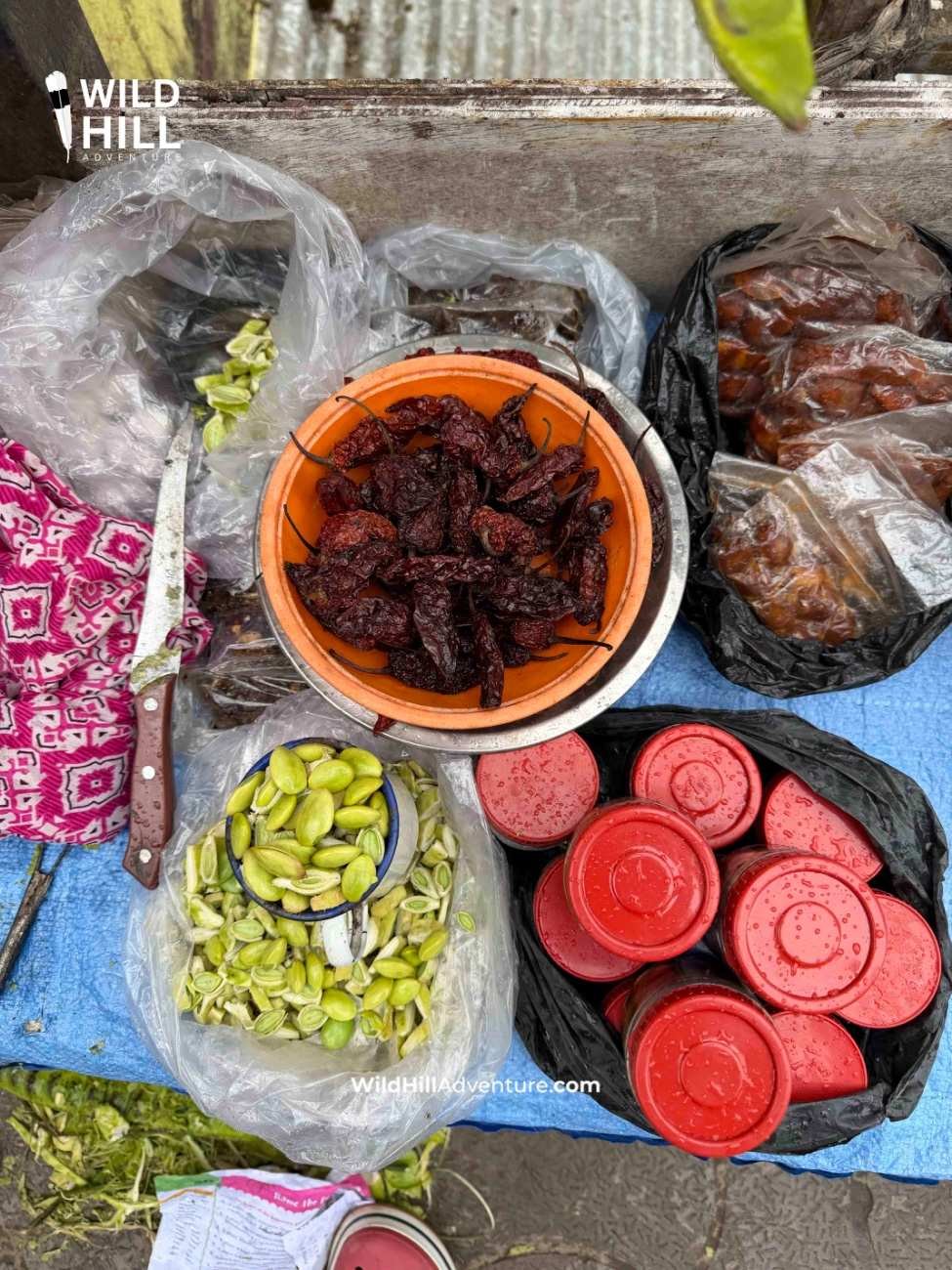
Food deserves its own section because you haven’t completely experienced Kohima until you’ve eaten local food.
Traditional meals commonly revolve around rice accompanied by meat, vegetables, greens, bamboo shoot and fermented ingredients.
Different communities prepare food differently, so there isn’t one single “Naga cuisine.”
If you’re vegetarian or have dietary restrictions, tell your host or restaurant clearly beforehand.
For me, eating in small local restaurants and homes has always been a bigger part of travelling Nagaland than searching for fancy cafés.
6. Kisama Heritage Village
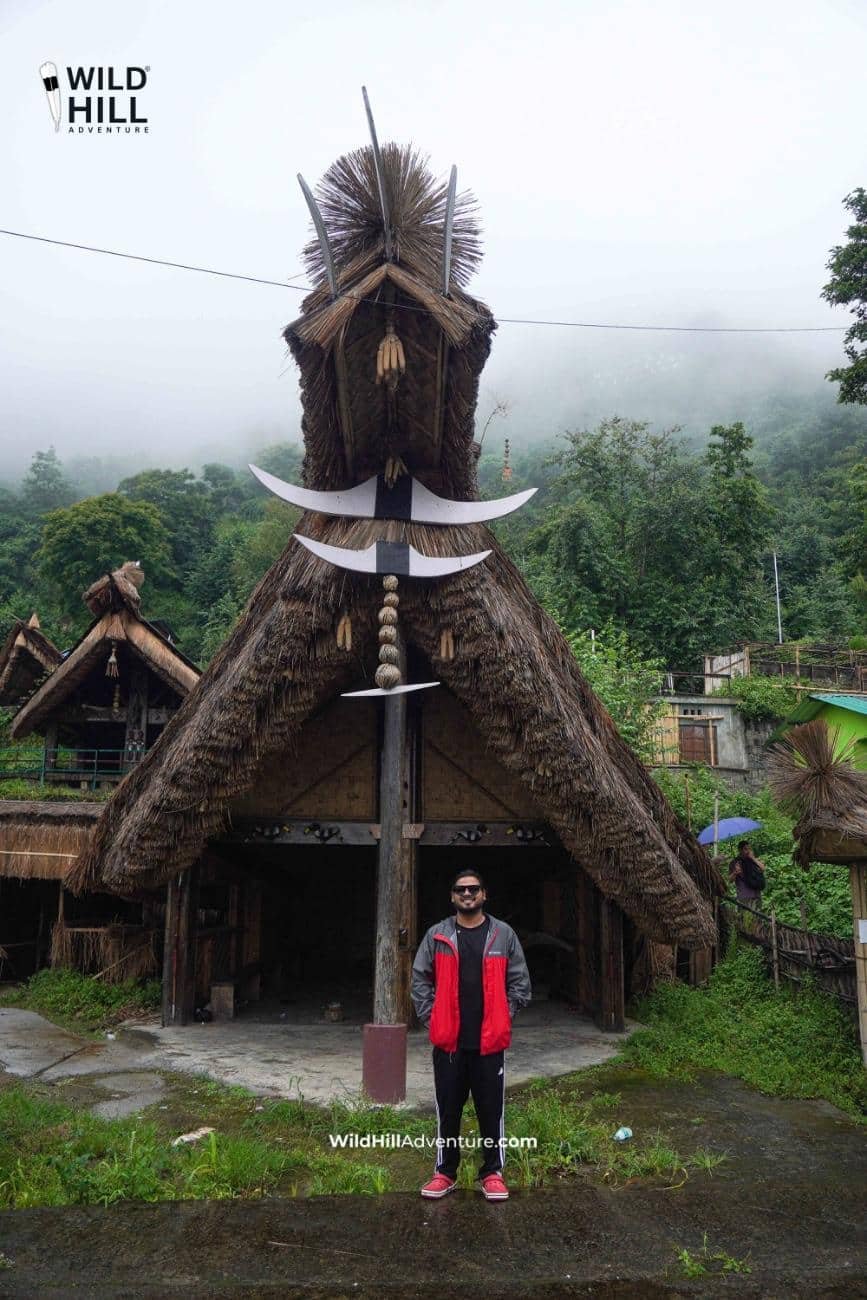
Approximately 12 km from Kohima, Kisama Heritage Village is one of the most important cultural attractions around the city. Nagaland Tourism explains that the name Kisama combines elements from the nearby villages of Kigwema and Phesama, and the heritage village was created to preserve and showcase Nagaland’s ethnic and cultural heritage.
It is best known as the main venue of the Hornbill Festival.
During the festival, Kisama transforms completely.
Traditional morungs representing different Naga communities, cultural performances, indigenous games, handicrafts, food, music and thousands of visitors come together here.
If you’re visiting Nagaland during Hornbill Festival, Kisama isn’t optional. It becomes the centre of your Kohima itinerary.
Distance from Kohima: Around 12 km
Recommended time: Half day to full day during Hornbill Festival
7. Jakhama Village
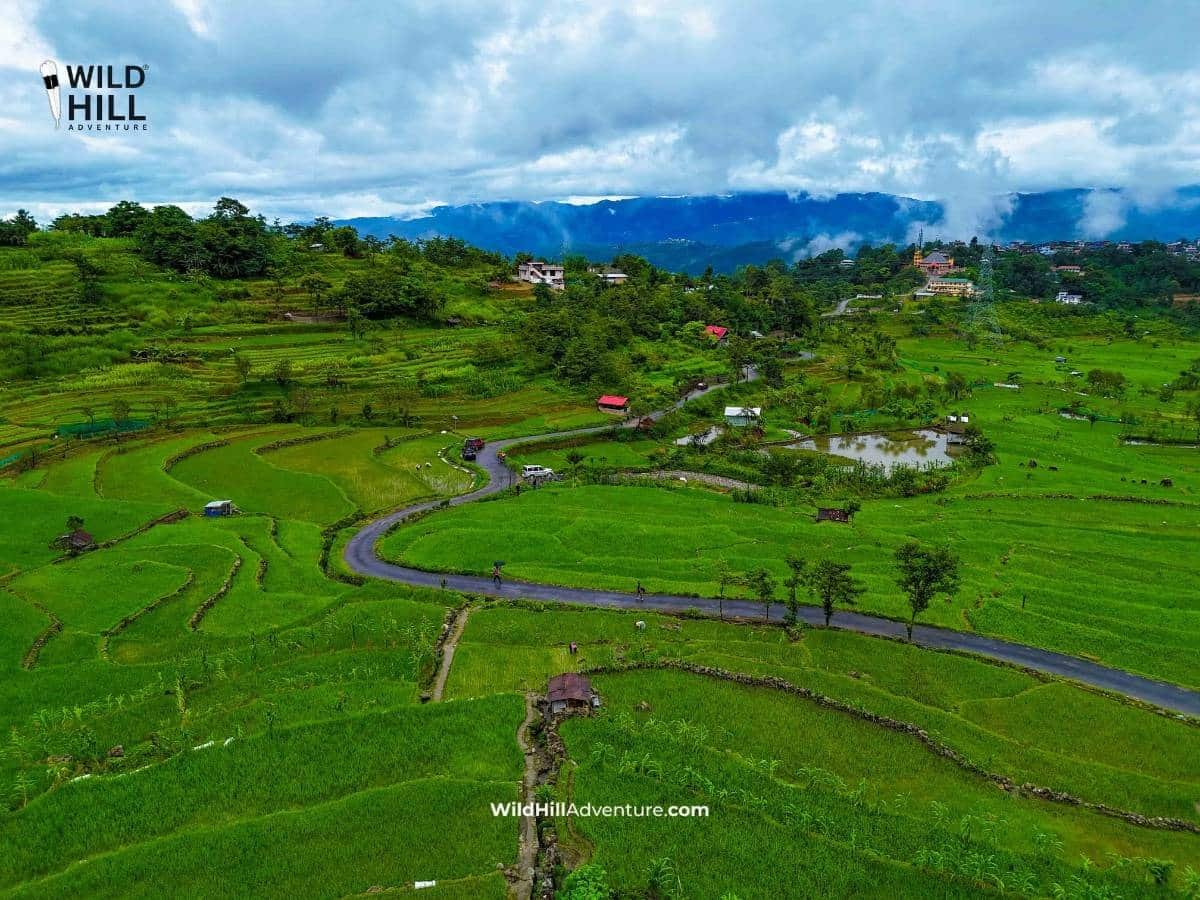
Continue beyond Kisama and you’ll enter the beautiful Angami countryside around Jakhama.
I like this area because you begin moving away from Kohima’s urban environment.
Hills, agricultural landscapes and village life take over.
Jakhama is also important for travelers heading toward the Dzukou Valley side.
If you have enough time, don’t simply drive through. Slow down and experience the surroundings.
8. Kigwema Village
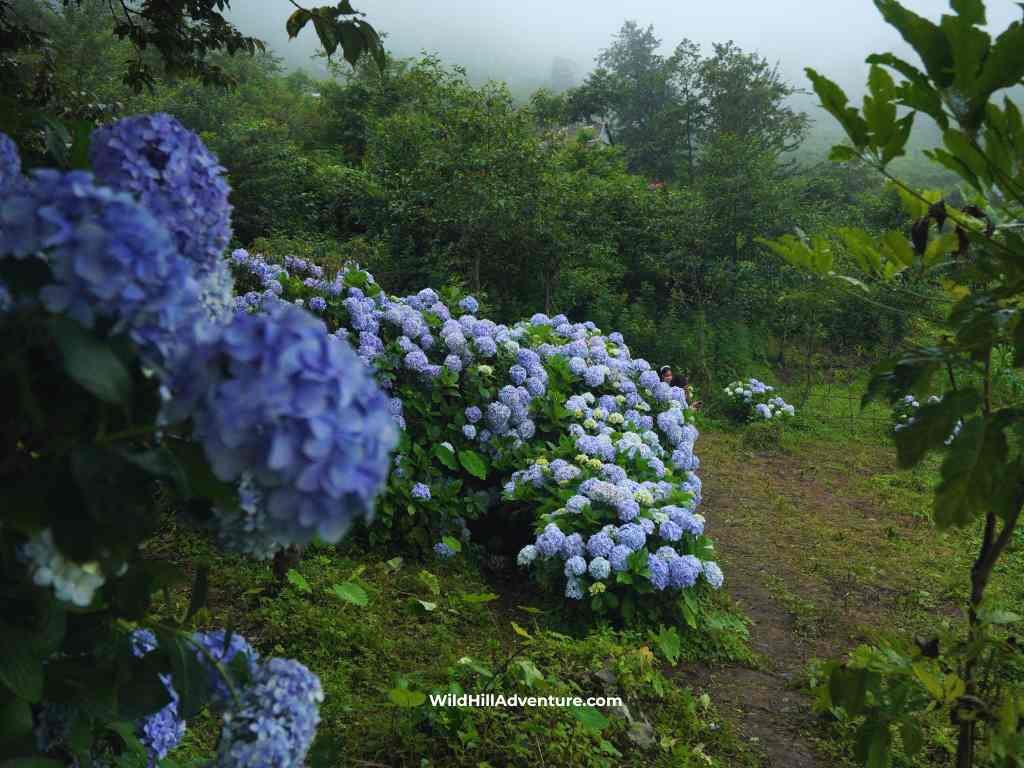
Kigwema is another village close to Kisama that can easily be incorporated into a Kohima itinerary.
The advantage of staying around Kigwema, Jakhama or Kisama rather than central Kohima is atmosphere.
You’re close enough to access Kohima while waking up surrounded by a much more rural landscape.
This is particularly useful during Hornbill Festival when the roads between Kohima and Kisama can become busy.
Best Day Trips from Kohima
This is where travelling around Kohima gets really interesting.
If you have more than two days, don’t spend your entire trip inside the city.
Use Kohima as your base.
9. Khonoma Village
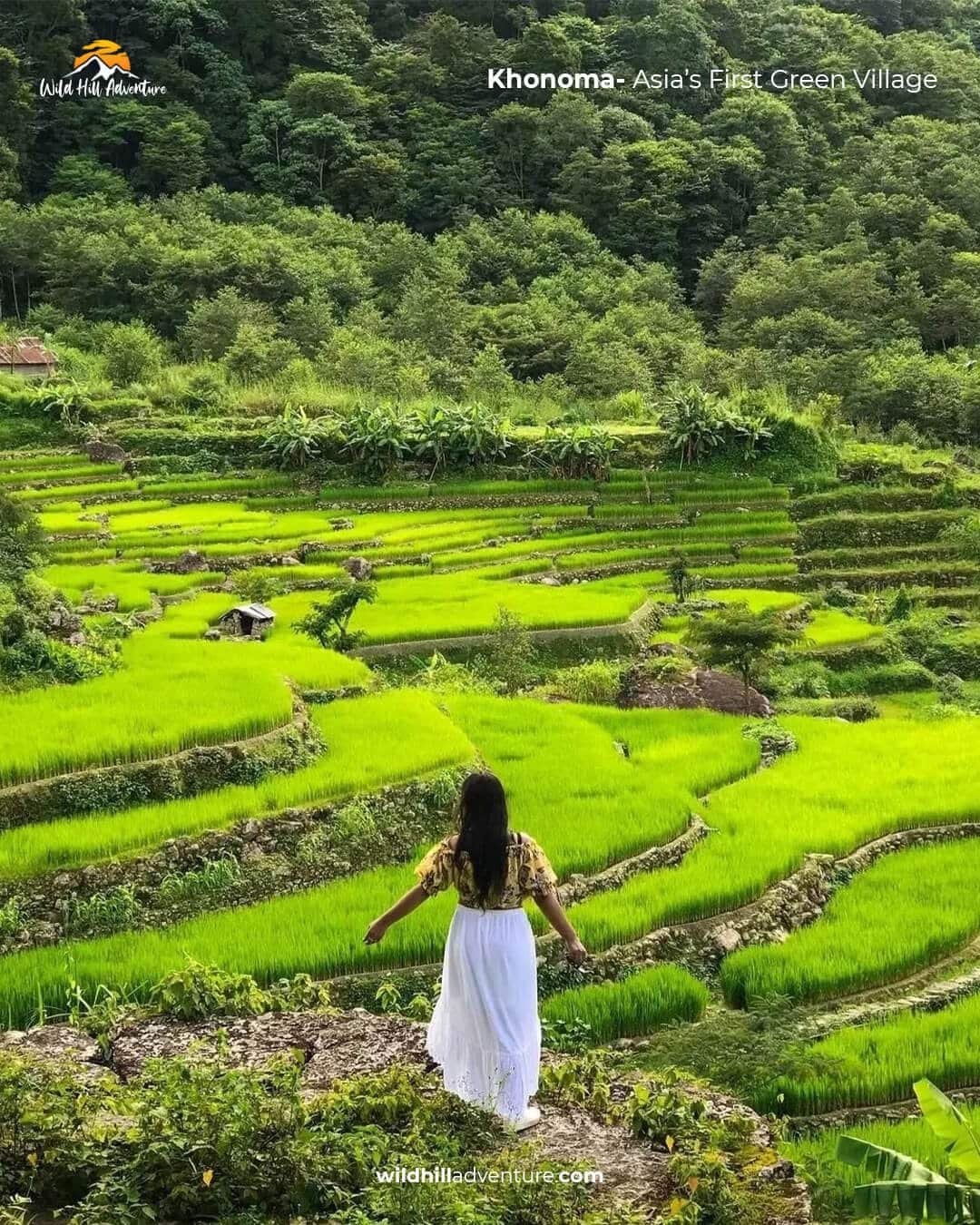
Distance from Kohima: Around 20 km
Ideal trip: Full-day trip or overnight stay
Khonoma is one of my strongest recommendations.
We have visited this village countless times, and somehow I still enjoy returning.
Nagaland Tourism places Khonoma around 20 km from Kohima and highlights its history, community conservation and the Khonoma Nature Conservation and Tragopan Sanctuary. The village is widely promoted as Asia’s first Green Village.
But descriptions like “green village” don’t completely explain why I like Khonoma.
You have to walk through it.
Stone paths climb between houses. Traditional architecture sits beside newer homes. Then you look down toward the terraced paddy fields.
During the green season, those fields can look almost unreal.
What to do in Khonoma
A proper village experience can include a guided village walk, traditional sites, viewpoints, interactions with residents and a walk through the agricultural landscape.
You can also buy locally produced items such as honey and handicrafts depending on availability.
Local guides are especially valuable because otherwise you’re simply looking at buildings without understanding their stories.
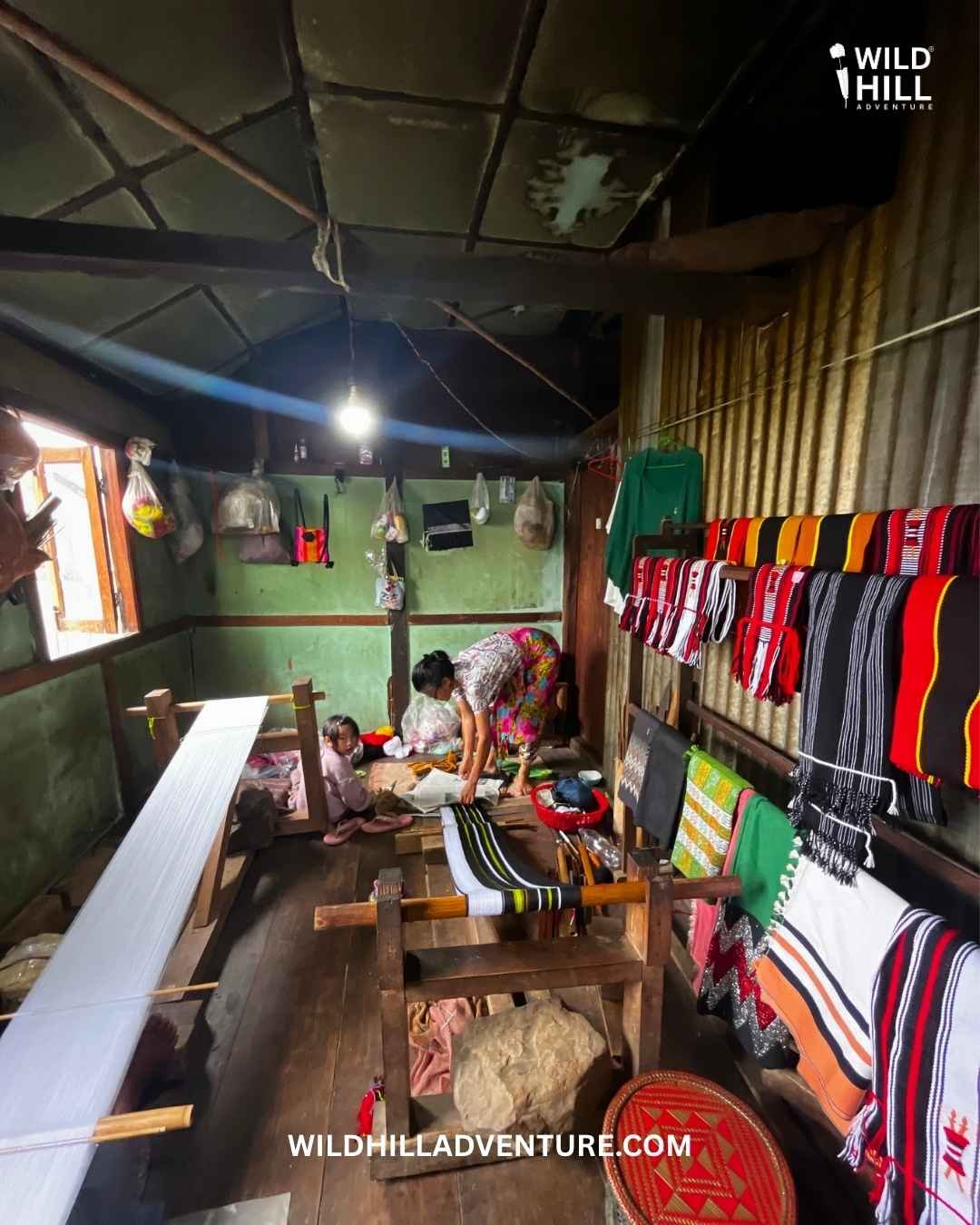
A village walk can easily take 2–3 hours, and exploring the paddy-field area can add another couple of hours.
That’s why I don’t recommend rushing Khonoma.
If your schedule permits, stay overnight in a local homestay.
Eat local food.
Talk to your hosts.
Once most day visitors leave, Khonoma becomes wonderfully quiet.
10. Dzüleke Village
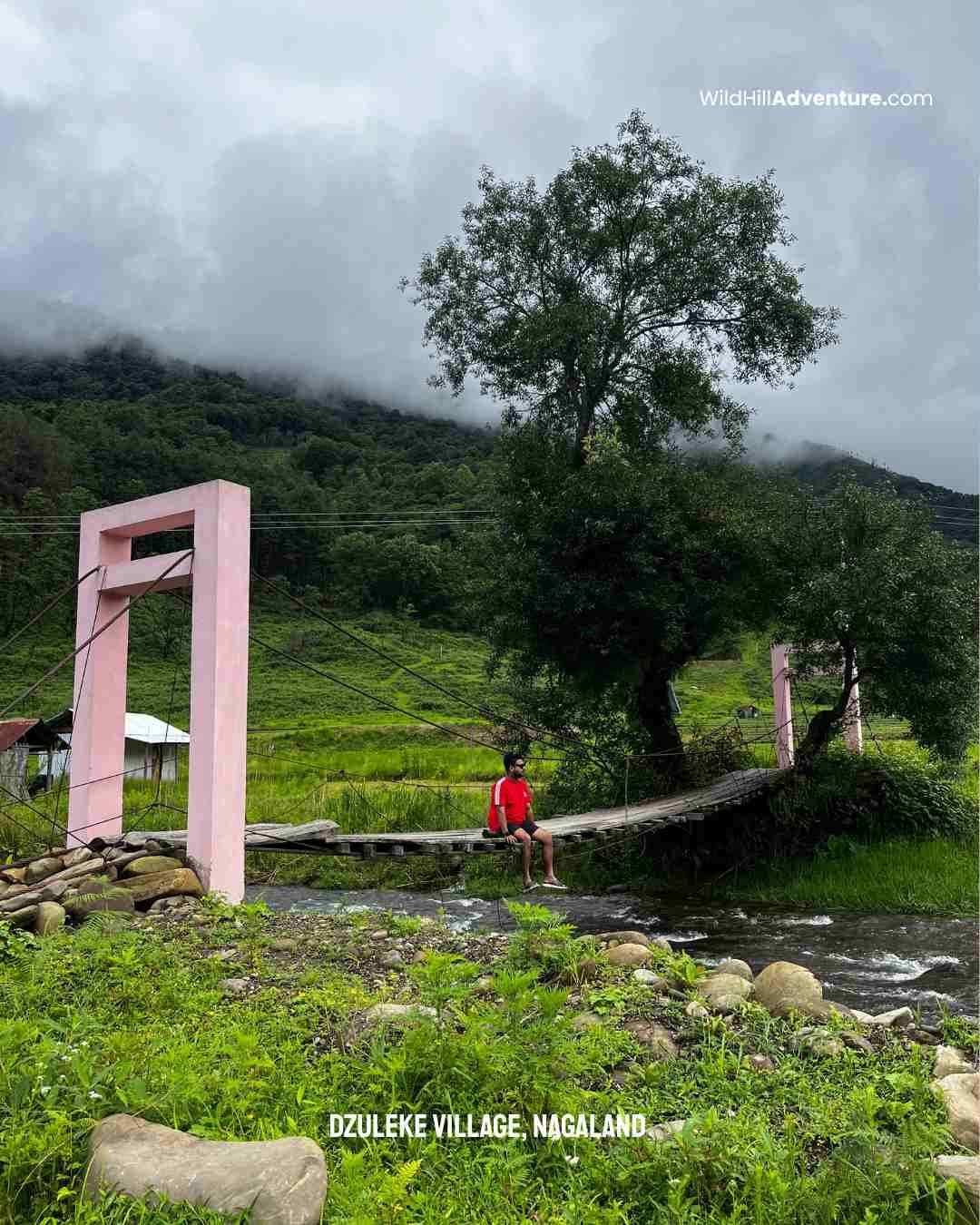
Distance: Roughly 30–40 km from Kohima depending on route/reference
Ideal trip: Khonoma + Dzüleke day trip, or preferably one-night stay
If Khonoma is about culture and conservation, Dzüleke is about slowing down.
Government tourism information describes Dzüleke as an offbeat village in Kohima district surrounded by rich biodiversity, and notes its proximity to Khonoma.
For me, Dzüleke is one of those places where doing less is actually the point.
Imagine a small village surrounded by forests and fields.
A river flows through the landscape.
There are simple homes and homestays.
Connectivity can be poor.
And suddenly your phone isn’t the centre of your day.
That’s exactly what I love about it.
What to do in Dzüleke
Walk around the village and fields, spend time beside the river, eat home-cooked food, photograph the landscapes and simply experience village life.
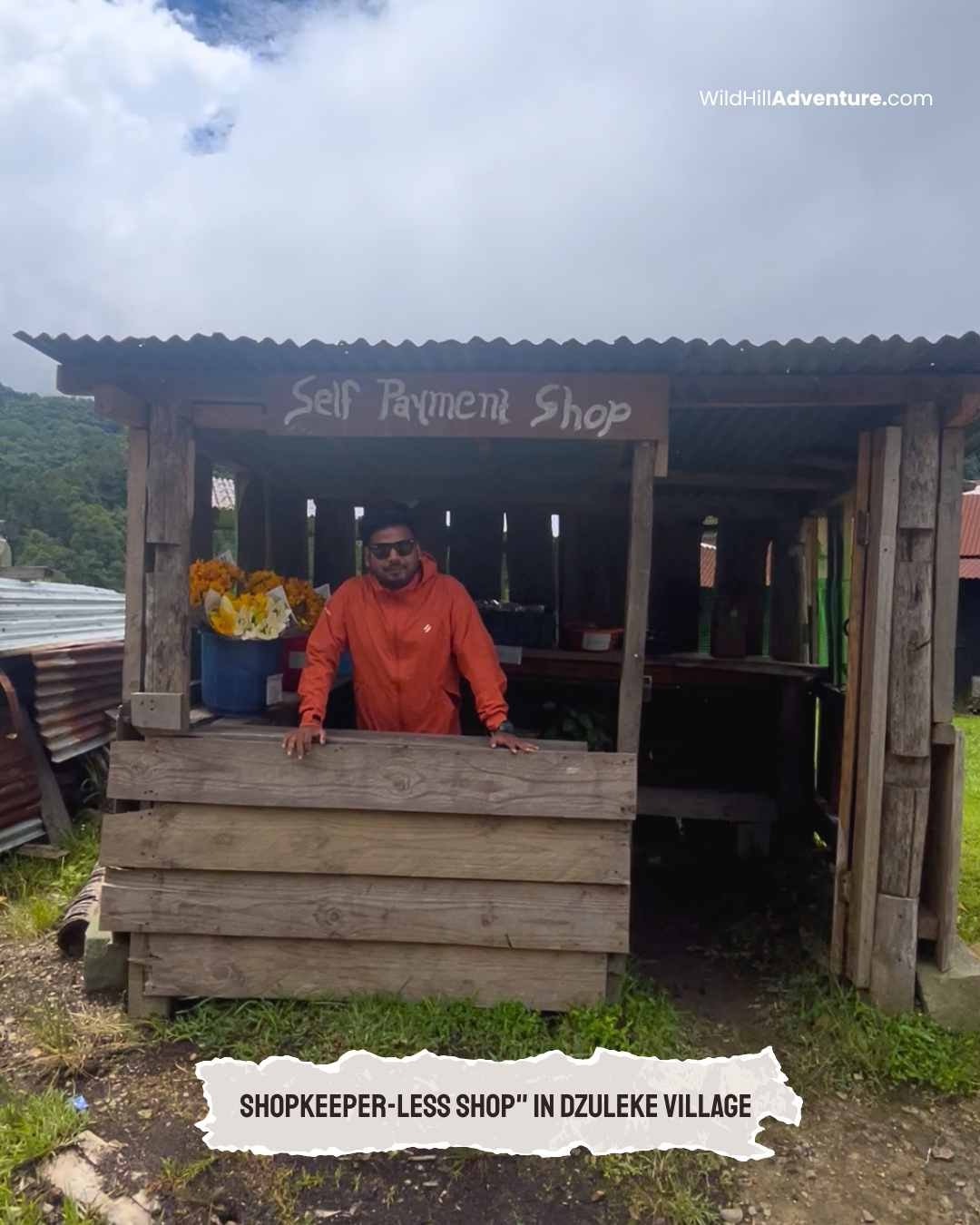
For travelers who enjoy camping, the surrounding area can also offer beautiful outdoor experiences where locally permitted and arranged.
Some of my favourite memories here aren’t from sightseeing.
They’re from evenings.
We’ve had groups sit together at night telling funny stories and ghost stories, talking for hours.
When internet connectivity disappears, something interesting happens.
People actually start talking to each other.
Can Khonoma and Dzüleke be visited together?
Yes.
This is actually one of the best day trips from Kohima:
Kohima → Khonoma → Dzüleke → Kohima
But if you have time, stay in Dzüleke.
A day trip lets you see it.
An overnight stay lets you feel it.
11. Dzukou Valley
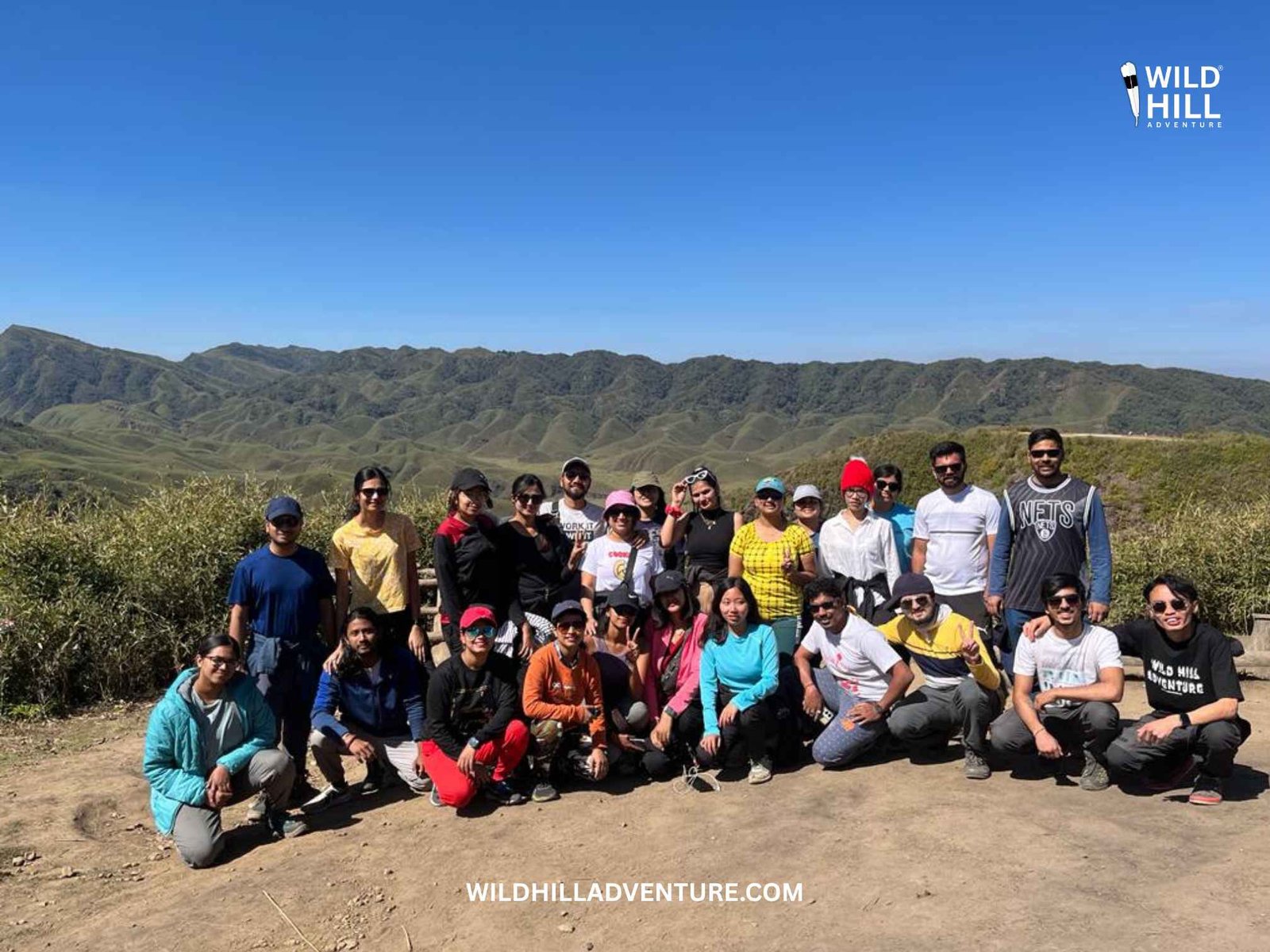
You cannot talk about places around Kohima without mentioning Dzukou Valley.
For us, Dzukou is more than another trekking destination.
After years of taking travelers there, we’ve watched people arrive exhausted from the climb and then completely forget their tiredness once the valley opens in front of them.
Rolling hills seem to continue endlessly.
Clouds move through the valley.
At night, when the weather is clear, everyone gathers around camp, talks, eats and looks at the sky.
Those nights are why I always say:
Dzukou is an emotion.
Dzukou Valley routes
Two commonly used approaches are from:
Viswema: Longer but generally preferred by many trekkers because the climbing section is comparatively easier.
Jakhama: Shorter in sections but steeper and more physically demanding.
I strongly recommend travelling with an experienced local guide and checking current trail, access and weather conditions before departure.
How much time do you need?
Don’t treat Dzukou like a rushed Kohima sightseeing stop.
Keep at least:
2 Days / 1 Night
That gives you time to trek, stay inside or near the valley according to current arrangements, experience sunset or sunrise and actually enjoy the landscape.
12. Pfutsero
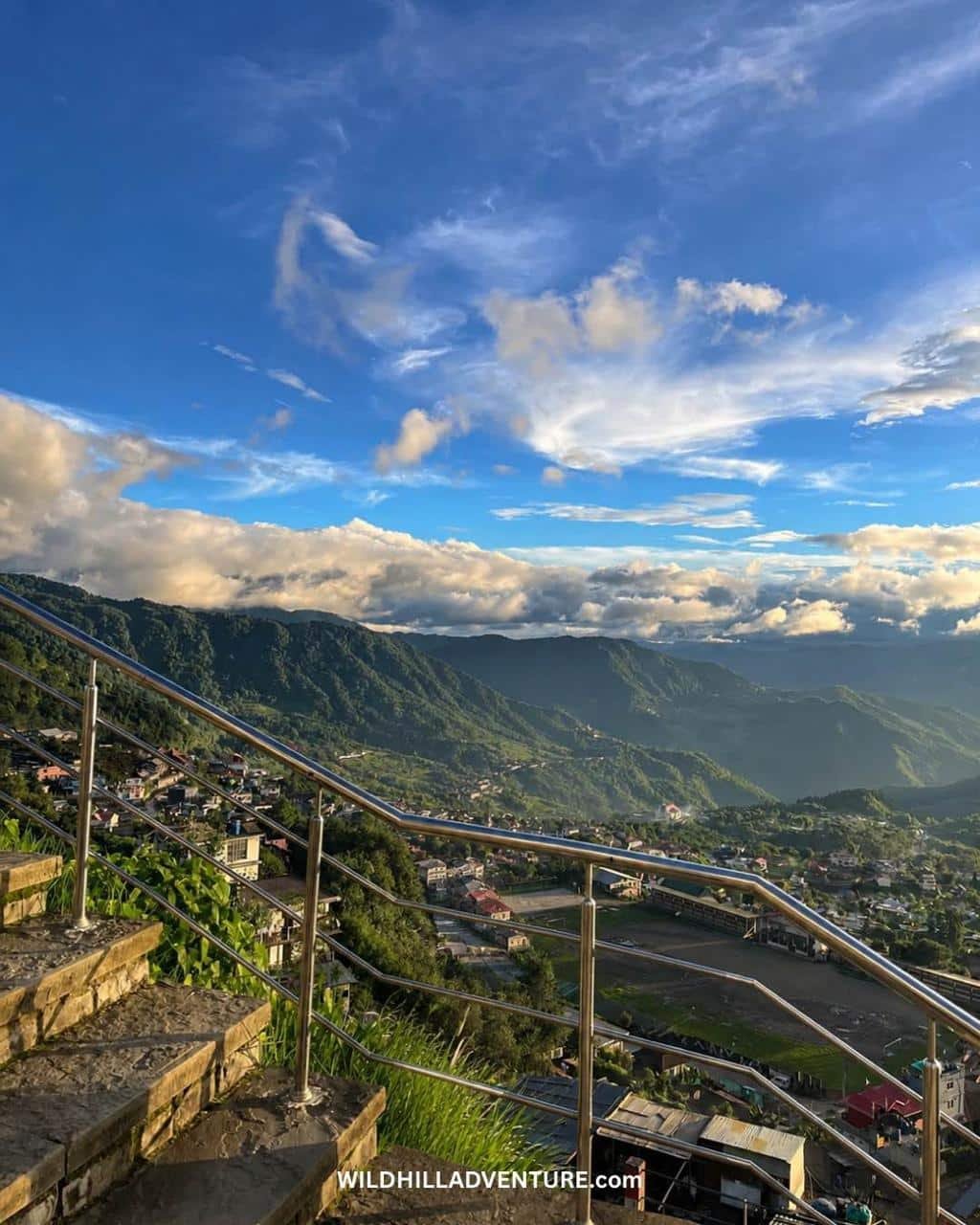
Now we move farther from Kohima.
Pfutsero is one of those destinations many first-time Nagaland visitors don’t even know about.
That is precisely why I like including it in longer itineraries.
The road takes you through increasingly remote mountain landscapes.
The climate feels cooler, agriculture becomes prominent and the surroundings are beautifully rural.
Rather than treating Pfutsero simply as another sightseeing point, use it as part of a larger journey toward Glory Peak, Zhavame and Kapamodzü.
13. Glory Peak
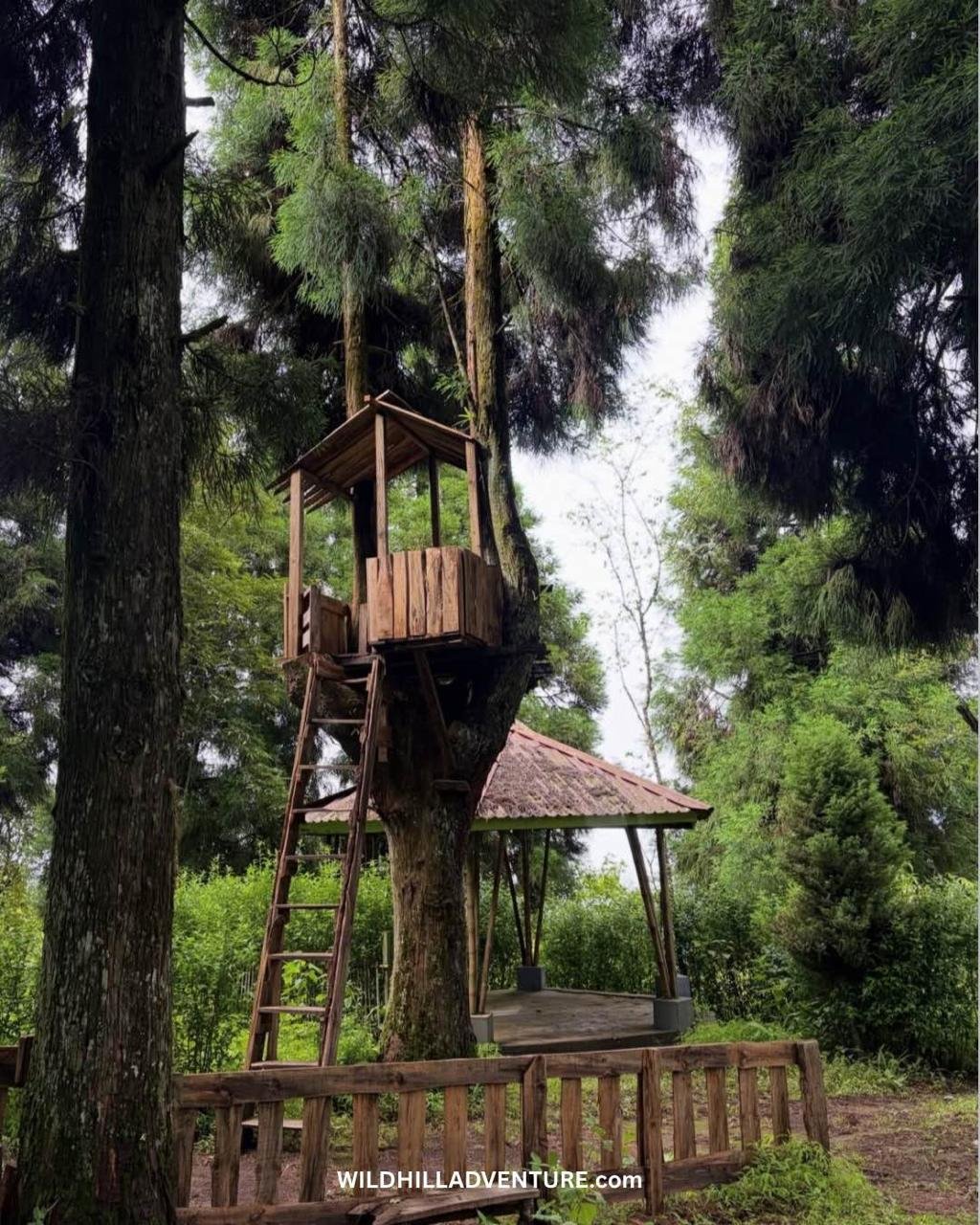
If you’re travelling toward Pfutsero, add Glory Peak when conditions and timing allow.
Nagaland Tourism itself includes Glory Peak at Pfutsero in its suggested Kapamodzü itinerary.
This region offers a very different experience from central Kohima.
The appeal is not monuments or busy attractions.
It’s the open mountain landscape.
This is the side of Nagaland I recommend to travelers who have already visited the usual places and want something quieter.
14. Kapamodzü Peak
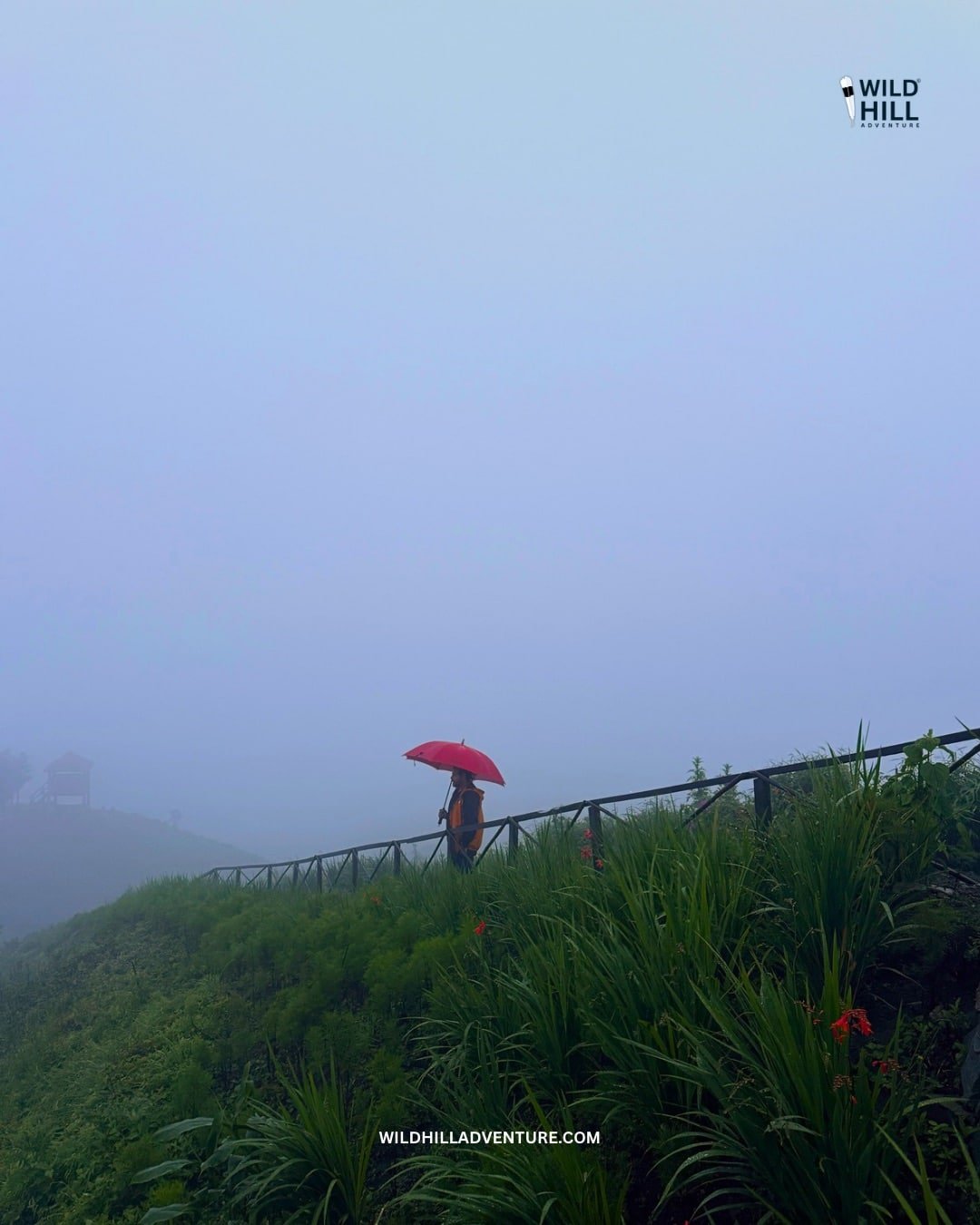
Best for: Mountain scenery, photography, road trips, camping and offbeat travel
Kapamodzü is one of my favourite mountain experiences around this part of Nagaland.
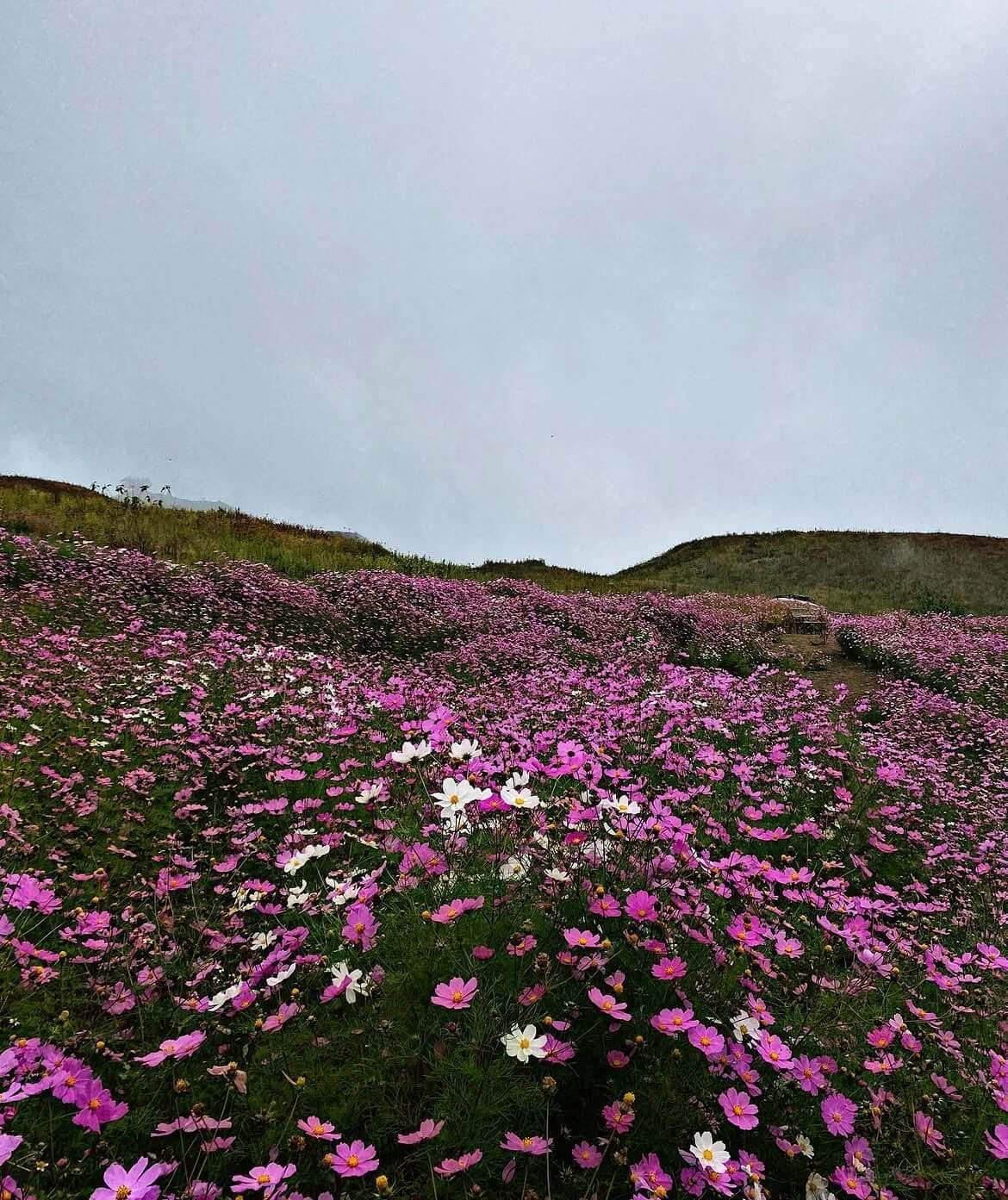
Nagaland Tourism describes Kapamodzü as offering views toward the Saramati range, Japfü Peak, Kohima and villages across Nagaland and Manipur. The surrounding landscape contains rhododendrons and various wild plants and flowers.
But my favourite memory of Kapamodzü came during monsoon.
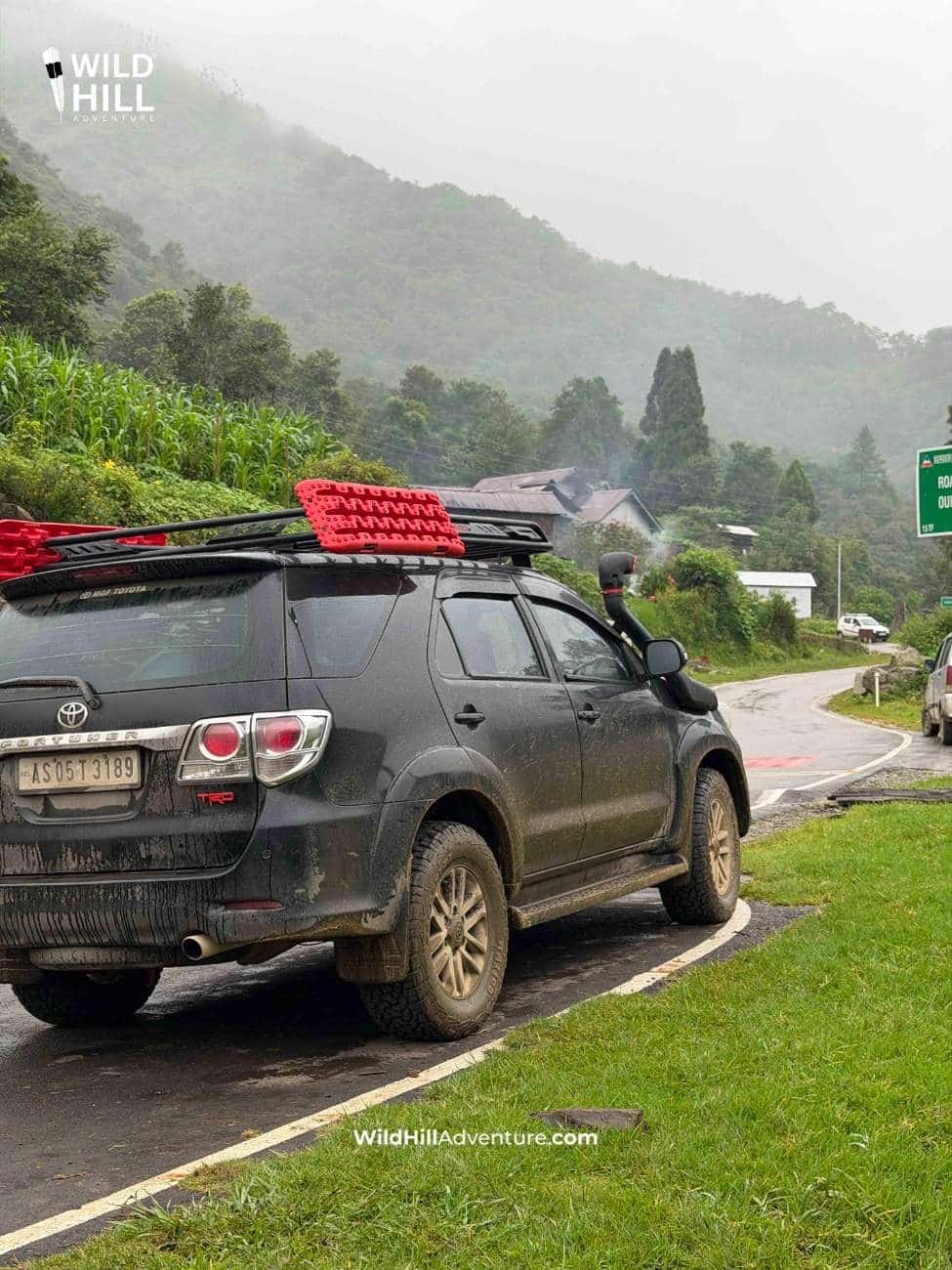
We drove from Kohima toward the Mao side.
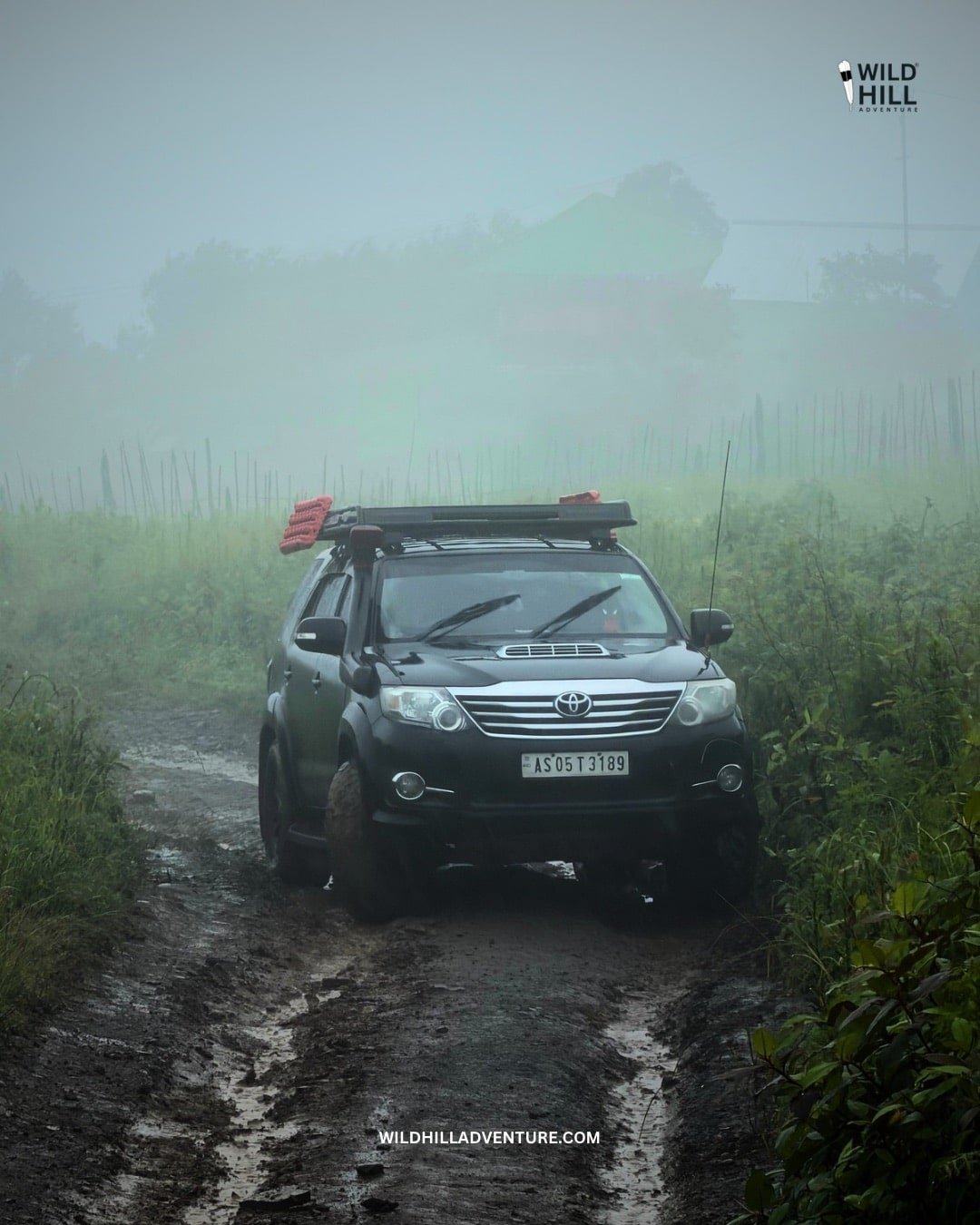
The road wasn’t perfect.
Some sections were muddy and slippery.
But the scenery made us forget about the road.
At one point we saw rice fields surrounded by mountains.
I immediately wanted to fly the drone.
That’s the thing about this journey. Sometimes the road itself becomes the destination.
We eventually reached Kapamodzü in the evening.
From the parking side, reaching the main viewpoint area was relatively easy on that particular trip.
There were basic stay options around the peak area, but availability is limited, so advance arrangements are strongly recommended.
That evening we sat outside, met some young people, talked, sang and enjoyed dinner.
I barely slept.
I kept waking up thinking sunrise was coming.
I wanted to see clouds floating below the mountain.
Morning finally arrived…
Fog.
Nothing.
No dramatic sunrise.
No perfect Instagram shot.
And somehow I still loved it.
I sat outside for hours looking into the mist.
Travel doesn’t always give you what you planned.
Sometimes that’s exactly what makes you return.
15. Zhavame Village
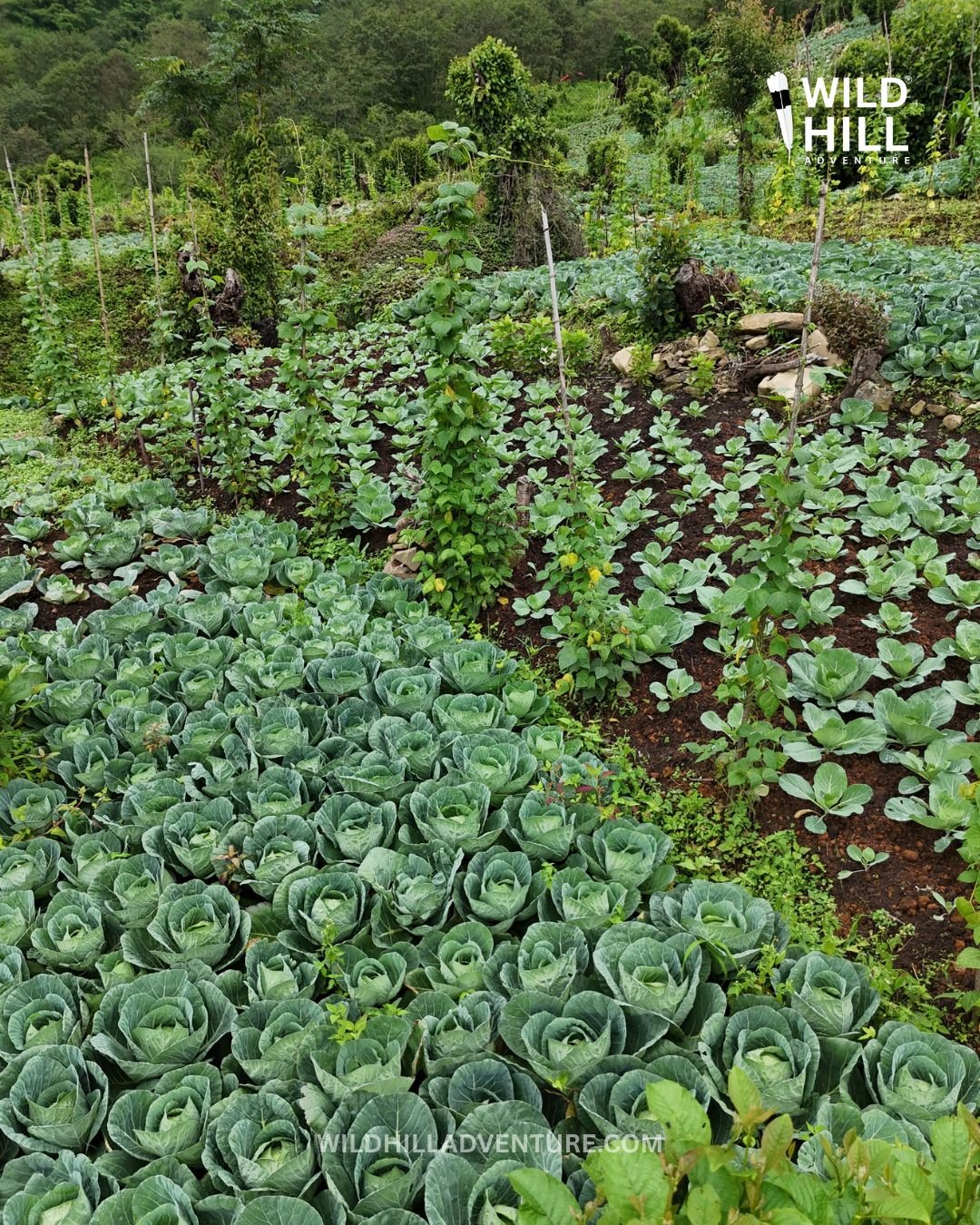
Zhavame can naturally be combined with the Kapamodzü region.
Nagaland Tourism’s suggested Kapamodzü itinerary includes Zhavame as the village base before hiking toward the peak.
If you’re travelling this far from Kohima, don’t think only about reaching the summit.
Village experiences are a major part of Nagaland travel.
Spend time locally where arrangements allow, eat local food and understand the community you’re travelling through.
Zhavame village is known for its rich produce of organic vegetables especially that of cabbage and potatoes. The village was declared as “vegetable village”
Suggested Kohima Day Trips
If you’re confused about how to organize everything, this is how I would divide the region.
| Trip | Suggested Time | Best For |
|---|---|---|
| Kohima city sightseeing | 1 day | History & culture |
| Kisama + Kigwema + Jakhama | 1 day | Naga culture & villages |
| Khonoma | 1 day | Culture & paddy fields |
| Khonoma + Dzüleke | 1 long day | Villages & nature |
| Dzüleke overnight | 2D/1N | Slow travel |
| Dzukou Valley | 2D/1N minimum | Trekking |
| Pfutsero + Glory Peak | Full day/overnight | Mountain scenery |
| Pfutsero + Zhavame + Kapamodzü | 2D/1N recommended | Offbeat adventure |
The biggest mistake would be trying to put Khonoma, Dzüleke, Dzukou and Kapamodzü into one rushed sightseeing day.
Nagaland rewards slow travel.
My Ideal 5-Day Kohima Itinerary
If someone asked me to design their first Kohima trip, I would keep it simple.
Day 1: Kohima City
War Cemetery → State Museum → Cathedral → local market → local food → café/evening around Kohima.
Day 2: Kisama + Kigwema + Jakhama
Explore the southern side of Kohima, particularly if you’re interested in Angami culture or visiting during Hornbill Festival.
Day 3: Khonoma + Dzüleke
Start early from Kohima. Explore Khonoma with a local guide, walk through the village and paddy fields, then continue toward Dzüleke.
If possible, stay overnight in Dzüleke.
Day 4: Return to Kohima / Slow Village Morning
Enjoy Dzüleke in the morning before returning to Kohima.
Alternatively, travelers prioritizing trekking can replace Days 3–4 with Dzukou Valley 2D/1N.
Day 5: Flexible Day
Choose according to your interests.
For culture: spend more time around Kohima and nearby villages.
For adventure: extend toward Pfutsero/Kapamodzü.
For trekking: keep this as an extra Dzukou day.
How Many Days Are Enough for Kohima?
If you’re visiting only the city, 1–2 days are enough.
But that isn’t how I recommend experiencing Kohima.
Keep:
3 days: Kohima + Kisama + Khonoma
4 days: Add Dzüleke
5 days: Add Dzukou or another countryside experience
6–7 days: Kohima + Khonoma + Dzüleke + Dzukou + Pfutsero/Kapamodzü region
Once you understand how many places surround the capital, spending a week here doesn’t feel excessive at all.
Best Time to Visit Kohima
For comfortable sightseeing and generally clearer conditions, October to April is an excellent period. Government tourism information similarly highlights October to April for nearby Dzüleke.
October–November
Green landscapes gradually transition toward cooler, drier conditions.
Excellent for villages and road trips.
December
December is completely different because of Hornbill Festival.
Kohima, Kisama and surrounding villages become busy.
Book accommodation and transport early.
January–April
Good for relatively comfortable sightseeing, village experiences and road trips, though nights can be cold.
Monsoon
Personally, I love Nagaland during monsoon.
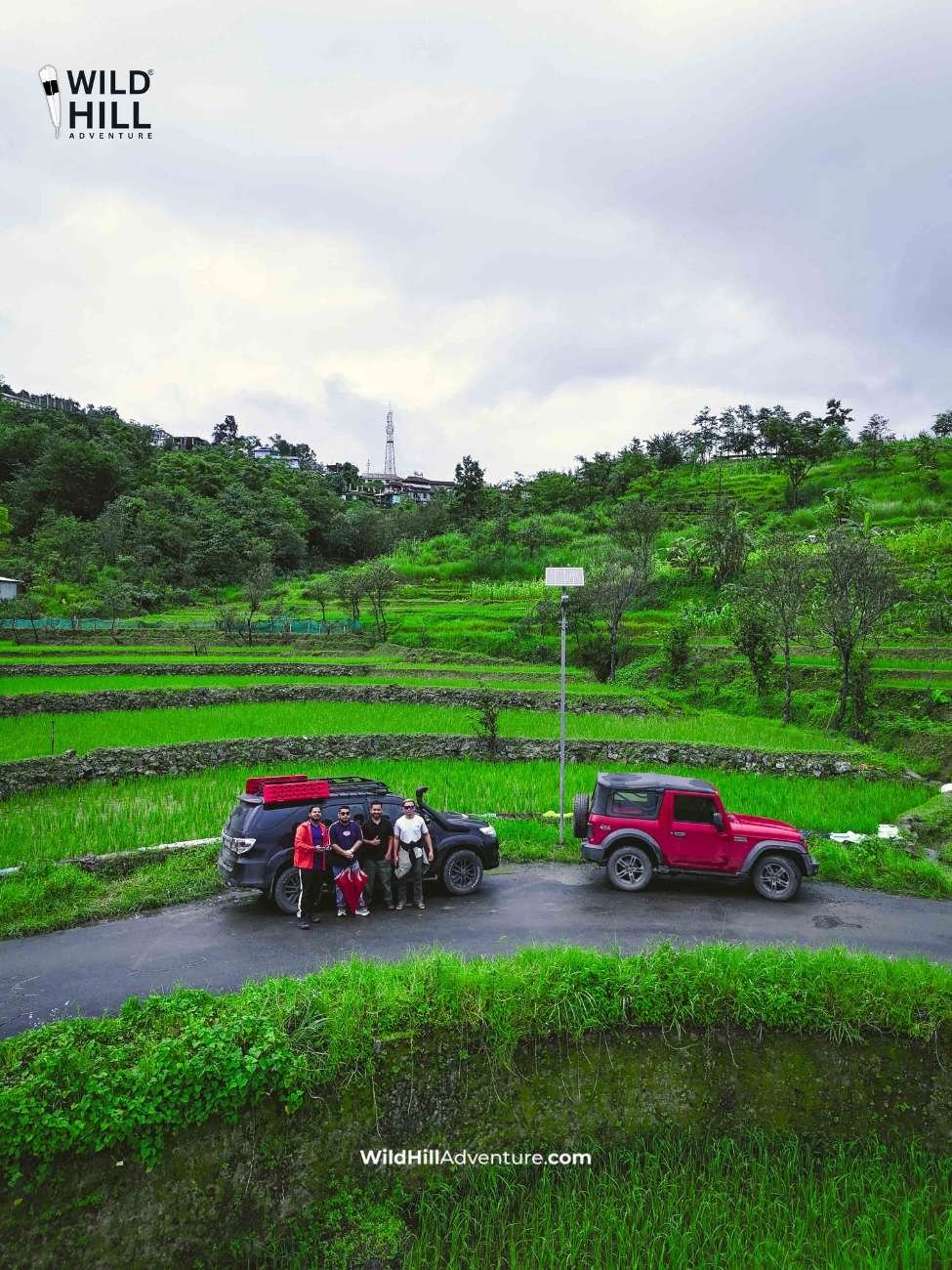
Khonoma’s paddy fields turn intensely green.
Clouds move through the mountains.
Dzüleke feels alive.
Kapamodzü becomes incredibly atmospheric.
But there is a trade-off.
Rain can mean muddy trails, slippery roads, fog, landslides, leeches and unpredictable travel times.
So monsoon is beautiful, but you need flexibility.
Important Travel Tips for Kohima
Nagaland is not a destination where I recommend building an itinerary around Google Maps alone.
Distances can look short while actual driving time is much longer.
Weather changes road conditions.
Remote villages may have limited connectivity.
Homestays can have very few rooms.
Local guides can also make an enormous difference because Nagaland’s best experiences aren’t always conventional “tourist attractions.”
Carry cash, comfortable walking shoes, rain protection, warm clothing, a power bank and offline copies of important documents.
Also check the latest ILP and entry requirements applicable to you before entering Nagaland rather than relying on an old blog.
Why Travel Slowly Around Kohima?
This is probably the most important advice in this entire Places to Visit in Kohima guide.
Don’t come to Nagaland only to collect destinations.
Kohima War Cemetery might take an hour.
But talking with someone in a village can become the story you remember for ten years.
Khonoma’s paddy fields are beautiful.
But eating dinner with a local family may become your favourite experience.
Dzüleke has rivers and forests.
But sitting around at night telling stories when nobody has internet can become the highlight.
Kapamodzü has spectacular mountain views.
But on our monsoon trip, we didn’t even get the sunrise we were waiting for.
And I still wanted to stay another night.
That’s Nagaland.
The destination is beautiful, but the people, conversations, food, roads, unexpected stops and small experiences between the famous places are what make the journey special.
Why Explore Kohima & Nagaland with Wild Hill Adventure?
Nagaland isn’t simply another destination on our website.
We have spent years travelling these roads, working with local guides, staying in villages and repeatedly returning to places such as Kohima, Khonoma, Dzüleke, Dzukou Valley, Kisama and Kapamodzü.
That ground experience matters.
A good Nagaland itinerary isn’t about fitting the maximum number of places into the minimum number of days.
It’s knowing which places deserve time.
It’s knowing when an overnight stay makes more sense than a day trip.
It’s understanding that road and weather conditions can change.
And it’s connecting travelers with local guides, homestays and experiences instead of simply driving them from viewpoint to viewpoint.
For travelers who want to experience Nagaland beyond the standard tourist circuit, we can design private itineraries combining Kohima, Hornbill Festival, Khonoma, Dzüleke, Dzukou Valley, Pfutsero, Kapamodzü, Mon and Longwa, depending on the number of days available.
Contact us
- Phone/WhatsApp: +91 9365476611 +91 91811 29331/+91 91814 99331
- Instagram: @wildhilladventure
- Email: wildhilladventure@gmail.com
- Website: www.wildhilladventure.com
Final Thoughts: Are the Places Around Kohima Worth Exploring?
Absolutely.
Come to Kohima for its history.
Visit Kisama for culture.
Walk through Khonoma for its heritage and incredible terraced fields.
Stay in Dzüleke when you want to disconnect.
Trek Dzukou when you want adventure.
Drive toward Pfutsero when you want to see another side of Nagaland.
And spend a night around Kapamodzü when you want mountains, clouds and silence.
If you have only one day, explore Kohima.
If you have three days, add Khonoma and Dzüleke.
But if you have five to seven days, don’t rush home.
Use Kohima as your gateway and explore deeper.
Because some of the best places to visit in Kohima aren’t technically inside the city at all.
They’re waiting on the roads beyond it.
FAQs About Places to Visit in Kohima
These FAQs are written around practical questions travelers commonly search when planning Kohima, Khonoma, Dzüleke, Dzukou Valley and Hornbill Festival trips.
1. What are the best places to visit in Kohima?
The best places to visit in Kohima include Kohima War Cemetery, Nagaland State Museum, Mary Help of Christians Cathedral, local markets and nearby Kisama Heritage Village. If you have extra days, add Khonoma Village, Dzüleke Village and Dzukou Valley.
2. How many days are enough for Kohima?
Keep at least 3 days for Kohima if you want to combine city sightseeing with Kisama and Khonoma. Around 5–8 days is much better if you also want Dzüleke, Dzukou Valley and other countryside experiences.
3. What can I see in Kohima in one day?
For a one-day Kohima itinerary, visit Kohima War Cemetery, Nagaland State Museum, Kohima Cathedral and the local market. Spend the evening exploring local food and cafés. If you have only one day, don’t try to add distant excursions.
4. What are the best day trips from Kohima?
Khonoma and Dzüleke make one of the best day-trip combinations from Kohima. Kisama, Kigwema and Jakhama can also be combined into another easy excursion. Pfutsero and Kapamodzü are better treated as longer road trips rather than rushed sightseeing stops.
5. How far is Khonoma Village from Kohima?
Khonoma is approximately 20 km west of Kohima. The village is known for its beautiful terraced agricultural landscape, history and community-led conservation
6. Is Khonoma worth visiting?
Yes. Khonoma is one of the places I recommend most strongly around Kohima. Come for the terraced paddy fields, Angami culture, history, conservation story and village walks. If you have enough time, stay overnight rather than visiting only for photographs.
7. Can I visit Khonoma and Dzüleke on the same day?
Yes. Kohima → Khonoma → Dzüleke → Kohima makes an excellent full-day circuit. However, travelers who enjoy quiet villages, local food and slow travel should consider spending one night in Dzüleke.
8. How far is Dzüleke from Kohima?
The Kohima district administration lists Dzüleke at approximately 40 km west of Kohima. The village is surrounded by hills and a stream, making it very different from the busier atmosphere of Kohima.
9. Is Dzüleke Village worth staying overnight?
Yes, especially if you want to disconnect from city life. Dzüleke is better experienced slowly through village walks, local meals, countryside, riverside time and simple homestay experiences. Connectivity can be limited, which is actually part of its appeal.
10. How far is Dzukou Valley from Kohima?
Dzukou Valley is roughly 30 km south of Kohima, although reaching the valley involves driving to the trekking side and then continuing on foot. The valley sits at approximately 2,438 metres and is one of the region’s major trekking destinations.
11. Can Dzukou Valley be visited as a day trip from Kohima?
A fast day trek may be possible for experienced and fit trekkers, but I recommend 2 days and 1 night. Staying overnight gives you much more time to experience the valley, evening atmosphere, camping and morning landscapes instead of rushing back.
12. Do I need a guide for Dzukou Valley?
You should plan your Dzukou trek with a local guide. also recommends having a local guide regardless of which side you use to enter the valley.13. Which Dzukou Valley route is better, Viswema or Jakhama?
Both routes are used from the Nagaland side. In our experience, Viswema is generally the better choice for first-time trekkers because the approach is longer but comparatively easier, while Jakhama involves a steeper climb. Weather and trail conditions should always be checked locally before starting.
14. Is Kisama Heritage Village worth visiting when Hornbill Festival is not happening?
Kisama is primarily famous as the venue of the Hornbill Festival and is about 12 km from Kohima according to the Kohima district administration. Outside festival time, it can still be included with nearby Kigwema and Jakhama, but the atmosphere is completely different from December.
15. When is the best time to visit Kohima?
For comfortable sightseeing, October to April is a strong period. December is especially popular because of Hornbill Festival. Monsoon brings incredible greenery and mist, but travelers should expect rain, slippery roads and possible travel delays. Nearby
16. Is Kohima worth visiting during monsoon?
Yes, especially for photographers and nature lovers. Khonoma’s paddy fields become intensely green, forests around Dzüleke come alive and the mountains are frequently covered in clouds. The downside is unpredictable weather, muddy trails and potentially difficult road conditions.
17. What is the best itinerary for 5 days in Kohima?
A good 5-day Kohima itinerary would be:
Day 1: Kohima city sightseeing
Day 2: Kisama + Kigwema + Jakhama
Day 3: Khonoma + Dzüleke
Day 4: Dzukou Valley trek
Day 5: Dzukou Valley → return to Kohima
If trekking isn’t your priority, replace Dzukou with a slower village stay or extend toward Pfutsero and Kapamodzü.
18. Is Kohima good for families and senior citizens?
Yes. Kohima War Cemetery, Cathedral, Kisama and several village experiences can be enjoyed without strenuous trekking. However, Dzukou Valley and some mountain trails require considerably more physical effort, so the itinerary should be customized according to fitness and mobility.
19. Do tourists need an Inner Line Permit to visit Kohima and Nagaland?
Many Indian visitors from outside Nagaland need an Inner Line Permit (ILP) to enter the state. Permit requirements can differ by traveler category and can change, so check the current Nagaland government rules before your journey rather than relying on an old travel article.
20. What should I not miss when visiting Kohima for the first time?
Don’t restrict yourself to Kohima city. Visit the War Cemetery and local cultural attractions, but keep time for at least one village experience. If I had to choose, I would combine Kohima + Khonoma + Dzüleke, and add Dzukou Valley if you enjoy trekking. These places show completely different sides of the Kohima region, from World War II history and Angami culture to terraced fields, forests and mountain landscapes.
21. Is vegetarian, Jain, or halal food available during the Hornbill Festival and in Nagaland?
Yes, vegetarian, Jain, and halal-friendly meals can be arranged in Nagaland, but travellers should not expect these options to be easily available everywhere, especially in remote villages and during road trips.
Nagaland’s traditional cuisine is heavily meat-based, and dedicated Jain or halal restaurants are limited outside the main towns. Vegetarian dishes are available, but travellers with strict dietary requirements should plan in advance.
At Wild Hill Adventure, we regularly host vegetarian, Jain, and groups with specific dietary requirements. At our dedicated stays and camps, we can arrange and prepare meals according to guests’ requirements with advance notice.
For travellers who require strict Jain food, vegetarian food, or halal-friendly meals, inform our team before the trip so we can plan meals and accommodation accordingly.
Why Choose Wild Hill Adventure for Your Nagaland & Northeast India Trip?
Travelling through Nagaland and Northeast India is very different from travelling through India’s more established tourist circuits.
Here, road conditions can change, permits matter, accommodation in remote villages is limited, mobile networks can disappear, and some of the most memorable places are not always easy to find online.
This is where travelling with a local Northeast-based company like Wild Hill Adventure makes a real difference.
We Are From Northeast India
Northeast India is not simply another destination we sell.
It is our home.
Our team has spent years travelling through Nagaland, Assam, Meghalaya, Arunachal Pradesh and other parts of the Northeast. We personally explore many of the routes and destinations before recommending them to our guests.
That local experience helps us understand not only where to go, but how to travel these regions properly.
We Personally Explore the Routes
Many of the places we include in our itineraries are places we have personally travelled to.
In Nagaland, our journeys have taken us through places such as:
- Kohima
- Kisama Heritage Village
- Dzukou Valley
- Khonoma
- Dzüleke
- Jakhama
- Pfutsero
- Kapamodzü Peak
- Longwa
- Mon and the Konyak region
Our Kapamodzü journey is a good example. We have experienced the route ourselves during monsoon, driven through difficult road sections, stayed near the peak, eaten there and explored the Pfutsero side.
That experience helps when we’re planning the same journey for a guest.
Strong Experience With the Hornbill Festival
Nagaland becomes extremely busy during the Hornbill Festival.
Accommodation fills up, Kohima traffic becomes heavy and first-time visitors can easily underestimate travel times.
Because we regularly operate Hornbill Festival trips, we can help guests plan the festival together with destinations such as Dzukou Valley, Khonoma, Dzüleke, Kapamodzü, Pfutsero and Longwa rather than simply visiting Kisama and returning home.
Local Guides and Community Connections
For us, a Nagaland trip shouldn’t only mean taking photographs from viewpoints.
We work with local people wherever possible.
Local guides can help travelers understand village history, tribal traditions, food, agriculture and everyday life in a way that simply driving through a destination cannot.
It also means tourism money reaches the communities travelers have actually come to experience.
We Take You Beyond the Usual Tourist Circuit
If you only search online, most Nagaland itineraries look similar:
Dimapur → Kohima → Hornbill Festival → Dzukou → Return.
There is much more to Nagaland.
Depending on your interests and available time, we can build journeys around remote villages, trekking, culture, food, photography, mountains and border regions.
Sometimes the best experience isn’t even a famous attraction.
It could be stopping beside a beautiful rice field, eating a local thali at Mao, visiting a vegetable farm near Pfutsero or spending an evening talking with people you have just met.
Those are the experiences we personally enjoy, and they influence the way we design our trips.
We Understand Northeast India’s Road Conditions
Google Maps doesn’t always tell the complete story here.
A road showing three hours can take considerably longer because of rain, landslides, construction or poor road conditions.
We plan journeys with these realities in mind.
For remote destinations and monsoon journeys, we can also select vehicles according to the route and current conditions rather than simply choosing the cheapest available option.
Permits Become Easier
Several parts of Northeast India have permit requirements.
Depending on the destination and nationality, travelers may need documents such as an Inner Line Permit (ILP) or other permissions.
Our team helps guests understand and arrange the applicable permits for their itinerary so they don’t have to figure everything out after arriving.
Private and Customized Northeast Trips
Not everyone wants the same holiday.
Some travelers want photography.
Some want trekking.
Some want culture and villages.
Others want comfortable hotels and relaxed sightseeing.
Instead of forcing every traveler into exactly the same itinerary, we can customize trips according to your time, interests, comfort level and budget.
On-Ground Support Matters Here
This is probably one of the most underestimated advantages of booking with a local operator.
When everything goes according to plan, arranging a trip looks easy.
The difference becomes obvious when something changes.
Bad weather, a road closure, delayed arrival, vehicle problem or accommodation issue can require quick local coordination.
Having a team operating within Northeast India gives travelers someone on the ground who can help find alternatives.
We Prefer Real Experiences Over Checklist Tourism
Our philosophy is simple:
Don’t just see Northeast India. Experience it.
Eat local food.
Stay in villages when appropriate.
Talk to people.
Walk through local markets.
Learn why communities protect their forests.
Understand the stories behind tribal traditions.
And sometimes, forget the itinerary for an hour and simply sit looking at the mountains.
That’s the kind of Northeast India we want our guests to experience.
Travel Northeast India With People Who Call It Home
Whether you’re planning the Hornbill Festival, Dzukou Valley Trek, Kapamodzü Peak, Longwa Village, an offbeat Nagaland road trip, or a longer journey combining Nagaland with Assam and other Northeast states, Wild Hill Adventure can help you design the trip around what you actually want to experience.
We don’t want to show you Northeast India only as a collection of tourist attractions.
We want to show you the Northeast that we know, travel through and love ourselves.
Contact us
- Phone/WhatsApp: +91 9365476611 +91 91811 29331/+91 91814 99331
- Instagram: @wildhilladventure
- Email: wildhilladventure@gmail.com
- Website: www.wildhilladventure.com

0 Comment