
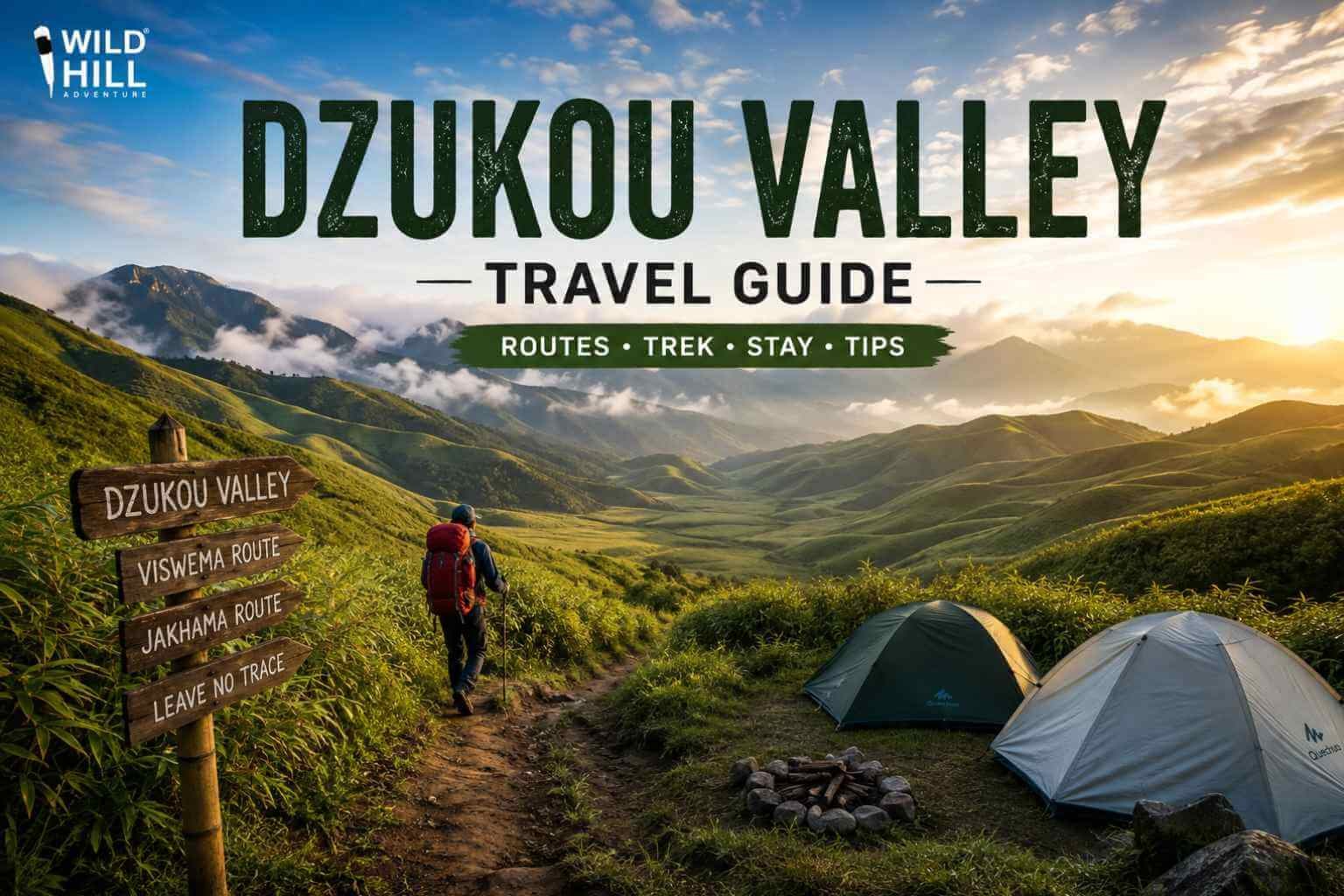

Dzukou Valley Travel Guide:
Routes, Best Time, Stay, Trekking & Our 8 Years of Experience
There are some destinations you visit once, take a few photographs and move on.
Dzukou Valley is not one of them.
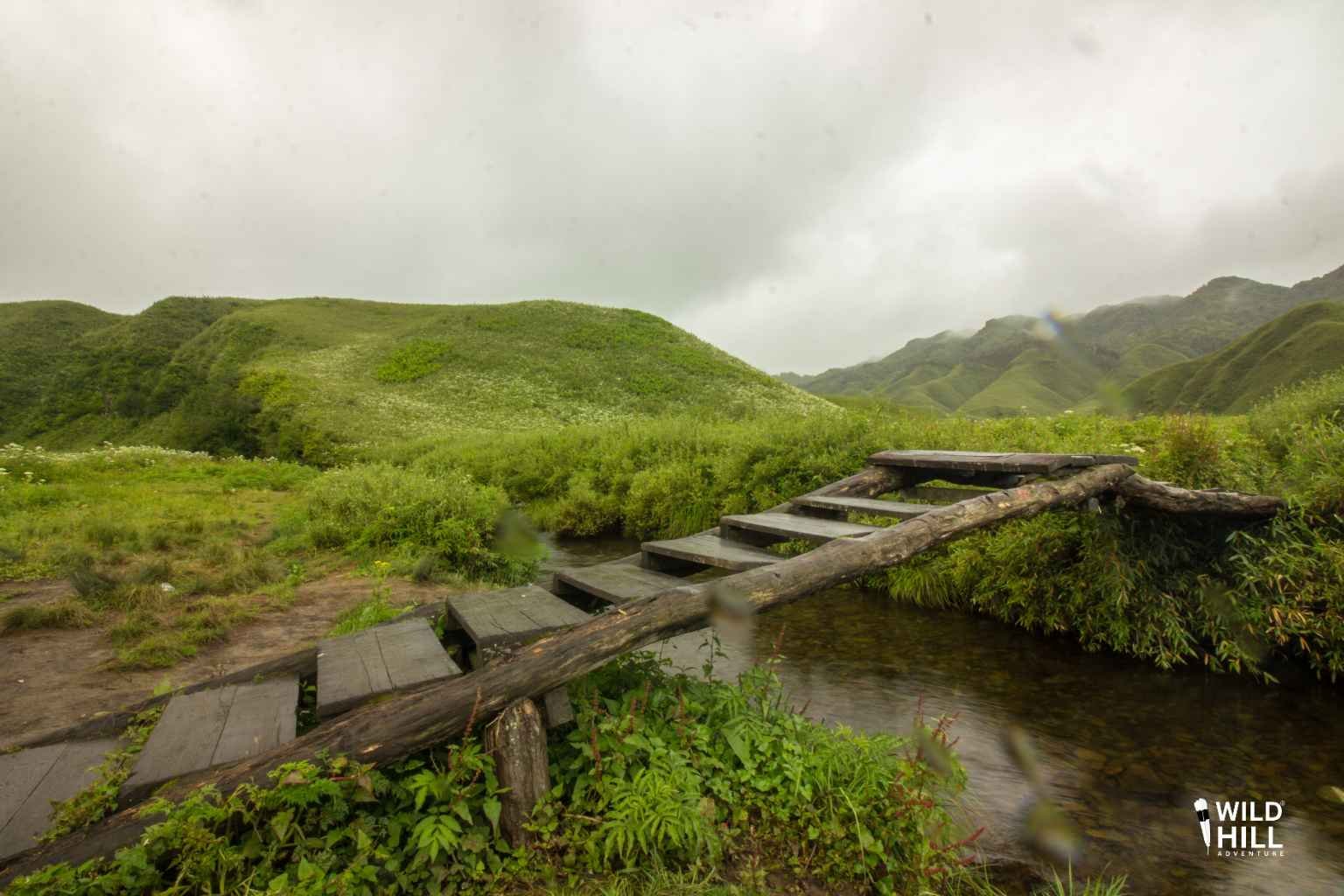
For us at Wild Hill Adventure, Dzukou is an emotion.
For around eight years, we have been organizing and operating Dzukou Valley trips, and over the years we have hosted more than 2,000 guests here. We have seen the valley under brilliant blue skies, covered in monsoon clouds, glowing green during the flowering season and freezing under clear winter nights.
For the last couple of years, we have shifted our focus primarily to private and customized Dzukou Valley tours rather than regular fixed-departure group trips. That allows us to plan the trek according to the travelers, weather, fitness level and type of experience they actually want.
And after all these years, Dzukou still doesn’t feel repetitive.
Every group brings different stories.
Every night brings different conversations.
And every time we walk onto that ridge and see those endless rolling hills, we understand why people fall in love with this place.
This detailed Dzukou Valley Travel Guide covers everything you need to know before planning your trek, including routes, accommodation, guides, transportation, seasons, what to carry and what the experience is actually like.
Dzukou Valley at a Glance
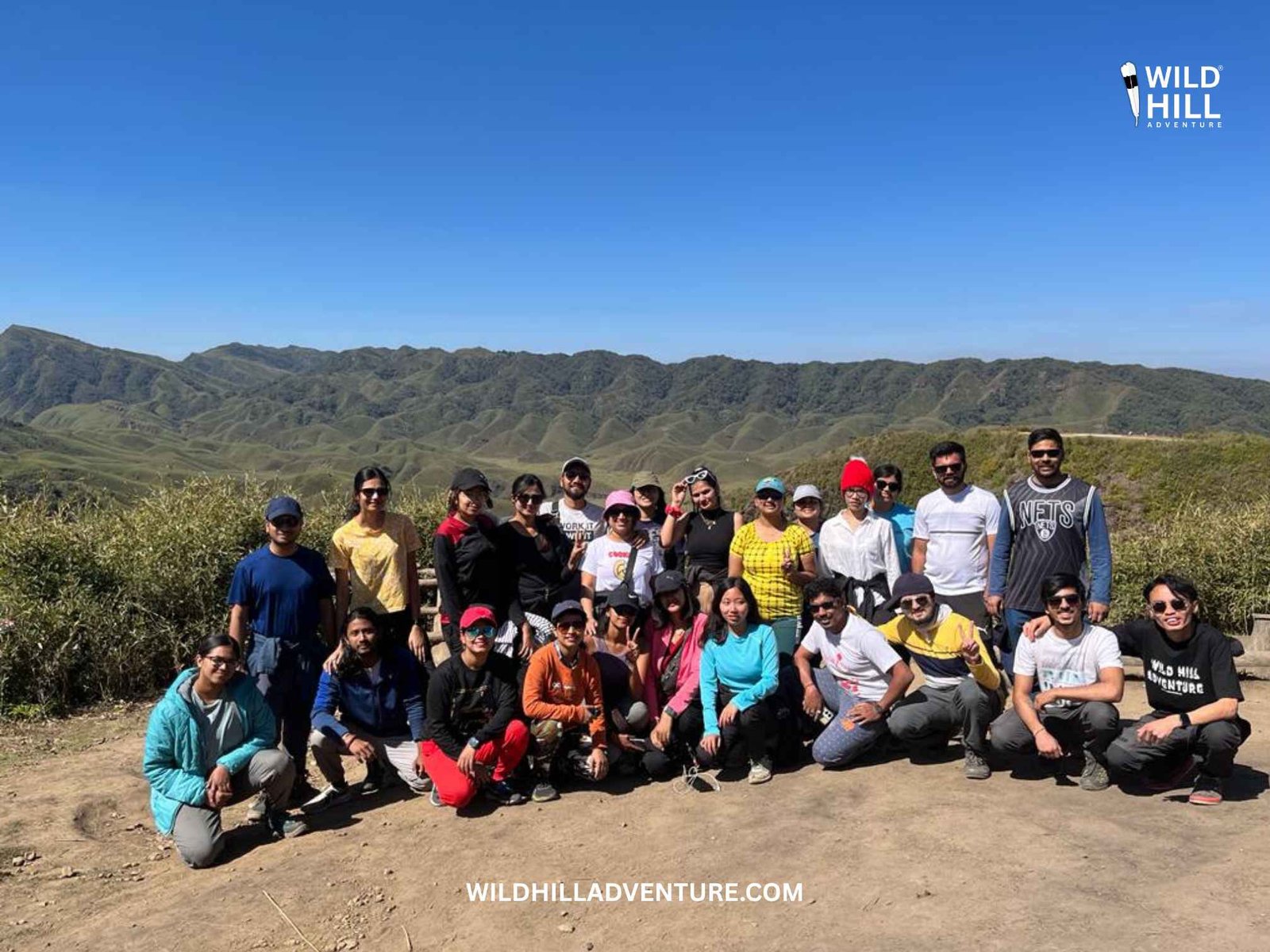
Dzükou Valley lies along the Nagaland-Manipur border, close to Kohima. it as a landscape of rolling meadows, seasonal wildflowers, bamboo thickets, streams and natural caves, sitting at approximately 2,452 metres or 8,045 feet above sea level.
| Location | Near Kohima, Nagaland |
| Altitude | Approximately 2,452 metres |
| Trek difficulty | Moderate for most reasonably fit travellers |
| Main routes | Viswema and Jakhama |
| Ideal duration | 2 Days / 1 Night |
| Accommodation | Camps, cottages/basic rooms and dormitory-style stays depending on availability |
| Guide | Currently required under local trekking rules |
| Best for | Trekkers, photographers, nature lovers, couples, groups and adventure travellers |
the trek is roughly 9 km, although actual walking distance and time depend on your chosen route and where your vehicle drops you. It recommends allowing roughly 5-6 hours for the trekking experience.
Why Is Dzukou Valley So Special?
Pictures don’t fully explain Dzukou.
You have to walk into it.
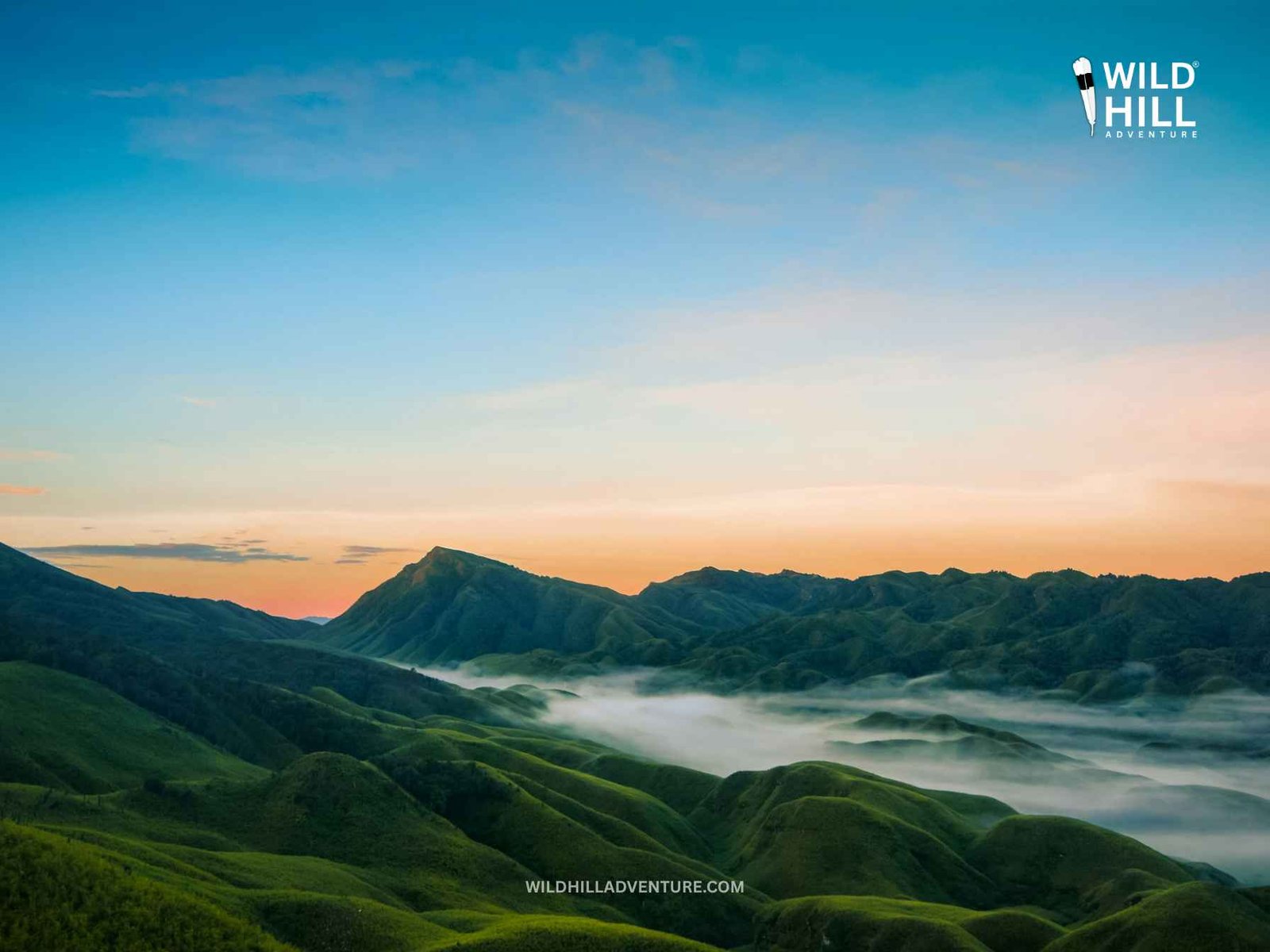
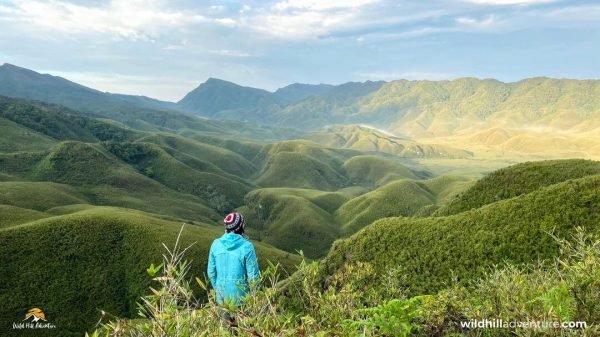
After the initial climb, suddenly the landscape opens.
Mountain after mountain appears covered with dwarf bamboo and grass. Small trails disappear between the hills. Clouds move across the ridges. Streams run through the valley below.
There are no cities in sight.
No traffic.
No normal rush of life.
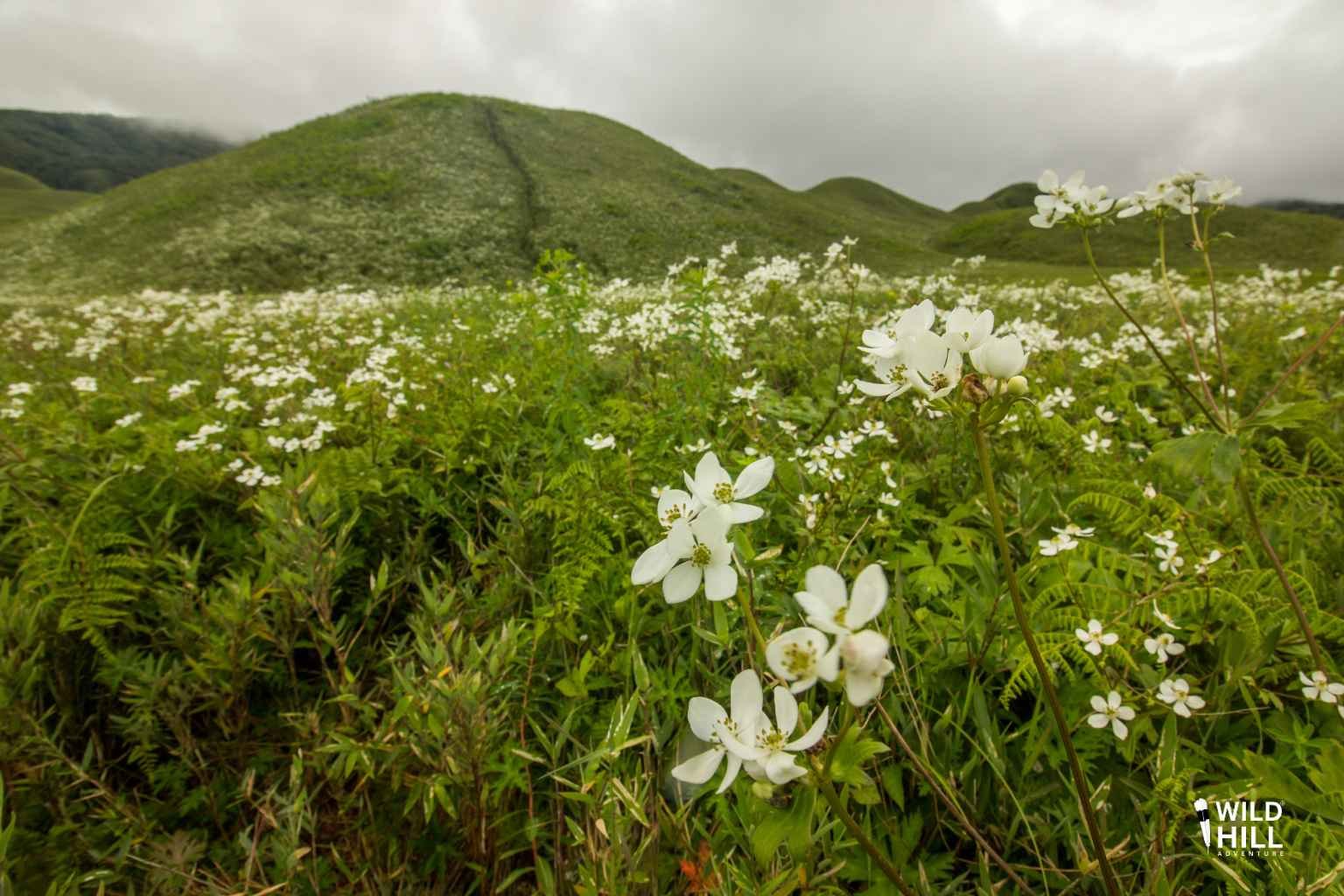
During flowering season, wildflowers add another layer to the landscape. The valley is especially associated with the rare Dzukou Lily, which Nagaland Tourism highlights as one of its distinctive seasonal attractions.
But flowers aren’t the main reason I keep returning.
It is the feeling of being there.
Our Story With Dzukou Valley
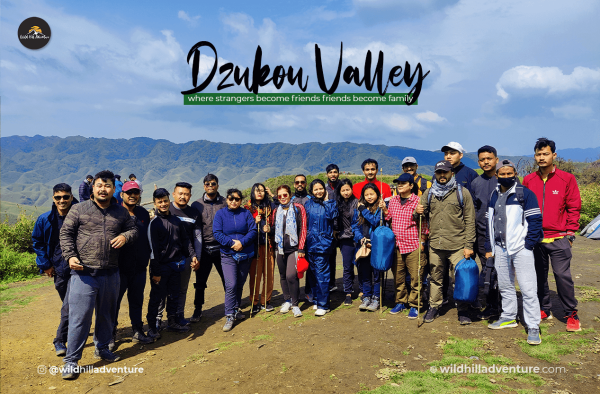
We’ve been coming here for so long that I’ve honestly lost count of the number of nights we’ve spent in Dzukou.
Over the last eight years, Wild Hill Adventure has taken 2,000+ guests into the valley.
College friends.
Couples.
Solo travelers.
Corporate groups.
First-time trekkers.
People who had never slept in a tent before.
And experienced travelers who had already explored much of India.
Yet Dzukou has a strange ability to bring everyone onto the same level.
After sunset, nobody really cares about their job title or what city they came from.
People sit together.
Someone starts telling a story.
Another person starts singing.
Then somebody shares a ghost story.
Someone else makes tea.
One conversation becomes ten.
Before you realize it, it’s midnight.
Those are actually some of my strongest memories of Dzukou.
Not the photographs.
The conversations.
How to Reach Dzukou Valley
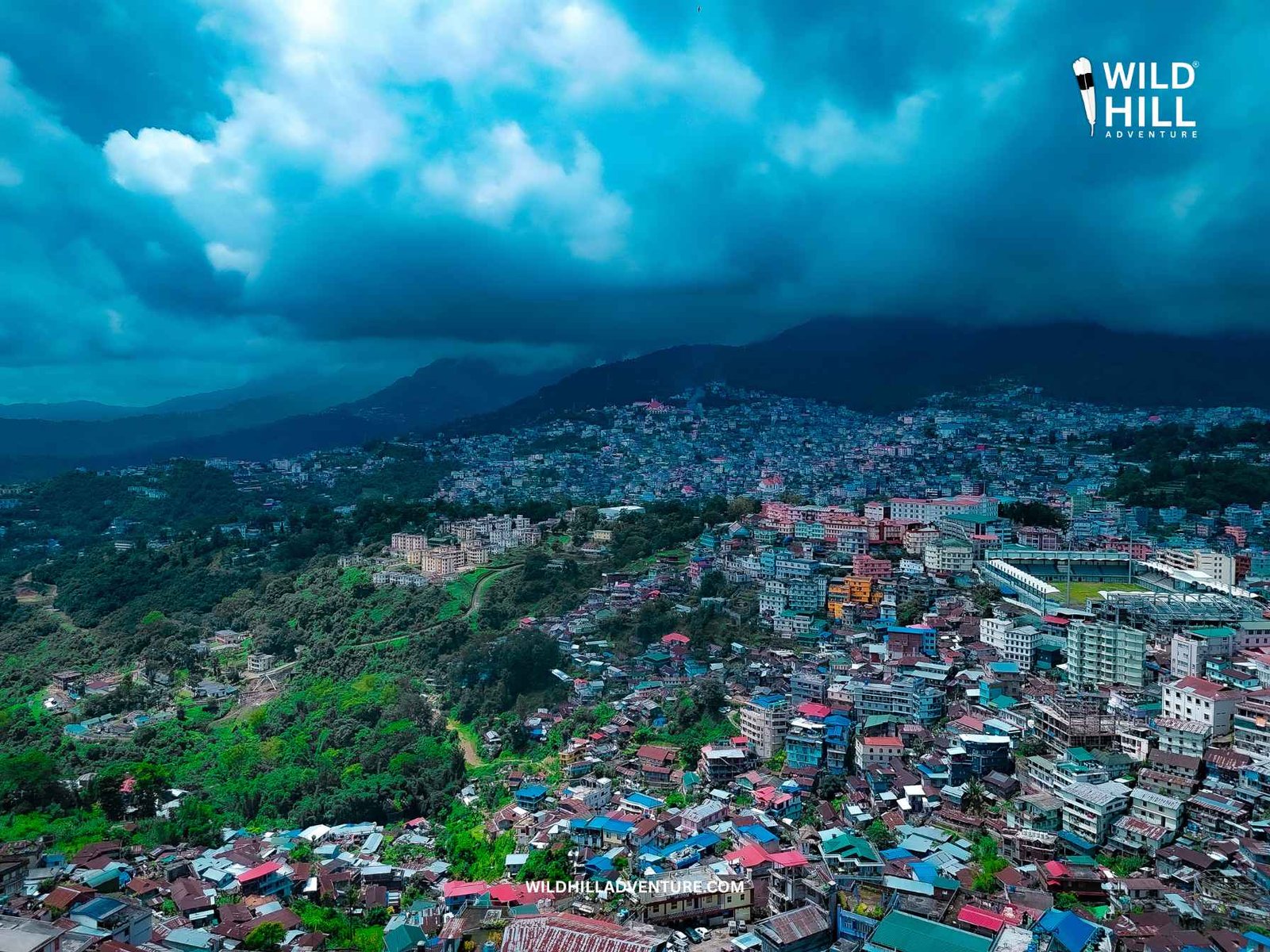
Most travelers approach Dzukou from Kohima.
You don’t drive directly into the main valley. You travel by road toward one of the trekking approaches and continue on foot.
There are two commonly used approaches from the Nagaland side:
Viswema Route
and
Jakhama Route
Where Should You Stay Before the Dzukou Trek?
You don’t necessarily have to stay only in Kohima.
Depending on your itinerary, transportation and what else you’re visiting, you can base yourself around:
- Kohima
- Kigwema
- Jakhama
- Viswema
Kohima
Kohima is convenient if you’re also exploring the city, Khonoma, Kisama or other parts of Nagaland.
You have considerably more hotel, café and restaurant choices here.
Kigwema
Kigwema can be a practical option for travelers who want to stay outside busy Kohima while remaining close to the southern villages.
Jakhama
Jakhama is useful if you’re taking the Jakhama trail or want an early start.
Viswema
Viswema makes sense if you plan to take the more popular Viswema approach.
The important thing is not simply choosing the closest hotel.
Your route, vehicle arrangement, starting time and guide should all work together.
Viswema Route vs Jakhama Route
This is probably the question we receive most frequently.
Both routes ultimately take you toward Dzukou, but they feel very different.
Viswema Route: Easier but Longer
For most of our guests, particularly beginners, Viswema is the more comfortable option.
A vehicle can cover part of the approach before you begin walking. Incredible India specifically notes that the Viswema route offers vehicle access toward the trek starting point and follows a more established trail.
You still have an initial climb.
Don’t misunderstand “easier” as “no effort.”
You’ll sweat.
But once you complete the steeper section, the trail becomes considerably more enjoyable as you walk along the mountains toward Dzukou.
We generally recommend Viswema for:
First-time trekkers, families with reasonably fit members, photographers carrying equipment and travelers who prefer a less aggressive climb.
Jakhama Route: Shorter but Steeper
Jakhama is a different experience.
It is considerably steeper and more physically demanding.
If you’re fit and enjoy tougher trails, you may enjoy it.
But if you’re completely new to trekking, don’t choose Jakhama simply because somebody tells you it is shorter.
Shorter doesn’t always mean easier.
The terrain can also become slippery when wet.
For many private trips, route selection is something we decide based on the guest’s fitness, season and current trail conditions rather than blindly using the same route for everybody.
Is a Guide Mandatory for Dzukou Valley?
Under current local trekking rules, travelers should plan on trekking with a registered local guide.
Recent local rules introduced by the Southern Angami Youth Organisation require trekkers to use registered guides, and current traveler reports from 2026 also describe guides as mandatory.
Even beyond the rule, we recommend a guide.
Weather changes quickly.
Fog can reduce visibility.
Monsoon trails become slippery.
And if something unexpected happens, having someone who understands the terrain is valuable.
So don’t look at a guide merely as somebody showing you the direction.
A good local guide is part of your safety system.
What Is the Dzukou Valley Trek Difficulty?
I would classify Dzukou as moderate for an average healthy traveler.
It isn’t a technical mountaineering expedition.
But it isn’t simply a casual park walk either.
The biggest challenges are usually:
The initial climb, slippery trails during rain, carrying unnecessary luggage and underestimating the weather.
You don’t need to be an athlete.
Basic fitness and some walking preparation before your trip will make the experience much more enjoyable.
Best Time to Visit Dzukou Valley
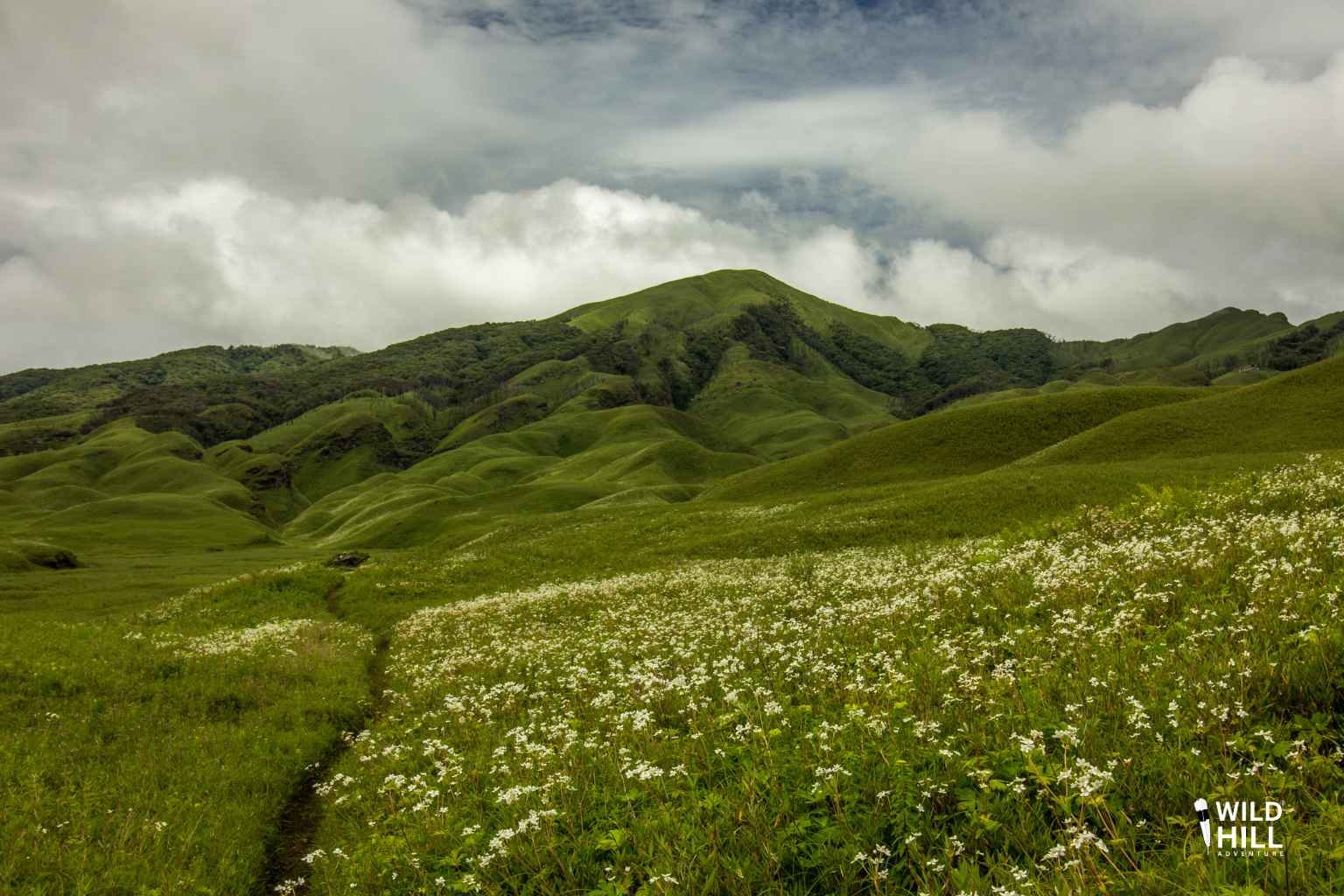
One of the things I love about Dzukou is that there isn’t only one season in which you can visit.
Dzukou can be experienced throughout much of the year, but every season gives you something different.
June to September: Green Dzukou
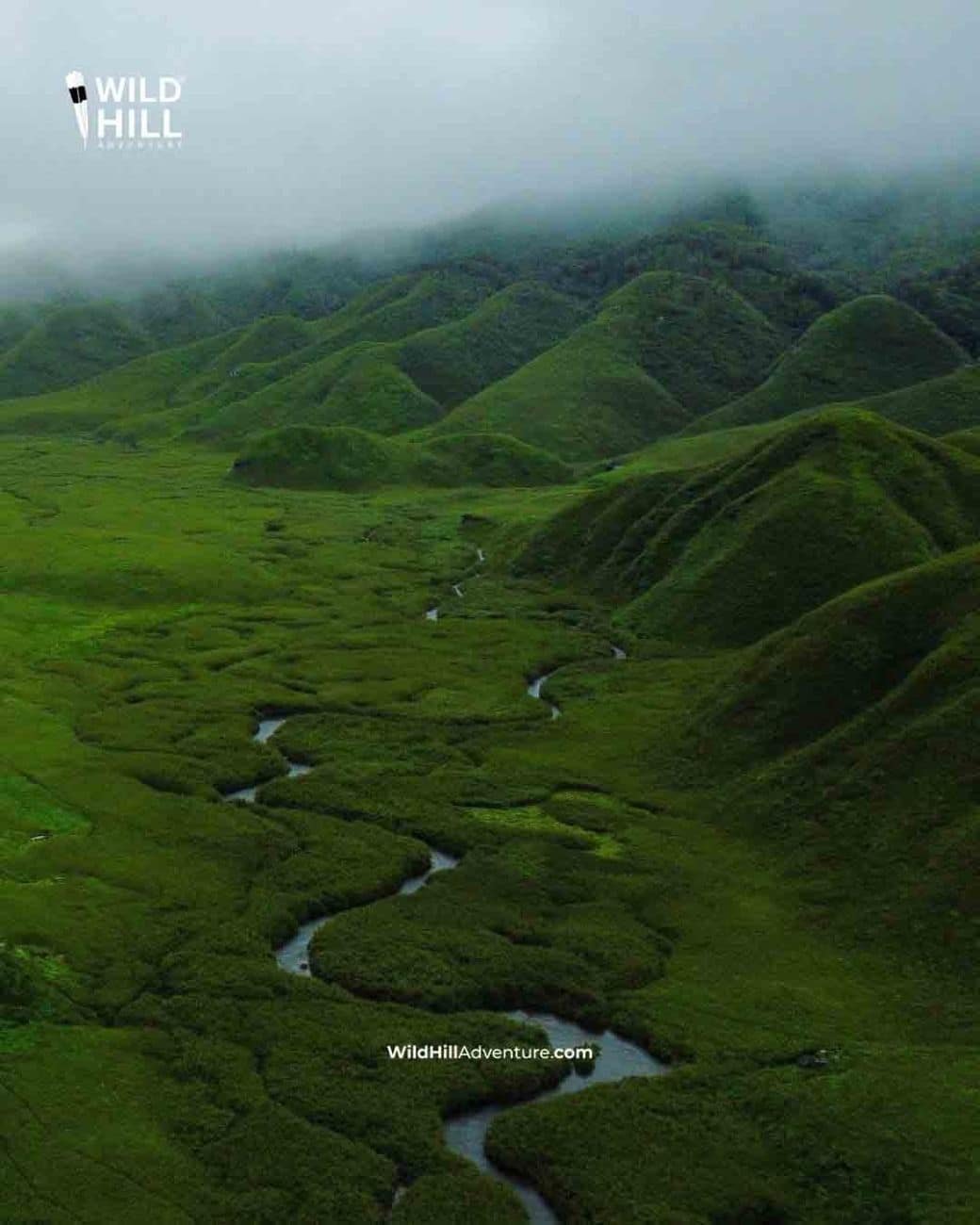
This is one of the most dramatic versions of Dzukou.
The entire landscape becomes intensely green.
Clouds roll over the mountains.
Wildflowers appear.
The famous Dzukou Lily is associated with the summer flowering period.
But this is also monsoon.
Expect rain, mud, slippery trails and changing visibility.
If you’re coming only for guaranteed clear mountain views, monsoon isn’t predictable.
If you love clouds, greenery and dramatic weather, it’s beautiful.
October to November: Excellent Trekking Weather
This is one of my favourite periods for travelers who want a balanced experience.
The heavy monsoon starts disappearing, trails generally improve and visibility can be excellent.
The landscape remains beautiful without the same intensity of rain.
December: Dzukou + Hornbill Festival
December is extremely popular because travelers can combine:
Hornbill Festival + Kohima + Dzukou Valley.
If you’re visiting during Hornbill Festival, book your accommodation and trek arrangements well in advance.
Nagaland receives a significant influx of travelers during this period.
Winter: Cold but Beautiful
Winter nights can become seriously cold.
But when the sky is clear?
It’s incredible.
Which brings me to one of my favourite things about Dzukou.
Stargazing in Dzukou Valley
You finish dinner.
The lights become fewer.
People slowly stop talking.
Then you look up.
On a clear night, the sky above Dzukou can be spectacular.
Some of our best nights here weren’t planned activities at all.
Just our guests sitting outside with hot tea, talking and looking at the stars.
Eventually someone tells a story.
Another person starts laughing.
Then suddenly two hours disappear.
That is Dzukou.
Sometimes the best itinerary is no itinerary.
Where to Stay in Dzukou Valley
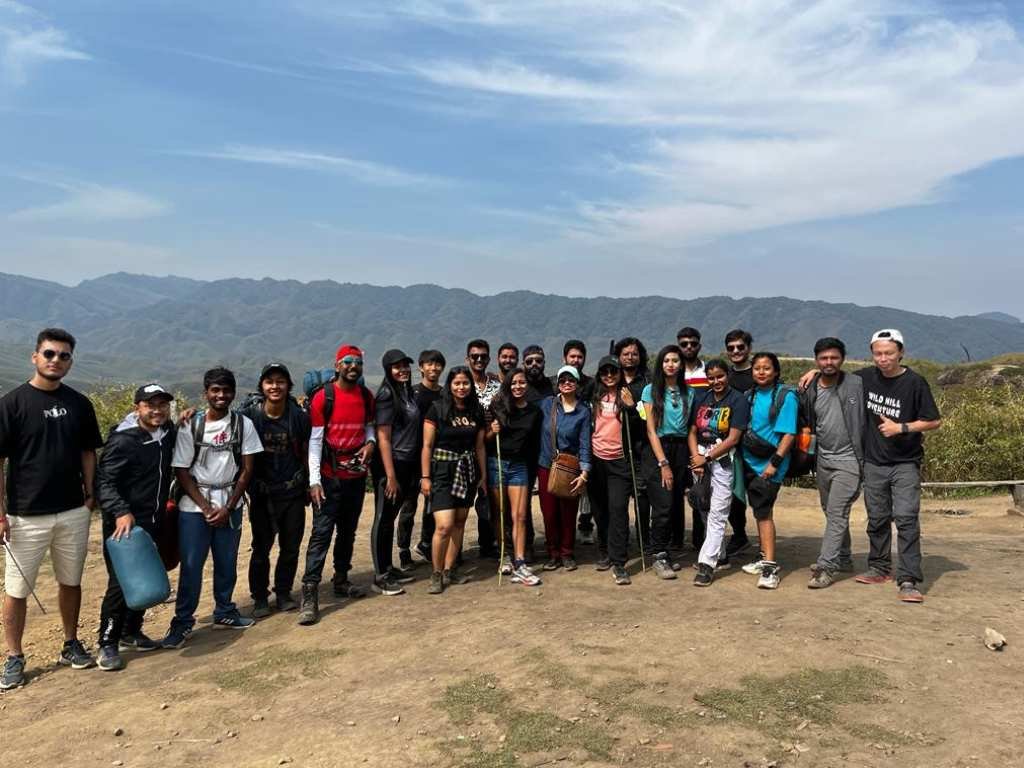
Depending on availability and current operations, travelers can find basic options such as:
Dormitory accommodation
Cottages/basic rooms
Camping/tents
Do not expect luxury.
Dzukou is a remote trekking destination.
That’s part of the experience.
Facilities can be basic, and availability changes with season and demand.
Pre-book your Dzukou stay
I strongly recommend arranging accommodation before beginning your trek, especially during:
Hornbill Festival, weekends, holidays, flowering season and peak trekking months.
After trekking for several hours, the last thing you want is uncertainty about where you’re sleeping.
Camping in Dzukou Valley
Personally, I love camping here.
There’s something completely different about sleeping inside the valley.
You hear the wind.
People sit together.
You eat simple hot food.
Maybe there is a bonfire where locally permitted and conditions allow.
Then the temperature drops and everyone disappears into their tents.
For travelers looking for the full experience, I would choose:
2 Days / 1 Night rather than rushing Dzukou as a day trip.
What Food Is Available in Dzukou?
Food facilities are basic.
Don’t expect restaurant-style menus.
Depending on current facilities, simple meals and items such as rice, dal, vegetables, noodles/Maggi, eggs and tea may be available.
What is available can change.
When Wild Hill Adventure operates a private Dzukou trip, we arrange the food plan beforehand so our guests aren’t trying to figure everything out after reaching the valley.
Carry some personal snacks too.
Energy bars, dry fruits, chocolate or whatever works for you.
But please bring your wrappers back.
What Should You Carry for Dzukou Valley?
Don’t overpack.
A heavy backpack can completely change your trekking experience.
Carry only essentials:
- Good trekking shoes with grip
- Small backpack
- Rain jacket/poncho
- Warm jacket
- Extra socks
- Water bottle
- Personal medicines
- Power bank
- Headlamp or torch
- Sunscreen
- Cap
- Basic toiletries
- Light snacks
- Waterproof protection for electronics
- Camera if you enjoy photography
During monsoon, waterproofing becomes especially important.
During winter, prioritize warm layers.
Mobile Network in Dzukou Valley
Do not plan your trek assuming you’ll have reliable connectivity.
Network availability can be weak or nonexistent depending on where you are in the valley.
Tell your family beforehand.
Download important information.
Keep your guide’s details.
Carry sufficient battery backup.
And then enjoy being offline.
We spend so much of our lives staring at screens.
Dzukou gives you a good excuse not to.
Inner Line Permit for Nagaland
Indian travelers who require an Inner Line Permit should arrange their Nagaland ILP before the trip.
Permit requirements and local rules can change, so check the latest regulations rather than relying on an old blog post or social-media reel.
Please Keep Dzukou Clean
This matters enormously.
Dzukou belongs to the communities that have protected this landscape long before tourism became popular.
Don’t leave:
Plastic bottles.
Chocolate wrappers.
Wet wipes.
Cigarette packets.
Food packaging.
Anything.
If you carry something into Dzukou, you should be willing to carry it back.
The valley doesn’t need more tourists.
It needs better travelers.
Our Favourite Dzukou Memories
After hosting more than 2,000 travelers, you’d think all the trips would start blending together.
They don’t.
I remember groups who arrived as strangers and returned as friends.
People who thought they couldn’t finish the climb but eventually did.
Guests sitting outside late into the night.
Endless conversations.
Ghost stories.
Singing.
Laughing.
Watching clouds disappear.
Waiting for stars.
Sharing food.
Sometimes there was no network.
No fancy hotel.
No luxury.
And somehow nobody cared.
Those nights taught me something.
When you remove phones, traffic, meetings and normal distractions, people start talking properly again.
That is probably why Dzukou means so much to us.
Why Book Dzukou Valley With Wild Hill Adventure?
You absolutely can plan parts of Dzukou independently.
But logistics involve more than simply reaching Kohima and beginning to walk.
For our private Dzukou trips, Wild Hill Adventure can arrange the complete ground experience, including transportation, local guide, accommodation/camping arrangements, meals, applicable entry arrangements and trek logistics according to the package booked.
We’ve been operating Dzukou trips for around eight years and have hosted 2,000+ guests over that period.
More importantly, we know that different travelers need different trips.
A 22-year-old experienced trekker and a family attempting their first trek shouldn’t automatically receive identical planning.
That’s why our recent focus has been on private/customized departures rather than regular fixed group departures.
We can choose the approach, accommodation and pacing based on your group and current ground conditions.
Dzukou Valley Travel Guide: Final Thoughts
I’ve traveled to Dzukou again and again.
I’ve photographed it.
I’ve trekked through it in different seasons.
I’ve watched thousands of our guests experience it.
Yet I still don’t feel finished with it.
Dzukou is an emotion.
Maybe you’ll go because you saw photographs of those rolling green hills.
But when you return, the thing you remember might be completely different.
The freezing morning.
The stranger who became your friend.
The ridiculous ghost story somebody told at midnight.
The stars.
The silence.
Or simply sitting somewhere above the valley doing absolutely nothing.
That’s the real Dzukou experience.
And that’s why, after eight years, we still love going back.
Contact us
- Phone/WhatsApp: +91 9365476611 +91 91811 29331/+91 91814 99331
- Instagram: @wildhilladventure
- Email: wildhilladventure@gmail.com
- Website: www.wildhilladventure.com
Frequently Asked Questions About Dzukou Valley
1. Where is Dzukou Valley located?
Dzukou Valley is located on the Nagaland-Manipur border in Northeast India, close to Kohima. Most travelers visiting from Nagaland start their journey from Kohima and approach the valley through Viswema or Jakhama.
2. What is the best time to visit Dzukou Valley?
Dzukou Valley offers different experiences throughout the year. June to September is excellent for lush greenery, monsoon landscapes and seasonal flowers, while October to November generally offers pleasant trekking conditions. December is popular for travelers combining Dzukou with the Hornbill Festival. Winter is colder but can offer beautiful clear skies.
3. How difficult is the Dzukou Valley trek?
The Dzukou Valley trek is generally moderate. The initial climb can be steep and tiring, particularly for first-time trekkers. Anyone with reasonable fitness can usually complete it comfortably by walking at a steady pace and taking sufficient breaks.
4. Which route is better for Dzukou Valley, Viswema or Jakhama?
For most first-time trekkers, we recommend the Viswema route because it is comparatively easier, although longer. The Jakhama route is steeper and more physically demanding. Your choice should depend on fitness, weather and current trail conditions.
5. Is a guide mandatory for the Dzukou Valley trek?
Travelers should currently plan to trek Dzukou Valley with a registered local guide. Apart from local requirements, having an experienced guide is useful because fog, rain and changing weather can make navigation more difficult.
6. How many days are required for Dzukou Valley?
We recommend at least 2 days and 1 night for Dzukou Valley. This gives you enough time to trek into the valley, experience the evening and night, stay overnight and explore before returning the following day.
7. Can I visit Dzukou Valley as a day trip?
A same-day Dzukou trek may be possible for fit and experienced trekkers, but we generally recommend staying overnight. Camping, stargazing, early mornings and spending time inside the valley are some of the best parts of the Dzukou experience.
8. Where can I stay before starting the Dzukou Valley trek?
You can stay in Kohima, Kigwema, Jakhama or Viswema, depending on your route and itinerary. Kohima offers the widest range of hotels and restaurants, while staying closer to the trekking route can make an early morning start easier.
9. Where can I stay inside Dzukou Valley?
Accommodation inside Dzukou is basic. Depending on availability and current operations, travelers may find camps/tents, dormitory accommodation and basic cottage or room options. Advance booking is strongly recommended during busy periods.
10. Is camping available in Dzukou Valley?
Yes, camping is one of the most memorable ways to experience Dzukou Valley where permitted and available. Spending a night surrounded by mountains, followed by stargazing on a clear night and waking up inside the valley, makes the trek much more special.
11. Does Dzukou Valley have mobile network or internet?
Mobile connectivity inside Dzukou Valley can be unavailable. Inform your family before starting the trek, download important information beforehand and carry a fully charged phone and power bank.
12. Do I need an Inner Line Permit for Dzukou Valley?
Travelers entering Nagaland who fall under the Inner Line Permit (ILP) requirements should obtain the appropriate permit before their trip. Because permit rules can change, always check the latest official requirements before traveling.
13. What should I carry for the Dzukou Valley trek?
Carry good trekking shoes, a raincoat or poncho, warm clothing, a water bottle, personal medicines, a power bank, headlamp or torch, extra socks, basic toiletries and some snacks. During monsoon, waterproof protection and shoes with good grip are particularly important.
14. Is Dzukou Valley suitable for beginners?
Yes. Beginners can trek to Dzukou Valley if they have reasonable fitness and prepare properly. For first-time trekkers, we usually prefer the Viswema approach, a comfortable pace, an experienced local guide and an overnight itinerary instead of trying to rush the trek.
15. How can I book a Dzukou Valley tour with Wild Hill Adventure?
Wild Hill Adventure has been operating Dzukou Valley trips for around eight years and has hosted more than 2,000 guests. We now mainly focus on private and customized Dzukou Valley tours rather than regular fixed departures. Depending on the package, we can arrange transportation, local guides, accommodation or tents, meals, entry arrangements and ground logistics, allowing travelers to focus on enjoying the trek rather than coordinating everything separately.
Why Choose Wild Hill Adventure for Your Nagaland & Northeast India Trip?
Travelling through Nagaland and Northeast India is very different from travelling through India’s more established tourist circuits.
Here, road conditions can change, permits matter, accommodation in remote villages is limited, mobile networks can disappear, and some of the most memorable places are not always easy to find online.
This is where travelling with a local Northeast-based company like Wild Hill Adventure makes a real difference.
We Are From Northeast India
Northeast India is not simply another destination we sell.
It is our home.
Our team has spent years travelling through Nagaland, Assam, Meghalaya, Arunachal Pradesh and other parts of the Northeast. We personally explore many of the routes and destinations before recommending them to our guests.
That local experience helps us understand not only where to go, but how to travel these regions properly.
We Personally Explore the Routes
Many of the places we include in our itineraries are places we have personally travelled to.
In Nagaland, our journeys have taken us through places such as:
- Kohima
- Kisama Heritage Village
- Dzukou Valley
- Khonoma
- Dzüleke
- Jakhama
- Pfutsero
- Kapamodzü Peak
- Longwa
- Mon and the Konyak region
Our Kapamodzü journey is a good example. We have experienced the route ourselves during monsoon, driven through difficult road sections, stayed near the peak, eaten there and explored the Pfutsero side.
That experience helps when we’re planning the same journey for a guest.
Strong Experience With the Hornbill Festival
Nagaland becomes extremely busy during the Hornbill Festival.
Accommodation fills up, Kohima traffic becomes heavy and first-time visitors can easily underestimate travel times.
Because we regularly operate Hornbill Festival trips, we can help guests plan the festival together with destinations such as Dzukou Valley, Khonoma, Dzüleke, Kapamodzü, Pfutsero and Longwa rather than simply visiting Kisama and returning home.
Local Guides and Community Connections
For us, a Nagaland trip shouldn’t only mean taking photographs from viewpoints.
We work with local people wherever possible.
Local guides can help travelers understand village history, tribal traditions, food, agriculture and everyday life in a way that simply driving through a destination cannot.
It also means tourism money reaches the communities travelers have actually come to experience.
We Take You Beyond the Usual Tourist Circuit
If you only search online, most Nagaland itineraries look similar:
Dimapur → Kohima → Hornbill Festival → Dzukou → Return.
There is much more to Nagaland.
Depending on your interests and available time, we can build journeys around remote villages, trekking, culture, food, photography, mountains and border regions.
Sometimes the best experience isn’t even a famous attraction.
It could be stopping beside a beautiful rice field, eating a local thali at Mao, visiting a vegetable farm near Pfutsero or spending an evening talking with people you have just met.
Those are the experiences we personally enjoy, and they influence the way we design our trips.
We Understand Northeast India’s Road Conditions
Google Maps doesn’t always tell the complete story here.
A road showing three hours can take considerably longer because of rain, landslides, construction or poor road conditions.
We plan journeys with these realities in mind.
For remote destinations and monsoon journeys, we can also select vehicles according to the route and current conditions rather than simply choosing the cheapest available option.
Permits Become Easier
Several parts of Northeast India have permit requirements.
Depending on the destination and nationality, travelers may need documents such as an Inner Line Permit (ILP) or other permissions.
Our team helps guests understand and arrange the applicable permits for their itinerary so they don’t have to figure everything out after arriving.
Private and Customized Northeast Trips
Not everyone wants the same holiday.
Some travelers want photography.
Some want trekking.
Some want culture and villages.
Others want comfortable hotels and relaxed sightseeing.
Instead of forcing every traveler into exactly the same itinerary, we can customize trips according to your time, interests, comfort level and budget.
On-Ground Support Matters Here
This is probably one of the most underestimated advantages of booking with a local operator.
When everything goes according to plan, arranging a trip looks easy.
The difference becomes obvious when something changes.
Bad weather, a road closure, delayed arrival, vehicle problem or accommodation issue can require quick local coordination.
Having a team operating within Northeast India gives travelers someone on the ground who can help find alternatives.
We Prefer Real Experiences Over Checklist Tourism
Our philosophy is simple:
Don’t just see Northeast India. Experience it.
Eat local food.
Stay in villages when appropriate.
Talk to people.
Walk through local markets.
Learn why communities protect their forests.
Understand the stories behind tribal traditions.
And sometimes, forget the itinerary for an hour and simply sit looking at the mountains.
That’s the kind of Northeast India we want our guests to experience.
Travel Northeast India With People Who Call It Home
Whether you’re planning the Hornbill Festival, Dzukou Valley Trek, Kapamodzü Peak, Longwa Village, an offbeat Nagaland road trip, or a longer journey combining Nagaland with Assam and other Northeast states, Wild Hill Adventure can help you design the trip around what you actually want to experience.
We don’t want to show you Northeast India only as a collection of tourist attractions.
We want to show you the Northeast that we know, travel through and love ourselves.
Contact us
- Phone/WhatsApp: +91 9365476611 +91 91811 29331/+91 91814 99331
- Instagram: @wildhilladventure
- Email: wildhilladventure@gmail.com
- Website: www.wildhilladventure.com

0 Comment